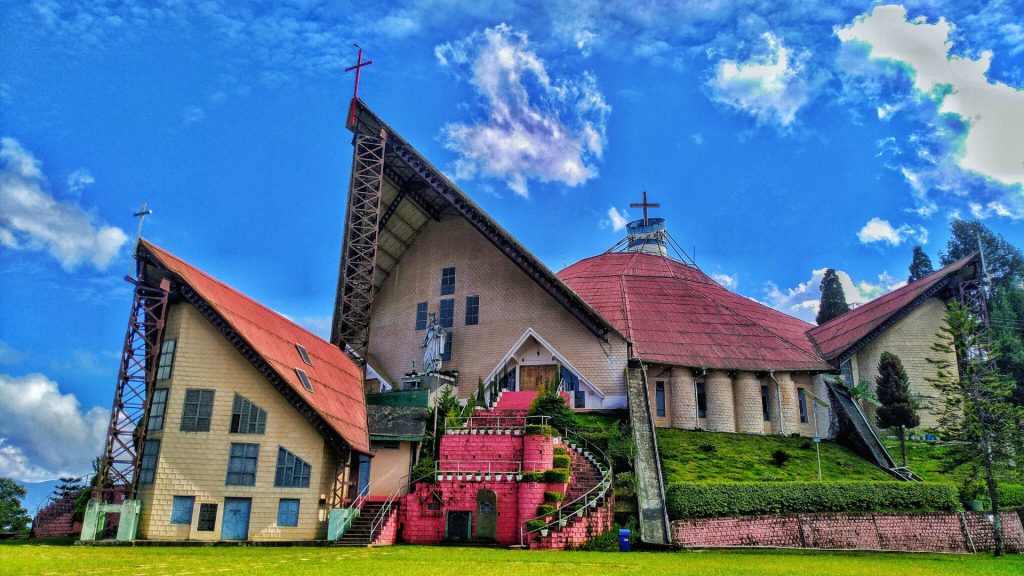
The story of Christianity in India’s Northeast is not a marginal footnote—it is one of the most profound social transformations in modern South Asian history. In states like Mizoram, Nagaland, and Meghalaya, Christianity is not simply a religion practiced by a minority; it forms the backbone of public life, education, and identity. Entire social systems—from schooling to community organization—have been shaped by its presence.
What makes this transformation particularly significant is that it unfolded in regions where indigenous societies had long-standing, deeply rooted spiritual traditions. The spread of Christianity here is tied not only to faith, but to literacy, language development, institutional life, and new forms of collective identity. It is also a story that resists simple judgment. It cannot be neatly labeled as wholly beneficial or entirely disruptive. It is, instead, a layered process of change—simultaneously generative and transformative, strengthening certain aspects of society while replacing others.
Before the arrival of Christianity, the Northeast was home to a rich diversity of indigenous belief systems. These were not “religions” in the organized, institutional sense, but lived cosmologies embedded in everyday life. Communities across the region practiced forms of animism, ancestor reverence, and spirit-based cosmologies. Forests, rivers, and mountains were often understood as sacred spaces. Ritual specialists—variously known across tribes—mediated between the human and spiritual worlds. Oral traditions carried history, ethics, and cosmological understanding across generations.
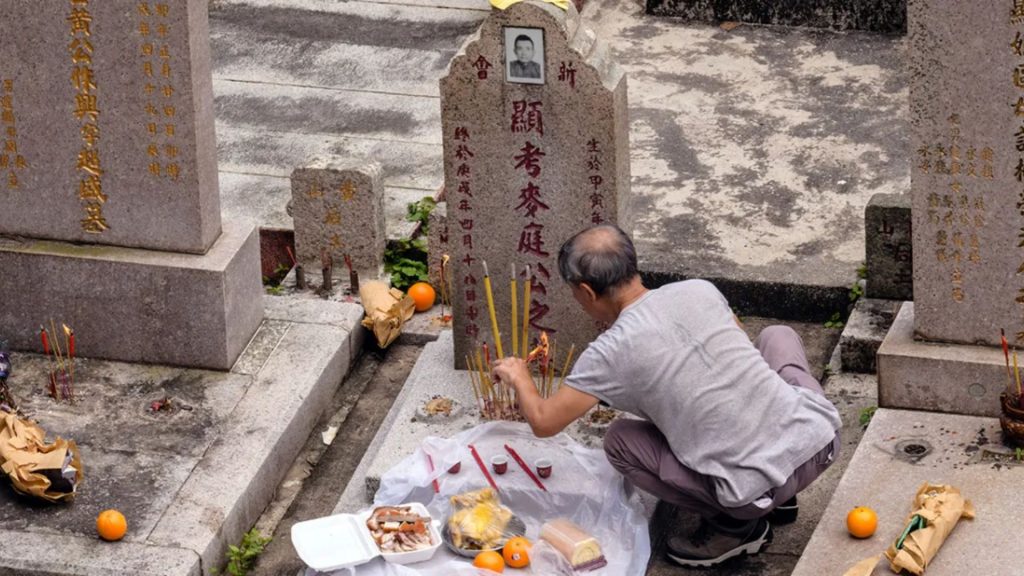
Spiritual life was inseparable from social structure. Clan systems, village councils, and customary laws were deeply intertwined with belief systems. Festivals, agricultural cycles, and community rituals reinforced both social cohesion and spiritual meaning.
It is important to recognize that “tribal religion” is too broad a label. Each community had its own distinct worldview. Christianity did not enter an empty landscape—it entered complex societies with established moral orders and spiritual depth.
For a community-level example of how origin narratives, sacred geography and Christian influence now sit alongside each other in Meghalaya, the Khasi identity article adds useful depth.
Read more: Ki Hynñiewtrep: Origins, Myths, and the Evolving Identity of the Khasi People
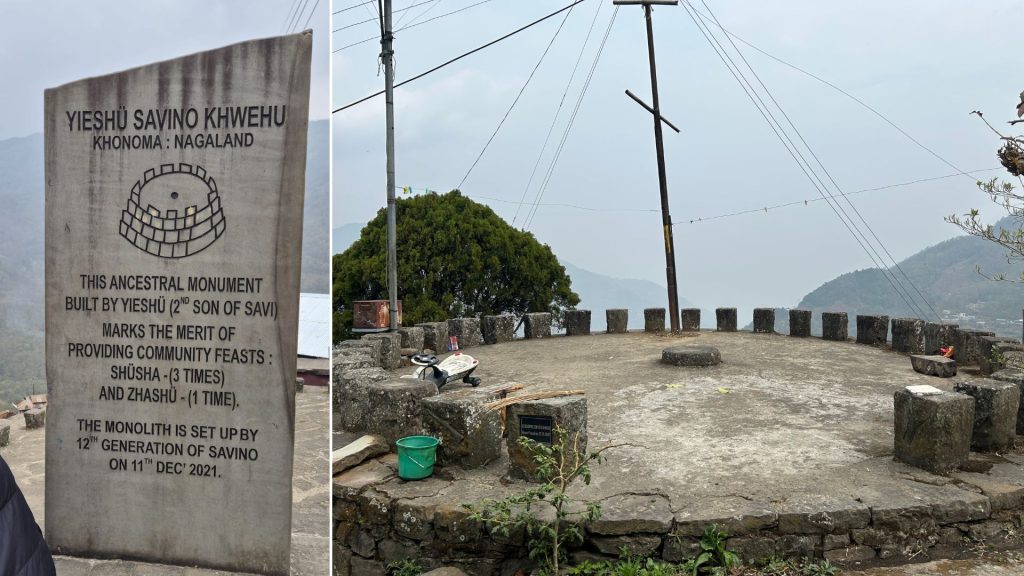
For exmaple:

Christianity began to spread in the Northeast during the nineteenth century, largely through missionary activity enabled by colonial expansion. As British administration extended into the hill regions, missionaries gained access to areas that had previously remained relatively isolated. Different parts of the region experienced different missionary influences. Baptist missions were particularly influential in areas like Nagaland and parts of Assam. Presbyterian missions played a major role in Mizoram and among Khasi and Jaintia communities. Catholic missions also contributed in various pockets.

The process was uneven. Some regions saw rapid and widespread conversion; others remained more religiously diverse. The twentieth century proved especially decisive, as conversion accelerated and Christian institutions became more firmly established.
Conversion in the Northeast cannot be explained by a single factor. It was rarely a purely theological shift, nor merely a social strategy. In most cases, it was both. For some, Christian teachings offered genuine spiritual appeal—a new moral framework, a different understanding of suffering and salvation, and a structured religious life. For others, the attraction lay in access to education, literacy, and healthcare.
Mission schools introduced reading and writing, often for the first time in these communities. Since Christianity is a text-based religion, literacy became a practical necessity. This alone transformed social possibilities.

Healthcare services provided by missions also played a role, particularly in areas where formal medical systems were absent. In addition, conversion sometimes offered relief from older ritual obligations that could be economically or socially burdensome. Equally important was the emergence of new forms of dignity and identity. Church-based communities created structured, collective spaces that emphasized equality, discipline, and belonging.
Conversion was often gradual. It could begin with a single family, spread through kinship networks, and eventually encompass entire villages. Local evangelists—often from within the community—were as important as foreign missionaries in this process.
Anthropologist T. N. Madan more broadly framed missionary impact in India by arguing that conversion often brought “entry into a new cultural system in which schooling, discipline, and literacy were central values.” This helps explain why education became embedded in social life, not just individual advancement.
Among the many transformations associated with Christianity in the Northeast, education stands out as the most significant. Mission schools were often the first formal educational institutions in these regions.
They introduced structured learning, regular schedules, and standardized curricula. Literacy became central not only to religious practice but to social mobility. Bible translation into local languages had a profound effect. It required the development of written scripts—often based on the Roman alphabet—and led to the standardization of previously oral languages. This, in turn, created a culture of reading.
Education extended beyond men. Missionaries actively promoted schooling for girls, contributing to relatively higher female literacy rates compared to many other parts of India. Over time, mission education laid the foundation for broader modern educational systems. Teachers, clerks, administrators, and professionals emerged from these institutions, reshaping the region’s engagement with the wider world.
One of the most fascinating aspects of Christianity’s impact is its role in language development. While it contributed to the decline of certain ritual traditions, it also helped preserve and standardize indigenous languages. Translation of religious texts required linguistic codification. Hymns and church music created new literary forms. Print culture expanded, allowing local languages to flourish in written form. This creates a paradox: Christianity often weakened older religious systems, but strengthened linguistic identity. It replaced certain cultural expressions while enabling others to survive and evolve. Some examples to substantiate this:

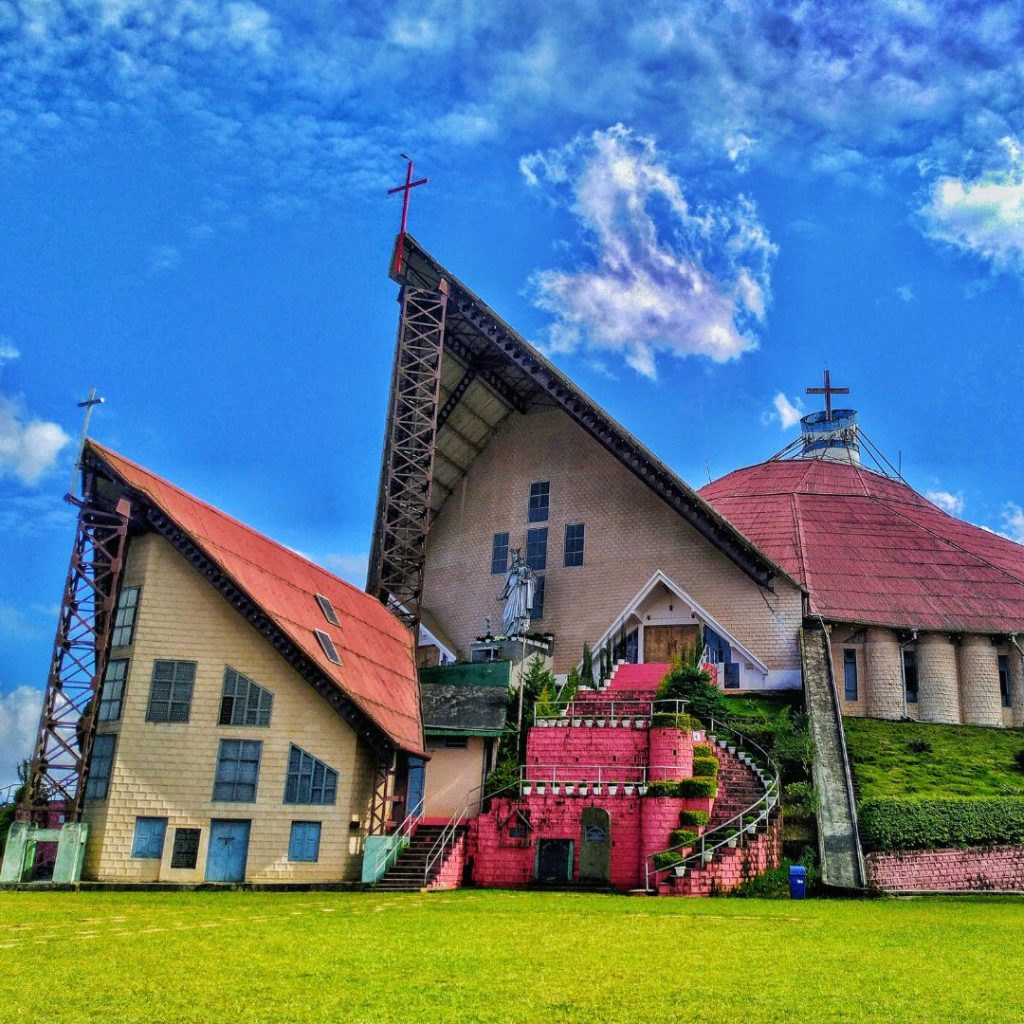
Nagaland and Mizoram are overwhelmingly Christian, with faith deeply embedded in social and political life. Meghalaya also has a large Christian population, though with more internal diversity. In Manipur, Christianity is more prevalent in hill areas than in the valley. Arunachal Pradesh presents a more mixed picture, with growing Christian populations alongside other faiths. Assam has significant Christian communities among tribal groups, though it is not a majority religion statewide.
That state-level summary becomes more useful when read alongside Assam’s ethnic, linguistic and regional diversity rather than as a single social story.
Read more: Assam Is Not One Story: Tribes, Languages, and the Many Worlds Within
In many of these regions, Christianity is not just a personal belief. it is part of how communities define themselves in the modern world.
The spread of Christianity across the Northeast brought profound change, but not without cultural loss. In many communities, ritual specialists who once mediated between people and the spirit world disappeared, taking with them generations of unwritten knowledge. Sacred landscapes—like Khasi groves—often survived physically but lost their ritual significance, becoming ecological rather than spiritual spaces. Rich oral traditions, from origin myths to epic storytelling, weakened as written, church-centered culture took hold, while older festivals and feasts were reshaped or stripped of their original cosmological meaning. In some cases, ancestral beliefs were recast as superstition, creating a rupture in how communities related to their own past. Yet this story is not simply one of erasure—today, revival movements in parts of the region are attempting to recover or reinterpret indigenous traditions, reflecting an ongoing negotiation between memory and modernity that travellers can still sense in the layered cultural landscapes of the Northeast
Mizoram is often described by anthropologists as one of the clearest examples of how faith, literacy, and social organisation can reshape an entire society. Early missionary work did more than introduce Christianity, it created a reading culture that became central to everyday life. As historian J. V. Hluna notes, the translation of the Bible into Mizo “turned literacy into a community habit,” not an elite skill. Over time, this produced a society where education, punctuality, and collective discipline became deeply embedded values. Sociologist T. N. Madan has broadly argued that such mission-influenced regions represent entry into a “cultural system organised around schooling and literacy,” and Mizoram exemplifies this almost completely—visible today in its near-universal literacy and strong schooling networks. Women’s education expanded alongside this shift, and church-based youth groups continue to shape public speaking, music, and leadership. Even contemporary cultural expressions, from the global rise of Mizo gospel choirs to the popularity of Korean-influenced fashion and music among urban youth, reflect a society that is both deeply rooted in church life and highly connected to global modernity.

For travellers, this creates a distinctive social atmosphere that feels markedly different from much of India. In cities like Aizawl, you’ll notice orderly traffic, clean streets, and a strong sense of collective responsibility—often informally enforced through community and church networks. Sundays transform the rhythm of life: shops close, streets quieten, and church services—rich with choral singing in the Mizo language—become the centre of social interaction. At the same time, Mizoram also reveals the limits of literacy-led development. As scholars like Sanjoy Hazarika have pointed out, high education levels have not fully translated into proportional economic opportunities, leading to youth migration and new identity negotiations.
Alongside this, there is a subtle re-engagement with pre-Christian heritage in festivals and memory, even within a strongly Christian society. What travellers encounter, then, is not just a “highly literate state,” but a layered cultural landscape: where church, education, global culture, and echoes of older traditions coexist in a uniquely Mizo way.
Equal parts policy wonk and wanderlust junkie, Kavya brings together her training in environmental economics and political science with an enduring curiosity about how the world works — and how it could work better. By day, she’s a public health researcher and advocate, working at the intersection of people, systems, and the planet.
Off the clock? She’s a storyteller, active rester, and cat mama.