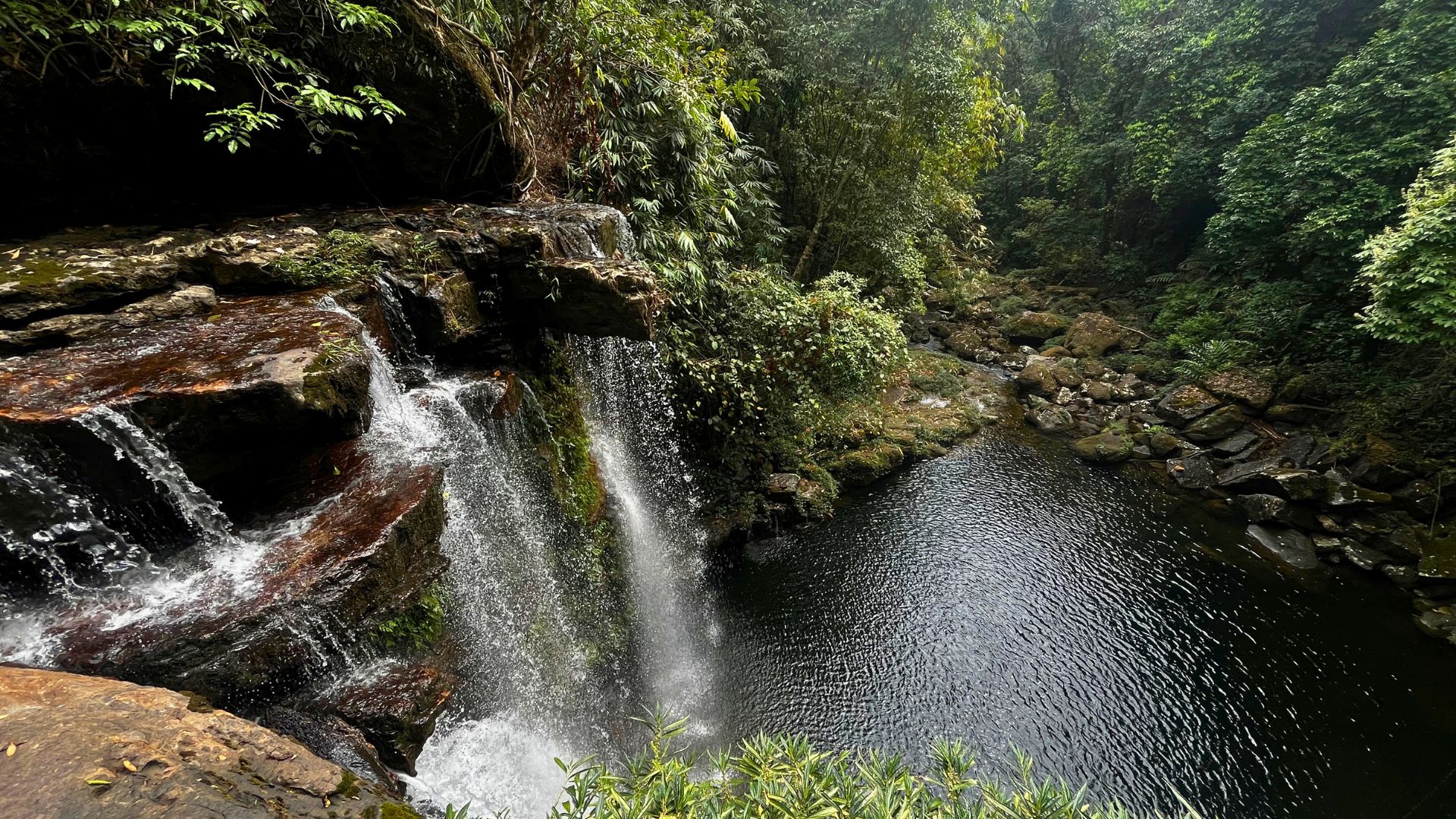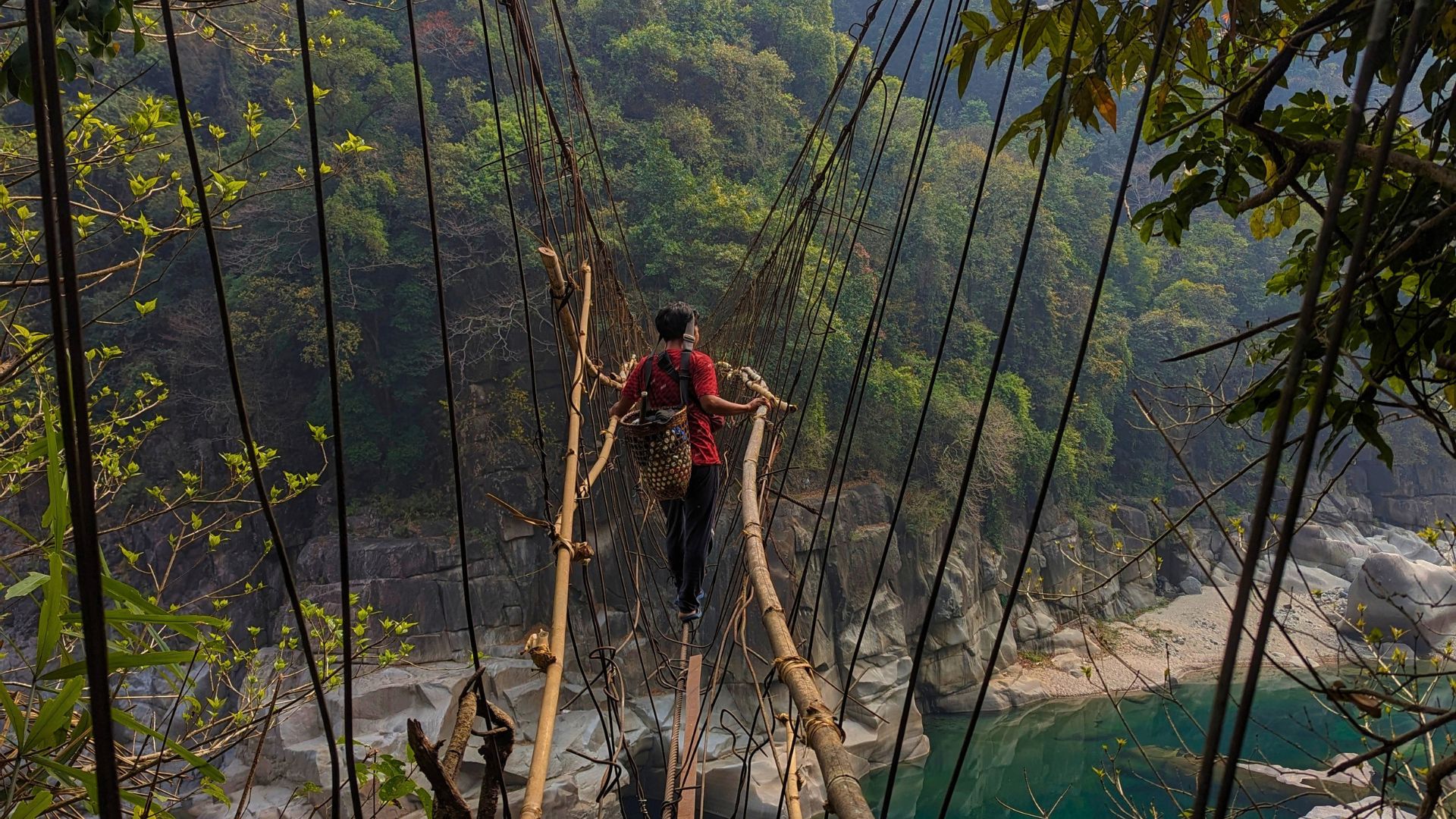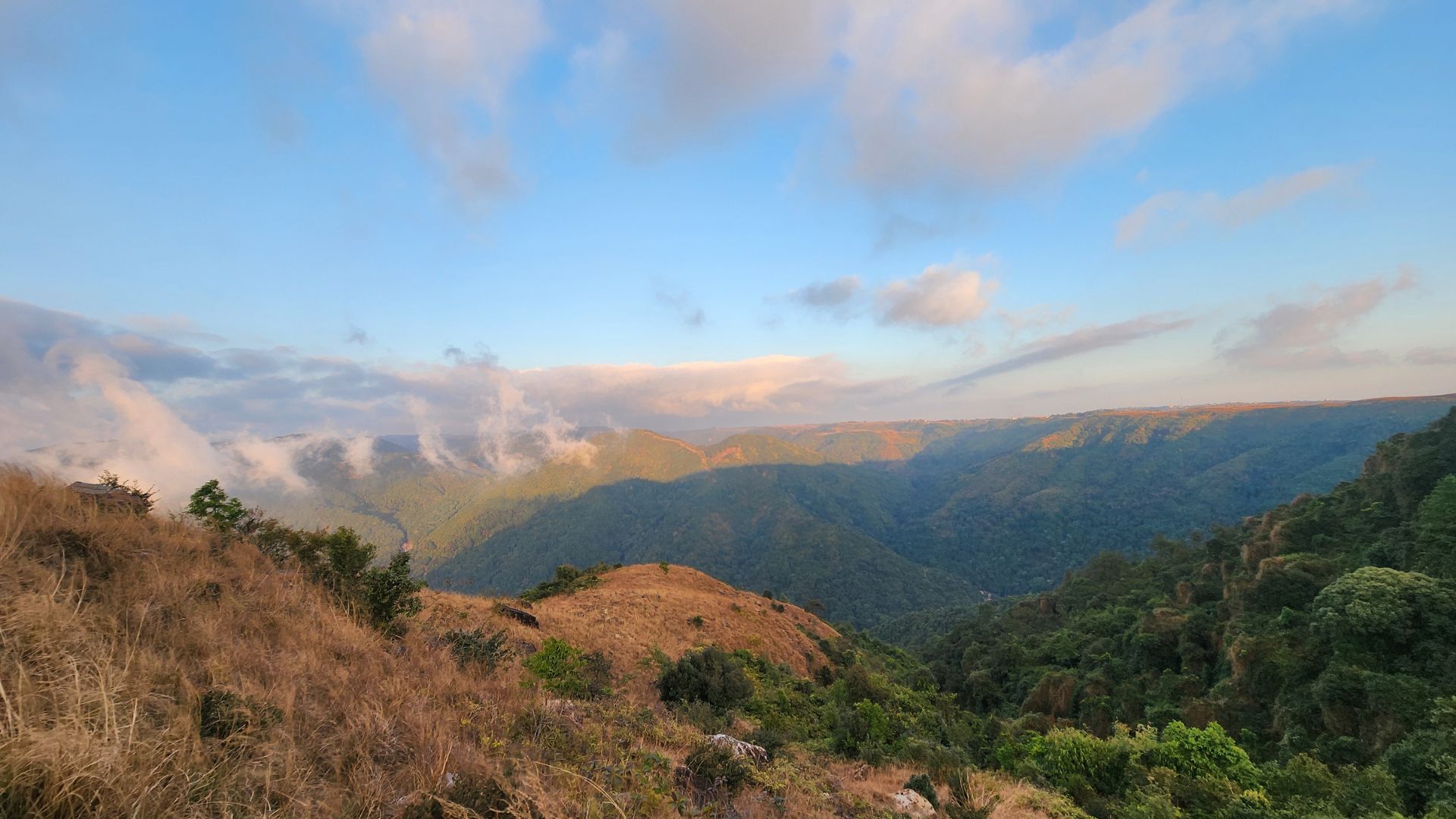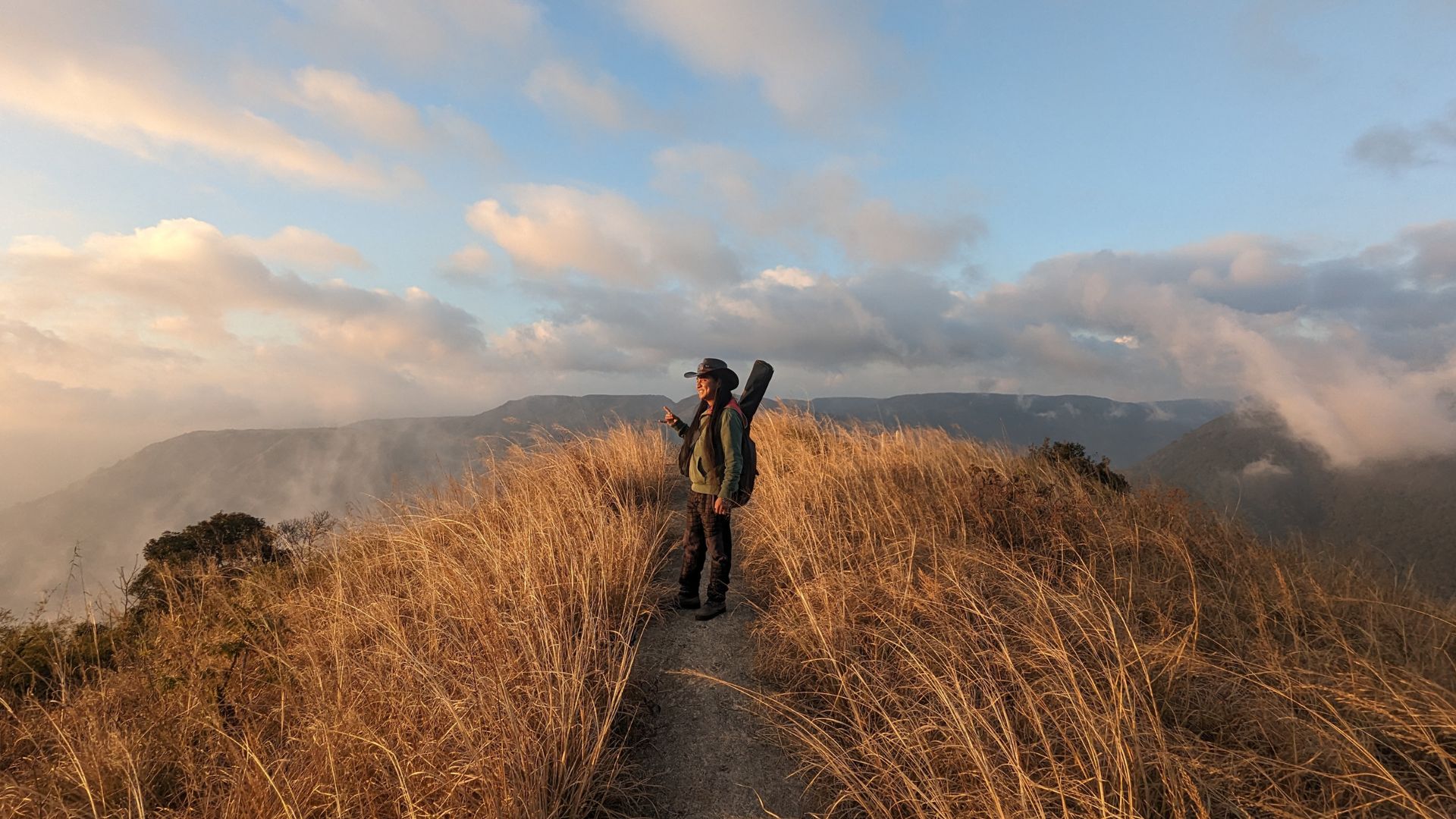
Meghalaya has become well known for its rivers, caves, waterfalls, living root bridges and trails. And for good reason. There is a lot to explore here.
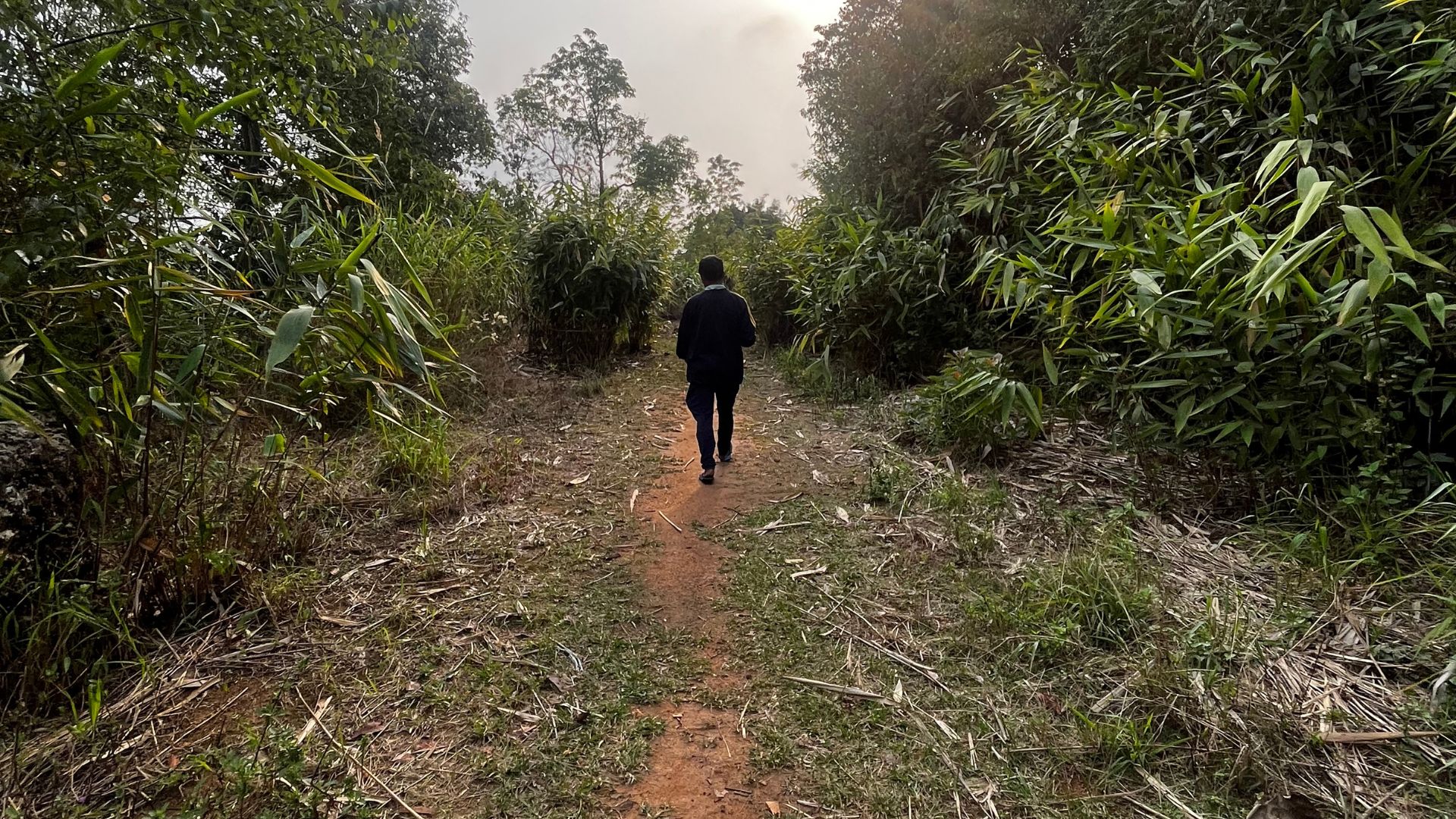
But after more than a decade of exploring the state, we’ve also found a side of Meghalaya that rarely makes it onto the usual itinerary. Trails through forests and villages. Riverbeds that reveal themselves only in the drier months. Old routes that have been walked for generations. Caves that aren’t about following a marked path and ticking them off a list.
This is where we’re taking you.
We’re deliberately leaving the exact locations out. Not to create mystery for the sake of it, but because we’d rather you discover these places as they come. You’ll know what kind of adventure you’re signing up for. You just won’t always know what’s around the next bend.
Over seven days, we’ll explore Meghalaya through three very different adventures.
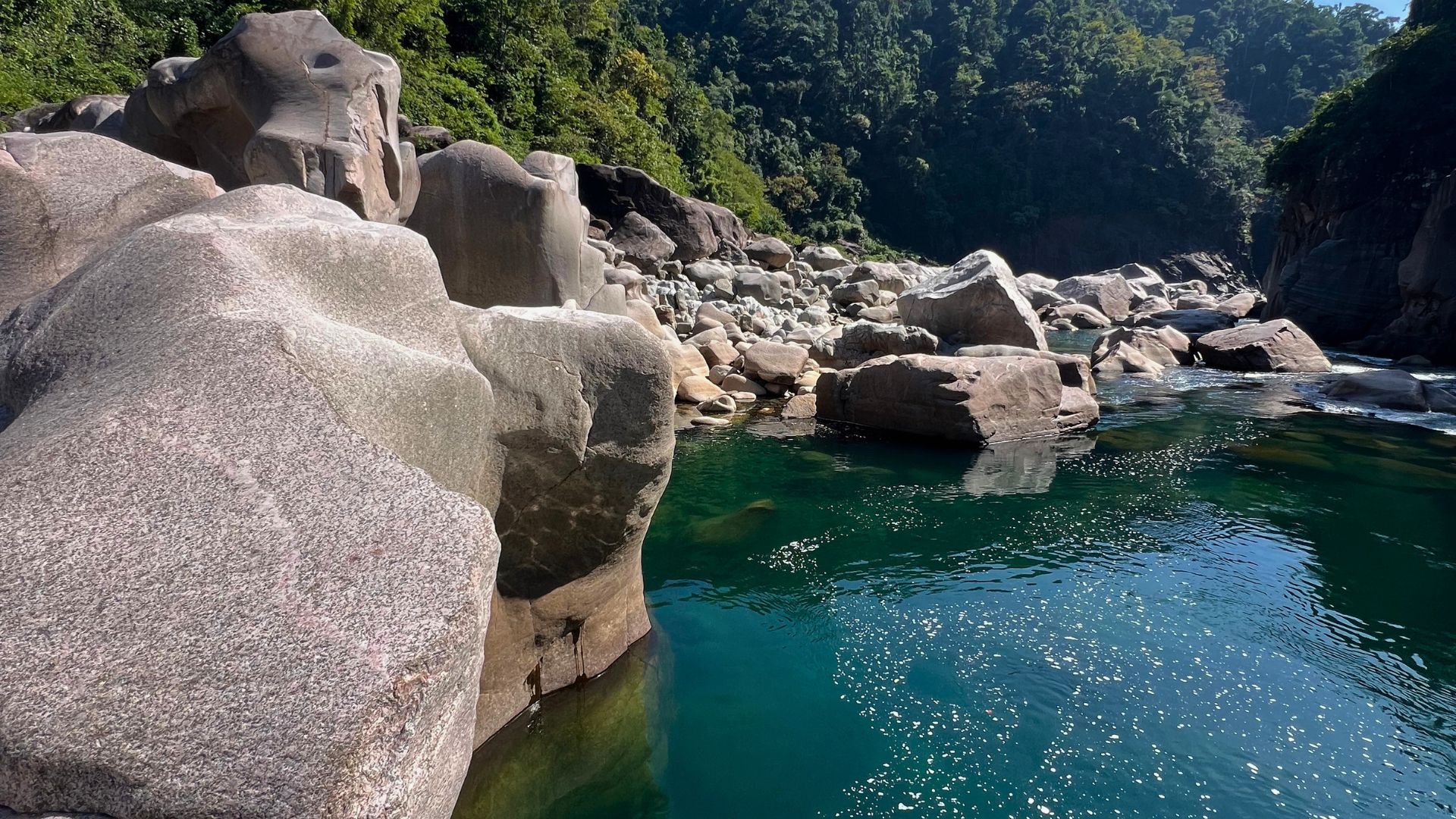
The first is a two-day boulder trek through forests, fields and riverbeds, with increasingly technical terrain, river crossings, swimming and camping beside the water.
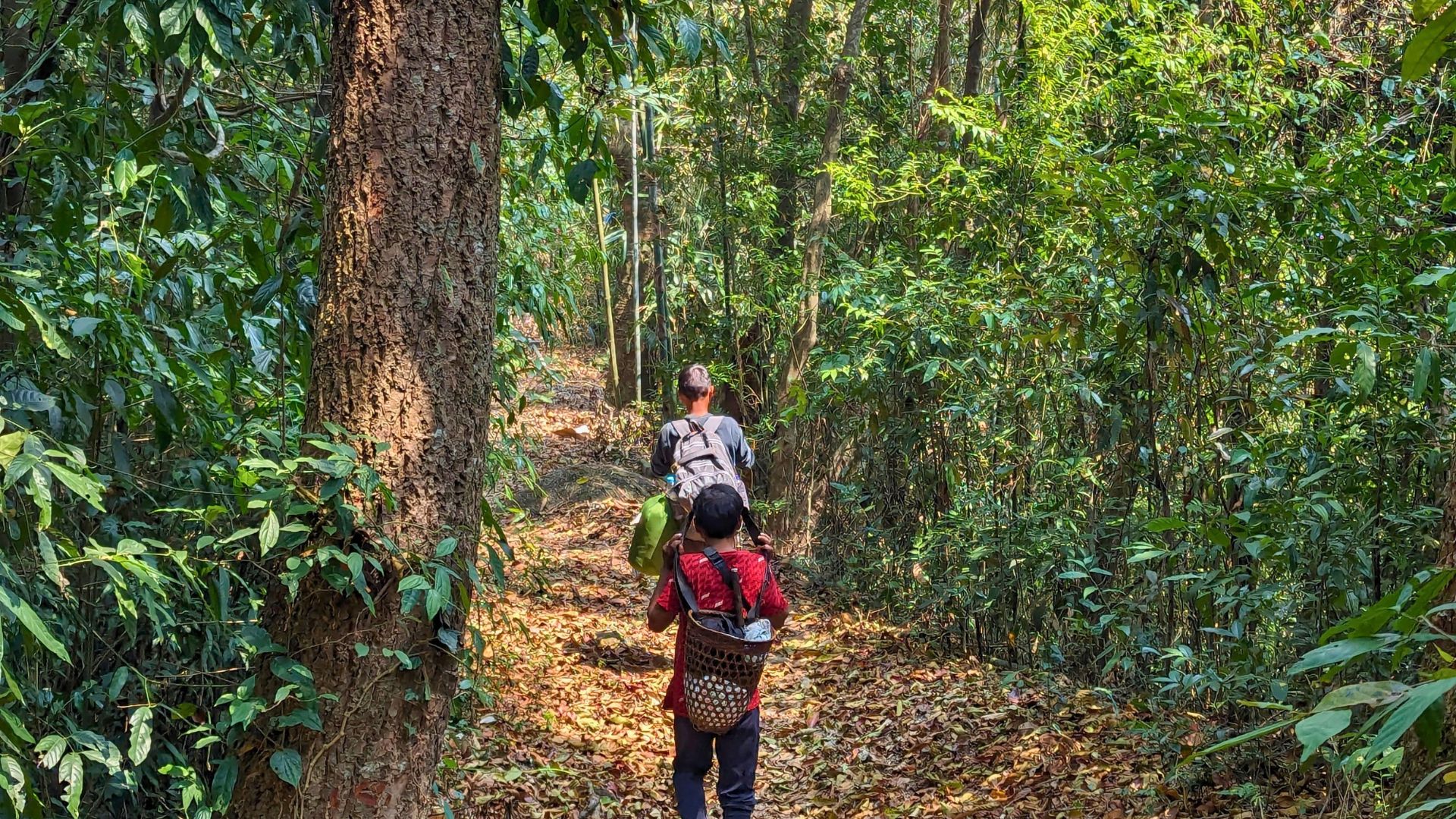
The second follows old Khasi trails through the forests and villages of the War Khasi region, where living roots have been shaped into ladders, platforms and other structures to help people navigate the landscape. There will be natural pools, local food, villages and, if the trail and weather allow, a waterfall or two along the way.
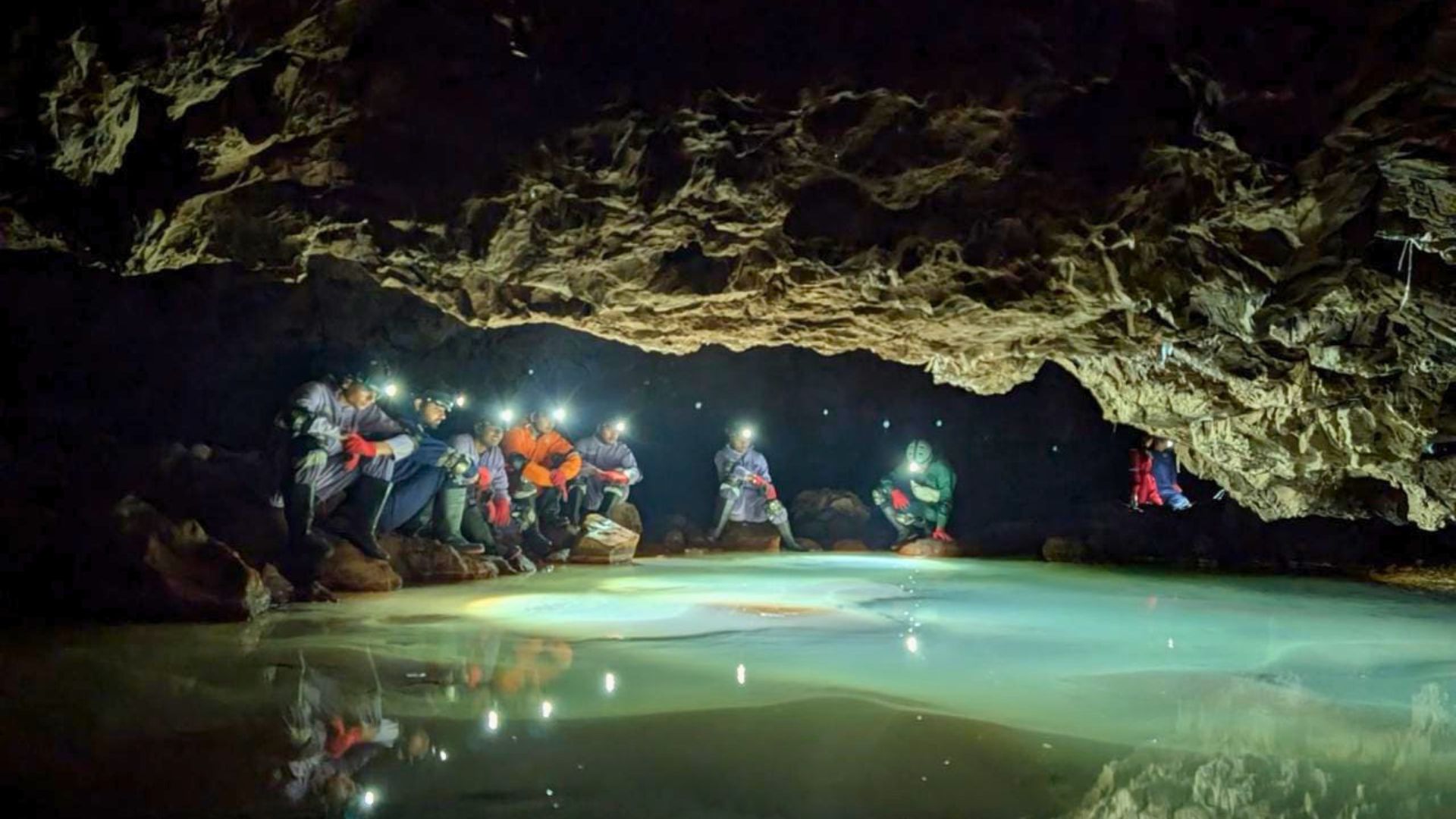
The third takes us underground on a proper caving expedition through Meghalaya’s limestone world, moving through darkness, water, narrow passages and formations shaped over millions of years.
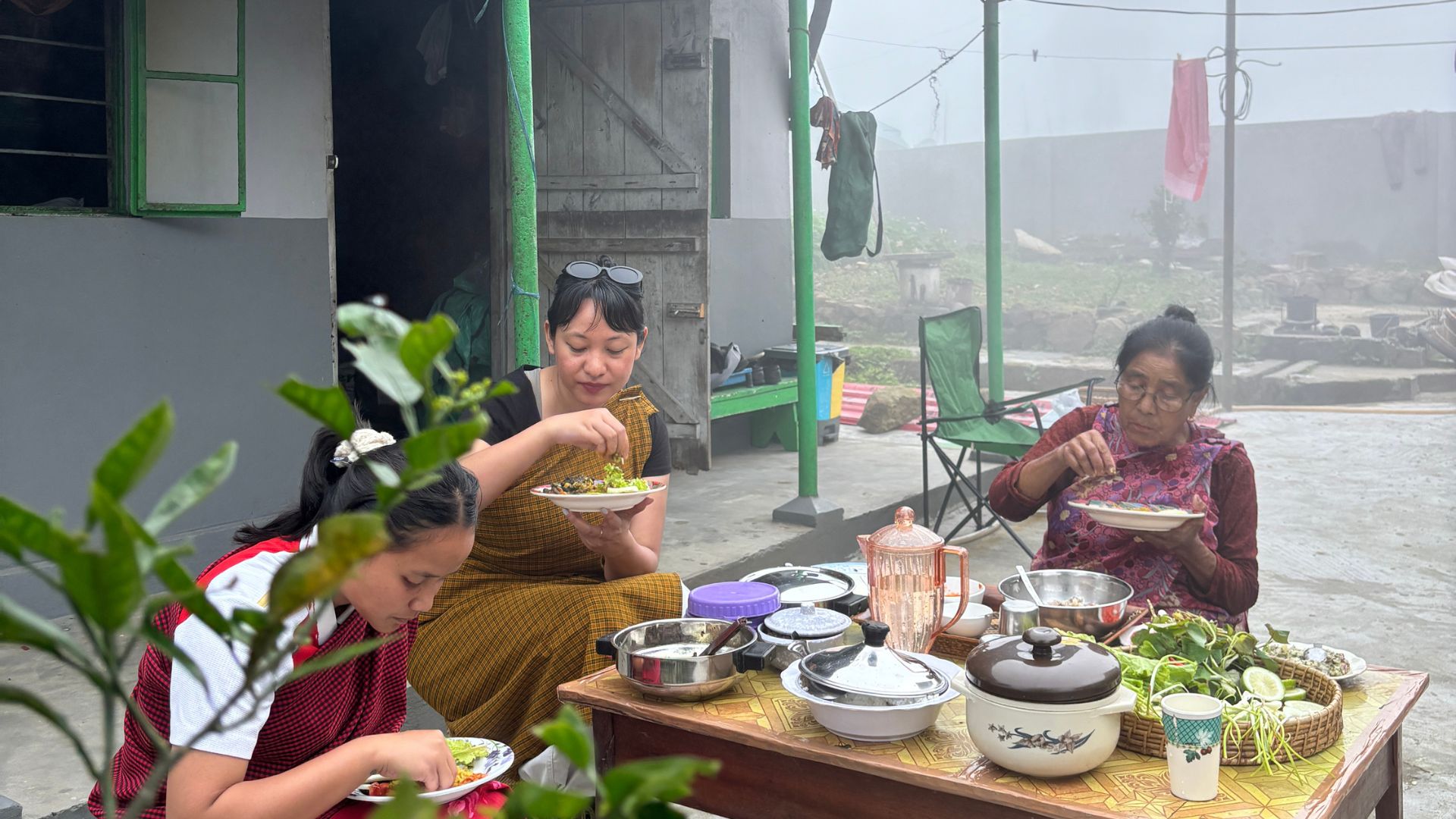
Between these adventures are quieter parts of the journey: a Khasi home lunch, local fishing, riverside camps, good food, bonfires, stargazing and time to simply be outside.
This is an active trip. There will be long days on your feet, uneven terrain, boulder and river crossings, getting wet, early starts and tired legs. But there will also be time to swim in clear rivers, sit around a fire at the end of a long day, share a meal with a Khasi family and simply enjoy being somewhere far from the usual circuit.
Seven days. Three very different ways into Meghalaya.
And no coordinates.
The trip begins at Guwahati Airport on Day 1, where the group assembles before departing for Meghalaya. Your ChaloHoppo Trip Leader will meet you at the airport.
Participants are required to arrive at Guwahati Airport by 10:00 AM on Day 1. The group departs by 11:00 AM. If you arrive after the scheduled departure due to flight timings or delays, you will need to make your own way to the destination at your own expense.
The trip ends at Guwahati Airport on Day 7. Return flights can be booked anytime after 4:00 PM. We recommend keeping a sufficient buffer while booking your flights.
Guwahati Airport is the only designated pick-up and drop-off point for this experience. The group vehicle will not make additional pick-ups or drops along the way.
Please ensure you arrive at the airport before the scheduled departure time, as the journey begins from there.
The ideal age range for this experience is 20 to 50 years. The average participant is usually around 25 to 30, and the group tends to be active, social and easygoing.
This is an experience that requires an active, fit lifestyle with multiple adventure activities and also where people spend a fair amount of time together beyond the day’s activities, whether around a meal, by the bonfire, over music and conversations, or simply relaxing after a long day outdoors.
Age, however, is only a guideline. Your physical fitness, comfort with outdoor activities and ability to manage multiple active days are more important considerations.
This is an active adventure experience and requires a good level of physical fitness. The experience is rated as moderate to difficult. Across the seven days, you will encounter three very different forms of adventure, each demanding something different from you.
The trekking involves uneven terrain, river boulders, ascents and descents, bridges, river crossings and forest trails. There are also two nights of camping with basic facilities.
The physical challenge is only one part of the experience. Caving involves darkness, confined sections, slippery surfaces and water, while the multi-day trekking requires stamina and the ability to stay comfortable outdoors for extended periods.
You should be comfortable being physically active for several hours a day and should not be joining this experience with an inactive lifestyle.
If you have any pre-existing medical, respiratory, cardiac, mobility or serious joint concerns, or have recently undergone surgery, this trip may not be for you. We strongly recommend consulting your doctor before booking.
We have chosen simple, comfortable and well-maintained stays that fit the nature of the experience. This is not a luxury or boutique accommodation-focused trip.
Two nights are spent camping beside the river. Day 2 camp has basic shared facilities, which include temporary pit toilets and changing tents. Day 3 is a much more established campsites with permanent toilets and bathrooms.
The accommodation is part of the experience. We prioritise location, cleanliness and comfort while keeping the focus on the adventure outside.
Rooms are shared on a double occupancy basis. Solo travellers will be paired with another solo traveller of the same gender.
Most stays have either double bedded rooms or twin arrangements. The camping nights are based on two-person tents.
Note: Room allocation is managed by the Sales and Reservations team based on gender and confirmed bookings.
Single occupancy requires an additional room and affects the overall group capacity and trip logistics. A limited number of single rooms are therefore available at an additional supplement.
Food throughout the trip is simple, local and suited to the nature of the journey.
Breakfasts are usually straightforward, with options such as bread and butter, fruit, eggs or Maggi depending on the stay.
Expect mostly rice-based meals with dal, seasonal vegetables, chicken and local salad. Some meals during the trekking days will be packed lunches designed to be easy to carry and eat outdoors.
Vegetarian options are available throughout the trip. However, options may be limited at some of the more remote stays and camps.
Most major expenses are already covered. Around ₹800 to ₹1,000 per day should generally be sufficient for personal expenses, snacks, cafés and small purchases.
UPI is widely accepted across the region, but we recommend carrying some cash as connectivity and digital payment access can be unreliable in remote areas.
You can also refer to the Exclusions section for a clearer understanding of additional expenses.
Mobile connectivity is available across most towns and settlements, but it becomes limited or absent during trekking and caving. Airtel and Jio generally offer better coverage in Meghalaya, although there will be stretches where the signal is weak or unavailable.
Wi Fi is also not available at all our selected stays.
We recommend informing family and colleagues that you may be temporarily unreachable during certain parts of the journey.
This experience takes place during winter, when Meghalaya takes on a very different character.
Days are generally dry, bright and comfortable, with a strong winter sun. As the sun goes down, temperatures drop and evenings become cold and windy. Early mornings can be particularly chilly as winter progresses.
The lower regions around Pongtung and the river valleys can feel warmer during the day, while Sohra tends to be cooler, particularly in the mornings and evenings.
Rain is unlikely during this season, although occasional showers and fog are still possible.
The winter conditions are also an important part of the experience. They make certain sections of the river trail accessible and give the landscape a dramatic character that is very different from Meghalaya during the monsoon.
Hill weather can be unpredictable, even during the drier winter months. Occasional rain, fog, road conditions or a sudden rise in water levels can affect movement or activities.
Our team monitors conditions on the ground, and the Trip Leader, along with the local trek leaders, may make changes where required. If an activity needs to be postponed, modified or replaced because conditions are unsafe, we will make the necessary adjustment while keeping the overall character of the experience intact.
Safety takes precedence over following the itinerary exactly as written.
Booking a flight does not guarantee a place on the experience.
We strongly recommend confirming your slot with us before making non-refundable travel arrangements. If the experience is sold out before you reserve your place, we cannot be held responsible for any inconvenience or costs arising from your flight booking.
We recommend carrying a 60-70L backpack that is comfortable to carry, along with a smaller daypack for trekking and daily essentials.
Please do not bring suitcases as they are not practical for the nature of this experience. Pack comfortable, trek-friendly clothing, warm layers, woollen socks, a beanie, gloves, sturdy walking shoes with good grip, personal medication and basic toiletries. And yes, please carry rainwear. Meghalaya likes to keep a few surprises up its sleeve.
A detailed seasonal Things to Carry list will be shared after you sign up.
Yes. The three major adventures are led by experienced local teams with intimate knowledge of the terrain.
You will also have a ChaloHoppo Trip Leader accompanying you throughout the journey to coordinate the group, logistics and overall experience.
Yes. Safety is an integral part of how these experiences are conducted.
The trekking and caving sections are led by experienced local teams familiar with the terrain. Water activities are conducted with appropriate safety equipment and local supervision.
That said, these are genuine outdoor adventures rather than controlled tourist attractions. Uneven terrain, slippery surfaces, river crossings, water, darkness and changing weather are all part of the experience.
Participants are expected to follow instructions from the Trip Leader and activity guides, stay with the group and exercise reasonable caution throughout the journey.
Participation in an activity is never forced. If you are uncomfortable with a particular section or decide that you do not want to participate, you can opt out.
However, given the remote nature of some of the experiences, an alternative activity or separate transport may not always be possible. In some cases, you may need to remain at the designated base or wait for the group to return.
We therefore recommend joining this experience only if you are genuinely comfortable with the nature of the adventures involved.
For water activities, for example, you do not need to be a swimmer to participate, as safety equipment and local supervision are provided. You can also choose to stay by the riverside instead.
Yes. A few light, ready-to-eat snacks such as energy bars, dry fruits or trail mix are useful to have during long drives and active days.
They can be particularly handy when you’re between meals or when timings are delayed.
The experience moves between a few different bases to bring together its three major adventures. The average daily drive time is around 2.5 hours in a day, while the journeys into and out of Meghalaya are longer.
The roads are generally in good condition, although sections around the Pongtung route may experience temporary stoppages due to ongoing construction.
The drives themselves are part of the transition between landscapes, taking you through rolling hills, river valleys and small Khasi settlements. We recommend maintaining punctuality throughout the trip, as early departures and comfortable buffers help us manage road, weather and terrain-related delays. All the drives will be through hilly winding roads and may be uncomfortable for people with motion sickness.
The river water can be cold, particularly in the mornings during winter. Under the afternoon sun, however, a dip can feel surprisingly refreshing.
You do not need to be a confident swimmer to participate in the water activities. Life jackets, local supervision and guidance will be provided wherever swimming is involved.
Participation is optional. If you would rather not enter the water, you can enjoy the riverside experience instead.
This experience is built around a simple idea: to explore the adventurous side of Meghalaya without following the places that have already become part of the usual travel circuit.
The journey brings together three very different adventures across the East Khasi Hills. You will trek across unusual terrain, spend time in and around clear rivers, follow old trade forest trails, discover living root structures and go underground with experienced local caving teams.
Some of these places have remained relatively quiet precisely because they have not been widely publicised. We would like to keep them that way for as long as we can. So rather than giving you a list of places to tick off, we are giving you a week of experiences to discover.
The exact names and locations are intentionally left out. You will know where we are going when you get there.
Meghalaya lies in the eastern part of India, and winter brings shorter daylight hours across the region. In December, for example, sunrise is generally between 6 AM, while sunset is around 4:30 PM (may vary slightly depending on the state you are travelling in). This gives us roughly 10.5 hours of daylight, considerably less than the longer summer days.
We may start early on certain days to make the most of the available daylight, particularly when we have longer hikes, outdoor activities or transit planned.
While the sun rises relatively early, morning fog, mist and cloud cover can sometimes reduce visibility, especially around the hills, forests and valleys. This may influence when we begin certain activities or start moving for the day.
For Meghalaya Unlisted, this is also part of understanding the rhythm of winter here. We make the most of the daylight when it is available, slow down when the landscape asks us to, and let the evenings arrive early.
If you have additional time, we can help curate an extension around your interests and available days.
2 to 5 days: Assam
5 to 7 days: Assam, Meghalaya or Nagaland
7 to 15 days: Arunachal Pradesh or a deeper exploration of Meghalaya
We can help build a seamless extension around your existing travel plans.