In the rain-soaked hills of Meghalaya, a silent cave has been keeping Earth's diary for thousands of years.
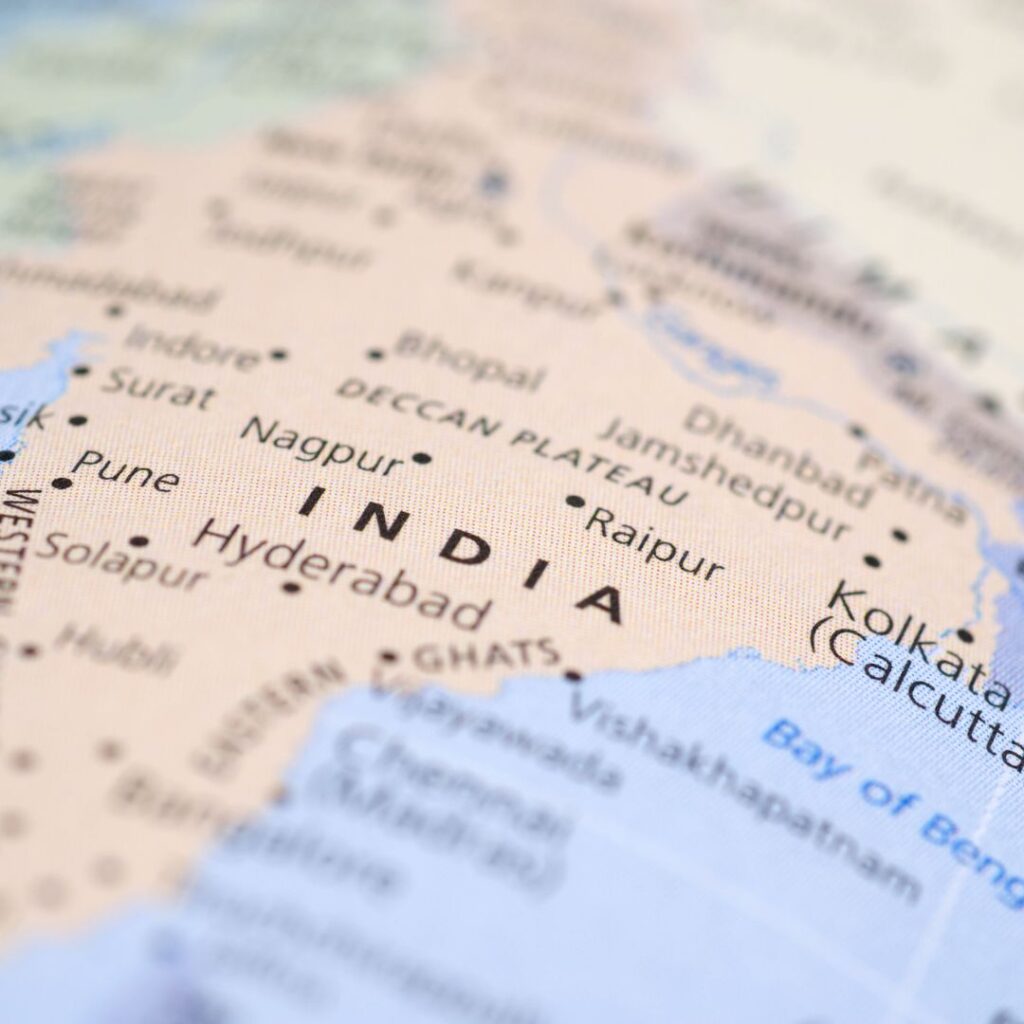
Somewhere in the darkness, water falls with astonishing patience. A single drop strikes stone. Then another. Then another. There is no urgency here, no spectacle demanding attention. The cave is cool, damp and almost indifferent to the visitor who has travelled all this way from Shillong, past the rolling Khasi hills and the dramatic escarpments of Sohra, better known to most of us as Cherrapunji. Outside, clouds drift across one of the wettest landscapes on Earth.
It is difficult to imagine that this quiet limestone cave, hidden beneath a forested plateau in Northeast India, has become one of the most important places on the planet—not because of treasure, mythology or archaeological ruins, but because it helped answer one of science's biggest questions:
When did the world we live in truly begin?
The answer, it turns out, lies beneath our feet. Most of us casually describe our lives as belonging to the modern age, the digital age or perhaps the age of artificial intelligence. These labels make sense within human history, but geology has always kept a much longer calendar. According to geologists, every person alive today lives in the Meghalayan Age. The name has appeared in scientific literature only since 2018, yet it describes a period that began around 4,200 years ago, and remarkably, it derives from this very cave in Meghalaya.
Few travellers realise this. Fewer still expect that a holiday through living root bridges and cascading waterfalls might also become a journey through Earth's official timeline. That quiet surprise is perhaps the best way to encounter Meghalaya.
For centuries, these hills have been known for rain. The Khasi and Jaintia peoples have built their lives around monsoons that arrive with astonishing intensity, shaping everything from architecture and agriculture to oral traditions and forest management. Water is not simply weather here; it is an architect. It has carved deep valleys, sculpted limestone cliffs and hollowed out hundreds of caves beneath the plateau. Every drop slowly dissolves the rock, enlarging cracks until entire underground worlds emerge.
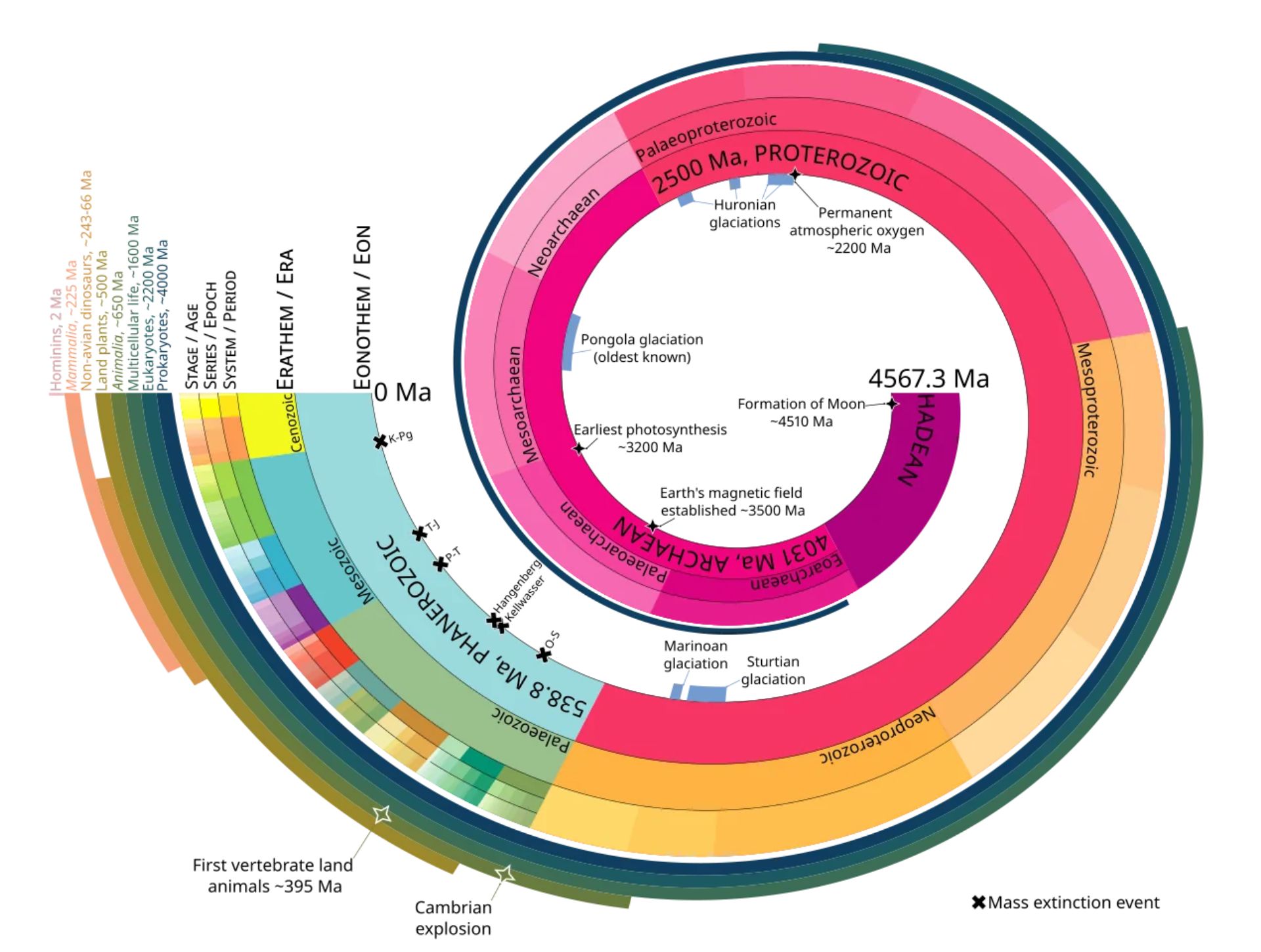
To understand why a cave in Meghalaya could lend its name to an age of the Earth, it helps to first understand how geologists measure time. Unlike human history, which is counted in decades or centuries, Earth's history spans an astonishing 4.54 billion years. To make sense of this immense timescale, scientists divide it into a hierarchy of chapters known as the geological timescale. At the broadest level are eons, which are divided into eras, followed by periods, epochs, and finally ages, which are the smallest officially recognised units of geological time.
We currently live in the Phanerozoic Eon, within the Cenozoic Era, the Quaternary Period, and the Holocene Epoch, which began around 11,700 years ago after the last Ice Age. The Holocene is particularly significant because it coincides with the rise of agriculture, permanent settlements, and every known human civilisation, making it the environmental backdrop to all of recorded history.
Scientific understanding of the Earth, however, is constantly evolving. As researchers began analysing increasingly precise climate records preserved in Greenland's ice cores, ocean sediments, tree rings, lake beds and limestone caves, they realised that the Holocene was not one long, uniform period of climatic stability. Instead, it contained distinct phases marked by measurable environmental shifts that were recorded across different parts of the world. Rather than renaming history, geologists subdivide epochs into ages when compelling global evidence reveals a significant transition in Earth's climate or environment.
This led to the Holocene being formally divided into three ages—the Greenlandian, the Northgrippian, and, most recently, the Meghalayan Age. While the first two are named after evidence preserved in Greenland's ice sheets, the youngest and current age derives its name from an unlikely archive much closer to home: a stalagmite deep inside Mawmluh Cave in Meghalaya, whose mineral layers captured one of the most significant climatic shifts of the last several thousand years.
| Hierarchy | Current Unit | Time Span | Major Characteristics | Examples of What Happened |
|---|---|---|---|---|
| Eon Largest division of geological time | Phanerozoic Eon | 541 million years ago – Present | Means "visible life." Marks the proliferation of plants, animals and complex ecosystems preserved in the fossil record. | Marine life diversified, plants colonised land, dinosaurs evolved and disappeared, mammals flourished, humans emerged. |
| Era | Cenozoic Era | 66 million years ago – Present | Known as the Age of Mammals. Began after the asteroid impact that caused the extinction of the dinosaurs. | Mammals diversified, grasslands expanded, birds evolved, primates appeared and eventually modern humans evolved. |
| Period | Quaternary Period | 2.58 million years ago – Present | Characterised by repeated Ice Ages and warmer interglacial periods. Modern landscapes and ecosystems took shape. | Homo sapiens evolved, glaciers advanced and retreated, humans spread across the world. |
| Epoch | Holocene Epoch | 11,700 years ago – Present | Began after the last Ice Age ended. The Earth's climate became comparatively stable, enabling agriculture and permanent settlements. | Farming began, villages became cities, writing developed, kingdoms and civilisations emerged, all of recorded human history unfolded. |
| Age Holocene subdivision | Greenlandian Age | 11,700–8,326 years ago | Marks the beginning of the Holocene immediately after the last Ice Age. Named after evidence preserved in Greenland's ice cores. | Rapid warming, retreating glaciers, expanding forests and the earliest farming communities. |
| Age Holocene subdivision | Northgrippian Age | 8,326–4,200 years ago | Named after the NorthGRIP ice core in Greenland. A generally warm period interrupted by a significant cooling event around 8,200 years ago. | Agriculture spread widely, large settlements expanded, early urban societies emerged across West Asia, South Asia and China. |
| ★ Current Age | Meghalayan Age | 4,200 years ago – Present | Named after Mawmluh Cave, Meghalaya, where a stalagmite preserved one of the clearest records of a major global climate event. | Weakened monsoons, widespread droughts in several regions, transformations in the Indus Valley, Akkadian Empire and Ancient Egypt. All modern history—from the Roman Empire to the Industrial Revolution to the present day—falls within this age. |
Around 11,700 years ago, the last Ice Age came to an end, ushering in a period of warmer, more stable weather known as the Holocene Epoch. For the first time in thousands of years, the climate became predictable enough for people to settle down, cultivate crops, domesticate animals, and build permanent communities. Over the centuries, these settlements grew into the great civilisations of the ancient world, from the Indus Valley and Mesopotamia to Egypt and China. For a long time, scientists thought the Holocene was one long chapter of relative climatic stability. But as they began studying natural archives—ice cores, tree rings, lake sediments and cave formations—they discovered that even this seemingly calm period had its own turning points. Today, the Holocene is divided into three ages: the Greenlandian (beginning about 11,700 years ago), the Northgrippian (around 8,300 years ago), and the Meghalayan Age, which began roughly 4,200 years ago and continues today.
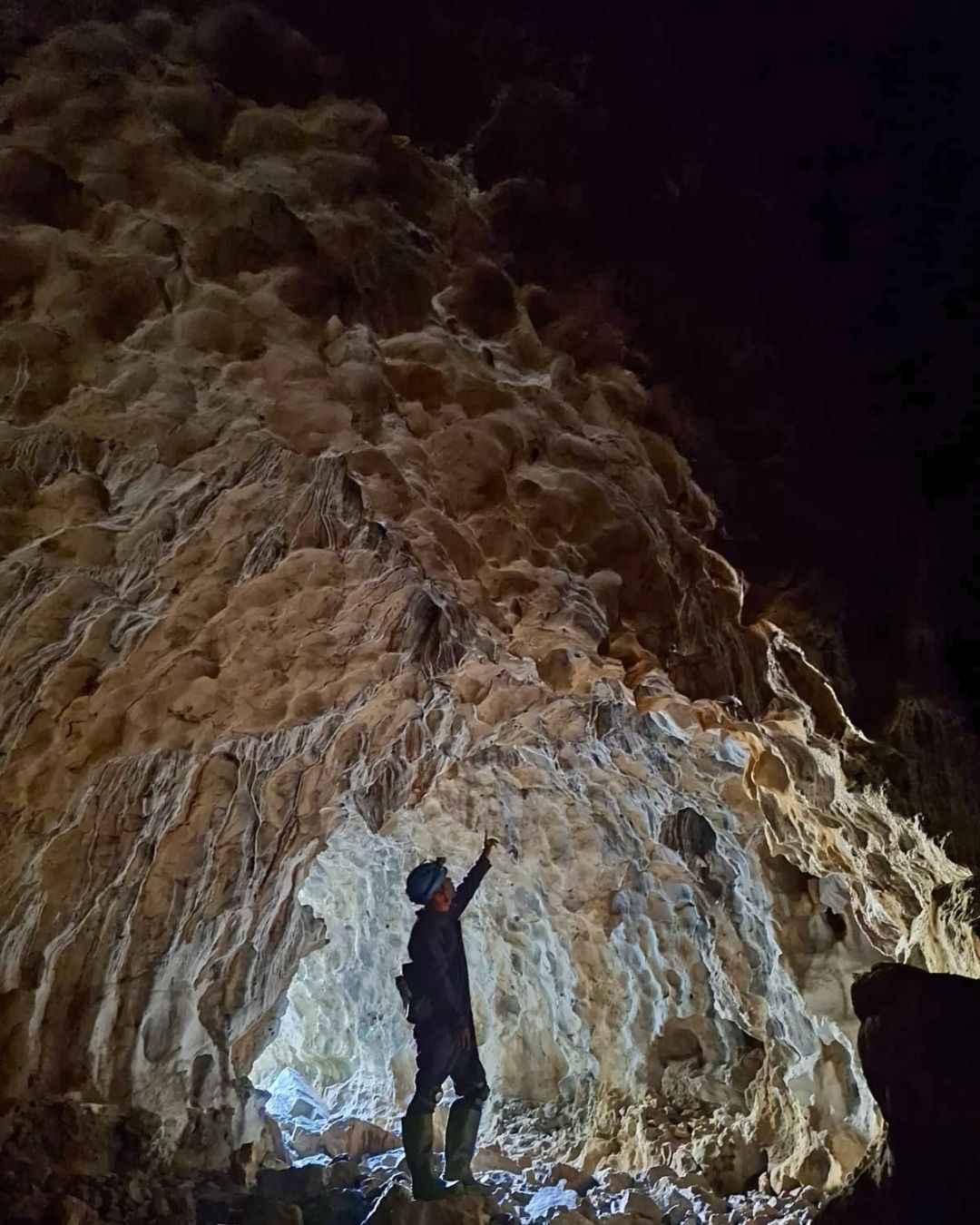
What marked the beginning of the Meghalayan Age was not the rise of a civilisation or the invention of a new technology, but a dramatic shift in the Earth's climate. Around 4,200 years ago, rainfall patterns changed across many parts of the world, monsoons weakened, and prolonged droughts disrupted landscapes that had supported people for centuries. Archaeologists have found that this period coincided with major changes in societies such as the Indus Valley Civilization, the Akkadian Empire, and Old Kingdom Egypt, although climate was only one piece of a much larger story. For geologists, however, the significance lay in the fact that this global event left a clear and measurable imprint in nature. One of its finest records was found inside a stalagmite in Mawmluh Cave in Meghalaya. That quiet cave, hidden beneath one of the wettest places on Earth, would eventually become the global reference point for this climatic shift—and lend its name to the geological age we are still living in today.
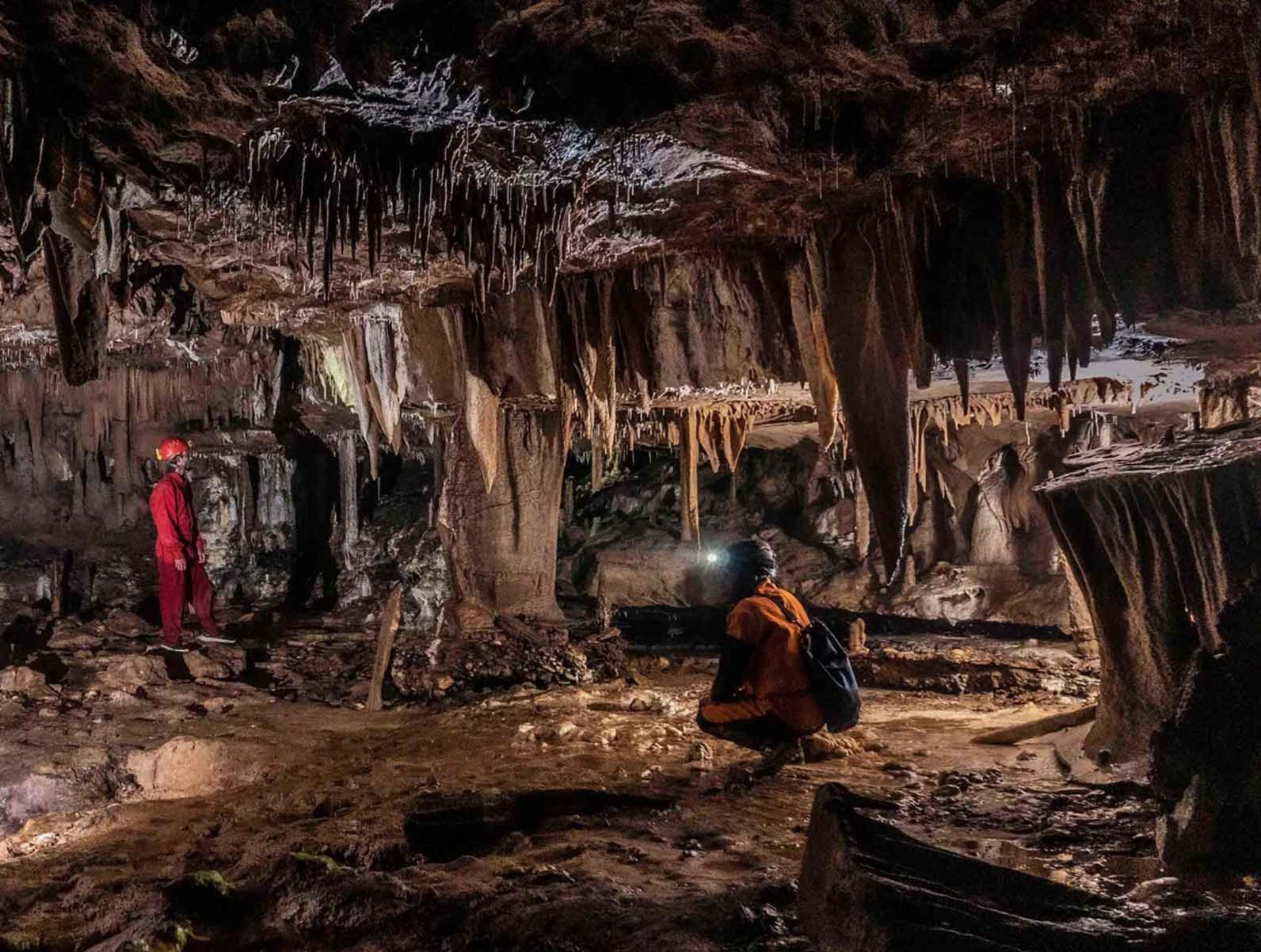
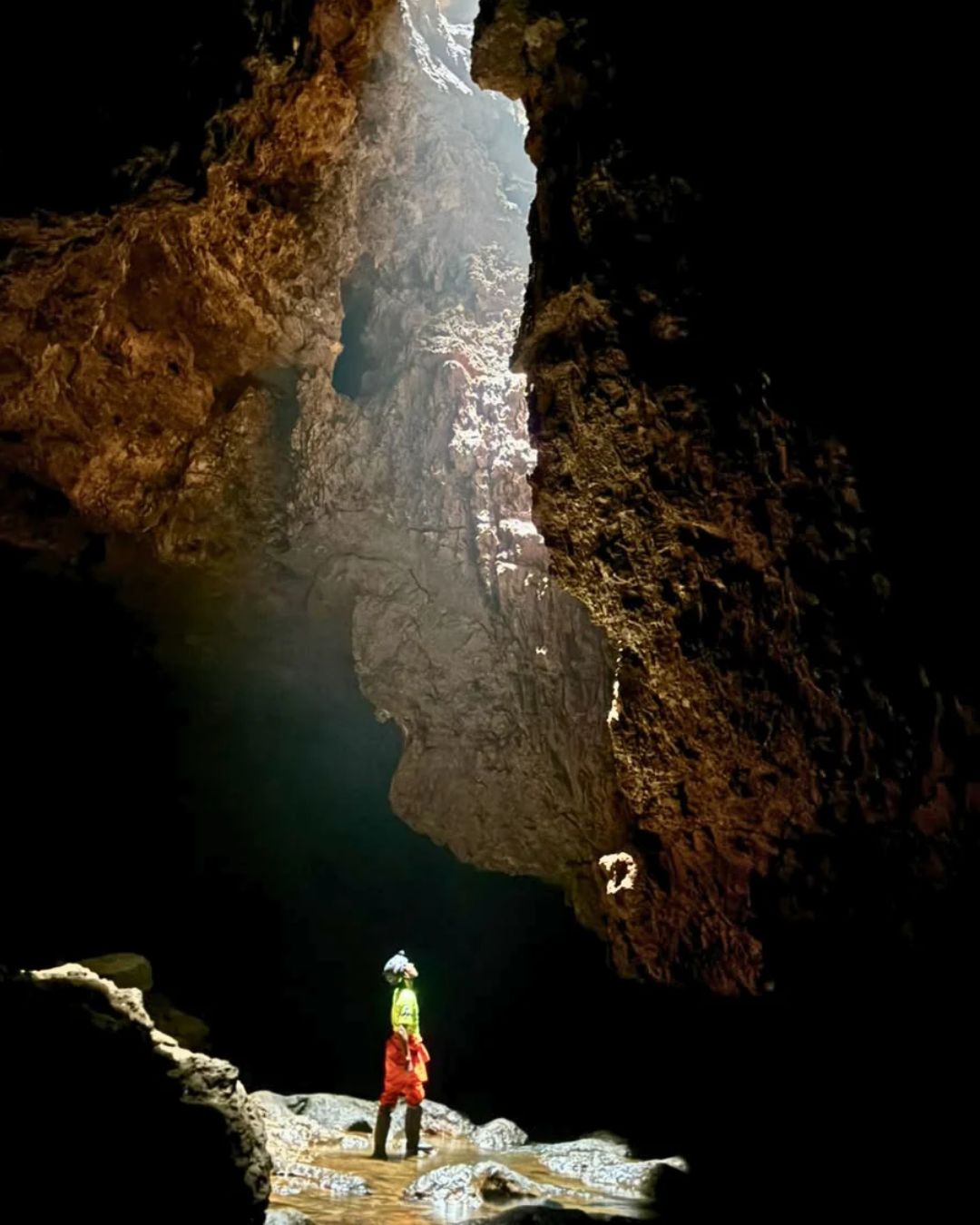
At first glance, Mawmluh Cave doesn't seem like the sort of place that would change our understanding of Earth's history. Tucked away near Sohra (Cherrapunji) in Meghalaya, the cave lies beneath a landscape famous for its thundering waterfalls, mist-covered valleys and some of the highest rainfall on the planet. Like many of the region's caves, Mawmluh was formed over millions of years as rainwater slowly dissolved the underlying limestone, carving out an intricate network of underground chambers and passages. It is a place of echoes and darkness, where water still drips steadily from the ceiling, continuing a geological process that began long before humans walked the Earth. For travellers, it is an adventure into Meghalaya's hidden underworld. For scientists, it is something far rarer—a remarkably preserved archive of the planet's climatic past.
The cave's greatest treasures are not its vast chambers or dramatic rock formations, but the stalagmites that rise patiently from its floor. These stone pillars are created one drop at a time. As rainwater seeps through the limestone above, it dissolves tiny amounts of calcium carbonate. When the water reaches the cave and drips onto the ground, it leaves behind an almost invisible layer of mineral. Over hundreds and thousands of years, these layers accumulate into stalagmites, each one quietly recording the chemistry of the rain that formed it.
Changes in rainfall, monsoon strength and temperature subtly alter the composition of every layer, much like the rings of a tree record good and bad growing seasons. Protected from wind, sunlight and most surface disturbances, caves preserve these records with extraordinary accuracy. This is what makes Mawmluh Cave scientifically unique. One of its stalagmites preserved an exceptionally clear record of the abrupt climatic shift that occurred around 4,200 years ago, allowing scientists to identify the beginning of a new chapter in Earth's history. In a place where every drop of water takes centuries to write a single sentence, the cave became a library of climate—and ultimately, the place that gave the Meghalayan Age its name.
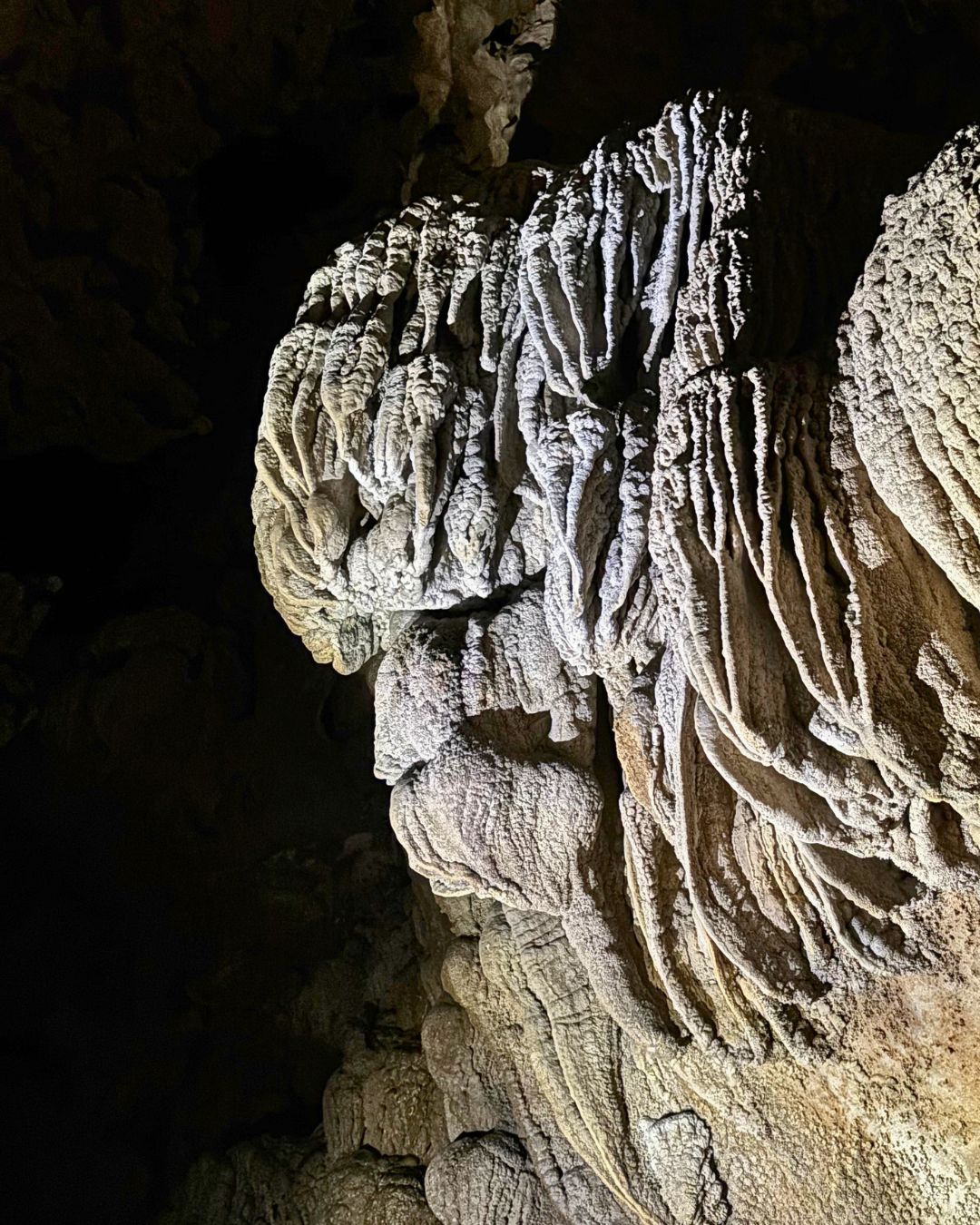
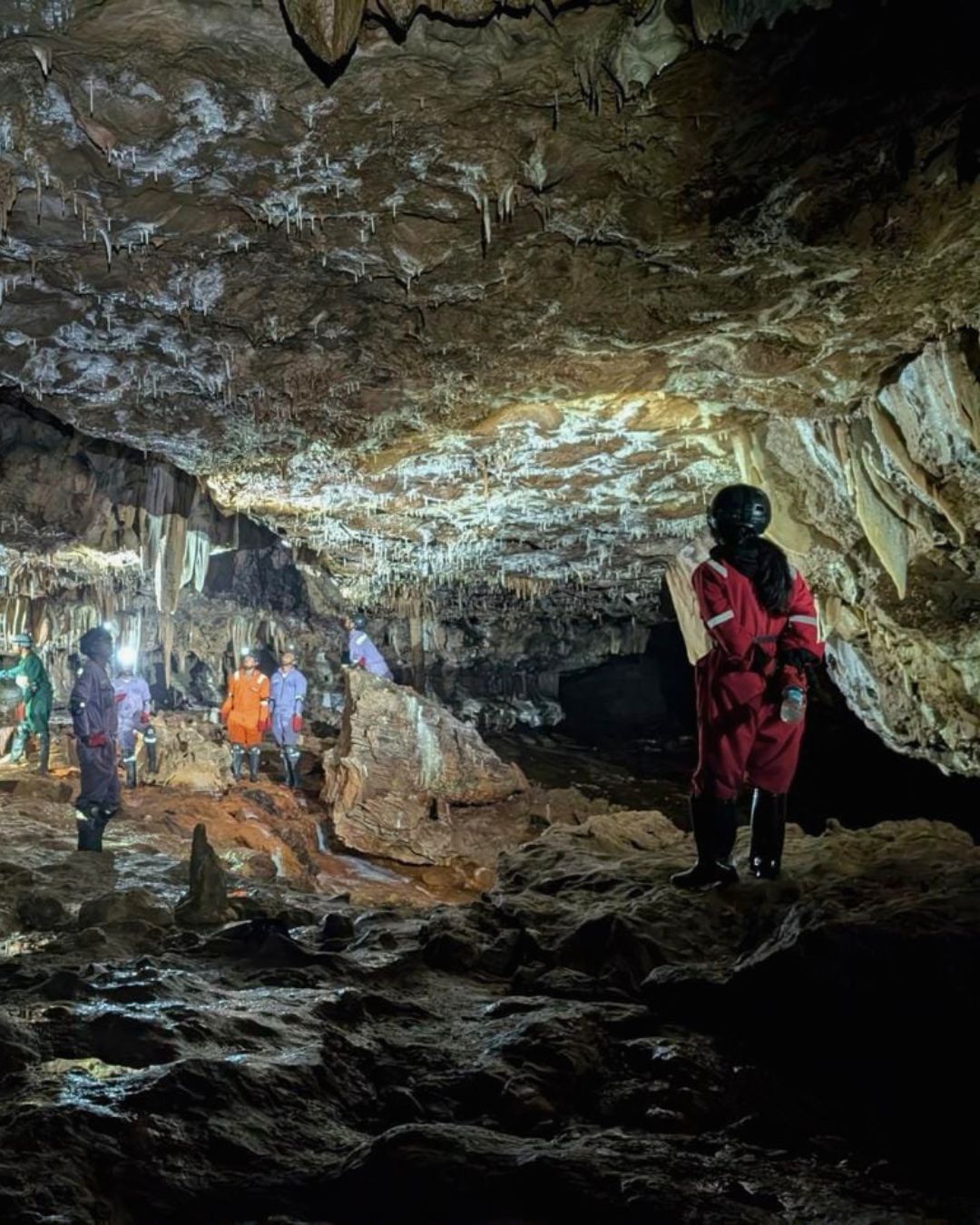
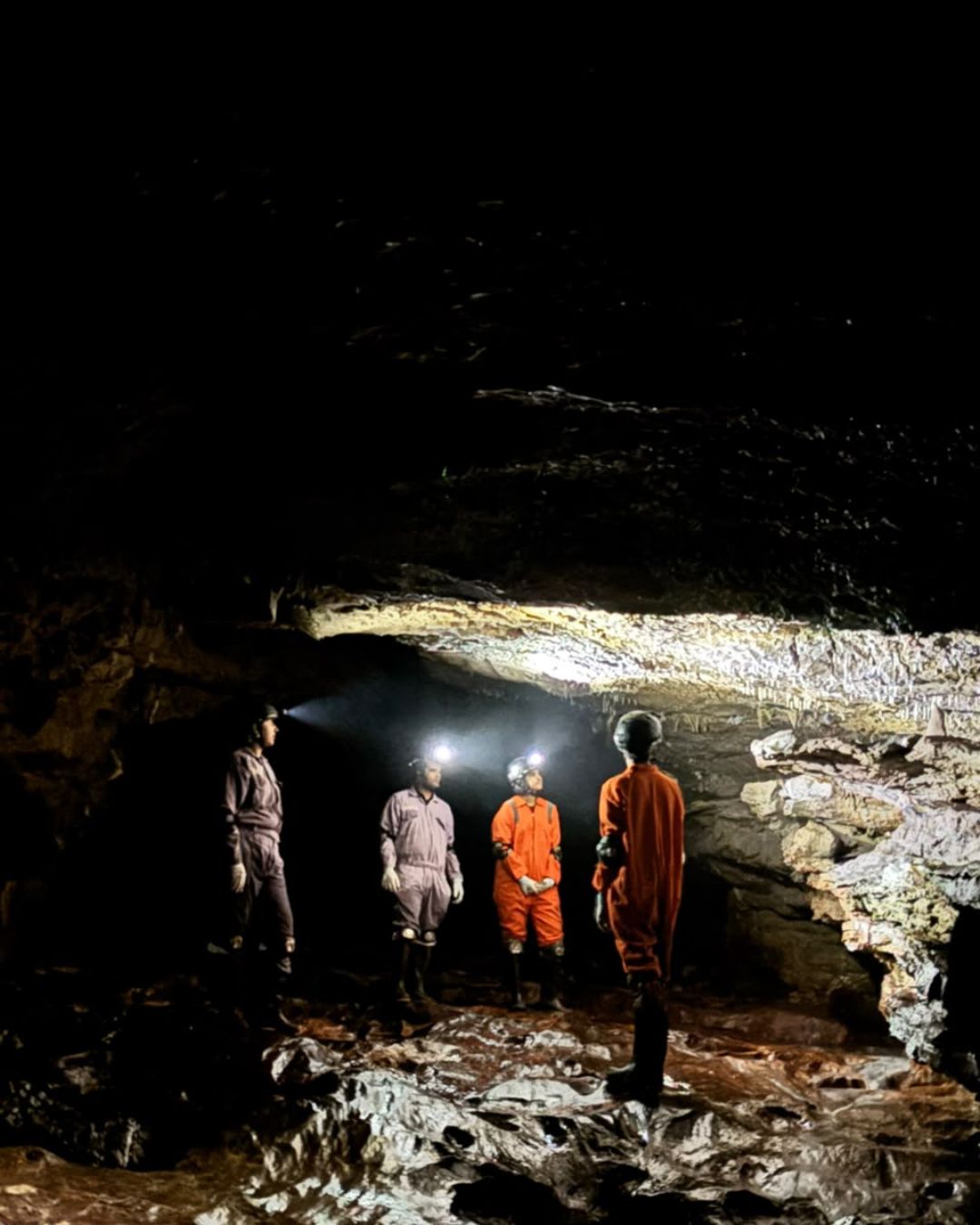
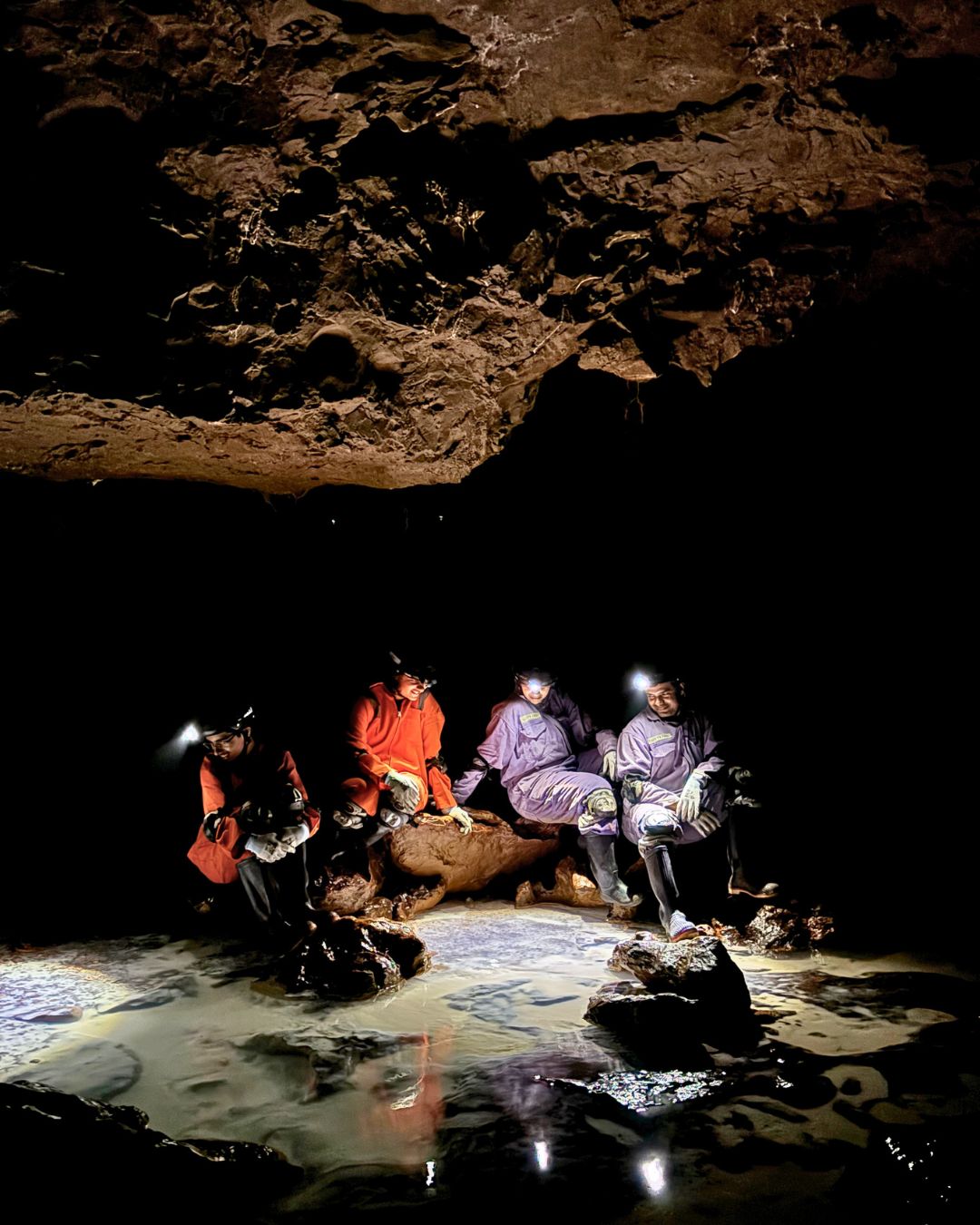
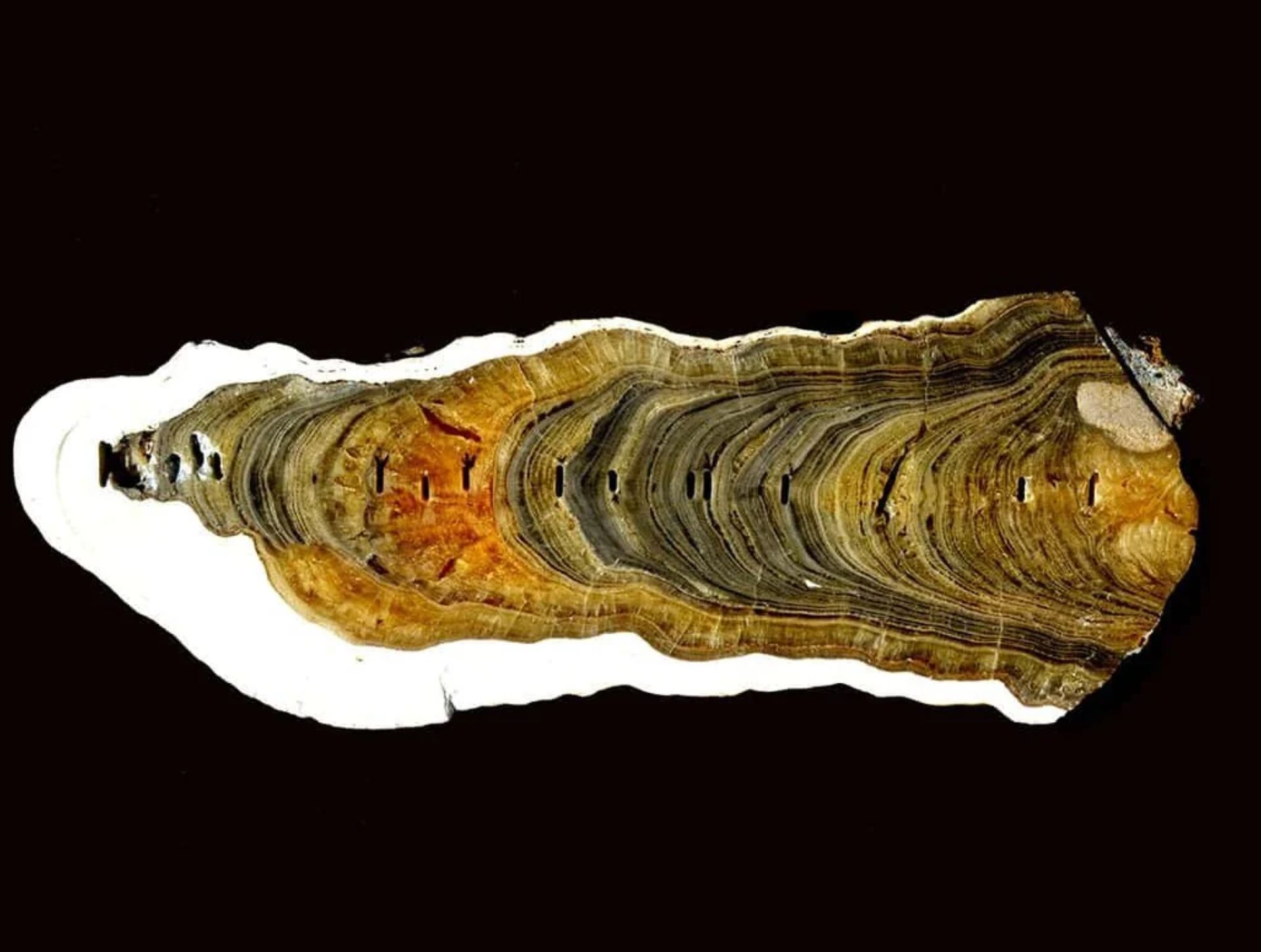
To understand what the stalagmites inside Mawmluh Cave had to say, scientists had to learn how to read them. Much like the rings of an ancient tree, each layer of a stalagmite preserves clues about the environment in which it formed. Researchers carefully extracted tiny samples from one of the cave's stalagmites and analysed the oxygen isotopes locked within each layer. These subtle variations reveal how much rain fell, how strong the monsoon was, and even changes in temperature over thousands of years. Using a highly precise technique called uranium-thorium dating, scientists could determine the age of each layer with remarkable accuracy. What they discovered was striking: around 4,200 years ago, the chemical record showed an abrupt weakening of the monsoon, matching evidence from climate archives across the world. Because this climatic shift was so clearly preserved and so precisely dated, Mawmluh Cave became the international benchmark for marking the beginning of a new geological age. A cave in Meghalaya had, quite literally, become the place where the world agreed to draw a new line in Earth's history.
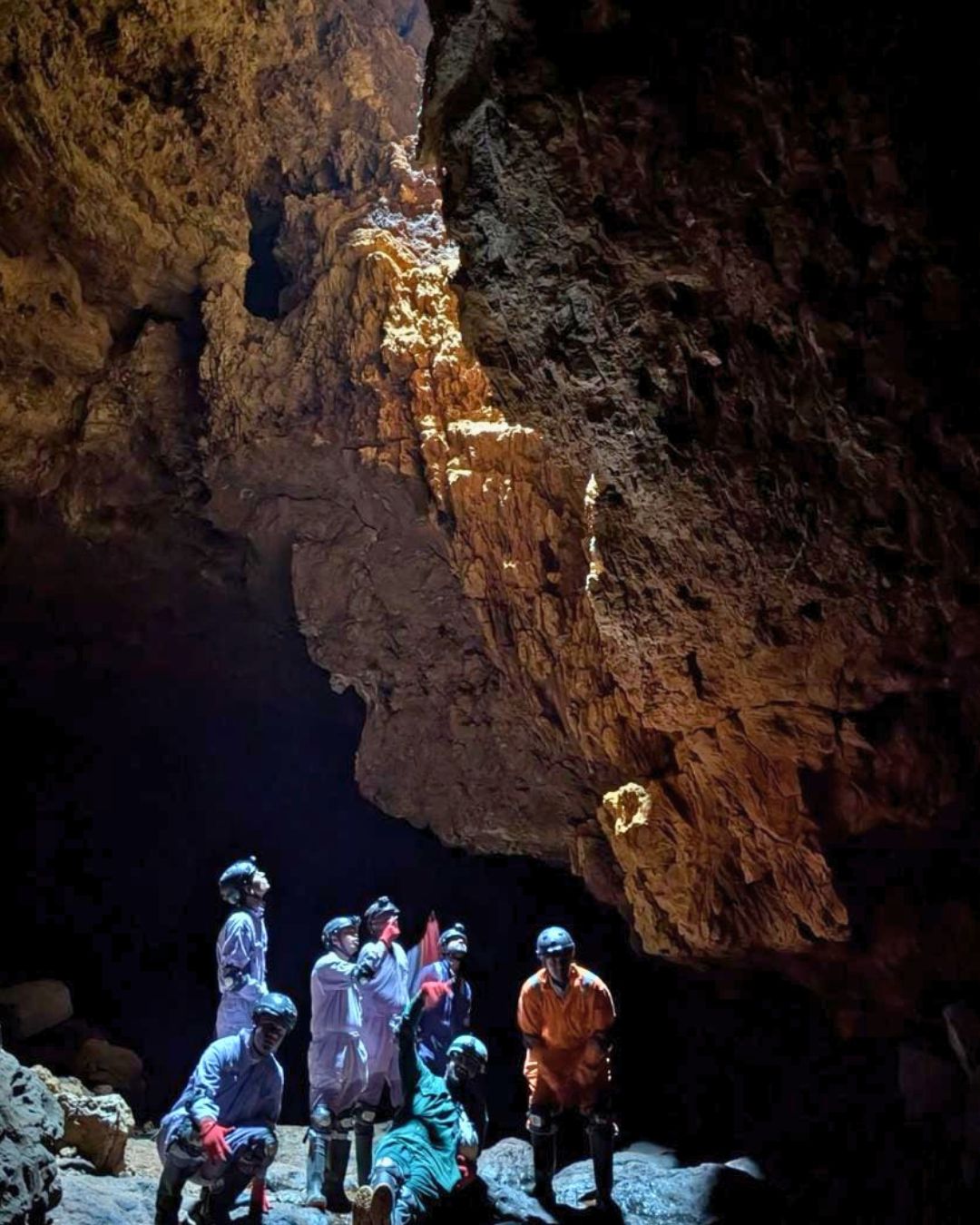
In geology, every officially recognised chapter of Earth's history must have a precise starting point—a place where that moment is preserved so clearly that scientists across the world can agree, this is where the new age begins. These reference sites are known as Global Boundary Stratotype Sections and Points (GSSPs), often called the "golden spikes" of geology. They serve as the international standard against which geological records from every continent are compared. After years of research, scientists found that the stalagmite in Mawmluh Cave preserved an exceptionally clear, continuous and precisely dated record of the dramatic climate shift that occurred around 4,200 years ago. Its evidence matched climate records from lakes, glaciers and marine sediments across the globe, making it the ideal candidate for defining the beginning of a new geological age. In 2018, the International Commission on Stratigraphy (ICS) formally approved Mawmluh Cave as the Global Boundary Stratotype Section and Point for the Meghalayan Age. It was a landmark moment—not only for the scientific community but also for Meghalaya, whose quiet limestone cave joined a select group of places around the world that have helped define Earth's official timeline.
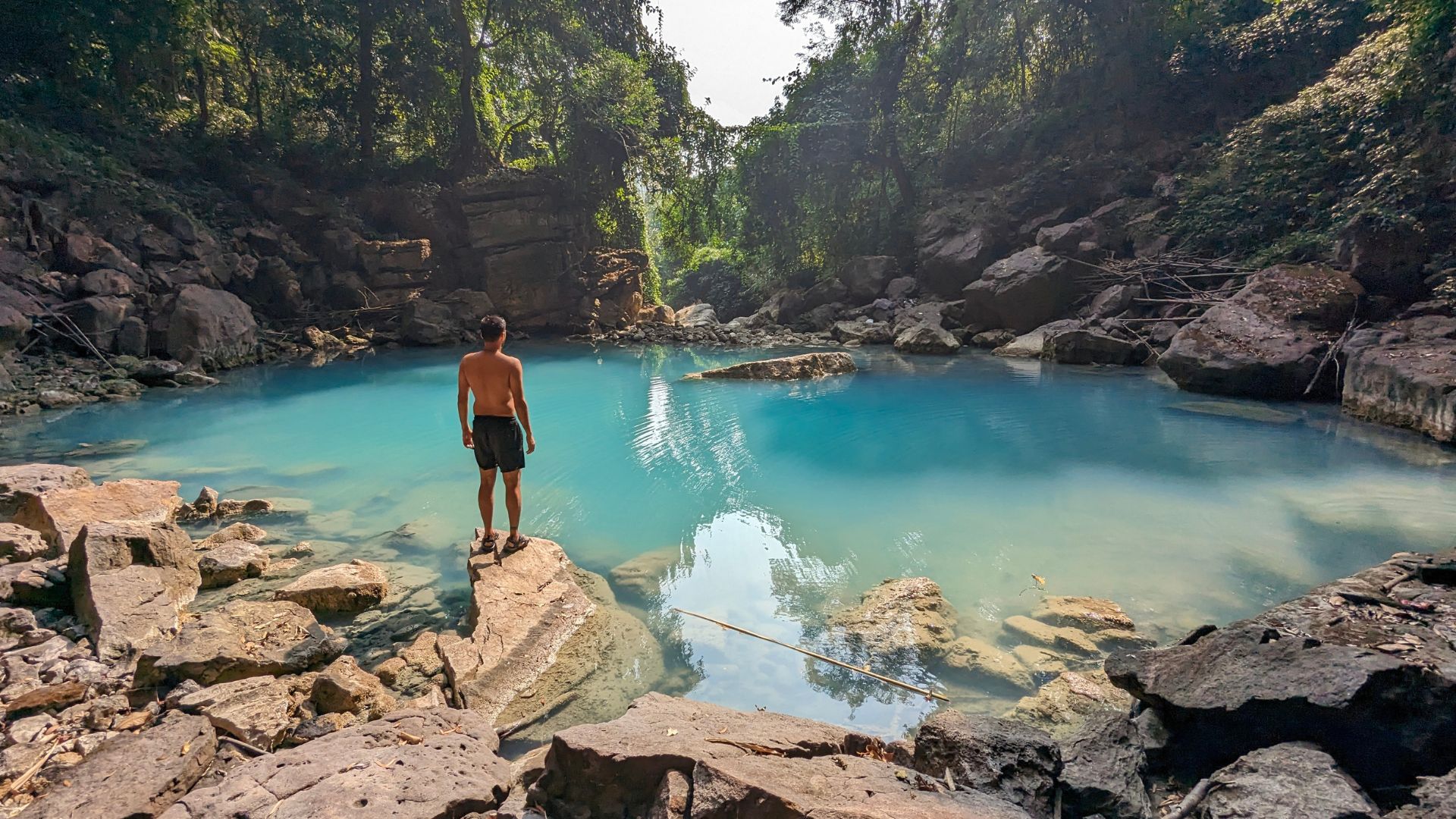
The climate shift that marked the beginning of the Meghalayan Age did not just leave its mark on caves and sediments—it also unfolded during a period of remarkable change in human history. Around 4,200 years ago, several of the world's great civilisations experienced upheaval, adaptation or transformation. The Indus Valley Civilization saw many of its large urban centres gradually decline as river systems shifted and monsoon patterns became less reliable. In Mesopotamia, the mighty Akkadian Empire, one of history's first empires, was weakened by prolonged drought and agricultural stress. Ancient Egypt entered a period of political instability linked in part to reduced flooding of the Nile, while archaeological evidence from parts of China and the eastern Mediterranean also points to environmental pressures during the same period. Historians are careful not to attribute these changes to climate alone—wars, trade, politics, disease and social change all played important roles. But increasingly, climate is understood not as the sole cause of history, but as the backdrop against which history unfolds, quietly shaping the opportunities and challenges that societies must navigate.
This is what makes the story of the Meghalayan Age so compelling. It reminds us that climate has always been an active force in human history, influencing where people settled, what they grew, how they traded and, at times, how they survived. Environmental change is not unique to the modern world; what has changed is our ability to recognise it in the geological record. By bringing together archaeology, which studies people and cultures, with geology, which studies the Earth's physical history, scientists can piece together a richer picture of the past—one that reveals how landscapes and civilisations have evolved together over millennia. Standing in Mawmluh Cave, it becomes easier to appreciate that the Earth is not merely the stage on which human history is performed. It is an active participant in that history, preserving memories of ancient climates that continue to shape our understanding of both the past and the future.
Meghalaya has long captivated travellers with its living root bridges, mist-covered hills and spectacular waterfalls, but beneath this dramatic landscape lies another world that is equally extraordinary. The state's vast limestone plateau, intricate cave systems and unique monsoon patterns have made it a natural laboratory for geologists, hydrologists and climate scientists from around the world. Mawmluh Cave, located near Sohra (Cherrapunji) and easily accessible from Shillong, offers visitors a chance to step inside this hidden geological landscape, where towering stalagmites and winding passages reveal millions of years of natural history. But unlike many tourist attractions, the cave is also a living scientific archive. The formations that took thousands of years to grow can be damaged by a single careless touch, while litter and unmanaged tourism threaten the fragile ecosystem within. Visiting Mawmluh is therefore more than an adventure—it's an opportunity to experience a place that has shaped our understanding of Earth's past. As travellers, respecting marked trails, avoiding contact with cave formations and leaving no trace helps ensure that this remarkable archive continues to tell its story, reminding us that scientific heritage deserves the same care and reverence as the landscapes that first draw us here.