You don’t arrive at the moidams with a sense of spectacle. There’s no dramatic reveal, no skyline of ruins. Instead, somewhere along the road in Upper Assam, the landscape begins to shift almost imperceptibly. It’s easy to miss them if you’re not looking
These are the moidams, earthen burial mounds built by the Ahom dynasty between the 13th and 19th centuries. They’re often called the “pyramids of India,” a label that tries to make them legible through something more familiar. But standing here, that comparison feels off. There’s nothing showy about these structures. They don’t announce power; they seem to hold it quietly, close to the ground.
To make sense of them, you have to shift gears a little. This isn’t just about monuments or royal graves—it’s about how a kingdom thought about death, what it chose to carry forward, and how it embedded memory into the landscape itself. In other words, the moidams make more sense as anthropology than as architecture: they tell you less about what the Ahoms built, and more about how they understood life, hierarchy, and what comes after.
They did not arrive as a single moment you could pin to a date. The Ahoms entered the Brahmaputra valley in the 13th century under Sukaphaa, carrying with them a Tai cosmology that did not overwrite the land so much as seep into it. Over time, they became less like outsiders and more like a current within Assam itself—absorbing languages, rituals, and people, while building a kingdom that would last nearly six centuries. They kept records, negotiated power, adapted to local beliefs.
But in the matter of death, they held their ground. While much of the subcontinent turned to fire, the Ahoms chose earth—deliberately, almost insistently.
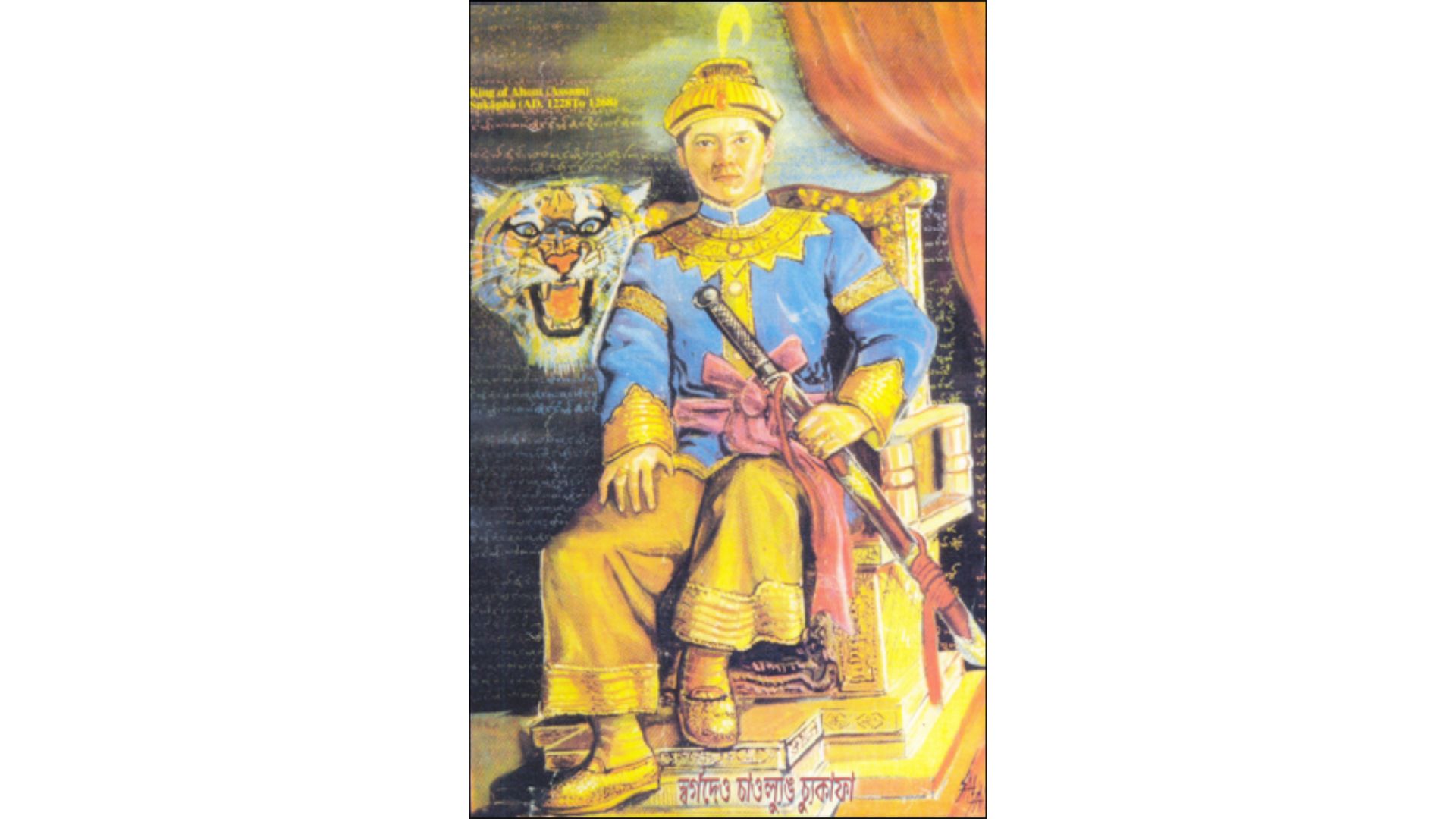
The larger story of how the Ahoms entered the Brahmaputra Valley, built a state and gradually became part of Assam provides the historical frame around Charaideo’s burial landscape.
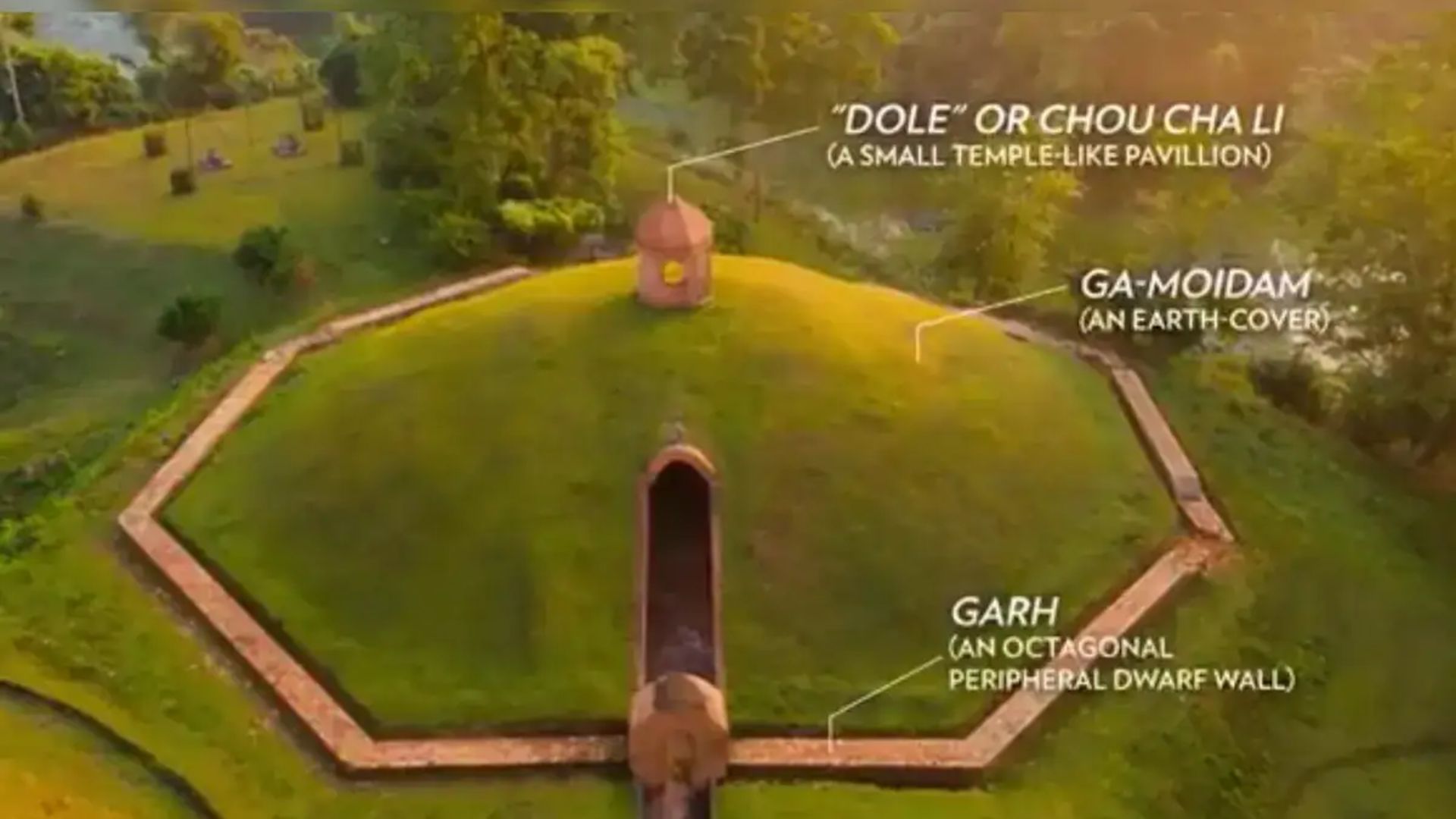
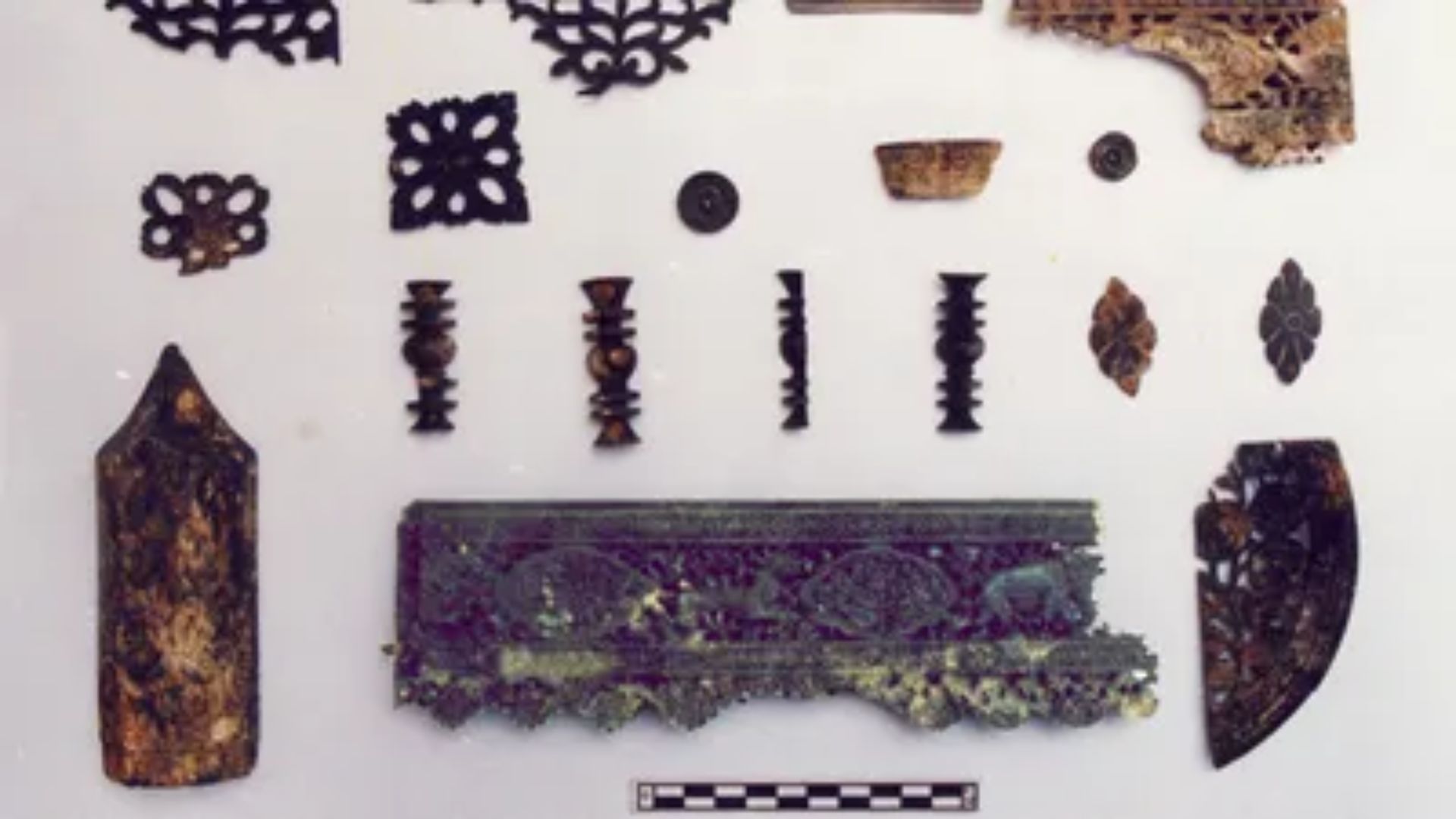
The moidams they built for their kings and elites are not grand in the way empires often prefer. They sit low and rounded against the landscape, a slight swelling of earth, easy to overlook. But beneath that quiet surface lies a carefully constructed chamber—vaulted, enclosed, prepared. The dead were placed inside not alone but accompanied: by objects, animals, sometimes even attendants. This was not ritual for symbolism’s sake. It was provisioning.
The afterlife, in the Ahom imagination, required continuity, and continuity required things, people, possessions, structure.
Seen this way, a moidam is less a tomb and more a system. It tells you that death, for the Ahoms, did not erase hierarchy; it extended it. A king did not become memory—he remained a king, only elsewhere. And so the mound above him is not just earth piled high, but a quiet assertion that power can be relocated, that authority can be buried and still endure, held in place by brick, soil, and belief.
To the untrained eye, a moidam may appear as a grassy hillock. But its design encodes a worldview. The subterranean chamber represents the underworld—a protected, sacred interior. The mound above is not just structural; it is symbolic elevation, lifting the deceased into a space that mediates between earth and sky. The geometry is intentional: circular forms, axial alignment, and layered construction all point to a cosmological order.
Unlike the vertical grandeur of, say, a temple spire, moidams are horizontal, grounded, and integrated into the landscape. They do not dominate; they settle. This reflects a different relationship with power—one that is embedded rather than imposed.
Burial, in the Ahom world, was never a private affair of grief. It was public, procedural, and unmistakably political. When a king died, the making of his moidam unfolded almost like a carefully staged assertion that authority did not end with the body. The size of the mound, the complexity of the chamber, the richness of what went inside, all of it spoke a language the living understood. A modest burial would have suggested rupture; an elaborate one insisted on continuity. By sending a ruler into the earth with ornaments, weapons, servants, and in earlier periods even elephants and horses, the Ahoms were doing more than honouring him. They were stabilising the idea of kingship itself. This was a dynasty that did not fracture at death; it extended, quietly, into another realm.
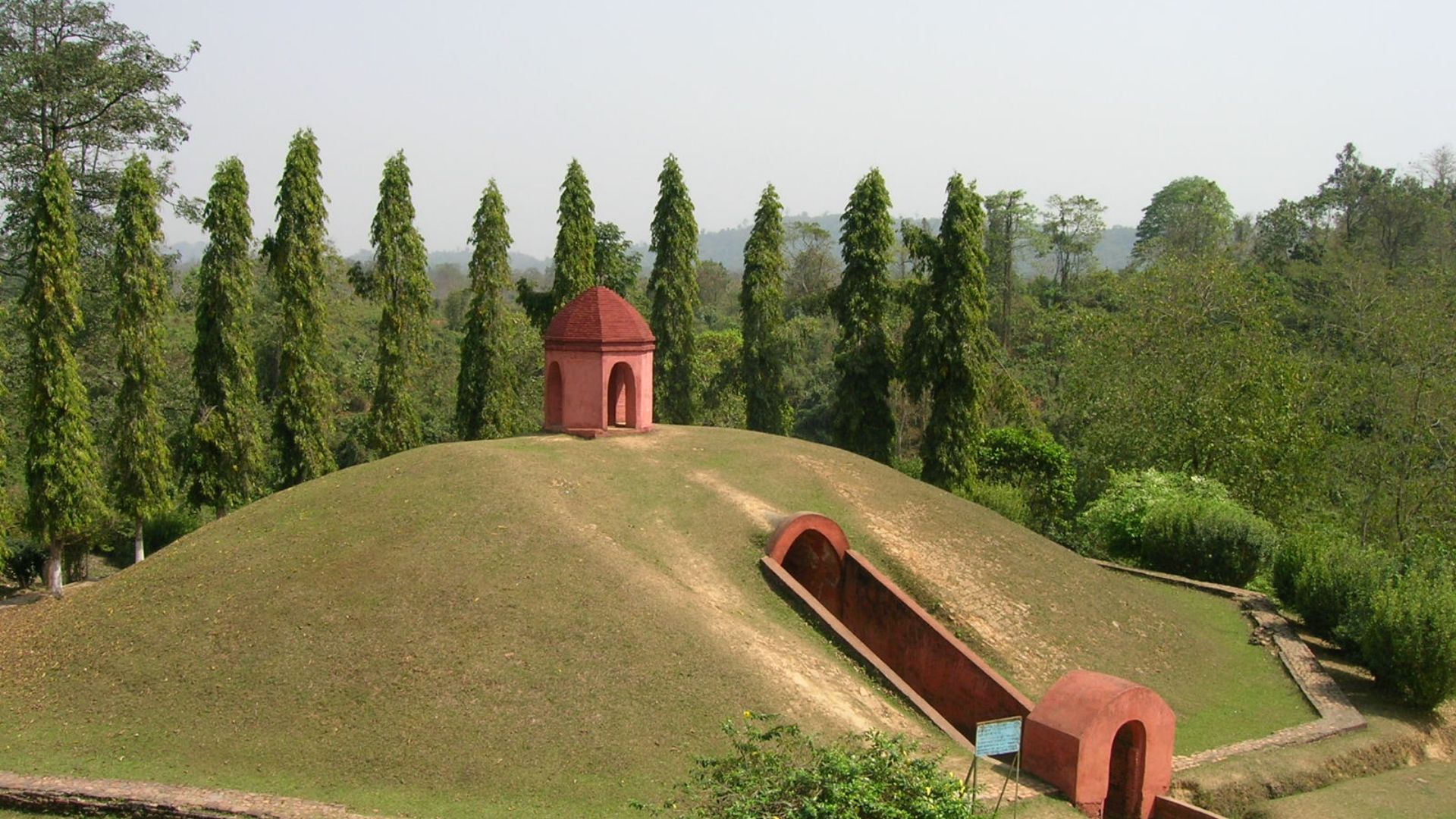
You can see this most clearly at Charaideo, where generations of Ahom royalty were buried close to one another, turning the landscape into something like a living genealogy. Each moidam does not stand alone; it draws meaning from those around it. A newly constructed mound reaffirmed not just the authority of the deceased, but also the legitimacy of his successor, who in overseeing the burial demonstrated control over ritual, resources, and memory. Even the shifts over time, from earlier burials that sometimes included human attendants to later ones that replaced them with symbolic offerings, show a state adjusting its moral language while holding on to the deeper idea of continuity.
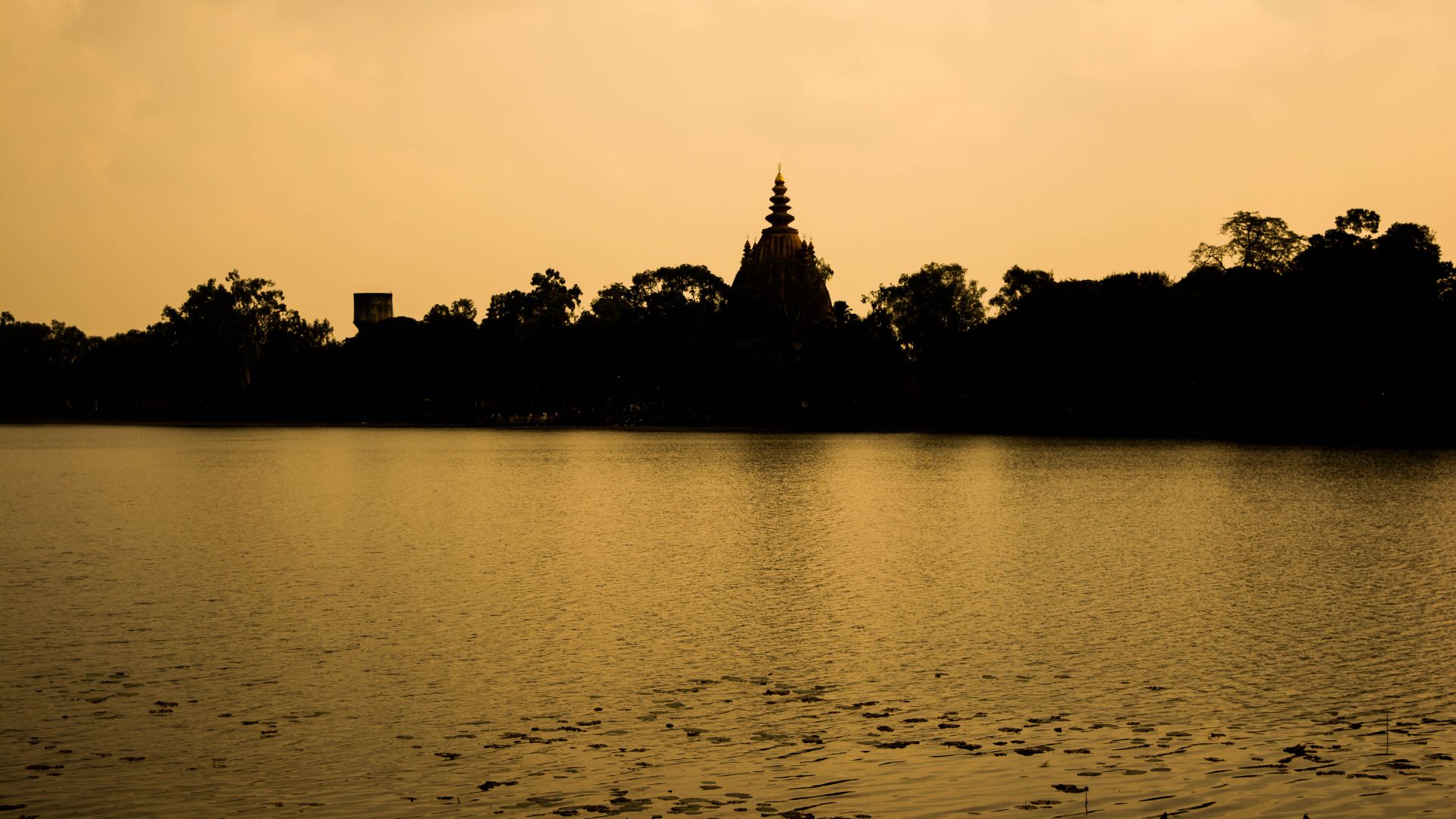
For travellers, this moment offers a rare balance. The site is gaining visibility, but it has not yet been overtaken by it. The way to experience the moidams is to lean into their rhythm rather than impose your own. Arrive without urgency. Walk the grounds instead of scanning them. The mounds do not reveal themselves all at once; they gather meaning slowly, through repetition, spacing, and silence. A local guide can deepen this, not just through historical detail but through fragments of memory that do not appear in official narratives. It also helps to situate the visit within the larger Ahom landscape, pairing it with nearby Sivasagar where tanks, temples, and ruins echo the same history in different forms. Most importantly, adjust your expectations of what “heritage” looks like.
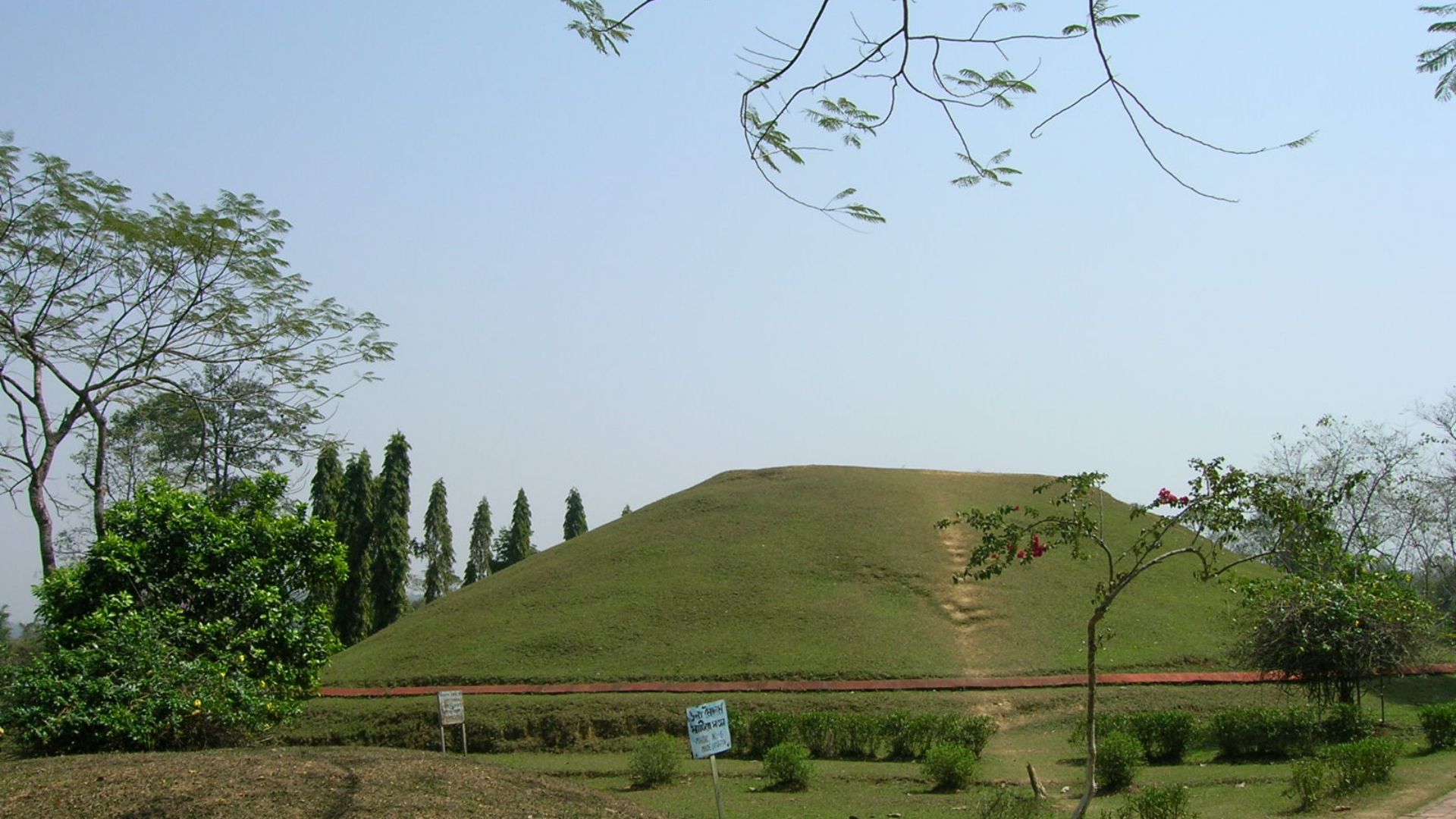
In a world where heritage is often equated with visibility and grandeur, the moidams challenge our assumptions. They remind us that significance can be subtle, that power can be buried, and that memory can be shaped as much by earth as by stone. For the traveler willing to look closer, they offer a rare opportunity: to step into a cultural logic that is at once distant and deeply human.
The Ahoms answered with mounds of earth, chambers of care, and a belief that life, in some form, continues.And in the quiet fields of Assam, that belief still lingers.