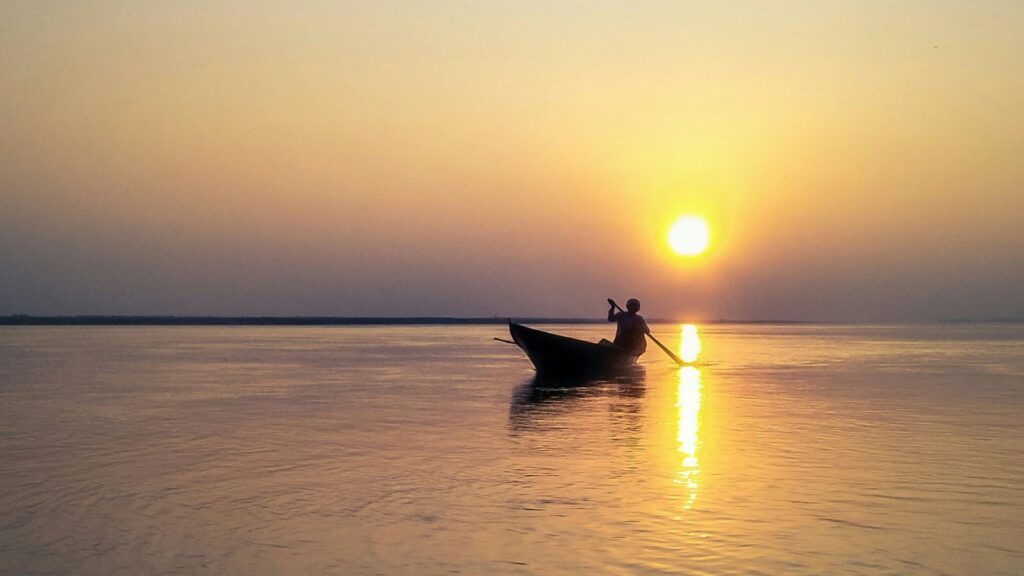
The first time you cross the Saraighat Bridge in Guwahati, it feels like a transit moment—airport-to-hotel, playlist on, window down, the river flashing silver and wide under you.
But Assam has a way of refusing to be “just backdrop.” The Brahmaputra keeps interrupting the frame: in traffic, in tea, in fog, in the way locals casually point to a sandbar as if it were an address. It’s the kind of landscape that asks you to slow down and read it like a text. Or, better: read it like a practice. Michel de Certeau once wrote, almost like a dare, “space is a practiced place.” In Assam, that isn’t theory. It’s an itinerary.
Because the most dramatic chapters of Ahom history aren’t locked inside fort walls—they’re braided into river channels. To travel here with a social-sciency curiosity is to realize that these battles weren’t only about armies. They were about how people live with water, and what happens when that lived knowledge becomes strategy.
Tim Ingold puts it beautifully when he argues the landscape is “an enduring record of… the lives and works of past generations.” In Assam, the “record” happens to be flowing.
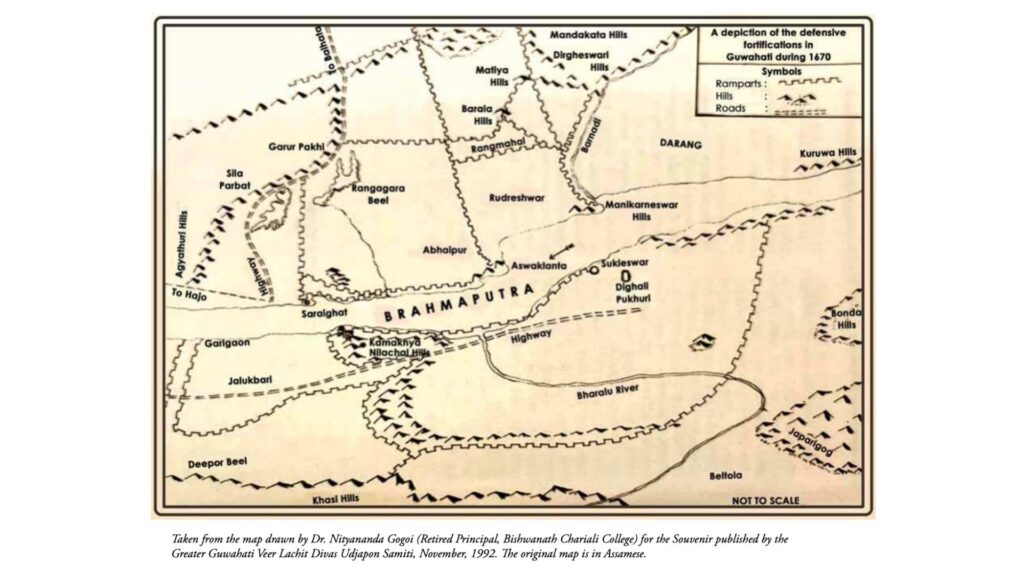
You can still feel Saraighat before you “see” it: the narrowing of the Brahmaputra near Guwahati, the way islands and currents compress the horizon into choke-points.
In 1671, the Ahoms faced the Mughal army led by Raja Ram Singh of Amber, with Lachit Borphukan directing the defense. What made Saraighat iconic wasn’t just victory—it was a method: naval warfare calibrated to local currents, harassment tactics on land and water, and a chess-like psychological game of delays and signals.

There’s a moment in the chronicles that reads like cinema: Lachit, seriously ill, still enters the fight—boarding a war boat with a small flotilla, firing artillery, and triggering a swelling counterattack as boats converge from “all sides.” Even if you don’t care about military history, you can feel why this story travels: it’s not only about tactics; it’s about nerves, about the theatre of morale on water.
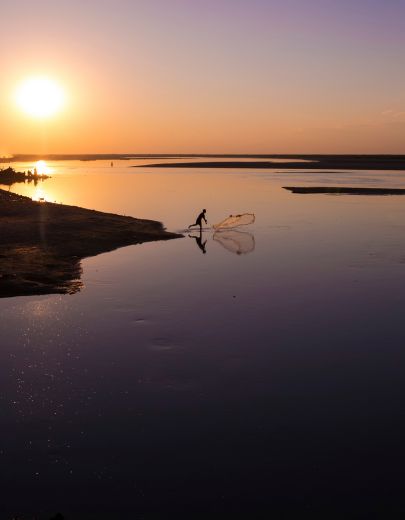
Travel cue: take any short boat ride at Guwahati—sunset ferry, cruise, even a riverfront hop—and watch how quickly the river changes its mind. A sandbank appears like an invitation. Then the current tells you otherwise. Saraighat makes visceral sense only when you notice how the Brahmaputra can be both highway and maze in the same minute.
If Saraighat is the headline, Itakhuli is the crucial paragraph most travelers skip—and shouldn’t.
In 1667, the Ahoms moved to retake Guwahati’s fortified core. The campaign’s storytelling detail is deliciously human: spies sabotage Mughal cannons by pouring water into their muzzles.
Then comes a night attack—ladders, walls scaled, the fort taken. The fall of Itakhuli forces the Mughals to flee, and Guwahati is recaptured by mid-November.
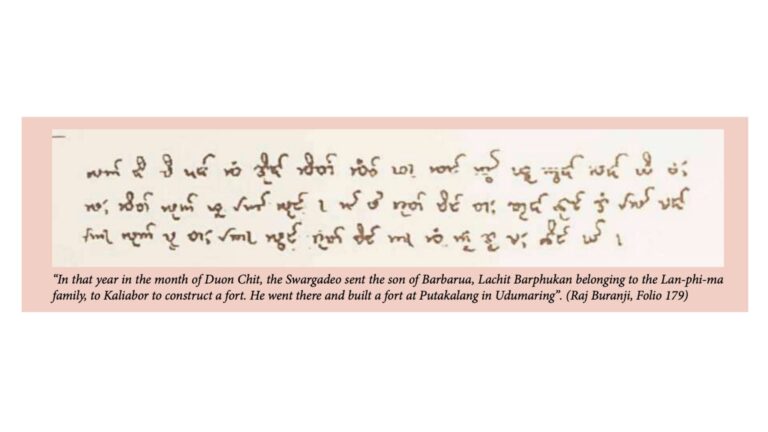
This is where travel turns into a different kind of seeing. Forts, in floodplain worlds, aren’t only military structures—they’re statements about altitude, storage, visibility, and who gets to occupy the “dry” in a land that’s always negotiating water.
That relationship between defence, geography and construction continued into the Ahom architectural landscape, particularly in sites such as Talatal Ghar and Rang Ghar.
Read more: The Ahom Imprint: Architecture, Myth, and Memory in Assam
Travel cue: when you explore Guwahati’s older hills and river edges, pay attention to elevation changes. In Assam, “high ground” isn’t a metaphor—it’s logistics.
Every region has its proud victories; fewer preserve the memory of the battles that sting. Alaboi is one of those.
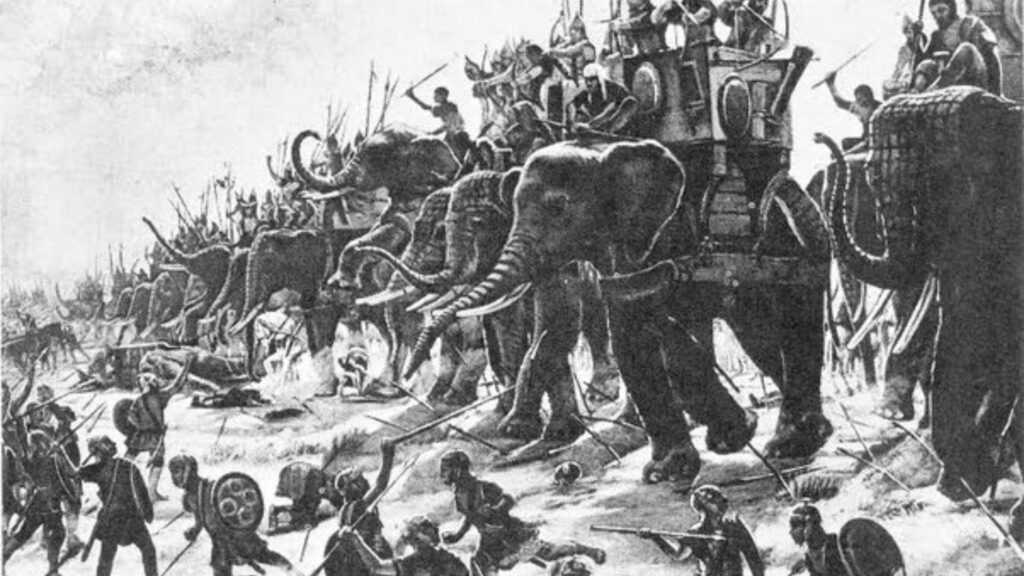
In 1669, the Ahoms fought near Alaboi Hills and suffered catastrophic losses—reported as over 10,000 warriors killed after Mughal cavalry broke through defenses. The account also notes Lachit’s attempt to minimize losses through deception and misrepresentation—war as performance, not just force.

For a traveler, Alaboi matters because it prevents history from becoming a superhero film. It reminds you that resilience is not bravado; it’s adjustment. Defeat reveals the seams of a system—then pressure sews them differently.
Paul Connerton, writing about memory, observes that the past can be carried without speeches or monuments: “In habitual memory the past is, as it were, sedimented in the body.”
In Assam, you can almost feel that sediment in how stories of Alaboi are told—less as spectacle, more as lesson.
Kaliabor appears in Ahom war history as both geography and hinge-point. It shows up as a strategic base for operations along the Brahmaputra and as a place linked to Lachit’s final days.
But more broadly, Kaliabor represents something deeply “contemporary” in its logic: when confronted with a larger imperial military machine, the Ahoms didn’t respond with imitation alone. They responded with adaptation—watching, learning, and translating tactics into river-country terms.
If you travel Assam slowly—across ferries, through towns that feel like river-nodes—you start to understand why “territory” here behaves differently. It’s not a solid block on a map; it’s a network of crossings, channels, and seasonal routes.
Not all pivotal events get tourist signage. Duimunisila is one of those quieter chapters—militarily significant, culturally under-visited.
A major account of the Ahom–Mughal conflict describes a three-day naval battle at Duimunisila near Tezpur in November 1638, where the Mughals “ran short of food,” suffered heavy casualties, and were forced to retreat downstream.
Another passage emphasizes the Ahom navy defeating the Mughal navy and pushing them back toward Guwahati—an upset to assumptions of supremacy on water.

Travel cue: Tezpur and the mid-Assam river landscape are perfect for a “history in motion” day—less monument-hopping, more river-watching. Sit by the water long enough and you’ll notice why naval warfare here isn’t about grand fleets alone; it’s about where you can feed people, where you can hide boats, how quickly currents cut supply lines.
If you want the cleanest example of “river as strategy,” follow the Bharali.
In early Mughal–Ahom clashes, Mughal forces crossed the Bharali River near its confluence with the Brahmaputra and initially inflicted damage—then the tide turned with Ahom counterattacks, night fighting, and the killing of the Mughal commander Sayyid Abu Bakr (as narrated in one modern synthesis of the conflict).
The point isn’t just who won which skirmish. The point is that the river dictated the grammar of war: stockades, crossings, surprise, winter nights, and the constant question—who understands this water better?
Travel cue: even today, you’ll hear locals describe rivers with an intimacy that sounds like kinship. It’s not romantic; it’s practical. And that practicality is exactly what war once fed on.
Modern travel culture loves “forts and kings.” Assam offers something rarer: a history shaped by labor systems, ecology, and everyday skill.
The military system makes more sense within the wider story of how Ahom migration, labour, administration and settlement gradually produced a durable state in the Brahmaputra Valley.
Arjun Appadurai calls locality “a structure of feeling.” In Assam, that “feeling” often travels through water: in the way a bridge becomes a mnemonic, a fort becomes a rumor of night attacks, and a river bend becomes a sentence in a much longer story.
So yes—come for the river cruise photos. But also come with a different question in your pocket:
What does it mean to live in a place so powerful that it teaches you how to fight?
Equal parts policy wonk and wanderlust junkie, Kavya brings together her training in environmental economics and political science with an enduring curiosity about how the world works — and how it could work better. By day, she’s a public health researcher and advocate, working at the intersection of people, systems, and the planet.
Off the clock? She’s a storyteller, active rester, and cat mama.