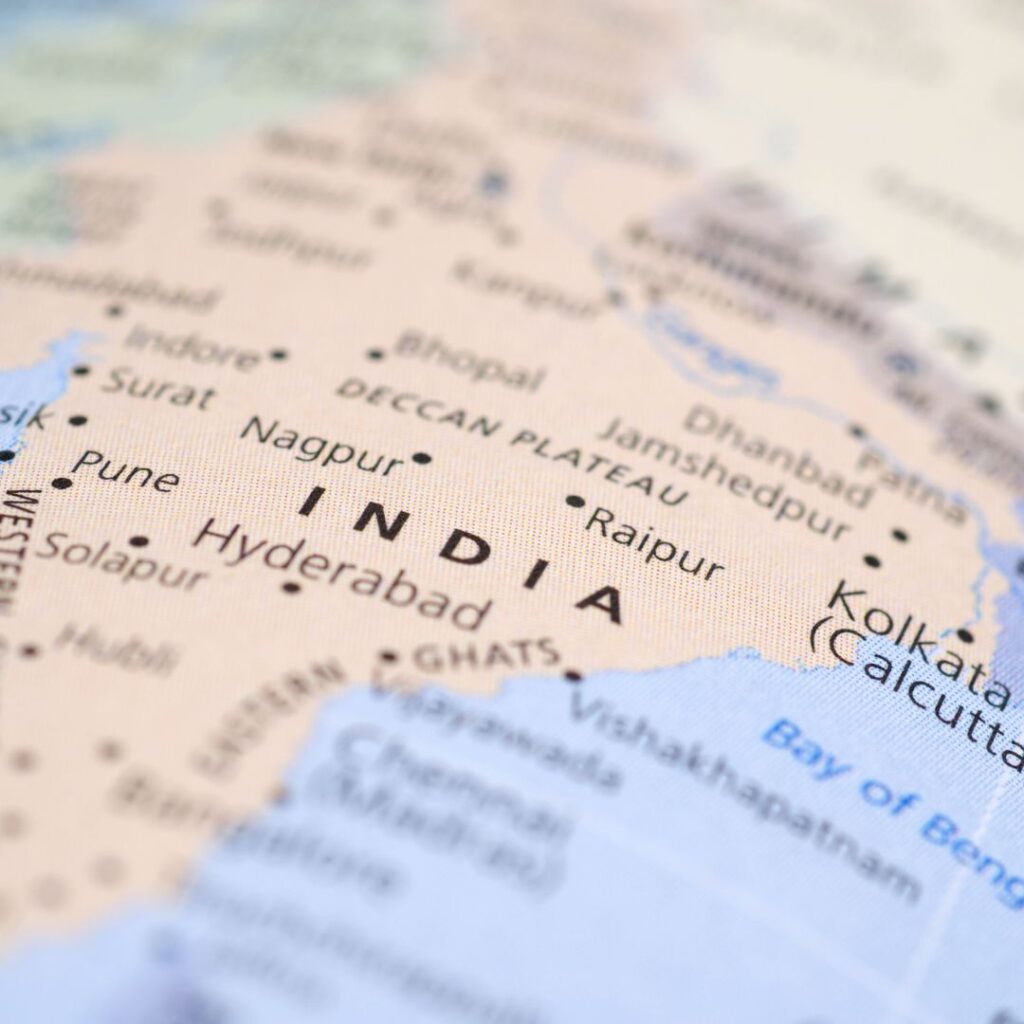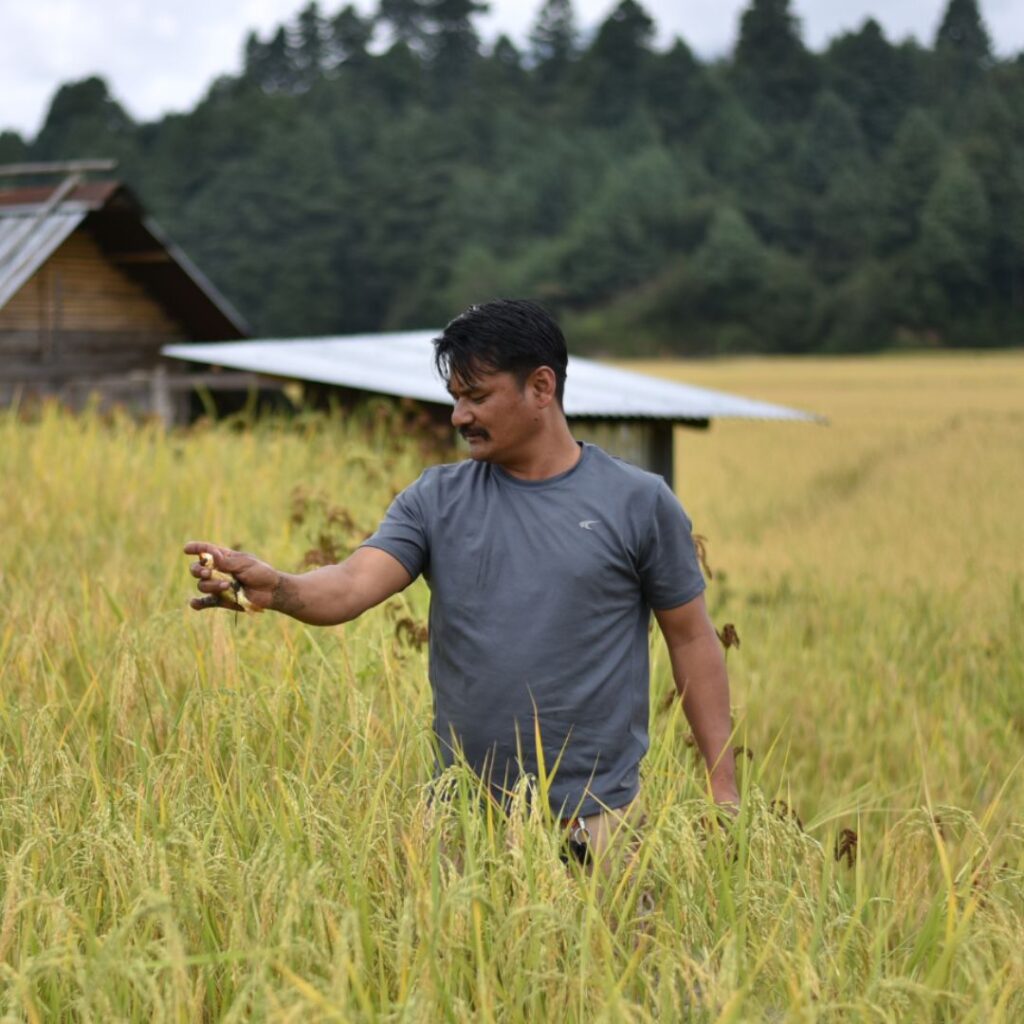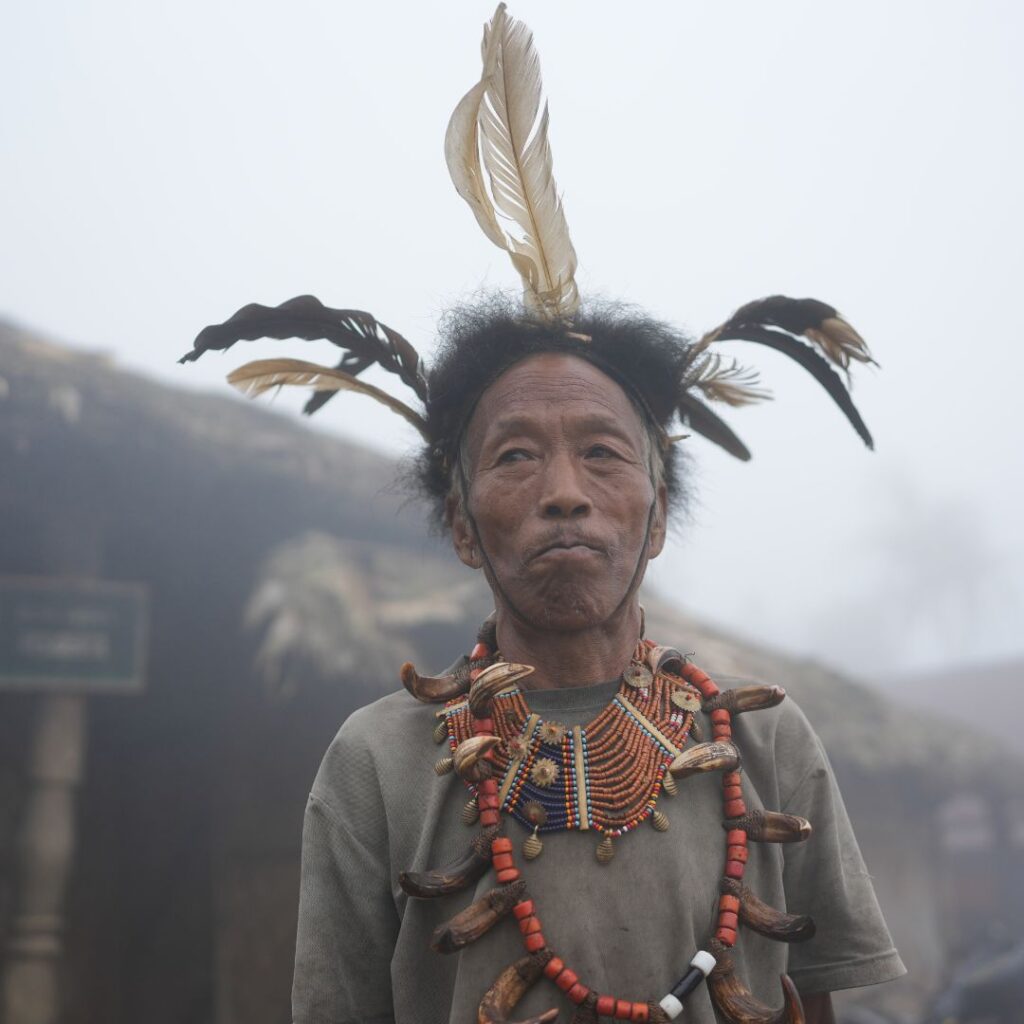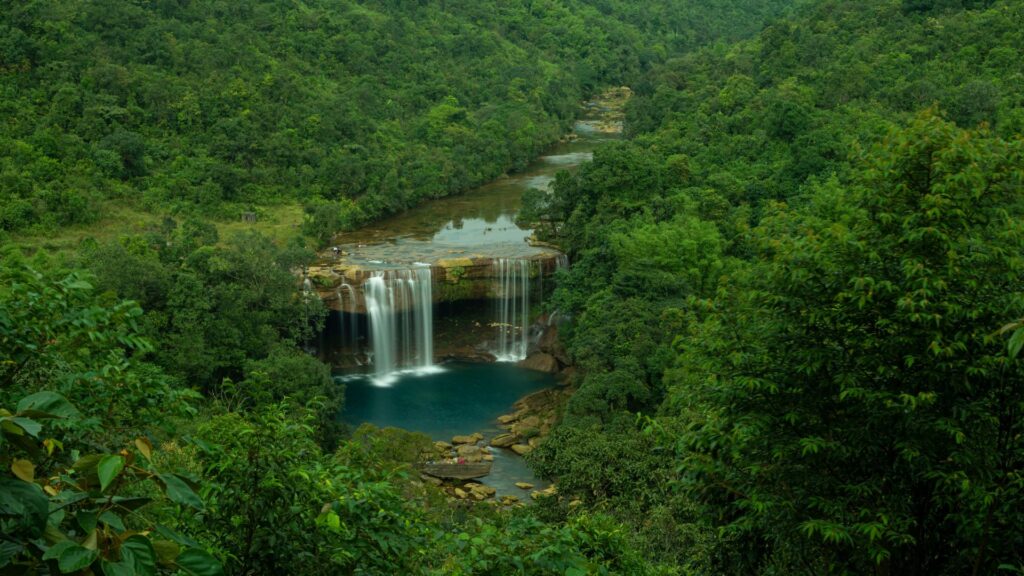
People say “the Seven Sisters” the way they say “the Riviera” or “the Outback”—like a charm that instantly conjures a landscape. Seven. Sisters. In an airport lounge, the phrase lands with an easy authority: half geography, half folklore. It’s everywhere now—tour brochures, quiz books, Instagram captions—shorthand for “that beautiful corner of India,” complete with the imagined soundtrack of rain, hills, and story. And because it sounds ancient—sisters! seven!—many assume it’s a myth that simply stuck to the map.
But names like this are never neutral.
The nickname “Seven Sisters” is much younger than it sounds. It’s generally credited to Jyoti Prasad Saikia, a journalist (based in Tripura), who used the phrase in a radio talk show in 1972—a moment when the Northeast was being newly “introduced” to many listeners in the rest of India through media and public discourse. Later, Saikia helped the phrase gain real traction in print: his book The Land of Seven Sisters (published in 1976) is often pointed to as the vehicle that turned a memorable metaphor into a widely repeated name.

What makes this origin so revealing is why the metaphor was needed then. In the early 1970s, the region was in the middle of a major administrative reshaping: the North-Eastern Areas (Reorganisation) Act, 1971 set out the establishment of Manipur and Tripura as states, the formation of Meghalaya, and the creation of the Union Territories of Mizoram and Arunachal Pradesh—a new political geography that practically demanded a shorthand. Calling them “sisters” offered something bureaucracy couldn’t: an image of close neighbours with shared lifelines—roads and rivers, trade and migration—bound together by proximity and interdependence, yet often imagined from the outside as a single faraway cluster. In other words, “Seven Sisters” is less a mythic inheritance and more a post-Independence act of storytelling: a way to make a complex borderland legible, memorable, and emotionally coherent on the national map.
“Sisters” is doing two jobs at once: it’s a geographic description dressed up as kinship. The Northeast’s states sit cheek-by-jowl, with borders that cut across older continuities—river valleys, forest corridors, hill routes, and trading belts that long predate today’s administrative lines. Anthropologists would call this a borderland ecology: people don’t just live in states, they live across them—through shared marketplaces, intermarriage, multilingual towns, seasonal work, and festivals that travel. Similar foods show up with different names; motifs repeat in textiles with local twists; songs and stories migrate the way monsoon clouds do—crossing boundaries without asking permission.
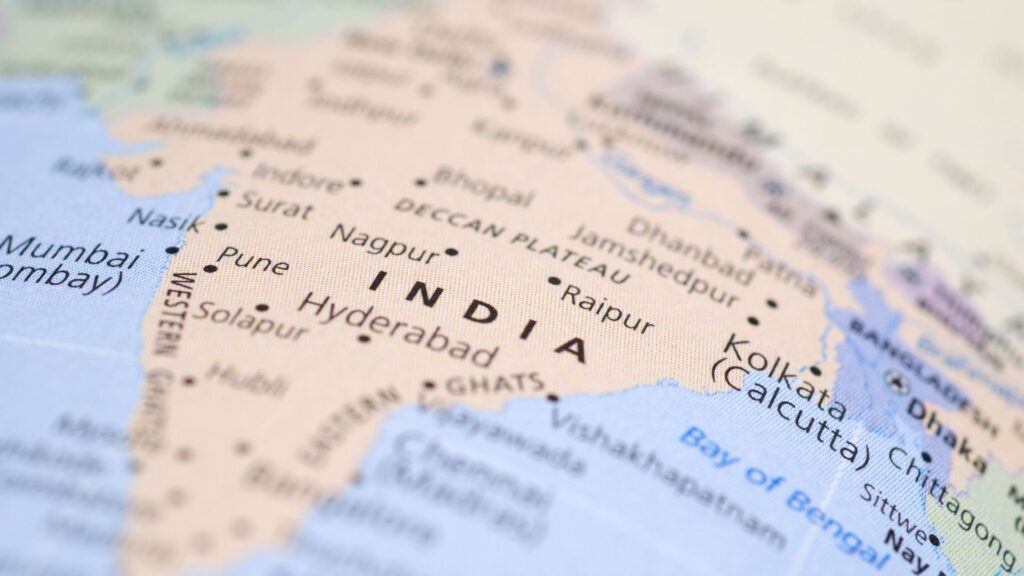
The metaphor also captures interdependence, the material infrastructure of being neighbours. Roads in the region often function like shared corridors—one state is frequently the route to another—while rivers act as both lifelines and meeting points: for transport, fishing economies, agriculture, and the everyday commerce of border haats and towns. Trade and migration—whether for education, government jobs, plantations, construction, or small business—have made mobility part of social life, producing what social scientists call circuits: repeated routes that stitch together distant places into familiar worlds. In a region where terrain shapes travel and travel shapes relationships, connectivity isn’t just logistics—it’s culture.
Then there’s the quiet force of relative isolation from mainland India. When a place is connected to the rest of the country through a narrow passage and difficult terrain, it can produce a shared experience of distance—distance from decision-making centres, from mainstream media narratives, from the “default India” imagined in schoolbooks and screens. Over time, that external gaze can generate an internal “we”: a collective identity formed not because everyone is the same, but because many communities recognise the feeling of being spoken about more than being listened to. “Sisters,” in that sense, becomes a soft protest as much as a soft bond.

Finally, the word carries two meanings that don’t always agree. Administratively, “sisters” is a neat bundle—useful for policy, development planning, and national shorthand. Emotionally, it suggests solidarity, mutual care, and shared fate—but also leaves space for friction, hierarchy, and difference (as any real siblinghood does). That’s why the metaphor is powerful: it offers intimacy without total sameness. And that’s also why it’s risky—because the warmth of “sisters” can sometimes blur the sharp, specific stories each state (and each community within it) is trying to tell.
Assam is often the region’s logistical anchor—riverine plains, tea landscapes, and transport networks that many journeys move through. Meghalaya rises into rain-shaped hills where matrilineal traditions among Khasi, Jaintia, and Garo communities complicate the “usual” Indian family script. Nagaland carries strong village identities and layered political histories, where community life and governance can feel intensely local. Manipur is a valley–hill mosaic—dense cultural worlds in close proximity, negotiated through movement, language, and history. Mizoram is often described through community and faith, with a public ethic that feels quietly organised rather than loudly advertised. Tripura holds a kingdom’s legacy alongside layered migrations and borderland intimacies that show up in food, language, and everyday life. And Arunachal Pradesh, the easternmost frontier, offers staggering diversity—where altitude, distance, and ethnicity can shift dramatically within a few hours’ drive, reminding you that “the Northeast” is less a single destination than a whole library of worlds.
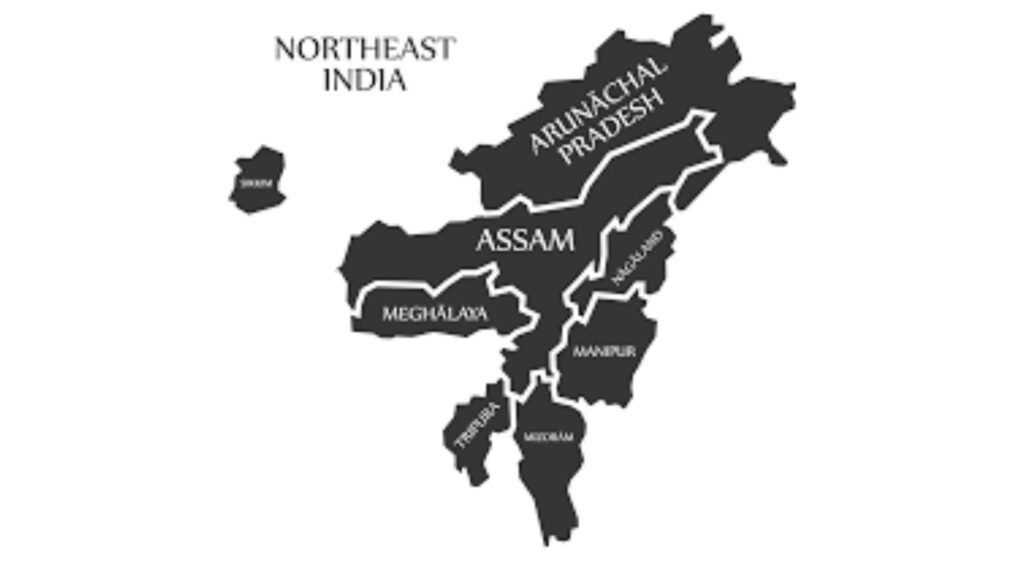
Jelle J.P. Wouters & Tanka B. Subba (anthropologist editors) on how the label “gendered” the region: “Unlike other Indian states, they are apparently gendered as they consist of seven sisters and one brother (Sikkim).”
Sikkim often enters the “Seven Sisters” conversation as the “brother”—a popular add-on that keeps the family metaphor going and reflects how many people now casually imagine Sikkim as part of the wider Northeast story, even though it wasn’t in the original coinage. The key reasons are geographic and historical: the “Seven Sisters” label was coined for a contiguous cluster of seven states in the early 1970s, while Sikkim sits slightly apart (bordering Nepal, Bhutan, Tibet/China and West Bengal rather than directly nesting into the same chain of state-to-state adjacency), and its constitutional trajectory also differs—Sikkim became an Indian state in 1975, after the phrase had already taken hold. Over time, though, the umbrella term “Northeast India” expanded in common and institutional use: a major marker is 2002, when Parliament amended the North Eastern Council (NEC) Act to include Sikkim in that regional planning body, which is why many present-day descriptions of the Northeast now count eight states even as “Seven Sisters” remains the older nickname for the original seven.
If the Northeast were a story, the Siliguri Corridor would be its suspenseful opening line: a thin land-bridge—often called the “Chicken’s Neck”—that serves as the only overland link between mainland India and the region, narrowing to roughly 20–22 km at its tightest point. That bottleneck doesn’t just shape logistics; it shapes feelings. When access funnels through a single slender passage, distance becomes more than kilometres—it becomes a shared condition. Over time, that sense of being connected to the rest of the country through one fragile “thread” can foster a collective regional identity: not because everyone is the same, but because many lives are organised around the same constraints of movement, supply, and visibility.

Inside the region, geography is both a handshake and hurdle. The Northeast is a terrain of Eastern Himalayan reaches, Patkai–Purvanchal hill systems, and river valleys, especially the Brahmaputra and Barak networks—features that create natural corridors for settlement and trade, while also carving sharp separations between valley and hill, one watershed and the next. Forests can be highways of livelihood (foraging, shifting cultivation histories, forest economies) and also dense thresholds; mountains offer protection and distinctiveness, but make everyday travel slow, seasonal, and politically loaded. In such a landscape, the “family” metaphor starts to make sense: these states are bound together by shared lifelines—routes, rivers, and ridgelines—yet separated enough that each develops its own rhythms. Geography, here, doesn’t just sit in the background; it produces the conditions for why “together, but different” became the most intuitive way to name the Northeast.
People from the Northeast don’t respond to “Seven Sisters” with one collective shrug or cheer—feelings tend to be mixed and situational: for some, it’s a convenient banner that creates visibility (a quick way to signal “we exist” in national conversations and travel imaginaries), while for others it lands as an outsider-made wrapper that smooths over difference. Anthropologist Dolly Kikon, for instance, has pointed out that the term was coined largely for administrative convenience during the 1970s reorganisation—useful shorthand, but not an ancient, organic self-name. That’s often where discomfort comes in: the label can feel warm and sisterly, yet also reductive when it becomes a single aesthetic—“misty hills + tribes + untouched beauty”—instead of many specific histories and lived politics. Younger writers, filmmakers, and regional storytellers increasingly push back by insisting on texture over trope—telling stories that refuse the “ethereal frontier” stereotype and foreground everyday complexity (Janice Pariat speaks to this impulse to dismantle standard notions of the Northeast), and platforms like the literary conversation titled “The Seven Sisters Speak” show how the phrase itself becomes something to debate, remix, or outgrow rather than simply accept.
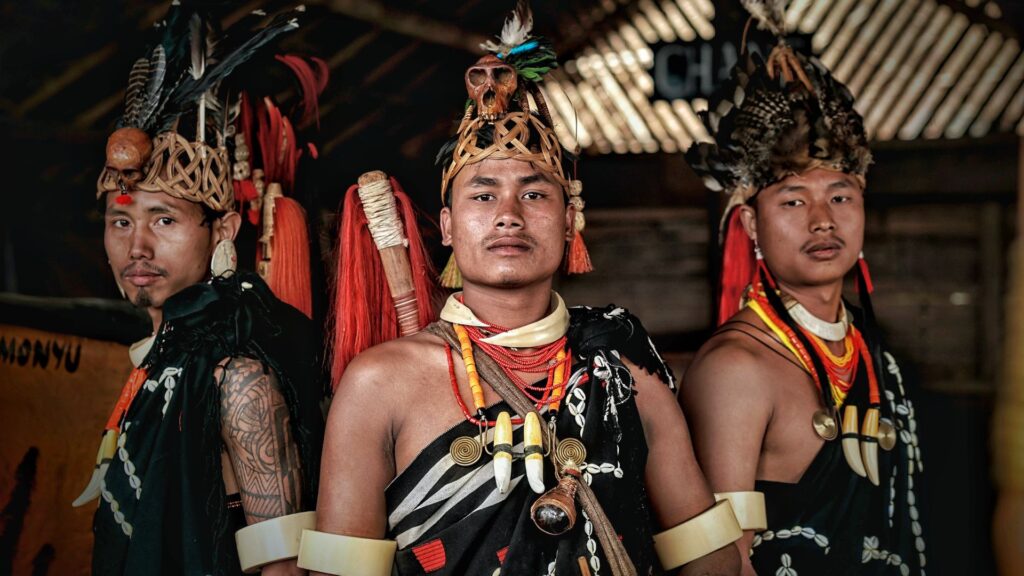
“Seven Sisters” gets a few important things right: it hints at a shared experience of being peripheralised in national narratives, it gestures toward real interconnectedness (routes, markets, migration, and cultural exchange across borders), and it has—at times—helped the region claim collective visibility in a country where attention is uneven. But it also misses a lot. The Northeast is not a single cultural unit; it’s a dense mosaic of languages, ethnicities, terrains, and social systems, and the label can quietly encourage outsiders to treat that diversity as “variations on a theme.” It can also blur distinct political histories and conflicts—different movements, different timelines, different relationships to the Indian state—by wrapping them in one soft metaphor. The biggest risk is that the phrase becomes a kind of romance filter: “sisters” can invite tenderness, but it can also turn a complex region into a moodboard of mist, music, and “untouched beauty,” when what the place really deserves is specificity—state by state, community by community, story by story.
Beyond the “Seven Sisters,” the Northeast rewards you when you stop travelling by label and start travelling by place. Each state changes the rules of the road—terrain, food, language, rhythm—sometimes within a few hours, and the real magic is in those specifics: a market day that explains a border town better than any museum, a bus route that doubles as a social map, a homestay conversation that turns “culture” into people with opinions, jokes, and everyday routines. Move slowly, ask questions that aren’t just “what’s famous here?”, and let the region introduce itself community by community—because the Northeast isn’t one destination wearing seven costumes. In the end, the best souvenir isn’t a tidy story you brought with you; it’s the humility of having listened long enough for the place to rename itself in your mind.
Equal parts policy wonk and wanderlust junkie, Kavya brings together her training in environmental economics and political science with an enduring curiosity about how the world works — and how it could work better. By day, she’s a public health researcher and advocate, working at the intersection of people, systems, and the planet.
Off the clock? She’s a storyteller, active rester, and cat mama.