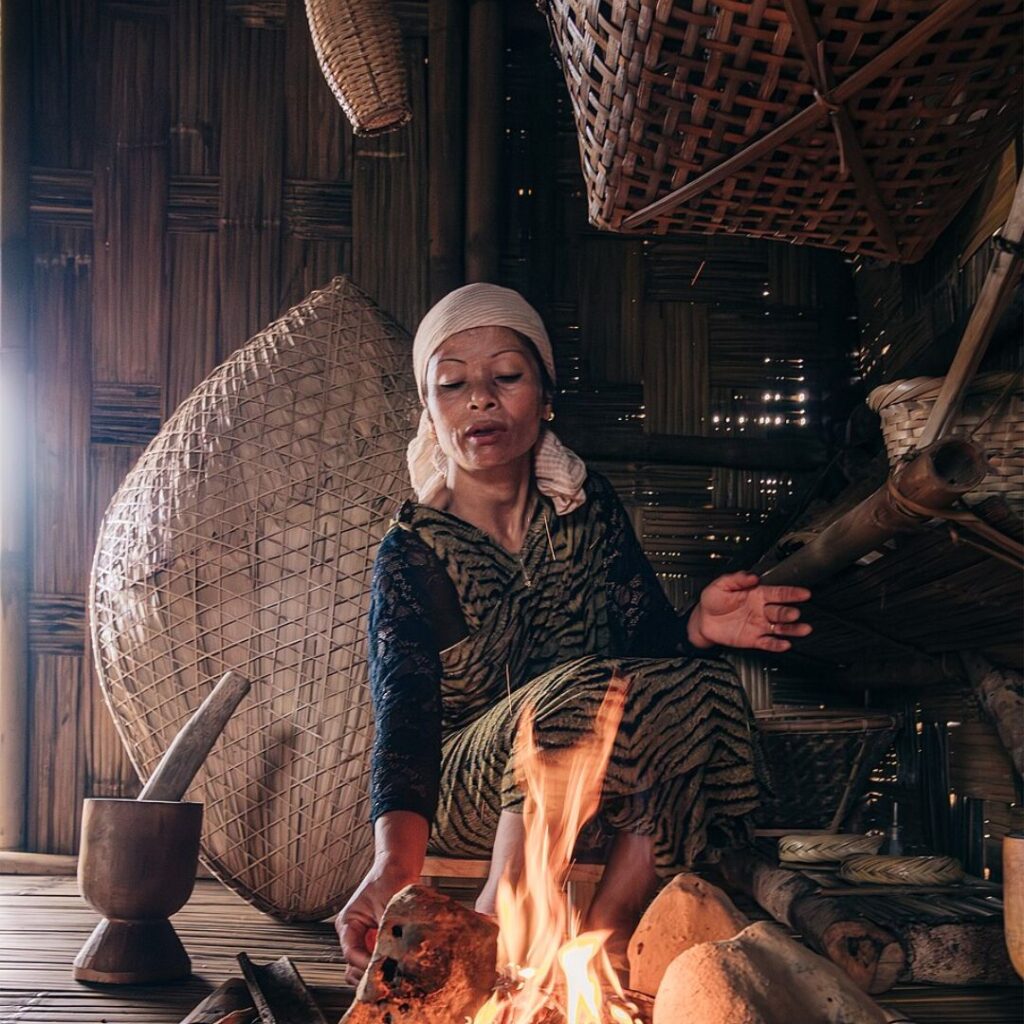
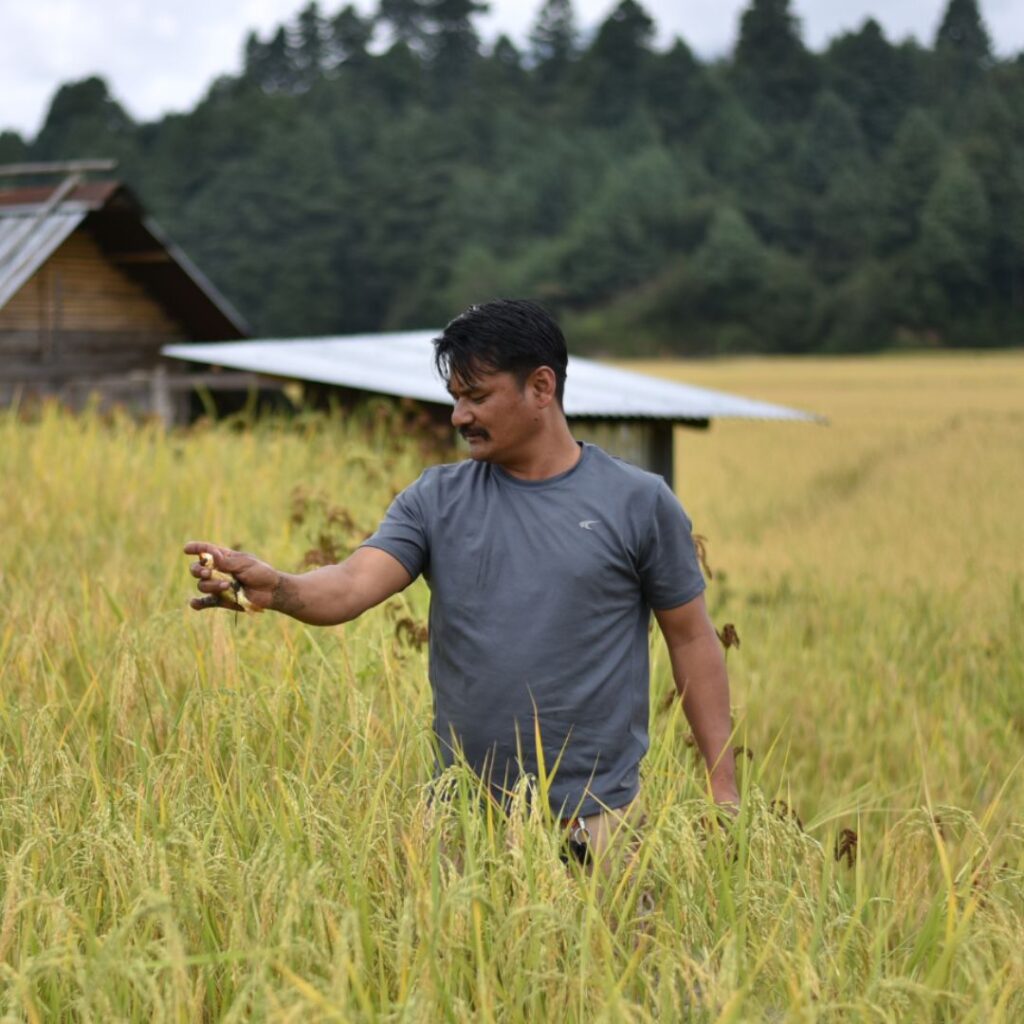
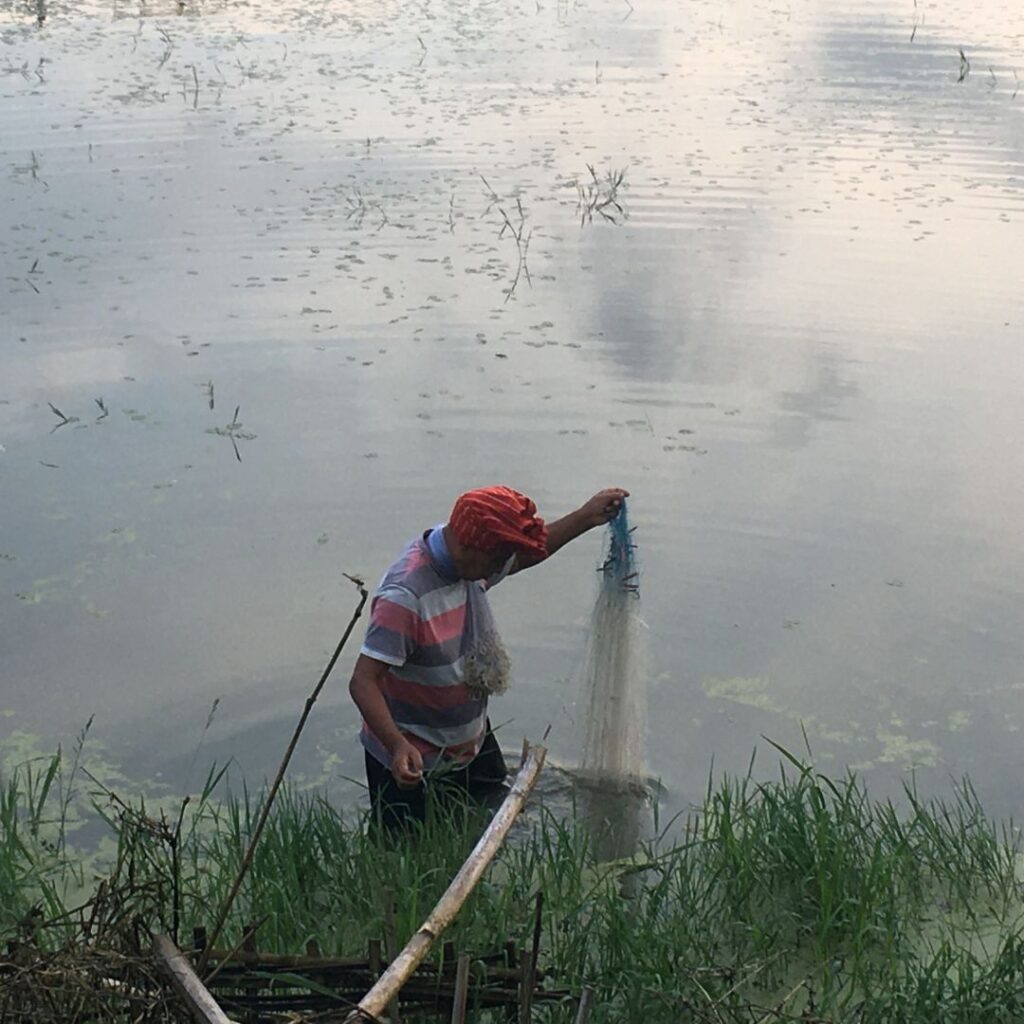
Tucked away in the mist-shrouded Khasi Hills of Meghalaya, India, the Khasi people have woven their identity into the very fabric of the land they call home. As one of the region’s major tribes, they speak a language rooted in the ancient Austroasiatic (Mon-Khmer) family, marking them as some of the earliest inhabitants of the Indian subcontinent. Their homeland, spanning the Khasi Hills, Ri-Bhoi, and parts of the Jaintia Hills, is not just a backdrop but a shaping force of their cultural and historical journey.

What sets the Khasi apart, however, is their deep cultural distinctiveness, standing in stark contrast to the surrounding Tibeto-Burman-speaking tribes. More than just a geographical presence, the Khasi people carry a rich, evolving identity, shaped by ancient myths, a matrilineal social structure, and an enduring connection to both their past and present. The story of the Khasi is one of survival, resilience, and cultural pride—a narrative that continues to thrive amidst the shifting currents of modernity.
The origins of the Khasi people have long intrigued anthropologists and linguists. Linguistically, the Khasi language traces its roots to the Mon-Khmer group, linking them to the Austroasiatic-speaking populations spread across Southeast Asia, from Cambodia and Vietnam to Laos. This linguistic connection hints at a migration path that likely brought the Khasi ancestors to their current homeland from Southeast Asia thousands of years ago.
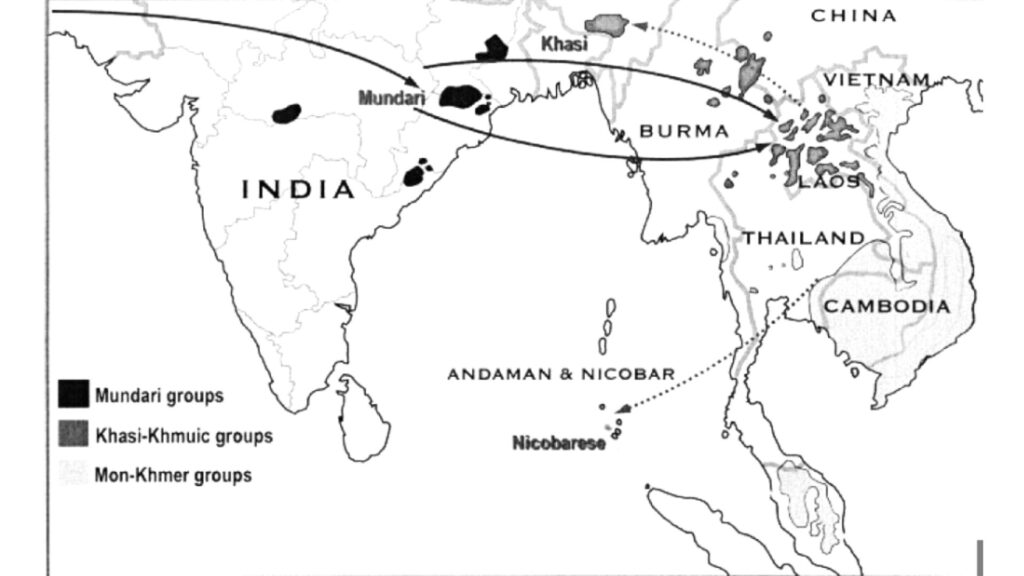
Theories abound regarding their ancient ancestors. Some scholars suggest that the Khasi are descendants of the Munda-speaking people of eastern India, while others argue that they stem from the broader Mon-Khmer populations that traversed the mainland Southeast Asian region. Archaeological evidence, as well as oral history, suggest that the Khasi’s ancestral homeland, Ri Hynñiewtrep (literally “the Seven Huts”), has remained a spiritual and cultural focal point for generations, marking the origin of their identity.
“Ki Hynñiewtrep”—literally translating to “The Seven Huts” or “Seven Clans”—is much more than a simple name; it is the heartbeat of Khasi identity, a reflection of an ancient origin myth that binds the community together. According to Khasi tradition, these seven clans are the direct descendants of the first ancestors who descended from the heavens to inhabit the earth, a celestial connection that continues to shape their cultural consciousness.
This symbolic number of seven unites not just the Khasi, but also their closely related tribes—the Jaintia (or Pnar), War Khasi, Bhoi, and Lyngngam, a Garo-Khasi hybrid group. Despite their distinct dialects, customs, and the varying landscapes they inhabit, the concept of Ki Hynñiewtrep serves as a powerful unifying force, weaving together the diverse threads of their shared heritage.
In these seven clans, the Khasi people preserve more than just kinship and land—they safeguard a deep cultural continuity that has endured through generations. Each clan, with its own set of ancestral stories and rituals, contributes to the rich tapestry of Khasi identity. Yet, it is the collective memory of these seven clans that anchors them in their shared mythic past, a legacy that continues to echo through the hills, shaping their present and future.
The core of Khasi spirituality and cultural identity can be found in the myth of U Sohpet Bneng, or “The Navel of Heaven.” Located near Mawryngkneng, this sacred pillar is believed to be the bridge connecting the heavens with the earth—a powerful symbol in the Khasi worldview. It is said that this pillar was once the central axis of the universe, where humans and the divine could freely commune.
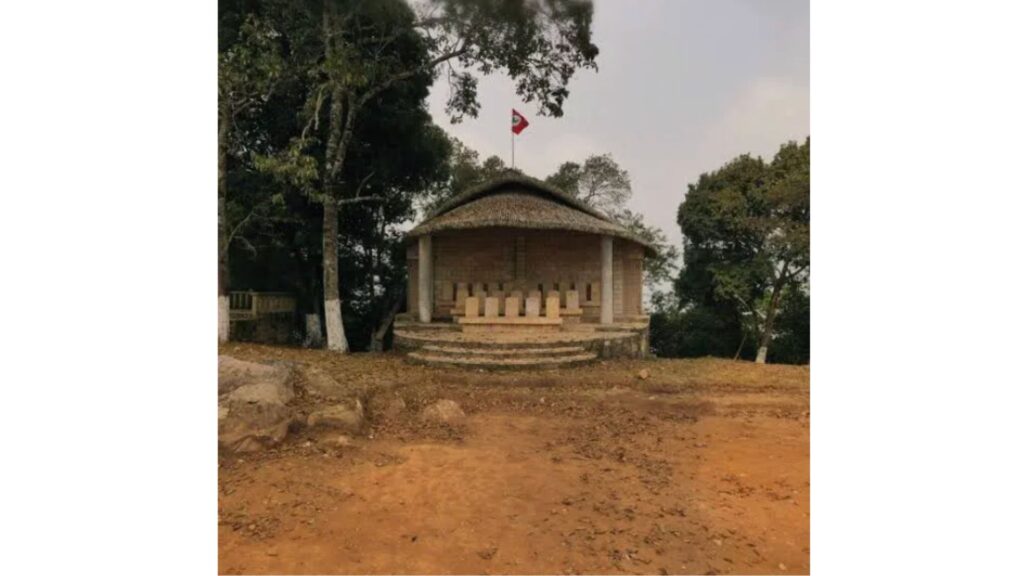
This celestial connection is further illustrated through the legend of Ka Jingkieng Ksiar (the Golden Ladder), a mythical stairway leading from earth to heaven. It is believed that the humans of old could walk this path between the realms, living in close harmony with the divine. However, when the bridge collapsed, humanity was left separated from the gods, forever altering the course of human existence.
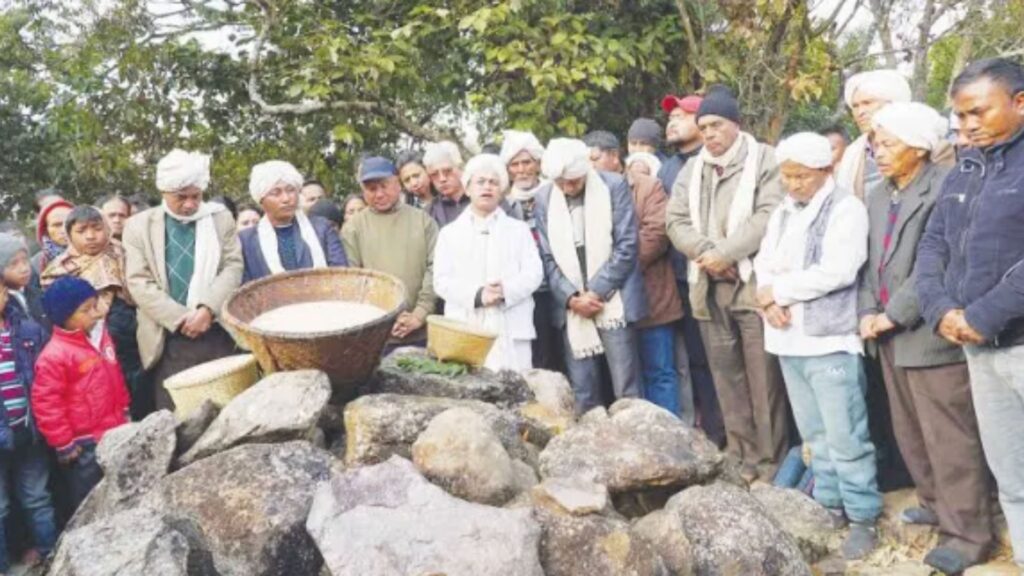
The myth goes further, narrating the tale of sixteen families that descended from the heavens to Earth. But when the bridge connecting the two realms broke, only seven families were left on Earth, forming the core of the Ki Hynñiewtrep. The remaining nine stayed in heaven, becoming part of the celestial lineages known as Ki Khyndai Shong Shap or Ki Khyndai Langit.
This symbolic split serves as a reminder of the loss of the divine connection, yet it also speaks to the resilience of the earthly clans, who now bear the responsibility of maintaining moral and ethical balance on Earth. The seven earthly clans are seen as the guardians of this balance, the custodian of a cosmic order that transcends mere earthly existence.
At the heart of Khasi society lies a unique matrilineal structure, where inheritance passes through the maternal line, a system known as Ka Tip Kur. Children inherit their mother’s clan surname, and the youngest daughter (Ka Khadduh) becomes the custodian of ancestral property, ensuring the continuity of family heritage. This matrilineal framework also influences marriage customs, with the rule of exogamy—Khasi people must marry outside their clan. While lineage is traced through the mother, the decision-making power rests with maternal uncles (kñi), who are revered as the moral and ritual authorities within the family.

This balance between matrilineal inheritance and the authority of maternal uncles creates a fascinating duality in Khasi society. As anthropologist George E. Marcus observed, “Cultures are shaped by the intricate, often unseen systems that govern family, tradition, and the roles we play within them.” In the Khasi world, this intricate balance of power, where maternal lineage meets avuncular authority, defines their distinct social structure—an enduring blend of tradition, respect, and harmony that continues to shape their identity today.
In Khasi society, the matrilineal system places women at the very core of cultural and familial continuity, but this doesn’t mean that women dominate all aspects of life. Rather, it’s a system that ensures women preserve the lineage, property, and ancestral knowledge—roles that are fundamental to the society’s survival and legacy. Women are the keepers of the family’s oral traditions, the guardians of sacred rituals, and the ones who pass down the cultural heritage through generations. In a sense, they embody the very soul of the family, connecting the past with the present, while ensuring the future remains rooted in tradition.
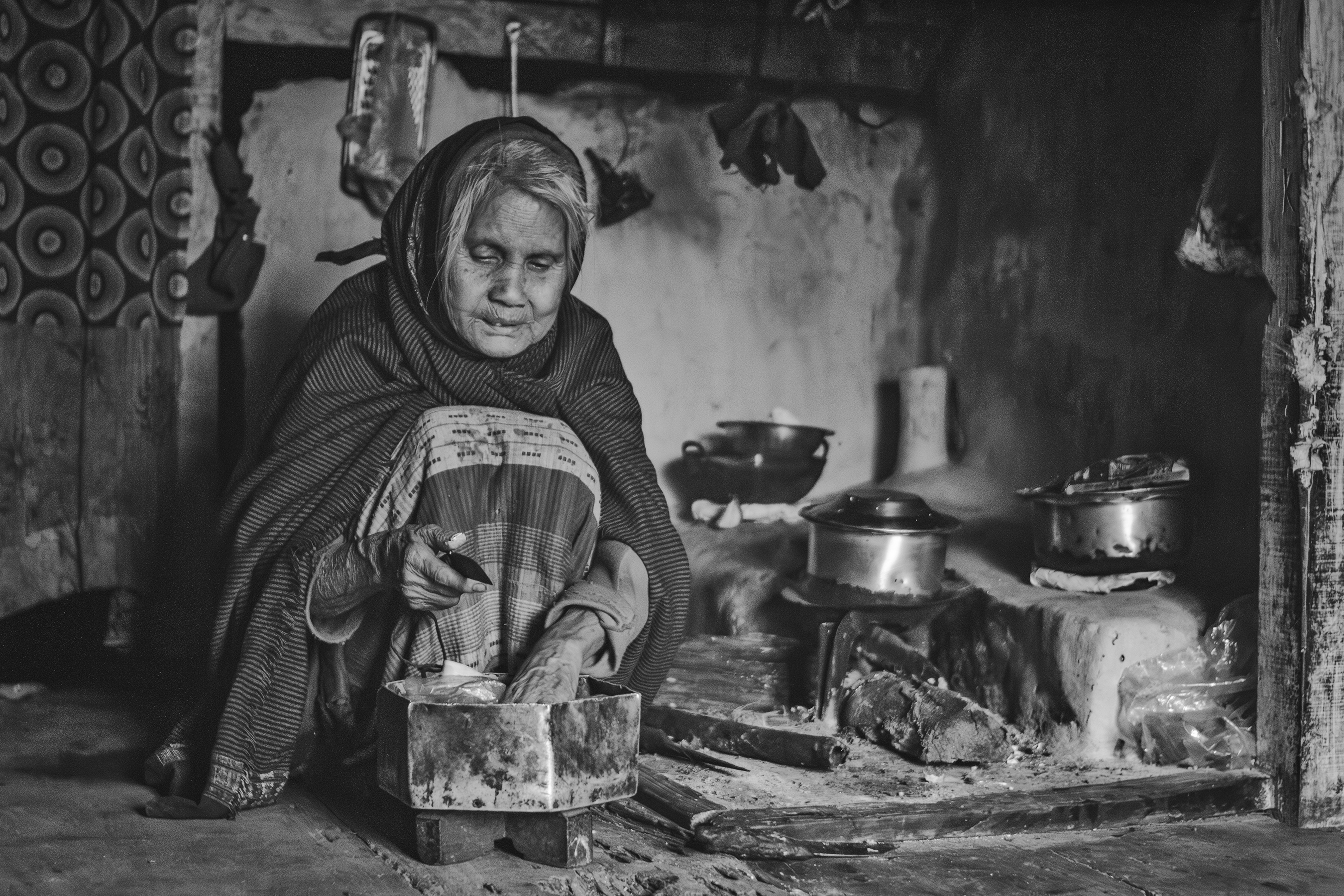
However, the power dynamics are far from simple. While women hold central cultural authority, it is the men—particularly maternal uncles (kñi)—who traditionally wield political and ritual power. These uncles manage family property, represent the clan in external matters, and act as mediators in disputes. This division of roles highlights the fascinating balance that exists within Khasi society: while women uphold the continuity of the clan and its traditions, men provide leadership and decision-making. It’s a society where authority flows through both maternal and paternal lines, emphasizing a delicate but enduring equilibrium between the sexes. As anthropologist Martha Ward remarked, “In matrilineal societies, the flow of power is never linear but rather a circle, where the roles of men and women complement and complete each other.” The Khasi embody this harmony, where roles are distinct, but equally important, reflecting a deep respect for balance and shared responsibility.
The Khasi people’s traditional religion, Ka Niam Khasi or Niam Tre, is rooted in a deep reverence for nature. Central to their belief system is Tip Briew, Tip Blei—“Know Humanity, Know God”—which emphasizes the interconnectedness of humans with both the natural world and the divine. Sacred forests, rivers, and groves like Law Kyntang symbolize the moral responsibility of living in harmony with nature, a theme that underpins their rituals and ancestral worship.
The arrival of Christianity in the 19th century brought significant change. Missionaries introduced Western education, health systems, and the printing press, leading to widespread conversions. While Christianity provided new opportunities, it also gradually shifted the religious and cultural landscape, diminishing some traditional practices. Today, the Khasi navigate a complex identity, blending Christian faith with indigenous traditions, creating a unique cultural coexistence.
The Khasi people’s festivals are a vibrant celebration of their cultural rhythms. Shad Suk Mynsiem (the Dance of the Peaceful Heart) and the Nongkrem Dance (a harvest and thanksgiving festival) are some of the key events that tie their cultural and spiritual lives together. These festivals, often centered around the agricultural cycle, serve as moments of unity, joy, and remembrance, with deep connections to their matrilineal structures.

Shillong, the cultural heart of Meghalaya, has become a vibrant hub where the Khasi people are navigating the intersection of tradition and urbanization. As the city grows, there’s a strong focus on preserving the Khasi language, customs, and the practice of Ka Niam Khasi, even as migration and modernity reshape their way of life.
Debates around gender roles, matriliny, and cultural preservation are central to contemporary Khasi discourse. The role of local governance and autonomous district councils remains crucial as the Khasi work to maintain their identity in a rapidly globalizing world.

Travel Tip: Explore Shillong’s cultural richness by visiting the Don Bosco Centre for Indigenous Cultures and the Mawphlang Sacred Forest. Don’t forget to chat with locals to truly understand how the Khasi balance their deep-rooted traditions with the modern world. Additionally: