ADORNED BY THE HILLS - JEWELLERY OF THE NE

Table of Contents

Assamese enamel jewellery

The Body as Archive: Jewellery as Material Culture in the Northeast

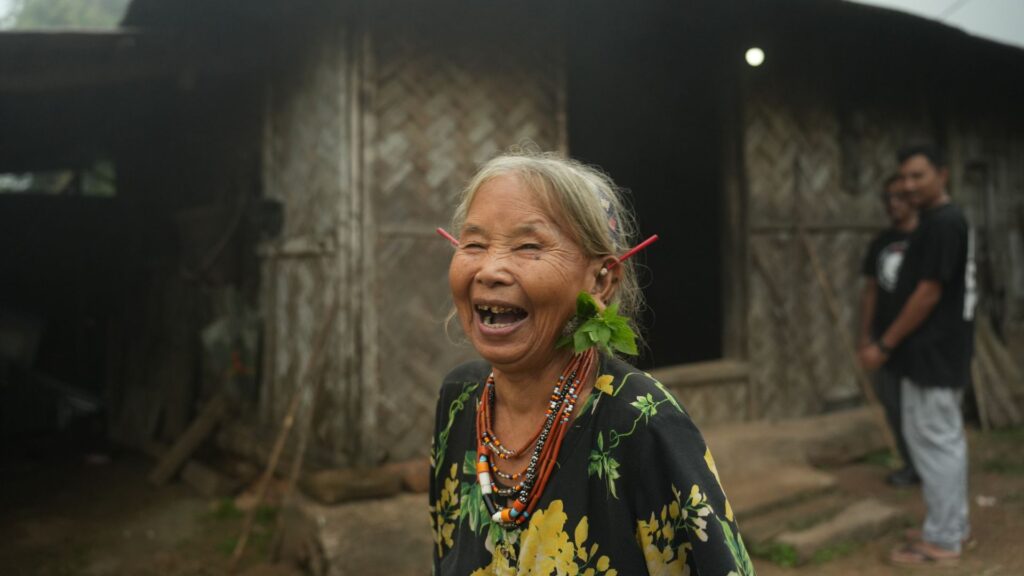
To journey through Northeast India is to enter a world where jewellery doesn’t just adorn the body—it speaks. Across the Brahmaputra plains and the cloud-brushed hills of Arunachal, Nagaland, Manipur, Mizoram and Meghalaya, ornaments act like tiny declarations of identity: signalling clan, status, age, memory and belonging. Anthropologists call this the “body as canvas,” and few places paint that canvas more vividly. A flash of coral on a Khasi woman, the warm weight of brass on an Apatani elder, the gleam of an Assamese jonbiri—each becomes a line in a living cultural script, a text travellers can learn to read as they move through this richly layered region.

Apatani woman wearing beads and ear ornaments

Routes of Exchange: How Trade Shaped Highland Treasures

Long before modern highways snaked through the hills, Northeast India was part of a tremendous, interlinked world of movement. Beads, metals and ideas travelled upriver from Assam, crossed Manipur’s valley marts, slipped through mountain passes, and even rode the vast currents of the Indian Ocean.

Glass beads in cobalt blue, Indo-Pacific red, or Venetian golden-amber found their way into the necklaces of Naga, Adi and Apatani families. Carnelian travelled from ancient workshops in Gujarat, shell discs from the coasts, metal from the plains. A single heirloom necklace in the hills could contain a history of half the subcontinent, strung together into a private geography of migration and memory.

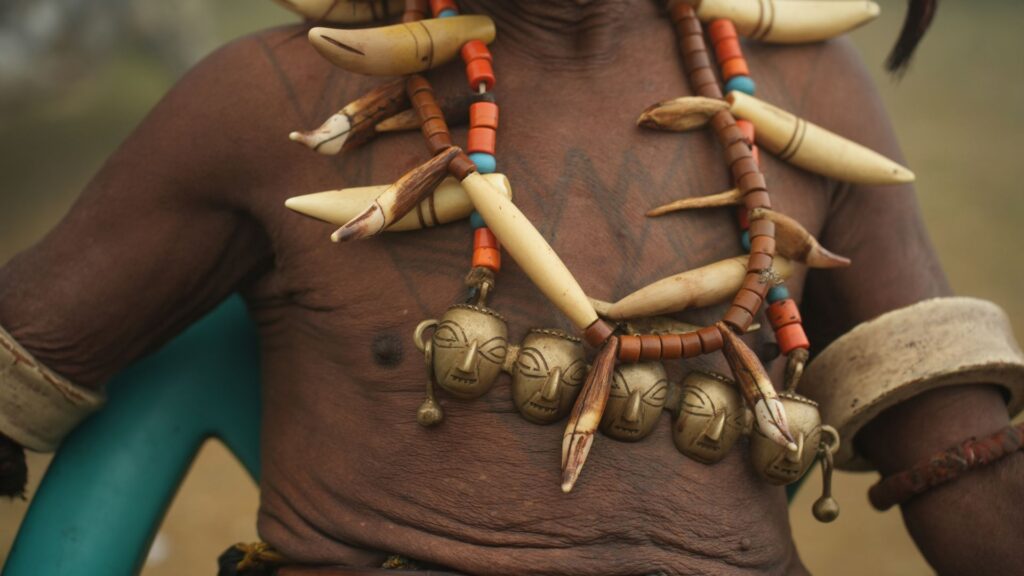
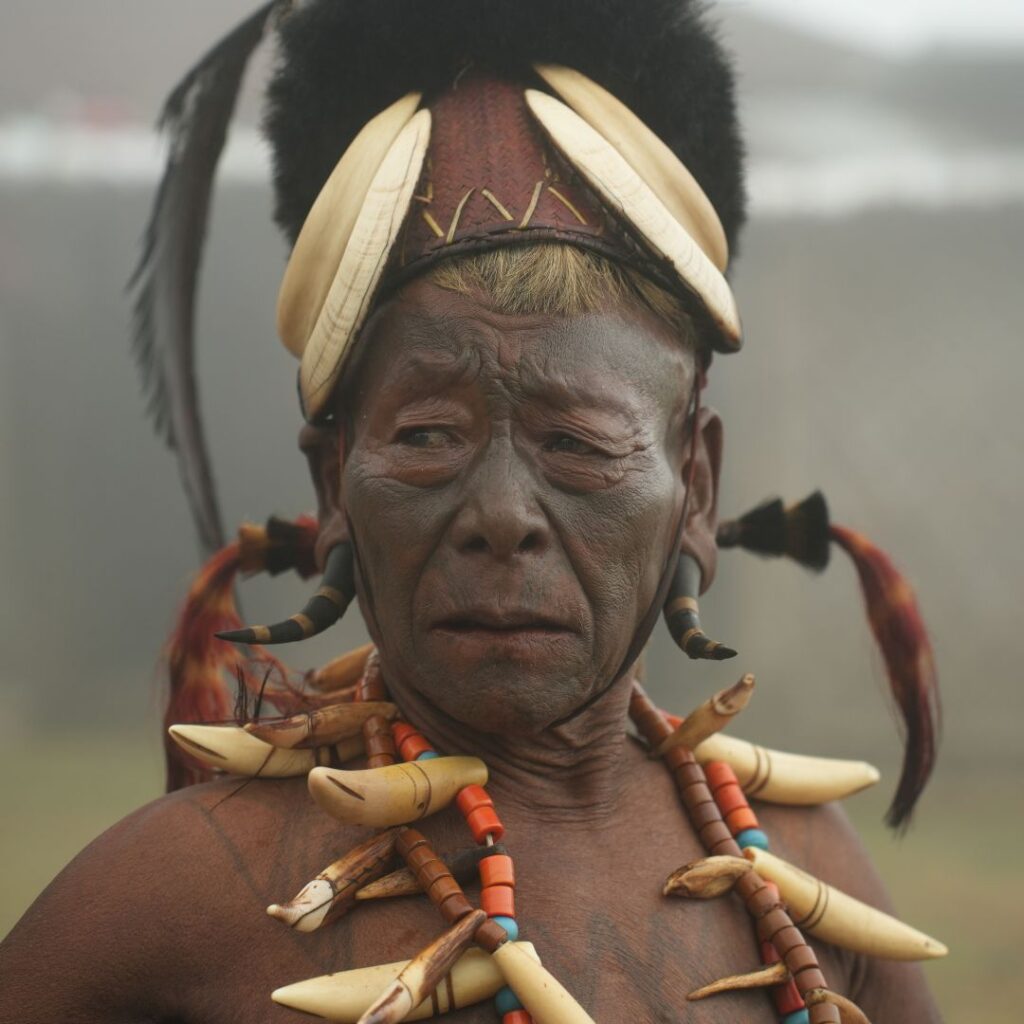
Close-up of Naga chest tattoo and ceremonial necklace

The colonial era layered another chapter onto this story. Administrators and missionaries, fascinated by what they termed “tribal ornaments,” catalogued and often appropriated pieces that now rest in European museums. Their records remain invaluable—yet their collecting practices left communities without objects that had carried ritual and ancestral weight for generations, an absence that still echoes through conversations on heritage and return.

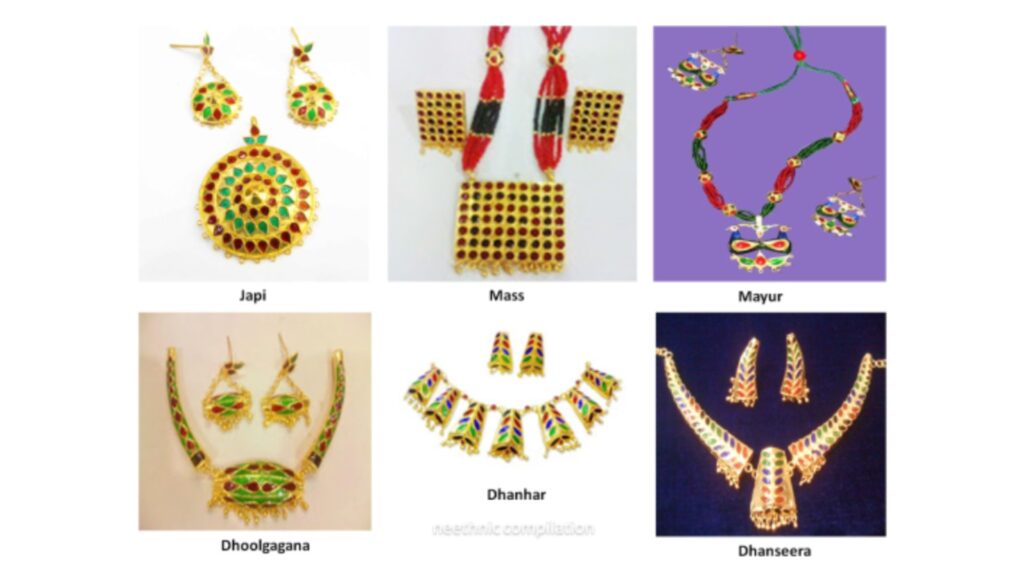
Meanwhile, the plains produced their own luminous world of craft. In Assam, gold was not mined but washed—panned from rivers by specialists who passed the skill down. These gold washers and the sonari goldsmith castes developed techniques of filigree, repoussé, and gold-plated silver that gave Assamese ornaments their delicate, airy glow. Supported by Ahom courts, they turned motifs from the natural world—peacocks, lilies, elephants—into wearable miniatures of the valley’s imagination.

Fire, Feather, Stone: The Aesthetic Ecology of Northeastern Jewellery

To understand the jewelry of the NE, one must understand the deep intimacy of the land with the landscape(s). Gold and silver link the plains to riverine abundance. Brass and copper mirror the warm glow of hearths in the hills. Beads speak of journeys that cut across oceans and kingdoms. But natural materials—bone, horn, boar tusks, feathers—anchor adornment to ecological relationships and ritual cosmologies.

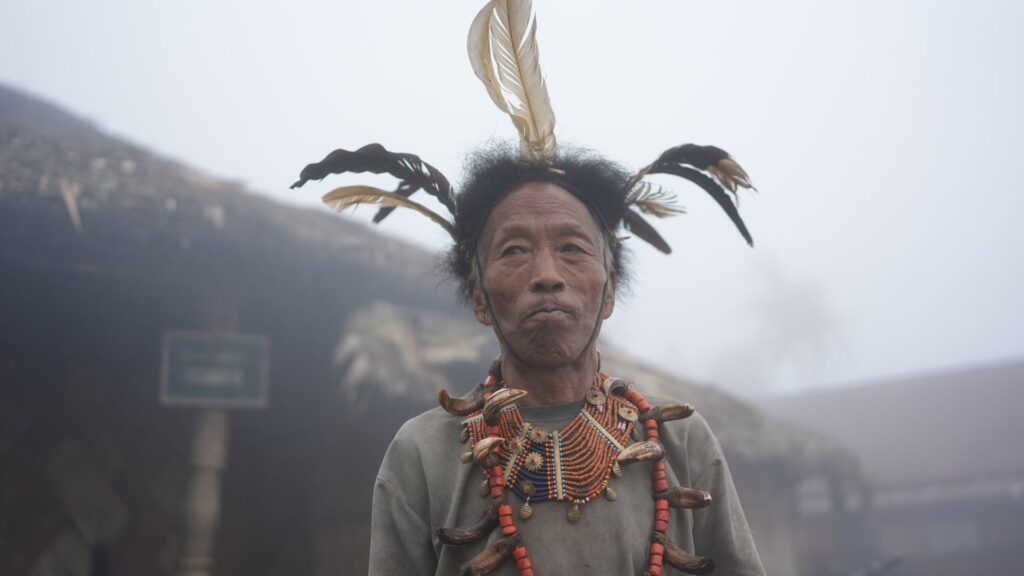
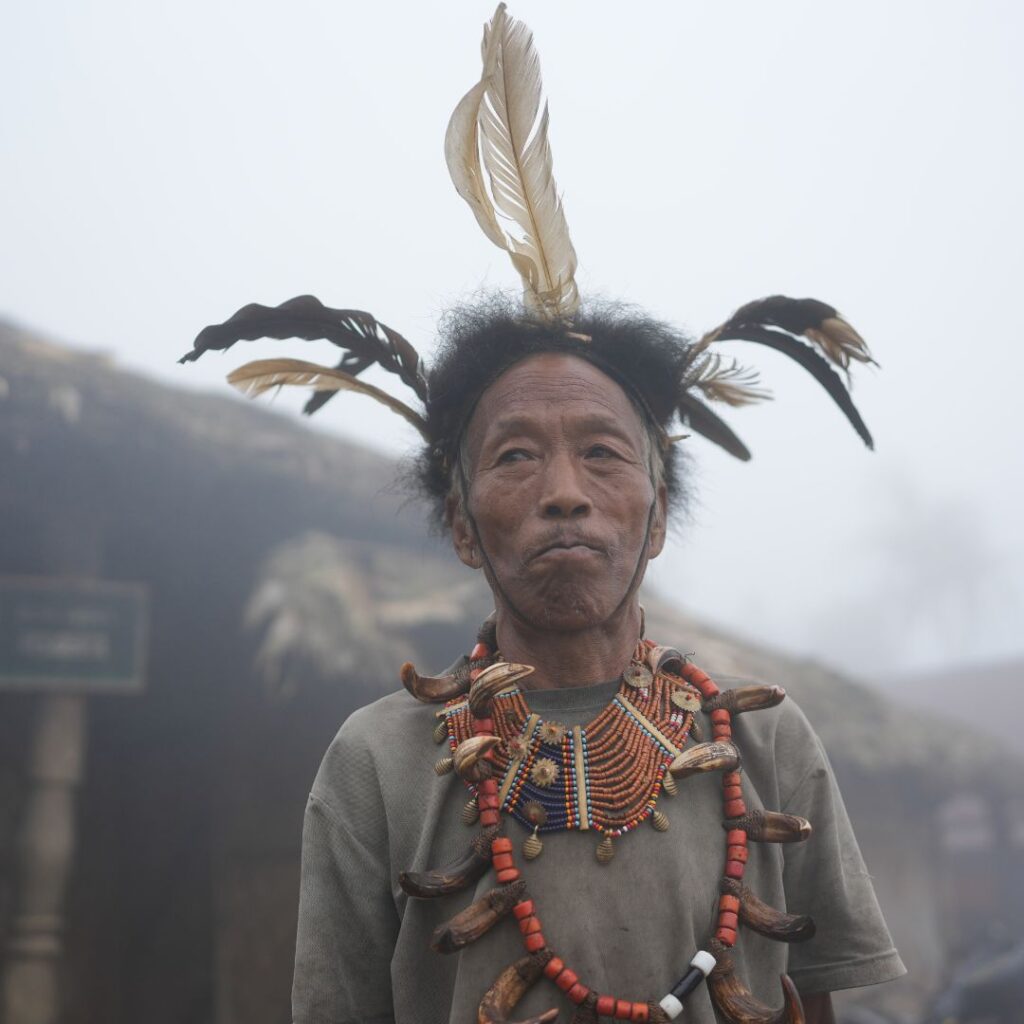
Konyak man wearing feathered headgear and bead necklace

In Naga and Arunachal communities, the gleam of animal horn or the curve of a tusk carries stories of hunting, protection, and masculine prestige. Among the Aos or Konyaks, certain bead combinations once marked a man who had completed warrior rites or held renown in feasts of merit. Among Apatanis, heirloom beads are inherited with ceremony, believed to contain powers that speak to the spirits of fields and ancestors. In the Assamese plains, however, the eye is drawn to the intricate play of metal—tiny birds poised in gold filigree, floral lines rendered with astonishing delicacy. Karbi motifs move in another direction altogether, capturing the energy of hills through geometric rhythms.

The Northeastern Tapestry

Travelling across the Northeast feels like moving through a living gallery where each state paints its own relationship with beauty, status, ritual and memory. Jewellery becomes the thread that binds these landscapes together—gold shimmering over riverine plains, beads glowing in high valleys, coral burning bright in the misted hills. Each region speaks in its own accent, yet all participate in a shared poetry of adornment.

  • Assam: Gold of the River, Heritage of the Courts
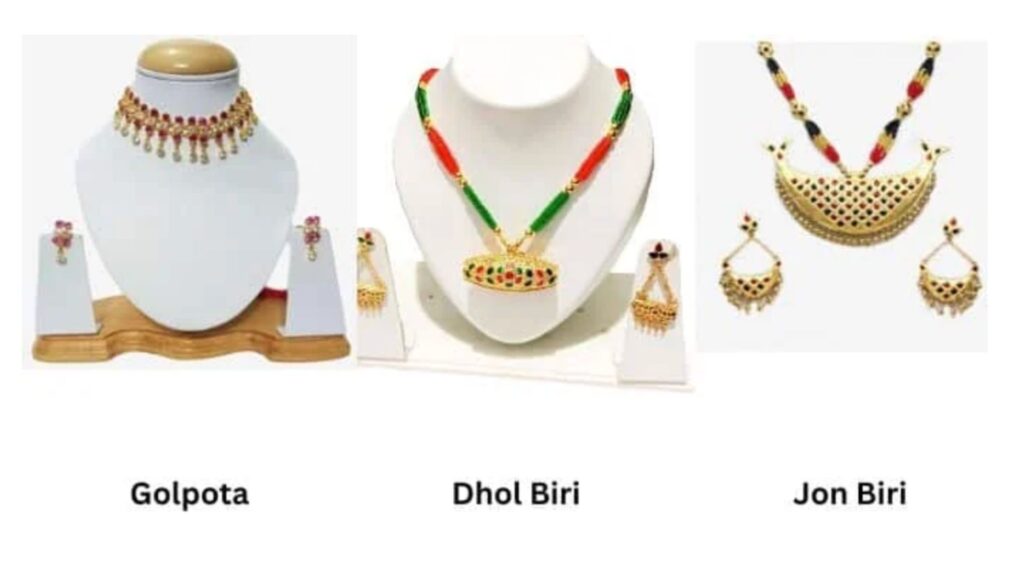
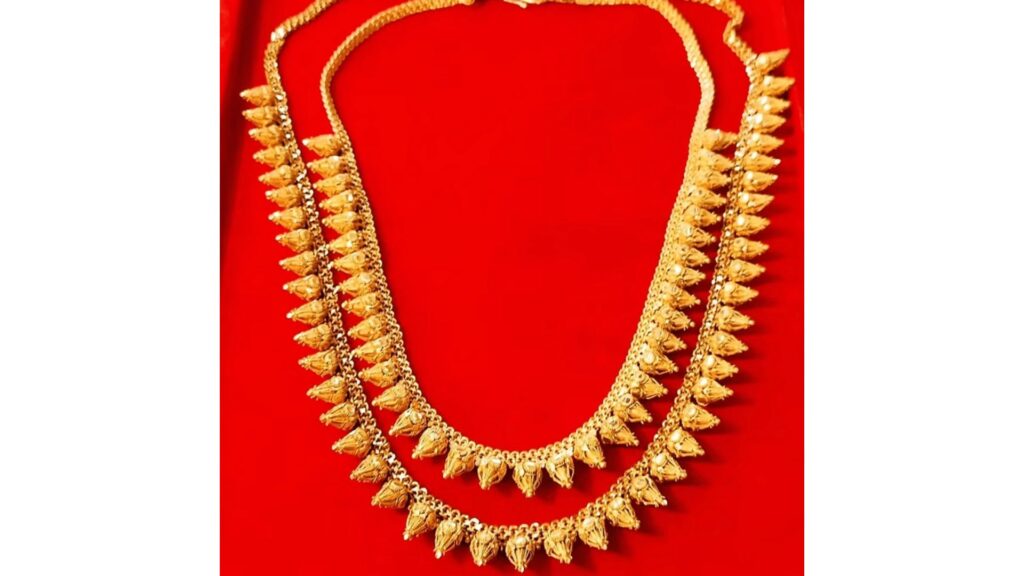
    In the Brahmaputra valley, jewellery feels almost river-born: light, luminous, filigreed into existence by the sonari families of Ranthali and Barpeta. The mati, jonbiri, lokaparo and biri still carry memories of Ahom ateliers and a cosmopolitan courtly aesthetic shaped by migration and caste craft lineages. Beyond the Assamese Hindu heartland, silver-heavy traditions among the Rabha, Karbi, Bodo, Mising and Dimasa mirror the plains’ ecological richness—each ornament signalling age, marital status and the deeper rhythms of ritual belonging.
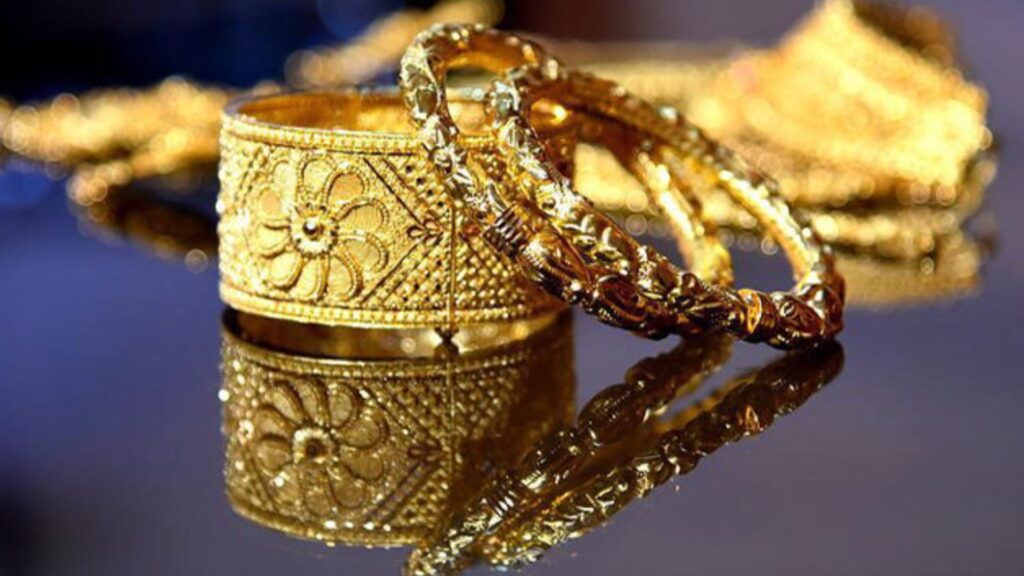
Assamese gold ornaments
  • Arunachal Pradesh: Beads with Souls, Brass with Memory
    Enter the high valleys of the Apatani, Adi, Nyishi and Monpa, and jewellery becomes animate. A bead here is never evaluated by weight but by biography: who inherited it, which ritual it has witnessed, how many generations it has travelled. Brass gleams during festivals like an echo of ancestral voices, and local myths often begin not with earth or sky but with the moment a bead descended from the spirit world—an heirloom carrying its own pulse.
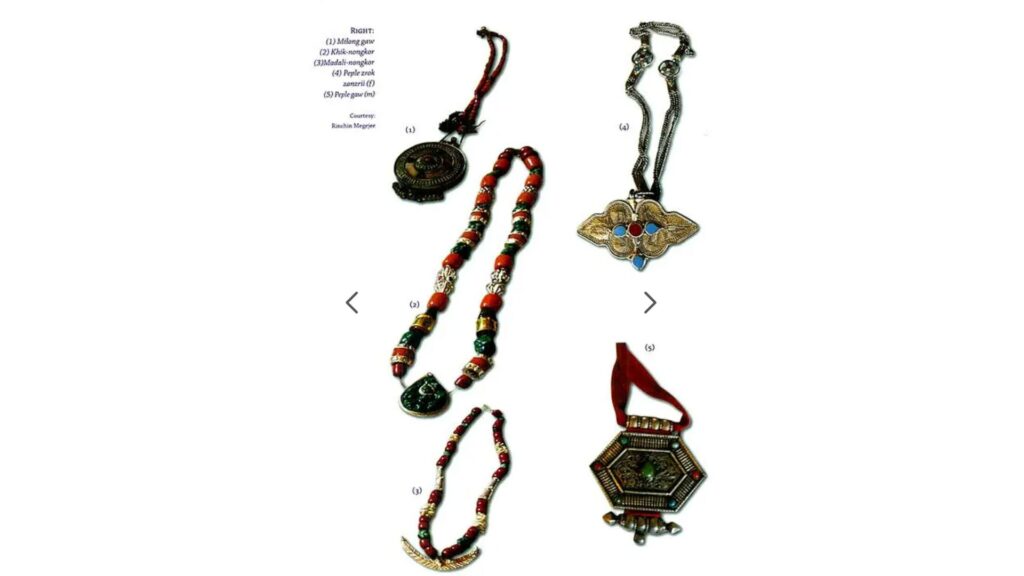
Traditional hill-region pendants and necklaces
  • Nagaland: Echoes of Headhunting, Radiance of Renewal
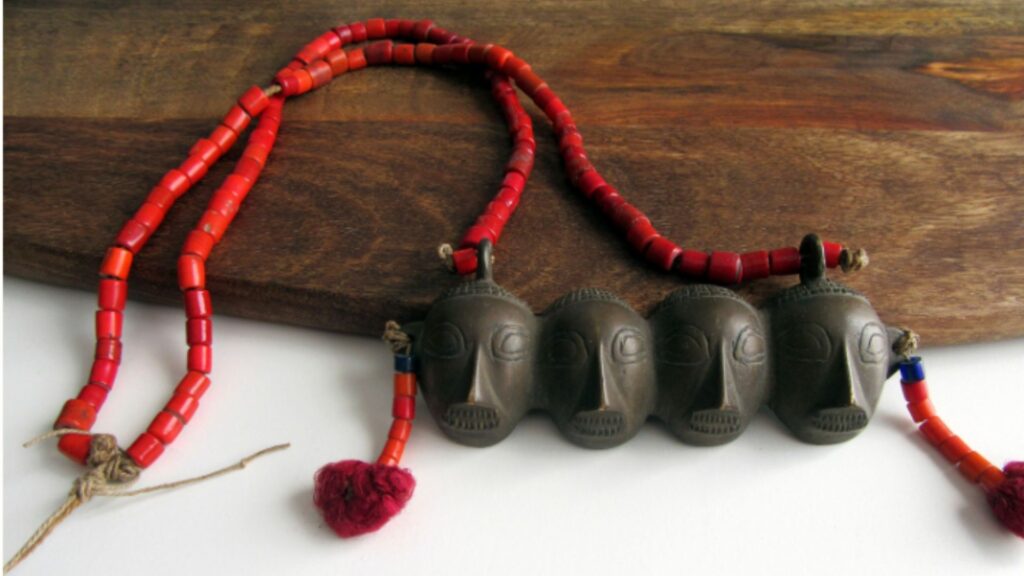
    In Nagaland, ornaments were once social scorecards—maps of honour, bravery and generosity. Carnelian beads, conch pendants, boar tusks and bright glass strands narrated a man’s warrior prowess or feast-giving reputation. Each tribe—Ao, Angami, Konyak, Lotha, Sumi—crafted its own instantly recognisable visual grammar. Though Christianisation muted many of these practices, festivals like Hornbill have rekindled their radiance, transforming once-feared symbols of warfare into emblems of cultural renewal.
Naga heirloom necklace
  • Meghalaya: Coral and Gold in the Cloud Kingdoms
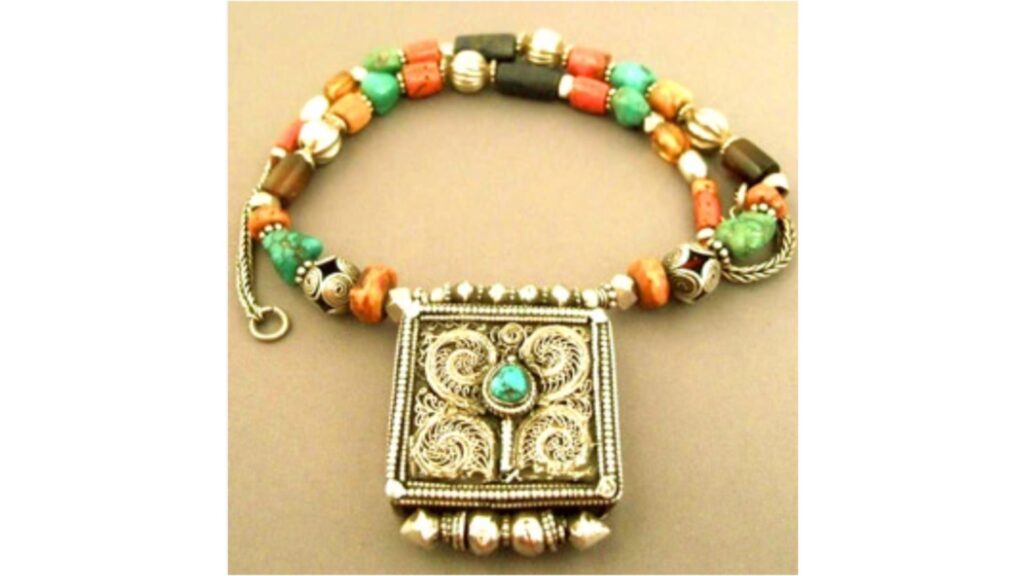
    In the Khasi and Jaintia hills, coral burns like a small flame against the mist. The paila, thick and red, paired with the sunlit glow of the kynjri ksiar pendant, remains vital to rites of passage and identity. A contemporary pride in “Paika culture” now circulates online, reviving and reinterpreting ancestral style. Among the Garo, coral and carnelian weave through bead necklaces worn by both men and women—proof that adornment here is as much communal as individual.
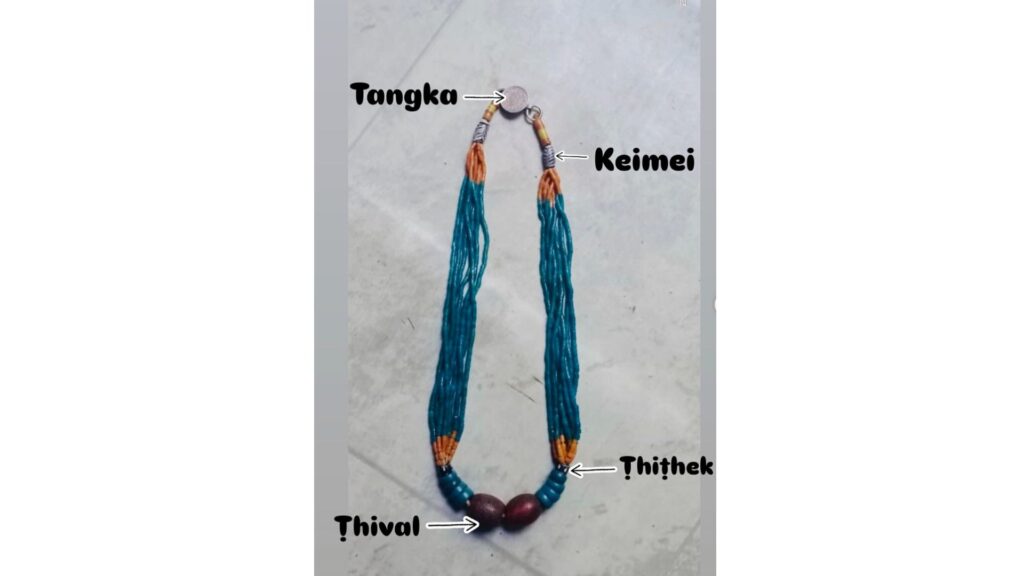
Beaded necklace with square silver pendant
  • Manipur: Meitei Gold and Hill-Tribe Chromatics
    Manipur’s cultural map oscillates between the elegance of the valley and the exuberance of the hills. Meitei women in weddings or Lai Haraoba appear crowned in finely worked gold and silver—Likchow necklaces, jewelled hairpieces, radiant earrings. In the hills, however, the Tangkhul, Kabui and Zeliang favour bold beads in vivid palettes, each combination a declaration of clan, age, and life-cycle transition.
Traditional Assamese gold necklace
  • Mizoram: Stones of the Hills, Silver of the Sky
    Mizoram’s jewellery speaks softly but deeply—thihna, thihus and thifen bead strands drape over the patterned beauty of the puan. Young designers, often NIFT-trained, are now experimenting with local stones, contemporary silhouettes and minimalist lines, creating a dialogue between heritage and modernity that feels as fresh as it is rooted.
Apatani beaded necklace
  • Tripura & Sikkim: Quiet Threads, Deep Resonances
    Though less documented, the ornament traditions of Tripuri families and those of Lepcha and Bhutia communities in Sikkim remain woven into wider worlds of handloom and ritual. Beads, metal pendants and heirloom pieces appear in festivals and life-cycle events, adding gentle yet enduring strokes to the larger canvas of Northeastern adornment.
Assamese gold bangles

Ornaments of Life: How Jewellery Moves Through the Life-Cycle

From birth to old age, jewellery quietly maps the arc of a life in the Northeast. Infants in several Arunachal communities receive protective charms of claws or beads; adolescence arrives with first necklaces or earrings that signal maturity and readiness for partnership. Marriage transforms the body’s ornamented story: Khasi, Jaintia and Meitei families exchange coral and gold as bridewealth, while in some Naga groups a man’s gift of bead strands or boar-tusk ornaments reflects his standing and ability to provide. Even in later years, jewellery remains a measure of lived experience—whether in the bead combinations reserved for a Naga man who has completed a feast of merit or in the ritual pieces worn by respected elders in Arunachal.

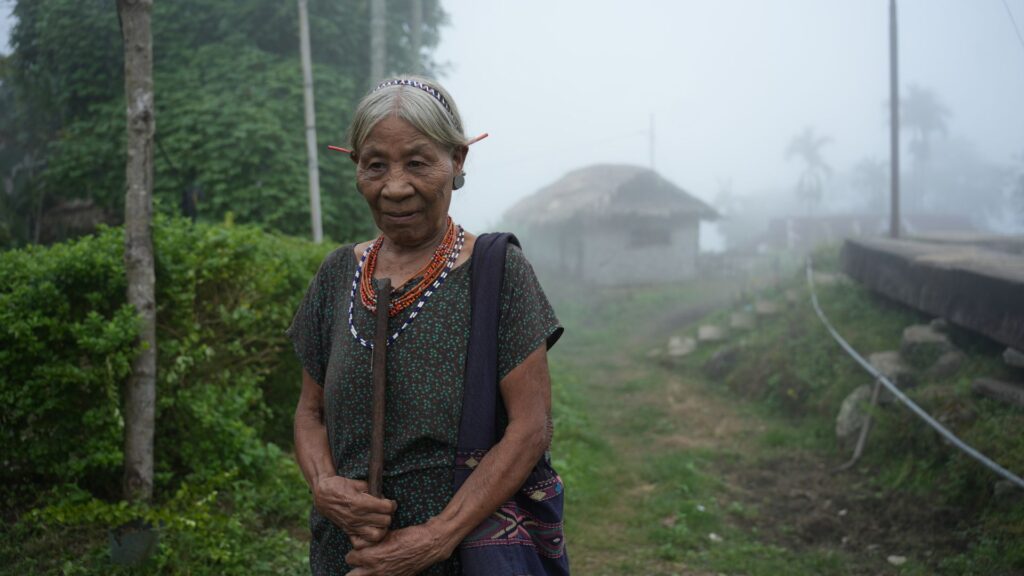
Apatani woman wearing beads and ear ornaments

Hands That Make, Hands That Wear: Craft, Gender and Economy

Jewellery-making in the Northeast often reflects gendered labour traditions: in the Assamese plains, goldsmithing has long been a male, caste-based craft, while across the hills bead-work is largely in women’s hands, giving them roles as designers, makers and traders. Today, women’s cooperatives, craft collectives and bodies like NEHHDC have strengthened these traditions into sustainable livelihoods. Yet the act of wearing jewellery need not mirror these divisions—among the Garo, for instance, rigitok bead necklaces belong to both men and women, reminding us that adornment can be a shared, communal language rather than a strictly gendered one.

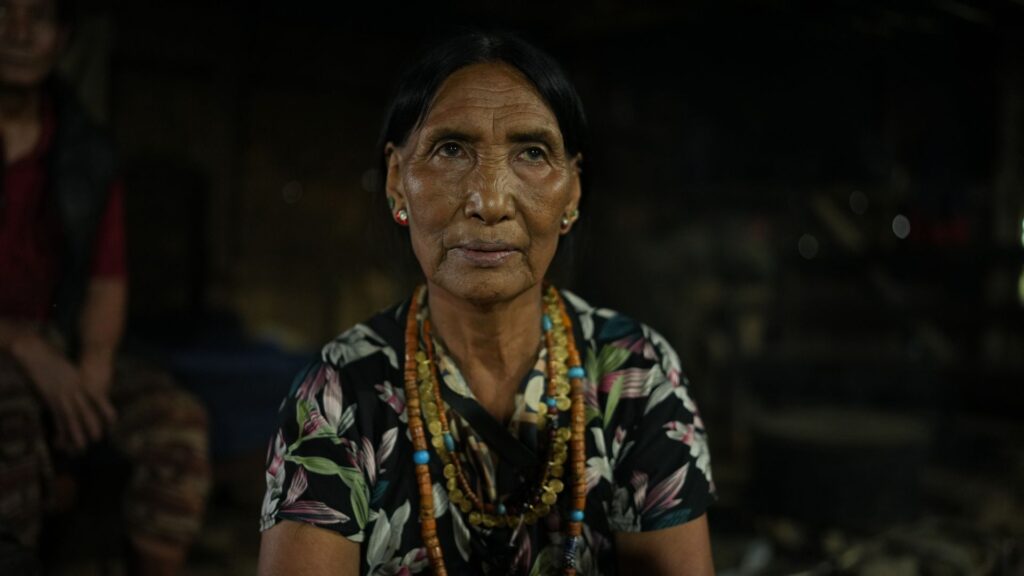
Elderly woman wearing layered bead necklaces

From Ancestral to Instagram: Contemporary Transformations

The last century has reshaped how jewellery is worn and understood in the Northeast. Christian missions, education and urban migration pushed many traditions out of daily life and into festival wardrobes, museum cases and collective memory. Yet revival is unmistakable: cultural bodies, museums, artisans and grassroots groups are documenting and reinventing old designs, while Assamese pieces like the jonbiri and lokaparo have surged into mainstream fashion through social media and e-commerce. With growing conversations around GI tags and cultural ownership, communities are increasingly defining what authenticity means—and how their artistic heritage should move through the wider world.

Apatani elder wearing traditional bead jewellery outdoors
Apatani bead heirlooms

Sources

  • Baby, C. and Kavitha, S. (2021) ‘The traditional jewelleries of Apatani tribe of Arunachal Pradesh, India’, Journal of Multidisciplinary Studies in Archaeology, 9, pp. 346–363. Heritage University of Kerala
  • Perme, A. (2021) ‘Folklore with special reference to origin of Apatani beads’, Skylines of Anthropology, 1(2), pp. 124–130. ARF Journals
  • Kanungo, A.K. (2006) ‘Naga ornaments and the Indian Ocean’, Bulletin of the Indo-Pacific Prehistory Association, 26, pp. 154–162. journals.lib.washington.edu
  • Saikia, M. (2016) ‘Assamese jewellery and its status and prospect: A case study of Ranthali village of Nagaon district, Assam’, IOSR Journal of Humanities and Social Science, 21(1), pp. 36–40. airs.org.in
  • Jacobs, J. with Macfarlane, A., Harrison, S. and Herle, A. (1990) The Nagas: Hill Peoples of Northeast India: Society, Culture and the Colonial Encounter. New York: Thames and Hudson. National Library of Australia Catalogue
  • Blackburn, S. (2008) Himalayan Tribal Tales: Oral Tradition of the Apatani of Arunachal Pradesh. Leiden: Brill. Google Books
  • Nongbri, T. and Bhargava, R. (eds) (2021) Materiality and Visuality in North East India: An Interdisciplinary Perspective. Singapore: Springer. SpringerLink
  • Indian National Trust for Art and Cultural Heritage (INTACH) (n.d.) Tribal Jewellery of Northeast India. New Delhi: INTACH/Young INTACH. Young Intach
  • Miller, D. (1987) Material Culture and Mass Consumption. Oxford: Basil Blackwell. Internet Archive+1
  • Miller, D. (ed.) (1998) Material Cultures: Why Some Things Matter. London: Routledge. Google Bo
Picture of Kavya

Kavya

Equal parts policy wonk and wanderlust junkie, Kavya brings together her training in environmental economics and political science with an enduring curiosity about how the world works — and how it could work better. By day, she’s a public health researcher and advocate, working at the intersection of people, systems, and the planet.
Off the clock? She’s a storyteller, active rester, and cat mama.

EXPLORE NORTH-EAST INDIA WITH US

READ MORE ABOUT NORTH-EAST INDIA

Northeast ornaments

Adorned by the Hills – Jewellery of the NE

Tattoo Culture

Cartographies of Skin: Travelling Through the Tattoo Culture in NE India

Flower Valley

Blossoms of the Hills: Exploring the Floral Diversity of Northeast India