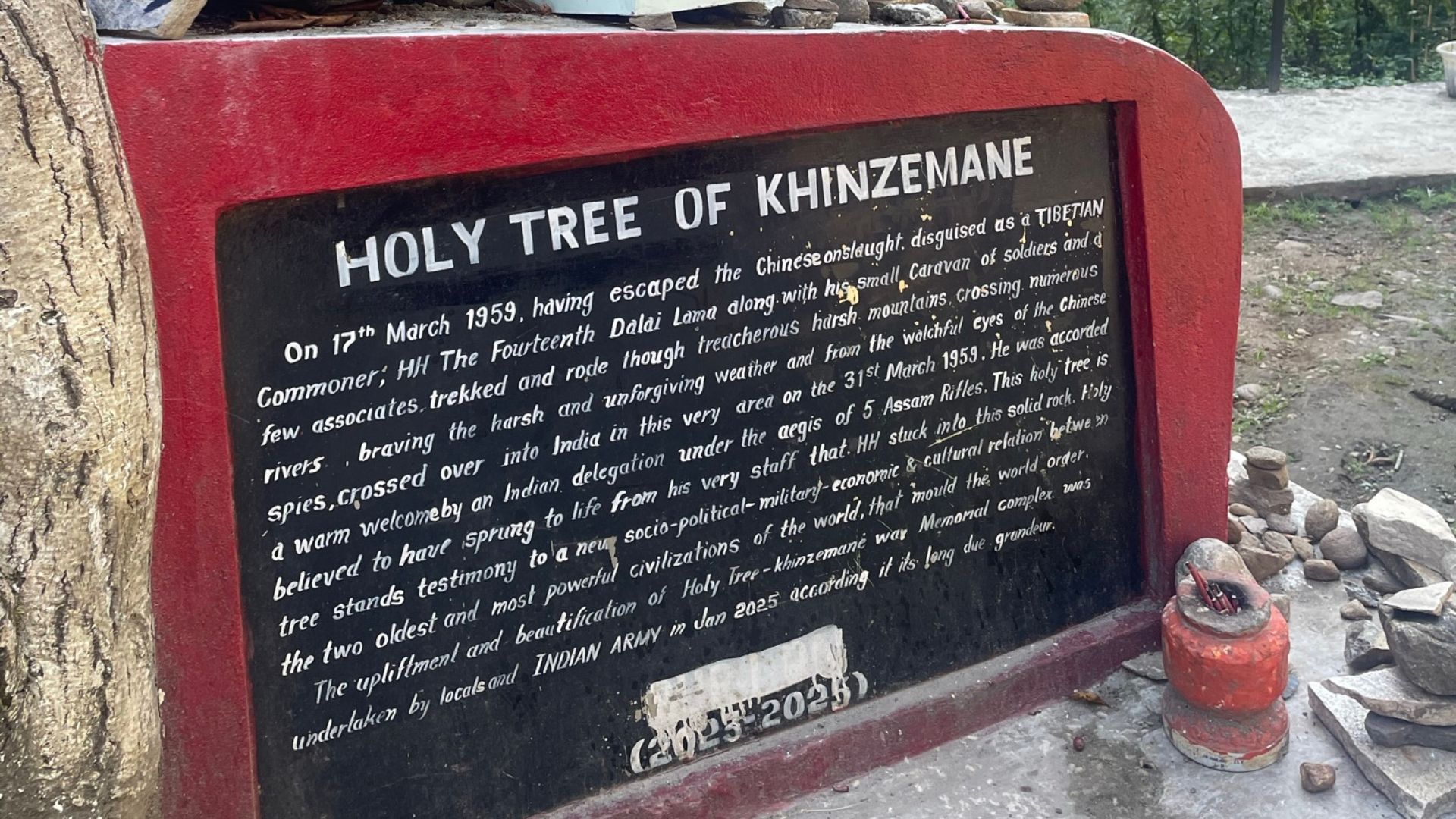
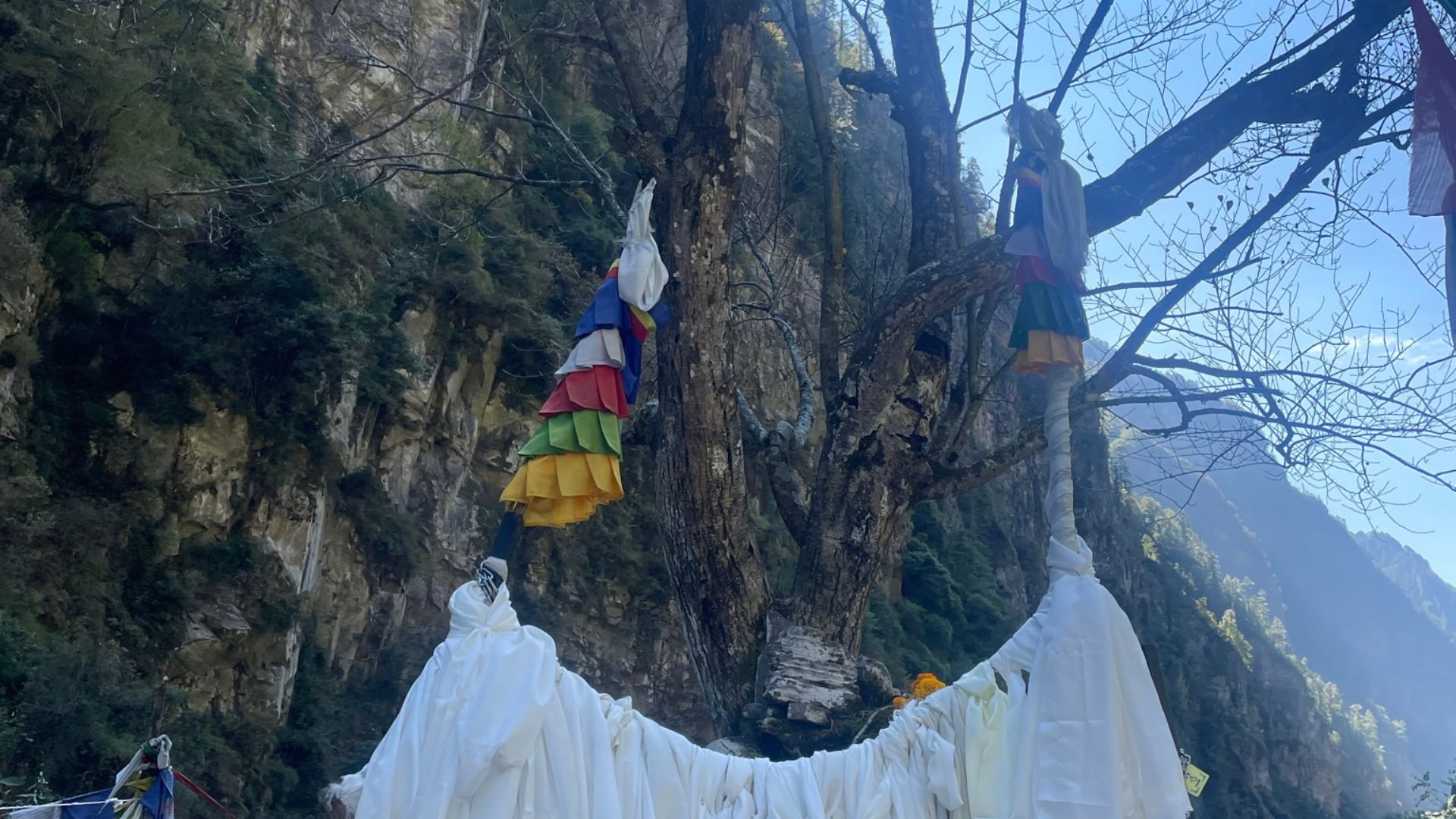
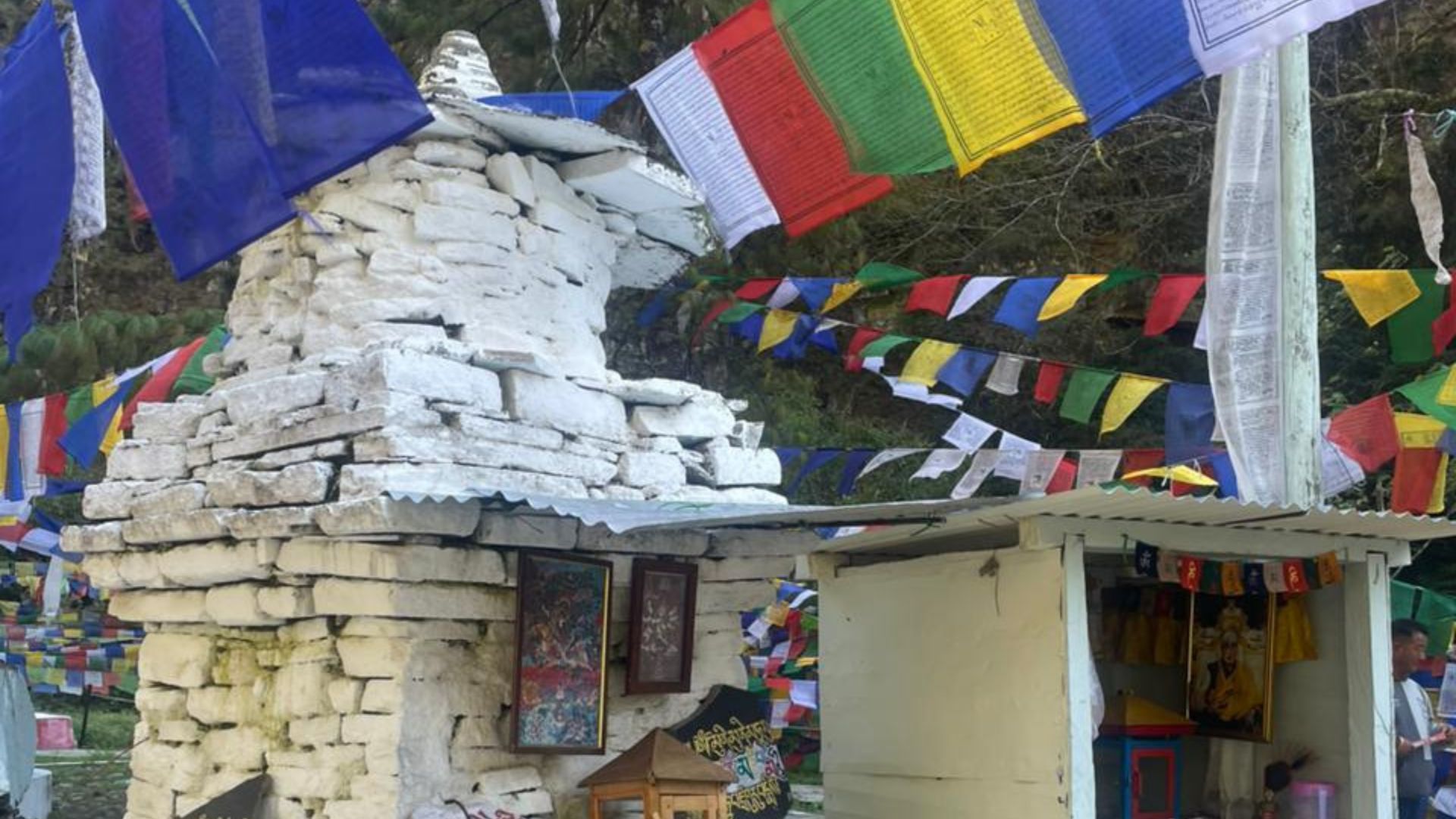
A short drive from the quiet settlements around Zemithang brings you to one of the most meaningful spiritual landmarks in Arunachal Pradesh. The Holy Tree of Khinzamane stands almost at the Indo China border, surrounded by mountains, crisp air, and a sense of deep stillness. This is the very spot where the fourteenth Dalai Lama first stepped onto Indian soil in 1959 after a long and exhausting journey from Tibet. Legend says that before he continued onward, he pressed his walking staff into the earth. In time, the staff took root and grew into the sacred tree that stands here today.
The tree is wrapped in layers of colourful prayer flags tied by pilgrims, soldiers, monks, and travellers who come seeking blessings or simply quiet reflection. The moving wind makes the flags flutter gently, creating a soft, calming sound that adds to the spiritual atmosphere of the place.
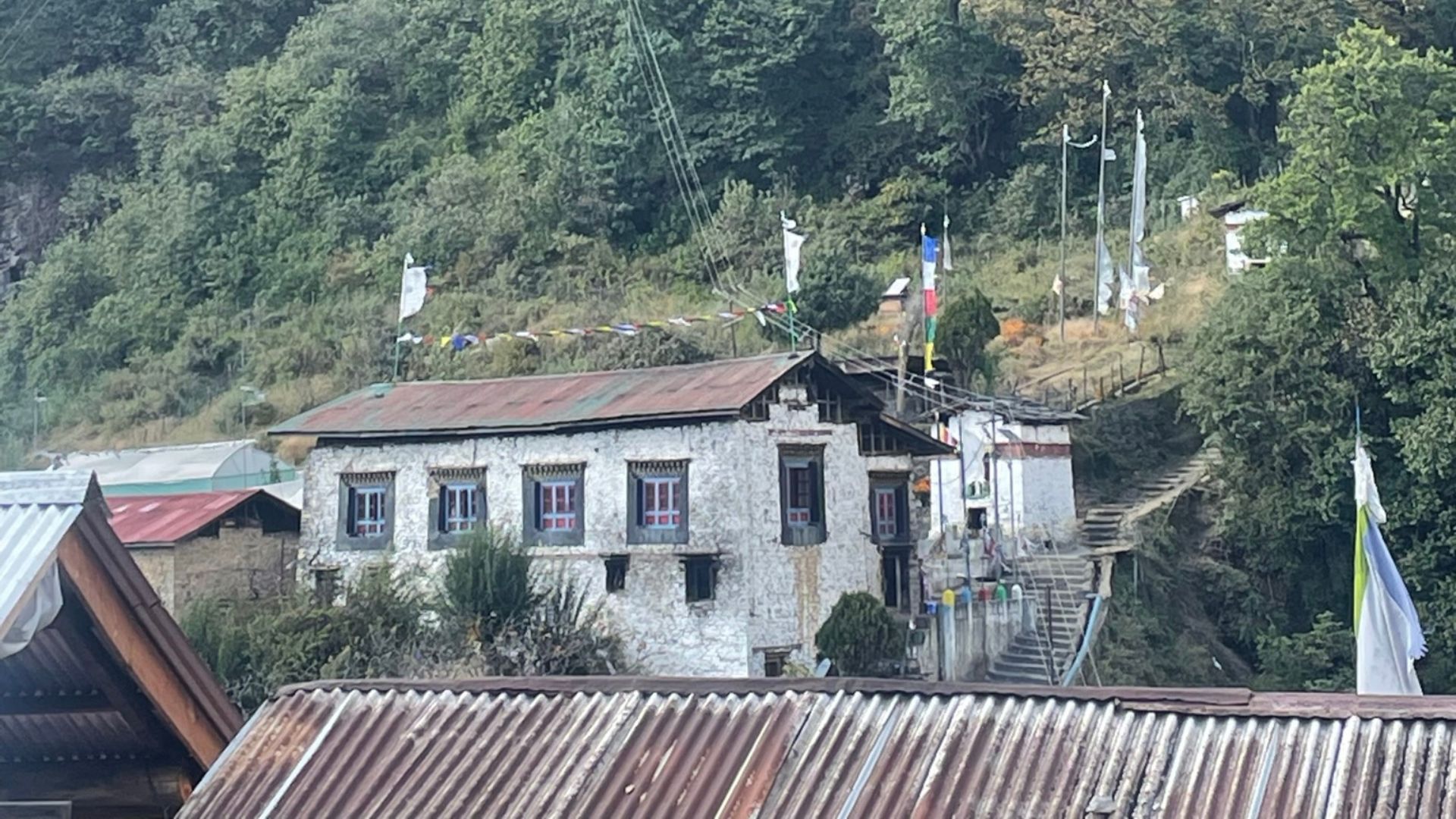
A small temple, simple but full of devotion, stands beside the tree. Visitors stop here to light incense sticks, kneel in prayer, or spend a moment in silence. The setting is humble, peaceful, and meaningful in its own way, reminding you that spiritual places do not always need grand structures to feel powerful.
Getting here also feels like a pilgrimage. The journey requires passing through two army checkpoints where permits are checked. These stops reinforce the feeling that you are entering a protected and significant space, a place where history, faith, and the landscape come together.
This experience is quiet, contemplative, and deeply moving. For many travellers, standing in front of the Holy Tree is not just about witnessing a historic moment but about feeling a connection that stretches across borders, mountains, and time.
9:00 AM to 9:30 AM: Drive from Zemithang to Khinzamane. Enjoy views of the valley and the border mountains as you approach the army checkpoints.
9:30 AM to 10:00 AM: Cross the two security checks with your Inner Line Permits. Learn from your guide about the significance of this area and the Dalai Lama’s historic journey.
10:00 AM to 10:45 AM: Arrive at the Holy Tree. Spend time taking in the peaceful surroundings, listening to the fluttering prayer flags, and observing the sacred site.
10:45 AM to 11:15 AM: Visit the small temple. Light incense sticks, offer prayers, or simply sit for a quiet moment of reflection.
11:15 AM to 12:00 PM: Take a slow walk around the border viewpoint area before beginning your return journey.
Khinzamane is a short drive of around thirty minutes from Zemithang. The journey is scenic and slow paced, passing through quiet valleys and border landscapes before reaching the site.
Yes. An Inner Line Permit is mandatory to visit this area. Since the Holy Tree is close to the Indo China border, permits are checked at two army checkpoints. We assist with guidance, but guests must carry their original permits and identification.
No. This is a gentle and accessible experience. There is minimal walking around the site and the temple area. It is suitable for most travellers who are comfortable with short walks and standing for a while.
You will spend around forty five minutes at the Holy Tree and additional time at the nearby temple and viewpoint area. The experience is unhurried, allowing you to move at your own pace.
Photography is generally allowed around the Holy Tree and the surrounding area. However, guests are requested to be respectful and avoid intrusive photography, especially when monks, pilgrims, or soldiers are present.
Yes. Visitors are welcome to light incense sticks, offer prayers, or sit quietly inside the small temple. You may carry a small offering if you wish, though it is not mandatory.
The experience is quiet, reflective, and deeply peaceful. Prayer flags flutter constantly in the mountain wind, and most visitors naturally speak softly and move slowly while at the site.
Yes, as long as they are comfortable with travel near a border area and basic walking. The experience is calm and not physically strenuous, but it does require patience at security checkpoints.
Warm layered clothing is recommended as the area can be windy and cold, even during the day. Comfortable shoes are advised for walking around the site.
Mobile network is extremely limited or unavailable in this area. It is best to treat this experience as a short digital break.
It is both. While the Holy Tree holds deep spiritual significance, the experience is open to people of all beliefs. Visitors are encouraged to approach the site with respect, openness, and curiosity rather than any obligation to participate in rituals.
This is not a place you visit for activity or adventure. It is special because of its quiet power, historical importance, and the rare opportunity to stand at a site where faith, history, and the landscape intersect so naturally.