Step into the heart of Angami culture with our immersive farm life experience in Jakhama Village. This adventure offers a unique opportunity to explore traditional agricultural practices and innovative integrated fish breeding systems. Your journey begins at the designated campsite, where our local guide will lead you through the lush, terraced farms, revealing the intricate balance of local farming methods and the harmonious relationship the Angami people maintain with nature.
Discover the fascinating practice of paddy-cum-fish culture, an age-old agricultural system practiced in various pockets around Asia. This sustainable method allows fish to be bred in paddy fields, providing a symbiotic relationship where fish fertilize the crops, regulate micro-climatic conditions, soften the soil, and control pests by eating larvae and weeds. The rice, in turn, provides shade and food for the fish. Introduced to the Angami community in recent years with the support of the fisheries department, this practice has revolutionized local farming by enhancing productivity and sustainability.
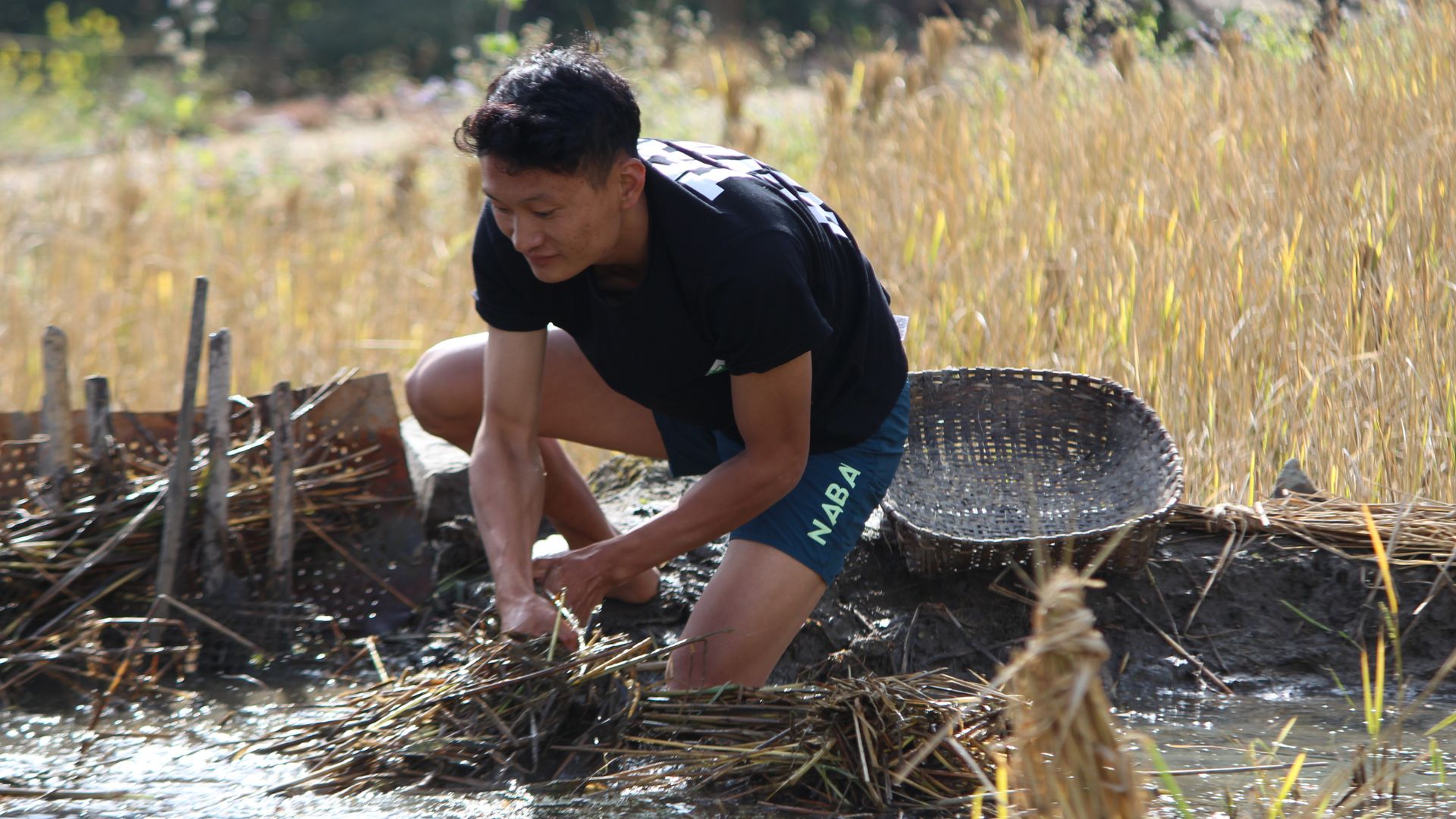
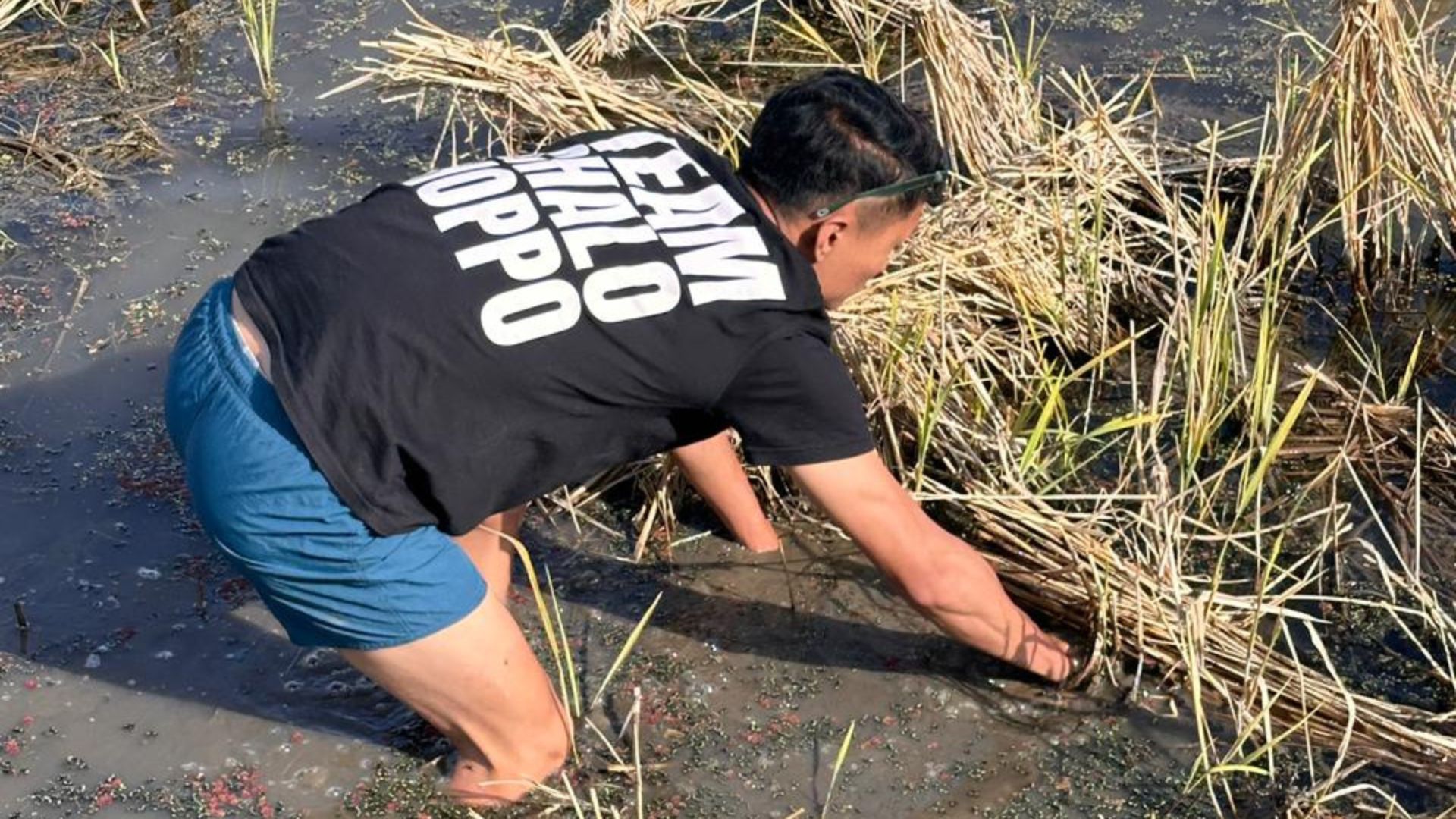
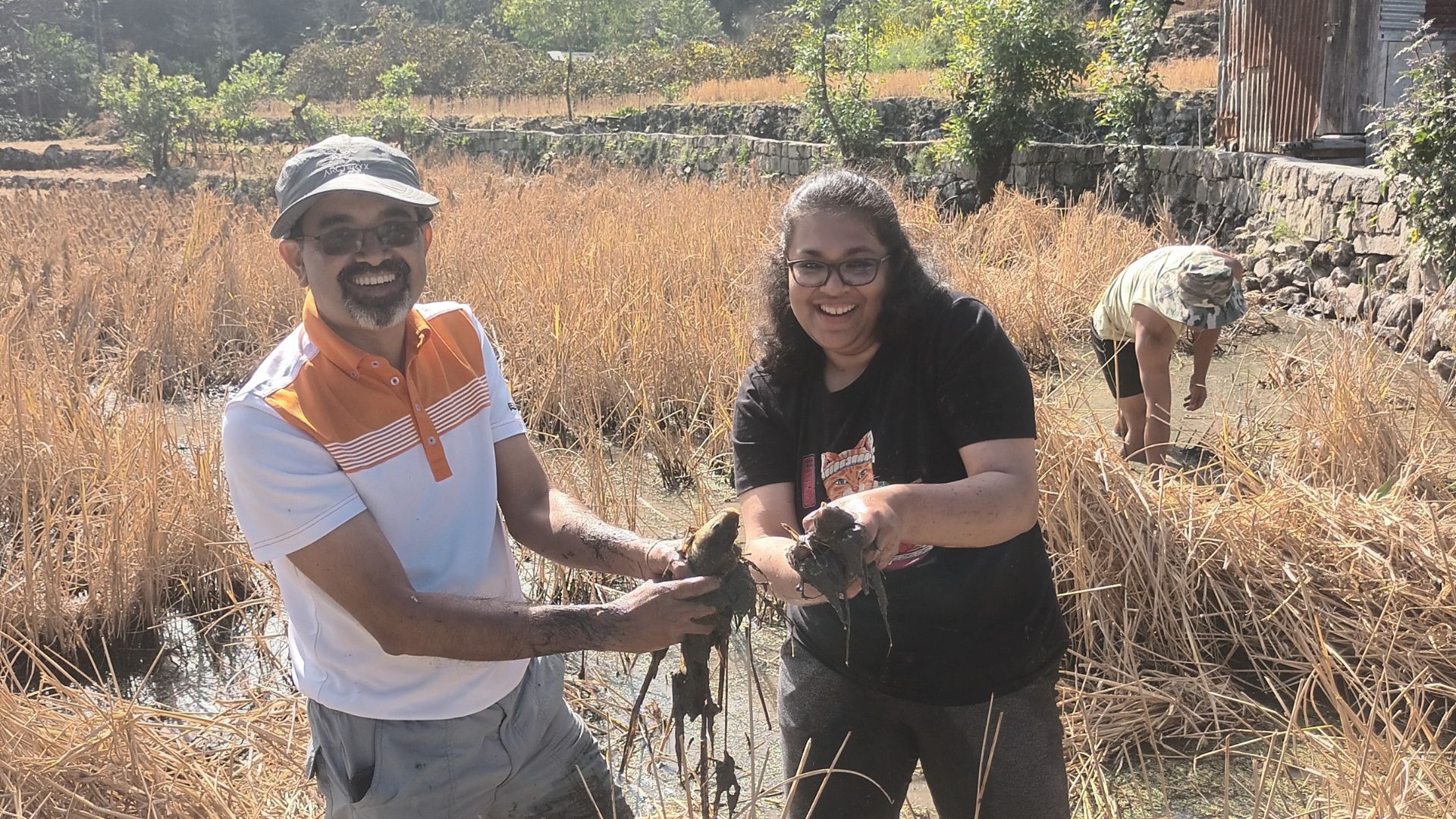
Participate in a hands-on fishing session where you’ll catch fish with your bare hands, experiencing this age-old method that adds excitement and authenticity to the experience. As you explore, you’ll gain a deeper understanding of the resilience and resourcefulness of the Angami farming community. The day culminates with a meal prepared from the fish you catch, offering a taste of Angami cuisine and a memorable conclusion to your adventure.
Itinerary
9:00 AM: Meet at the designated campsite in Jakhama Village. Our friendly local guide will greet you and provide an overview of the day’s activities.
9:00 AM – 9:15 AM: Change into shorts and appropriate footwear (slippers or gum boots) to prepare for the farm visit.
9:15 AM – 9:30 AM: Begin a scenic 15-minute walk to the farms of Jakhama Village, soaking in the picturesque landscapes and learning about the local environment.
9:30 AM – 10:00 AM: Introduction to Angami farming practices. Learn about the agricultural seasons, the variety of crops grown, and the traditional methods used by the Angami people.
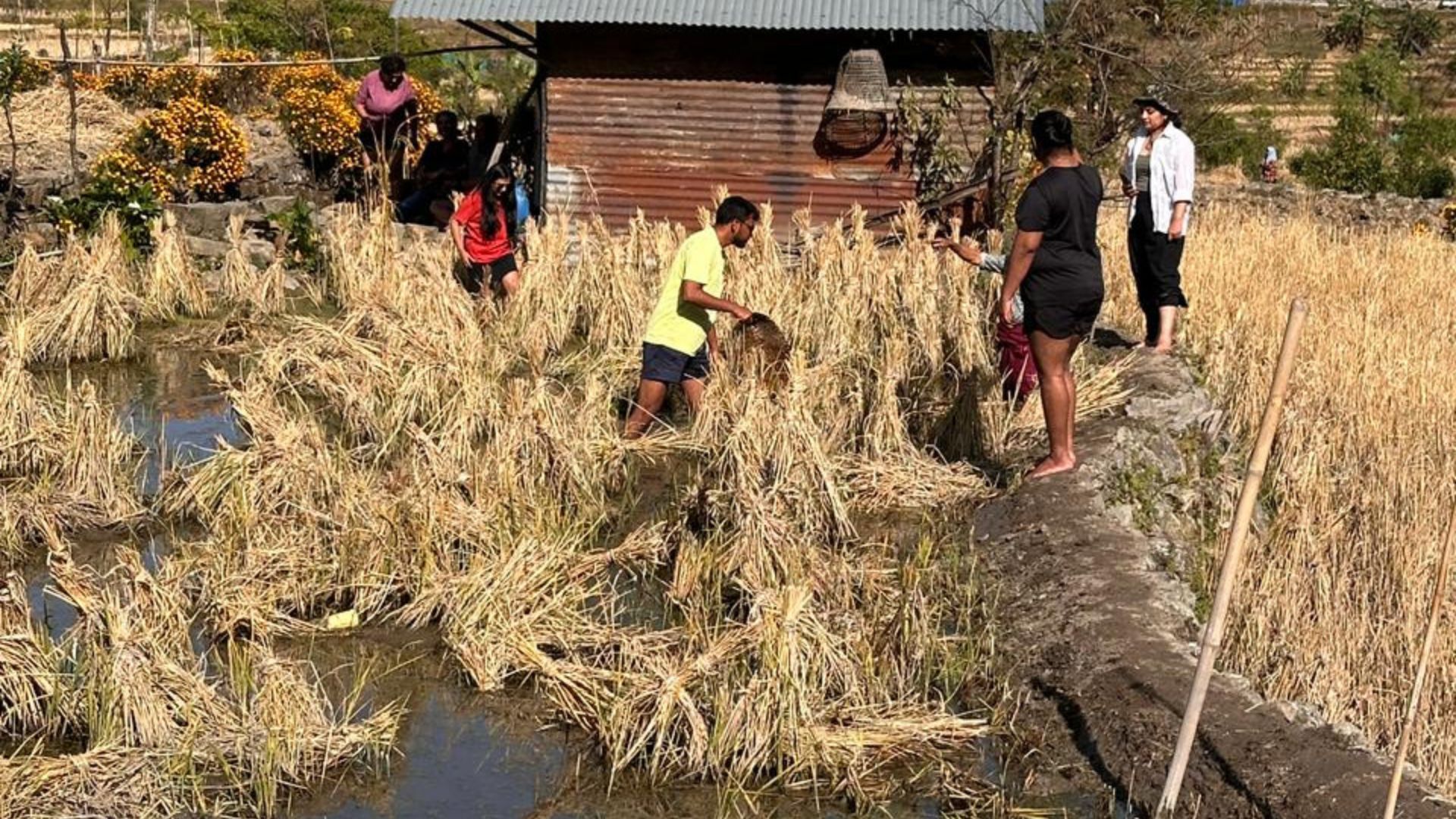
10:00 AM – 10:30 AM: Explore a field incorporating fish breeding into the farming system. Understand the paddy-cum-fish culture, where fish are bred in paddy fields, fertilizing the crops and feeding on pests, resulting in a symbiotic relationship that enhances food yield.
10:30 AM – 11:30 AM: Participate in a hands-on fishing session. Get down into the mud and try catching fish with your bare hands, experiencing this age-old method firsthand.
11:30 AM – 12:00 PM: Walk back to the campsite, a scenic 20-30 minute journey, reflecting on the unique fishing experience.
12:00 PM – 12:30 PM: Freshen up at the campsite while our local partners take the fish to prepare a hearty lunch.
12:30 PM – 1:30 PM: Take a guided walk into Jakhama Village. Discover traditional farming tools and big baskets made by locals for storing grain. This walk offers deeper insights into the local way of life and lasts about an hour.
1:30 PM – 2:30 PM: Return to the campsite for a delicious lunch featuring the fish you caught, prepared in authentic Angami style. Enjoy a packed picnic en route, soaking in the serene surroundings.
2:30 PM – 3:00 PM: Conclude with a Q&A session. Feel free to ask our local guide any questions about Angami culture, farming practices, or the history of the region.
3:00 PM: Bid farewell to your hosts and guide, leaving with a newfound appreciation for the Angami community and their rich agricultural heritage.
Why You Will Love It?
Cultural Immersion: Dive deep into the Angami community’s heritage by learning about their traditional farming practices and innovative fish breeding systems.
Hands-On Experience: Participate in the farming and fishing processes, allowing you to appreciate the skill and dedication of the Angami farmers.
Authentic Connection: Engage with local farmers and experience their daily lives, gaining a deeper understanding of their culture and traditions.
Who Is This Experience For?
Cultural Enthusiasts: Perfect for those interested in exploring and preserving traditional farming practices and understanding their historical context.
Adventure Seekers: Ideal for individuals who enjoy hands-on activities and want to experience the thrill of catching fish with their bare hands.
Food Lovers: Great for those who are passionate about authentic local cuisine and want to learn about sustainable food practices.
Gallery
Guided tour of Jakhama Village farms
Introduction to Angami farming and fish breeding practices
Hands-on fishing session
Scenic walks to and from the campsite
Guided village walk and cultural insights
Delicious lunch prepared with the fish you catch
Q&A session with local guide
Waterproof Footwear
Protective and spare set of clothing
Sun protection: sunscreen, a hat, and sunglasses
Snacks and Water
First Aid Kit/Personal Medication
Camera or Smartphone
Respectful Attitude
FAQs
What is “paddy-cum-fish” culture and why is it important?
Paddy-cum-fish (or integrated rice–fish) culture means the same paddy fields are used to grow rice and raise fish simultaneously. The fish help fertilize soil, control pests, soften soil, and regulate conditions — while the rice fields provide water and shelter for the fish.
This sustainable farming method boosts productivity and reflects indigenous/agro-ecological practices adapted for the hills of Nagaland.
Do I need prior experience in farming or fishing to participate?
No — the activity is guided and explained. Even if you’ve never fished or done paddy-field work before, local guides will support and instruct you. The hands-on portion is designed to be accessible.
What will I learn about Angami agriculture during this visit?
You’ll learn about:
Traditional and modern farming practices used by the Angami (wet-rice terrace cultivation, integrated farming systems).
The diversity of crops traditionally cultivated in their agro-forestry and home-garden systems.
The social and cultural importance of farming and agriculture in Angami village life (how farming ties into community, seasons, livelihood).
Is this a sustainable/eco-friendly experience?
Yes — the paddy-cum-fish method itself reflects sustainable agriculture: it reduces the need for chemical fertilizers and pesticides, supports soil health and biodiversity, and uses land efficiently.
By participating as a visitor, you also contribute to valuing and preserving these traditional farming and agro-biodiversity practices.