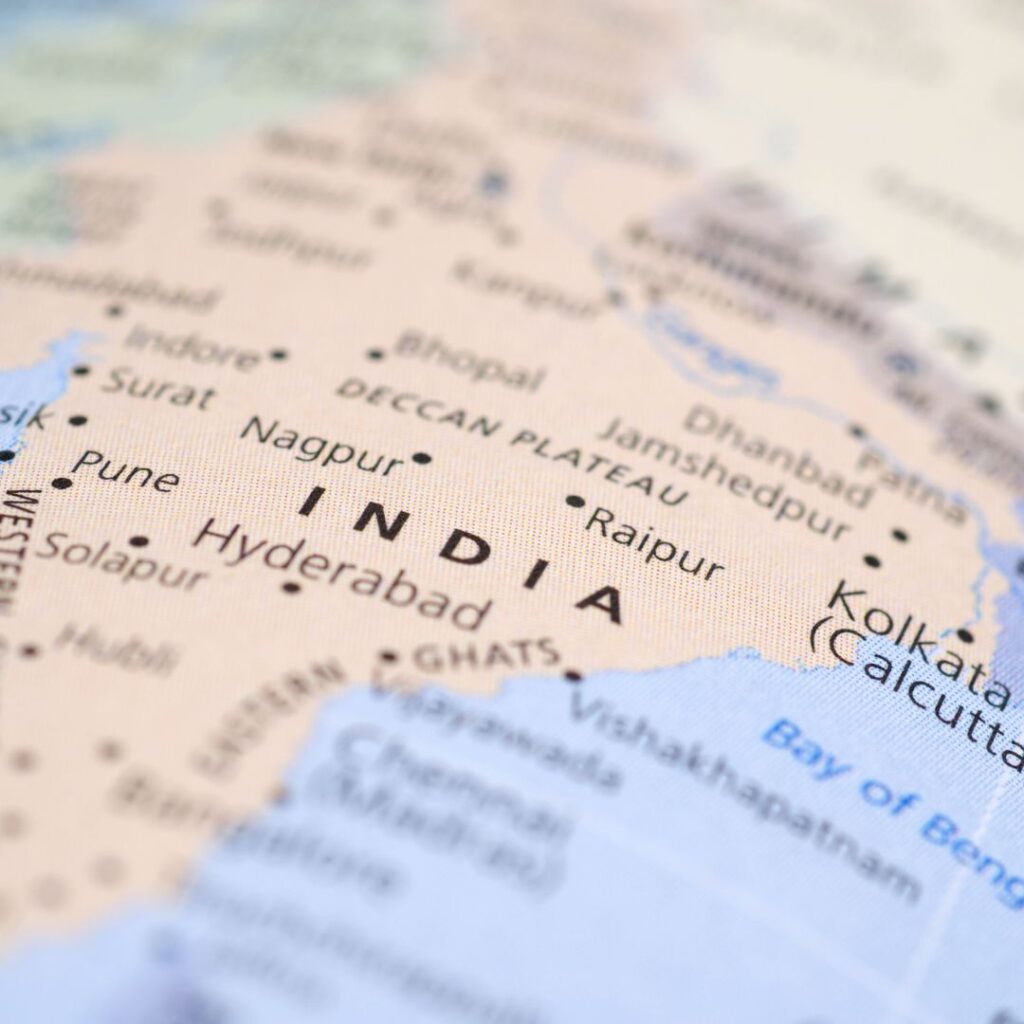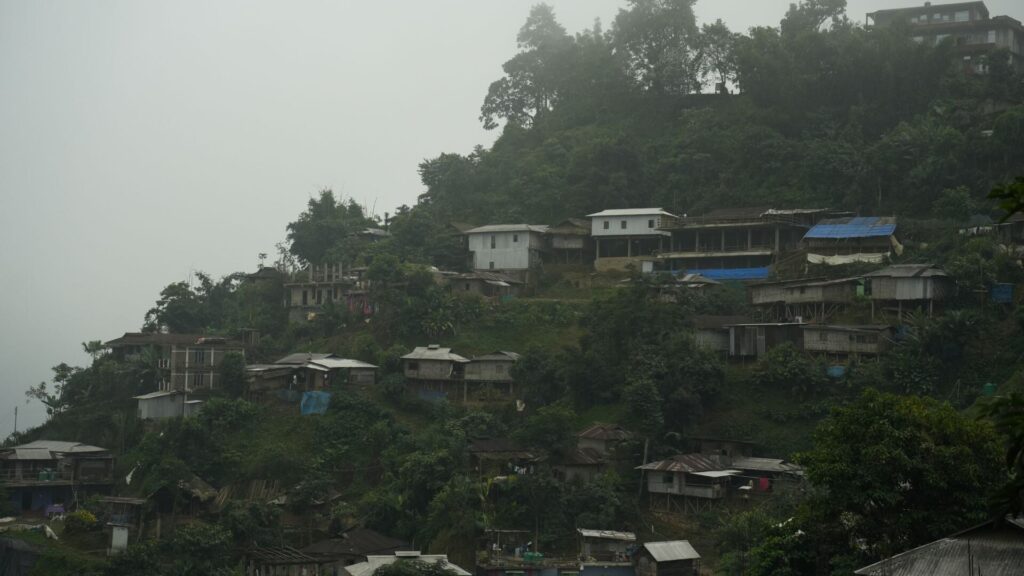
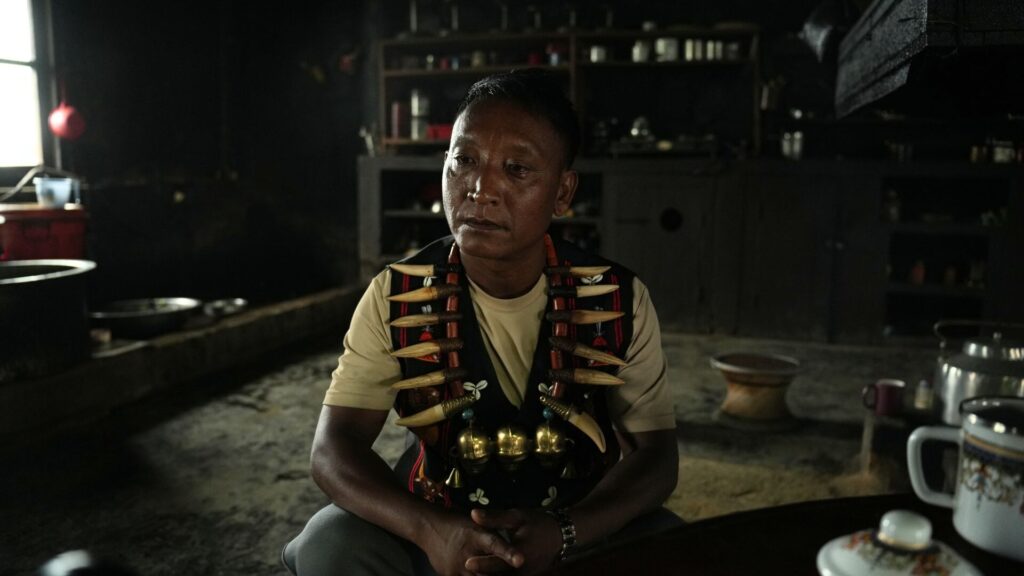
The mist curls over Mon’s emerald hills, whispering of a time when courage was counted in heads and honour etched in skin. On Nagaland’s far northern frontier where India blurs into Myanmar, the Konyaks live between memory and modernity—legendary headhunters turned farmers, artisans, and storytellers. As Fürer-Haimendorf wrote, the act once “furthers… the fertility of the village, [and] acts as an incentive to trade and production,” a reminder that head-taking sat inside an intricate moral–economic cosmos rather than mere violence.
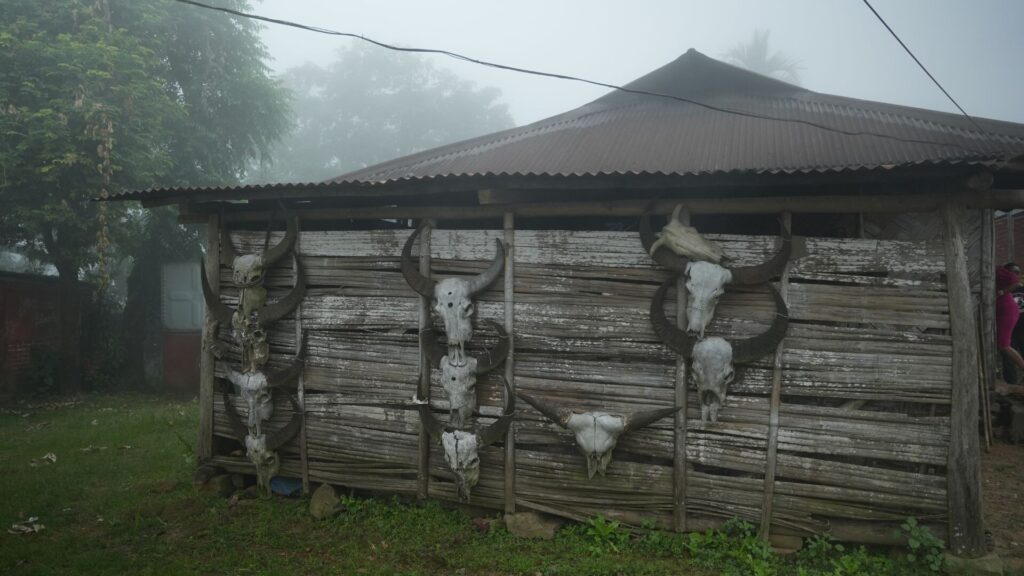
Step into a ridge-top morung and you feel how the community knits everything together—training, ritual, law, and lore. Haimendorf again captured that warp and weft: “There is no room for a free-lance in the world of the head-hunters; it is only a community that provides the necessary security and protection.”Even their art speaks of stamina and grace; as Elwin noted, “with wood some of the tribes, especially perhaps the Konyaks, can produce strong and graceful carvings.”
Known as the “People of the East,” the Konyaks are the largest and perhaps most visually striking of Nagaland’s seventeen officially recognized tribes. They inhabit the remote hill ridges of Mon district, where many villages straddle the border between India and Myanmar, and families often live with one foot in each country. Their language belongs to the Tibeto-Burman family, a melodic tongue passed down orally through songs, chants, and stories. To outsiders, the Konyak world feels suspended in time — a place where carved wooden gates mark village boundaries, and life still unfolds in rhythm with the hills and harvest.
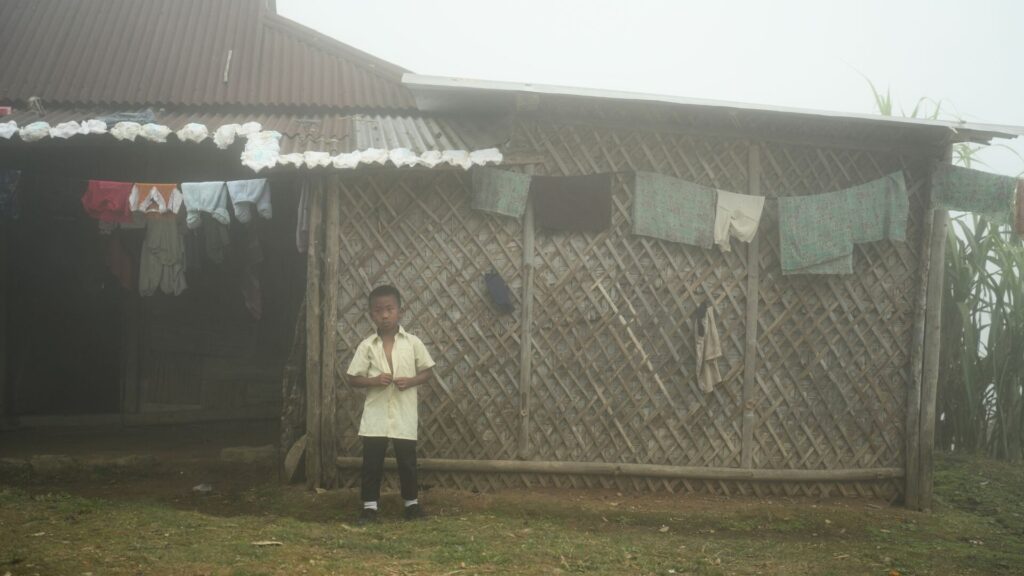
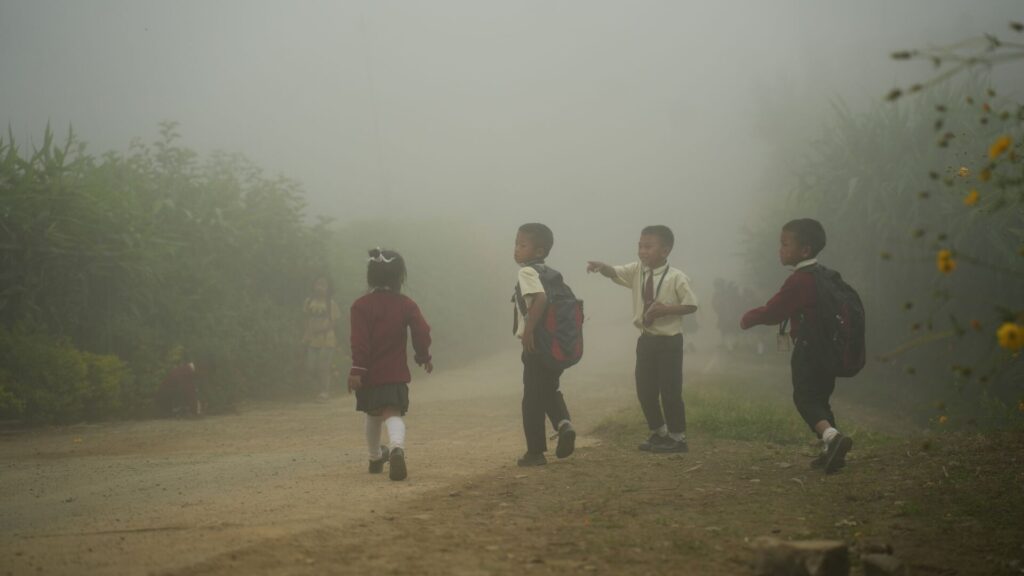
At the heart of every Konyak settlement stands the Angh’s house — a structure as political as it is spiritual. The Angh, or hereditary chief, is more than a ruler; he is a bridge between the living and the ancestral world, a figure whose authority once extended over clusters of villages, sometimes even across the border. Around him, the social fabric takes shape — kinship, loyalty, land, and ritual all flow outward from his seat of power. Visiting a Konyak village means witnessing this delicate balance of old and new: the echo of drumbeats beneath church hymns, the wisdom of elders tattooed in indigo beside the laughter of children learning English under tin roofs. It’s a world that holds the past gently, yet walks steadily toward the future.
Long before today’s borders, Konyak warfare lived inside a political economy of land, alliance, and legitimacy. Raids affirmed an Angh’s (chief’s) authority, stitched villages into defensive networks, and—through ritual—were thought to nourish fields, families, and fate. Colonial incursions and missionary schooling reframed that moral world; church congregations, councils, and state law slowly displaced the logic of the raid. By the late 1960s the practice had disappeared from public life, a shift documented in Christoph von Fürer-Haimendorf’s 1969 study of the Konyaks, which captures a society pivoting from warfare to new forms of order and exchange.
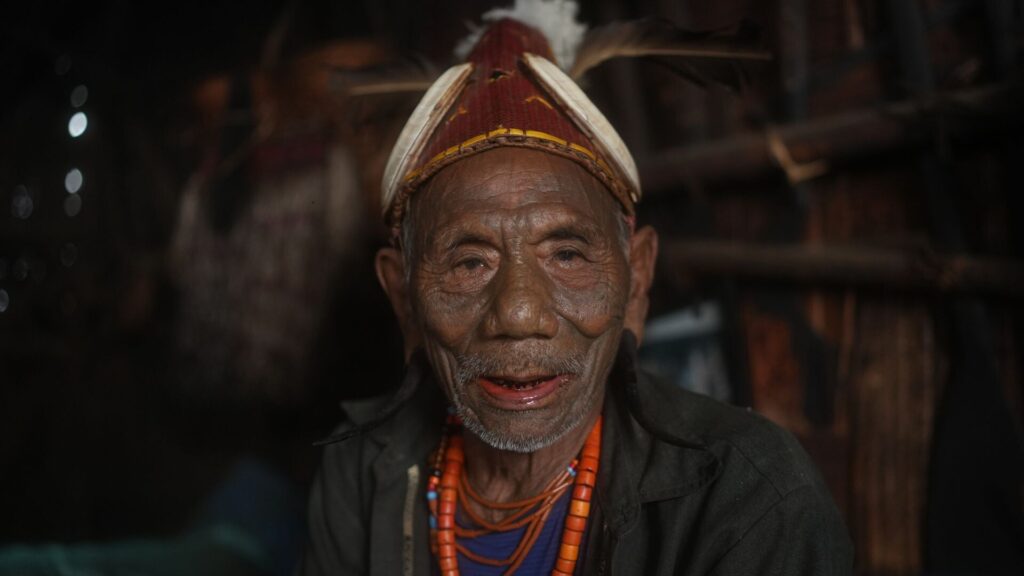
Today that past is curated (never practiced) in festivals.
Among the Konyaks, thun (tattoos) were not decoration but credentials: you didn’t wear them until community, ritual, and deed said you could. For men, patterns across the face, chest, and arms marked proven courage—victories in defense of land and kin, successful raids in an earlier era, adulthood earned rather than assumed. For women, motifs carried beauty, lineage, and life-cycle meaning—signs of clan, marriage, and the skills that knit village life together. The act itself was ceremonial: thorns for needles, soot for ink, chants and offerings to steady the hand and invite protection, as elders fixed biography into skin.
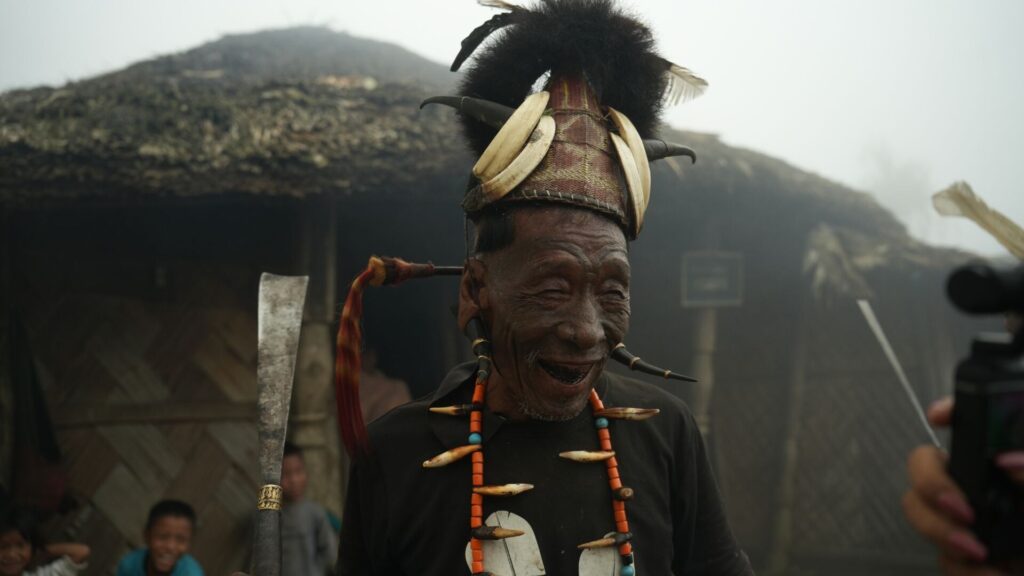
Mid-20th-century change—church influence, state law, schooling, and wage work—shifted what counted as prestige. Public tattooing faded, and today the last fully tattooed elders are living archives, their designs referenced in carvings, beadwork, and festival regalia rather than freshly inked on youth. Travellers will meet this heritage at morungs and festivals, in photo archives and oral histories. Good etiquette: ask before photographing, don’t press elders for “war stories,” and see the tattoos not as spectacle but as text—a library of identity, ethics, and belonging now being preserved through documentation, craft revivals, and museum projects rather than needles.
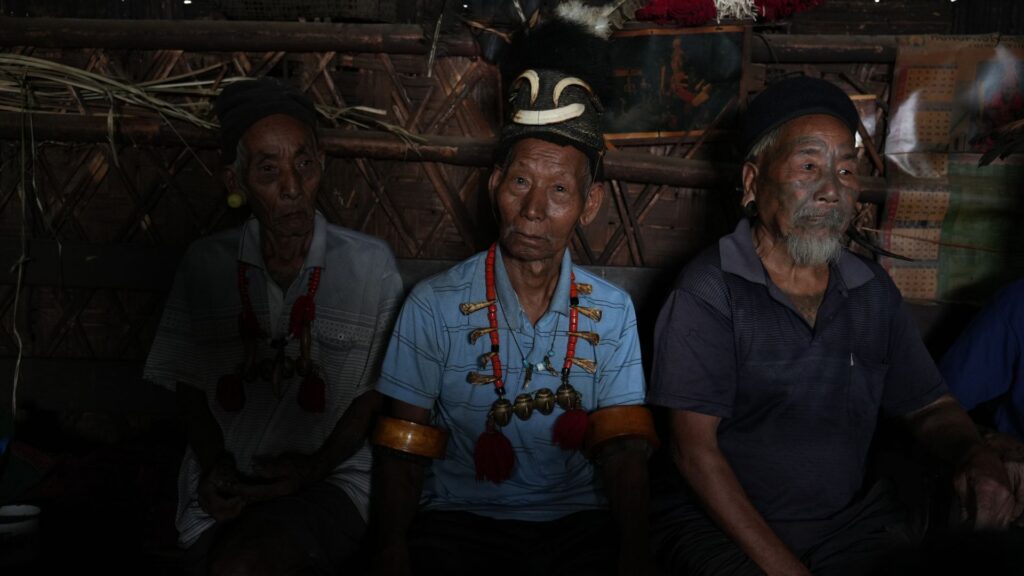
Begin where the border is a doorway: in Longwa, the Angh’s house sits like a compass on two nations—India to the hearth, Myanmar to the veranda. This isn’t just a home; it’s a palace-shrine, once fronted by buffalo horns and memory-markers of valor, still anchoring kinship and ceremony. A few ridges away, the village morung rises—a great timber hall that was dormitory, academy, and codebook in one. Here boys learned to carve and smith, to sing law and remember lineages, to shape spears and, later, ploughs; the curriculum was courage and craft, taught by elders whose voices carried further than drums.
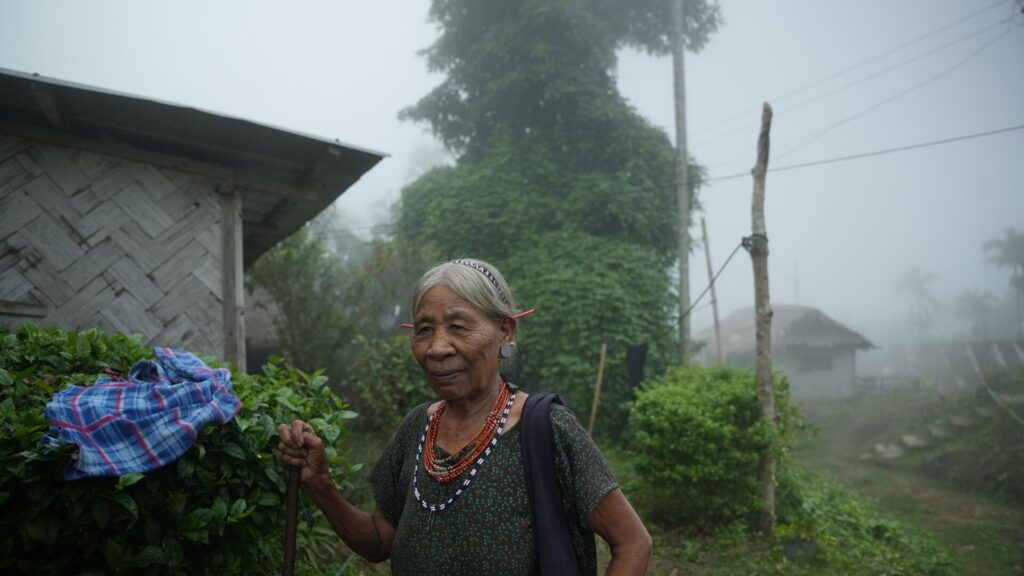
Step outside and the lesson continues in the fields. The Konyaks make a life with earth, iron, and fire—jhum and terrace plots laid like green terraces of song; anvils ringing as daos are forged; woodcarvings that hold stories the way bark holds sap. On a good day you’ll hear hymns drift from a chapel while a blacksmith tempers steel, and a grandmother threads beads the colour of sunrise. Come with a local guide, ask before you photograph, and offer a small contribution when invited indoors. If you can, time your visit for Aoleang (early April) when village courtyards bloom with dance and feasts—or for Hornbill (December) when the morung fills with demonstrations and the past steps forward, not as spectacle, but as a welcome.
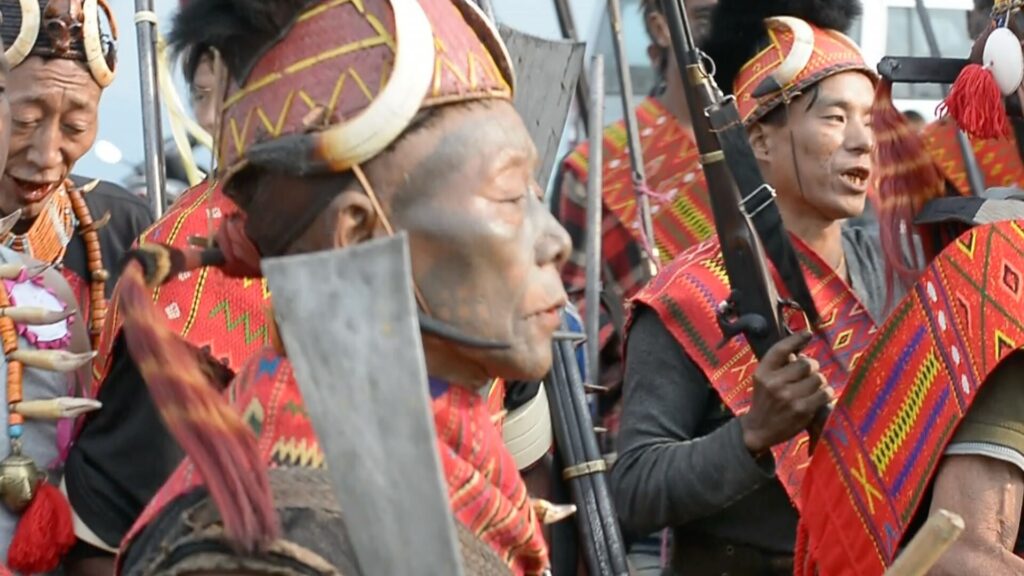
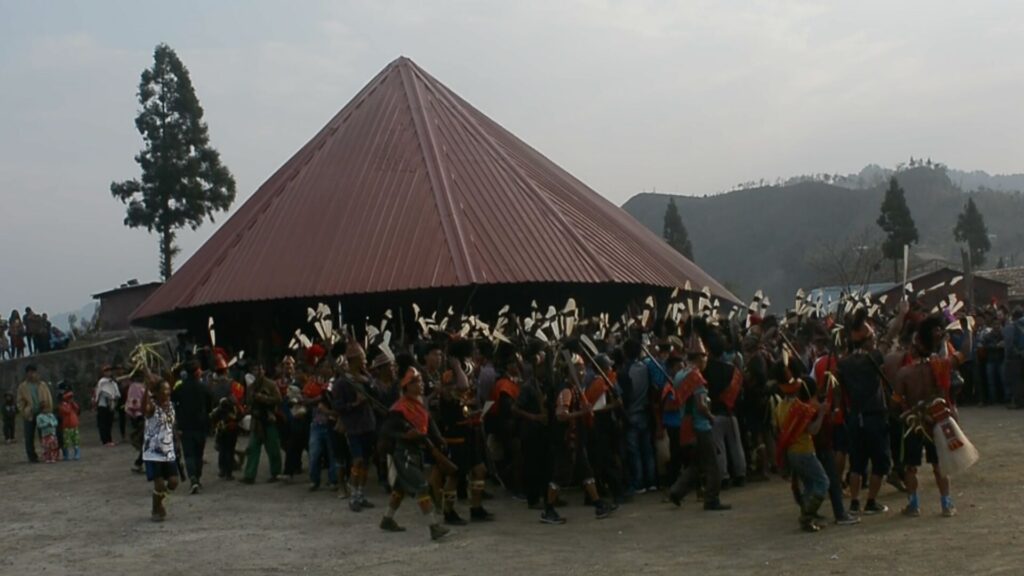
Each April, the hills of Mon awaken to the Aoleang Festival—a six-day celebration that marks both the Konyak New Year and the start of the agricultural season. What begins with offerings and ancestral prayers unfolds into a riot of colour and sound: warriors in hornbill-feathered headgear, women draped in beadwork and brass, drums echoing through valleys, and songs that weave past and present into one continuous rhythm. Once a ritual of renewal to ensure fertility and harvest, Aoleang today is a vibrant blend of heritage and modernity, where church choirs follow warrior dances and smartphones flash beside fireside chants.
Travel Tips:
Once guided by the spirits of forests, rivers, and ancestors, the Konyaks began embracing Christianity in the 1960s, bringing literacy, schools, and Sunday choirs to ridge-top villages. Yet the older cosmology hasn’t vanished so much as softened into the everyday: a carved guardian at the doorway, a food taboo kept without fuss, a dusk-time song that names the hills before it names heaven. For travellers, church bells and drumbeats often share the same afternoon—proof that here, faith isn’t a replacement but an evolution, with old and new walking the footpaths side by side.
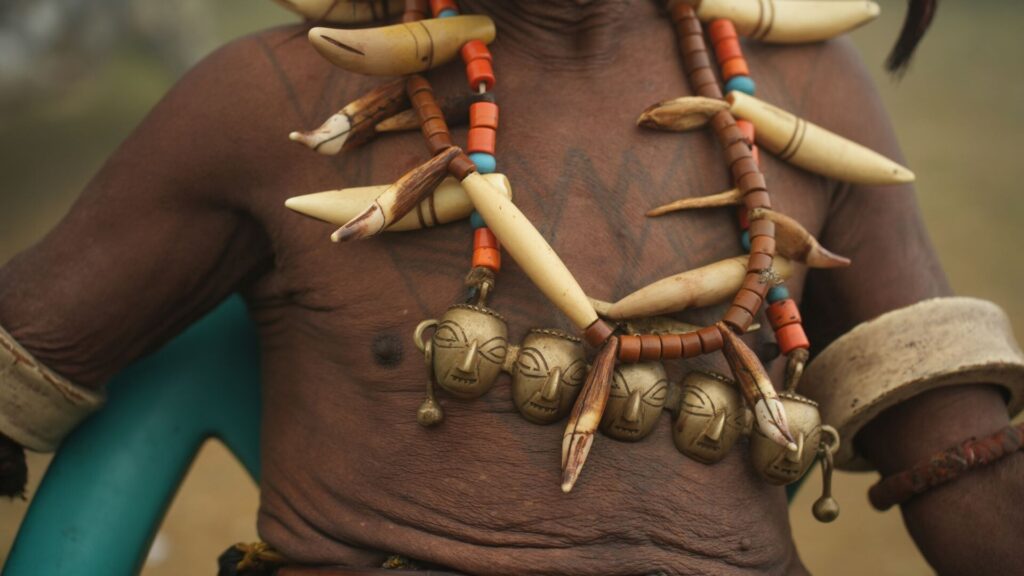
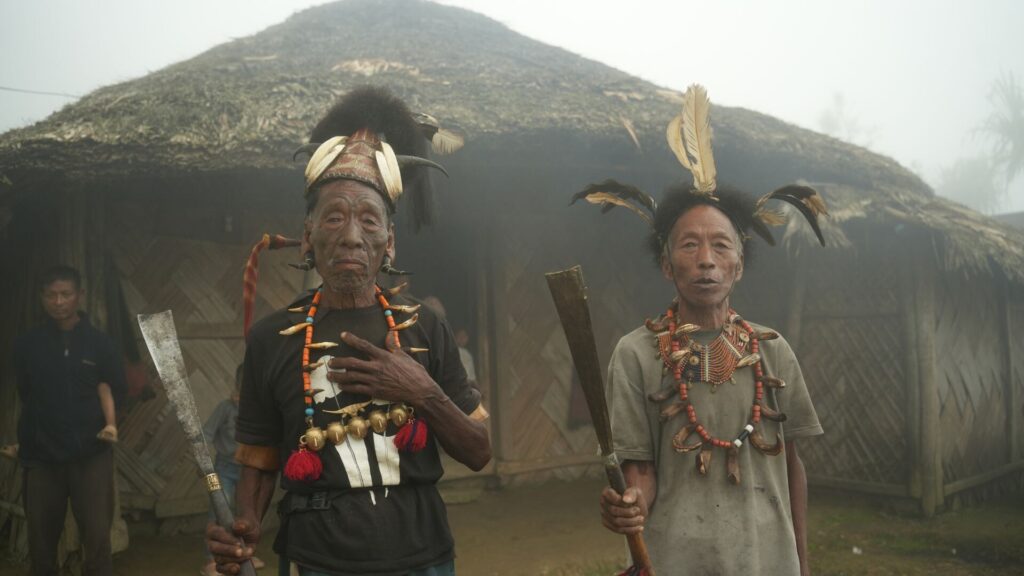
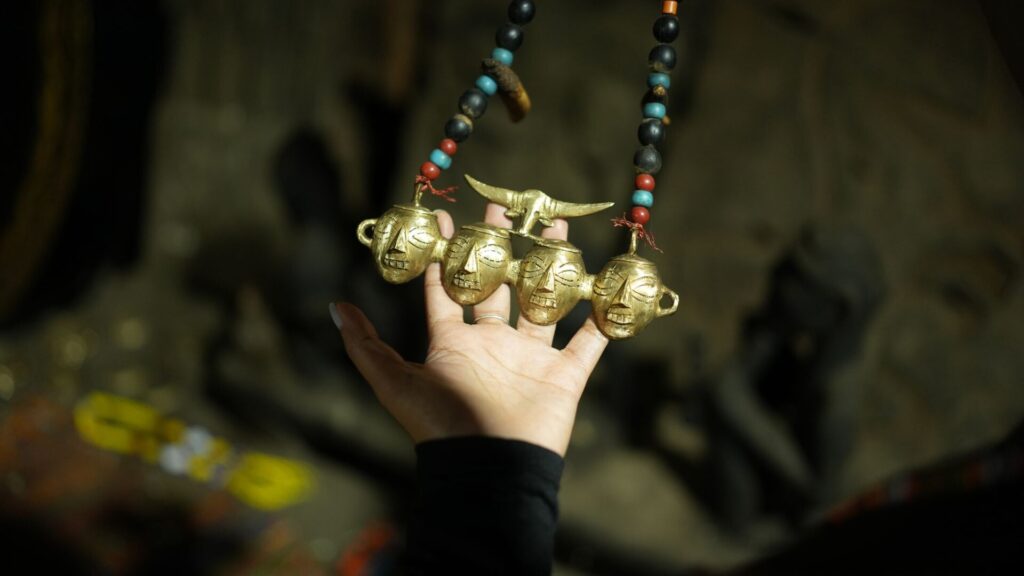
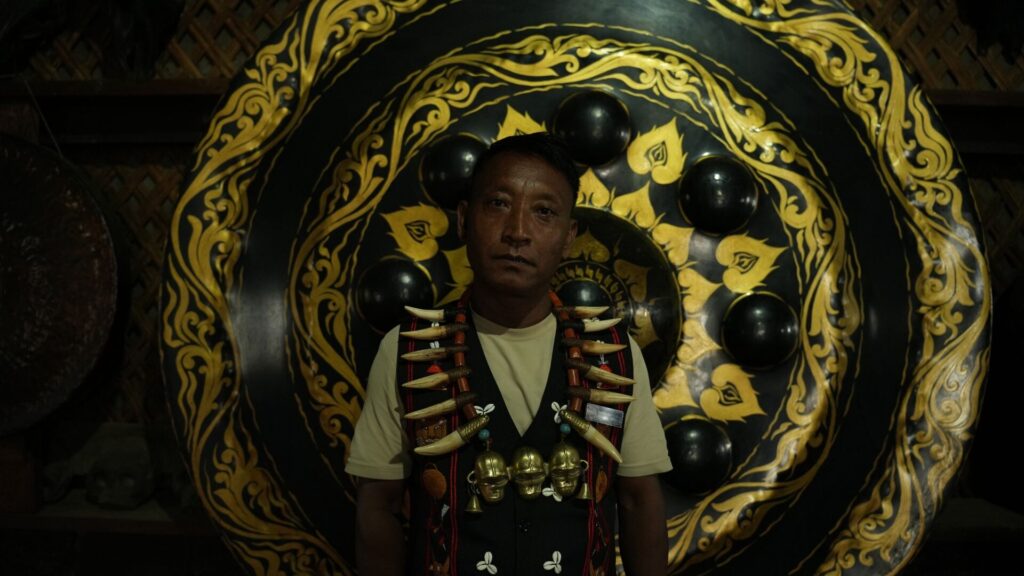
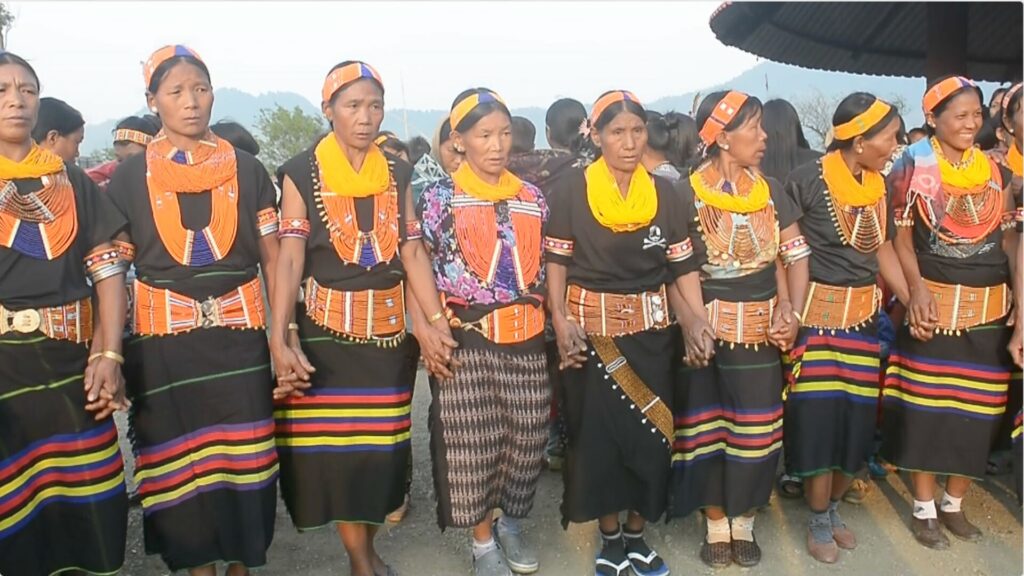
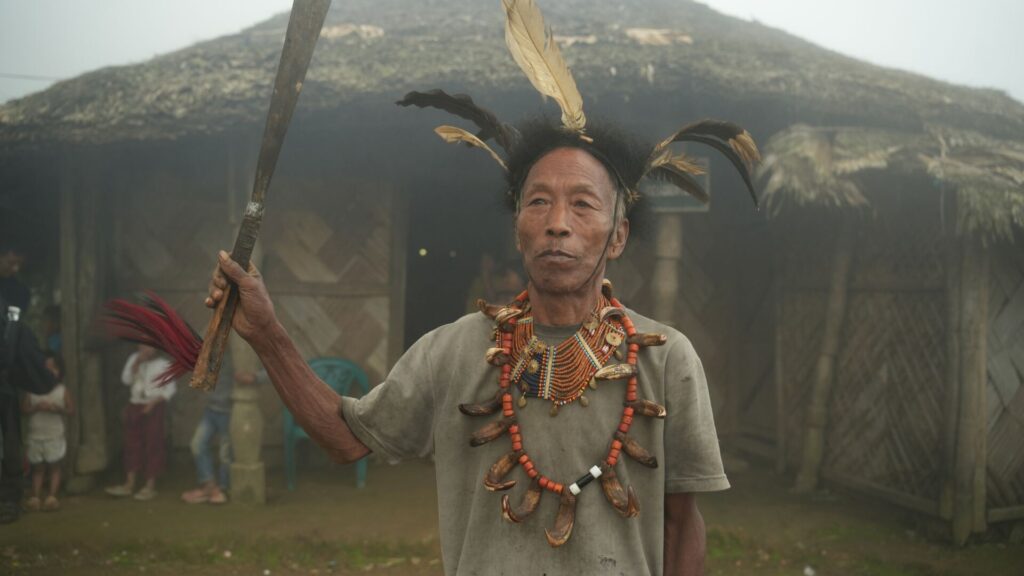
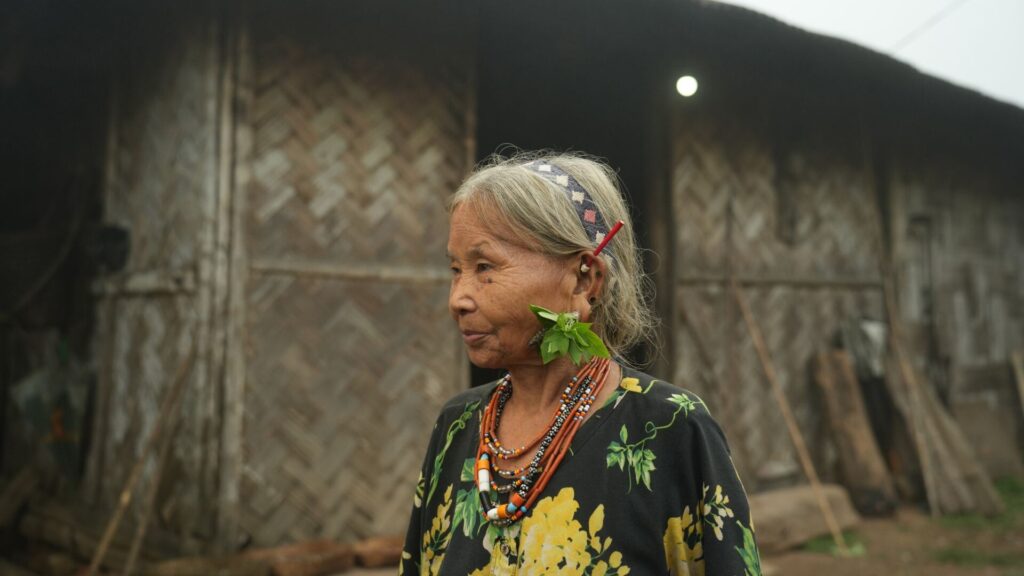
First you notice the sound: beads knocking softly like rain on bamboo as someone turns toward the sun. Then the colours arrive—bands of red, blue, and honey-amber laid across the chest, brass skull pendants catching light, boar tusks and shells threaded where memory meets beauty. A woman’s choker reads clan and life stage with the precision of code; a man’s headgear once lifted hornbill plumes like a banner of status. Even tools speak in elegant lines—the dao, spear, and old muzzle-loader hammered and carved into objects that are part weapon, part heirloom. In Konyak country, the body is a page and every ornament a sentence—worn not to dazzle strangers, but to carry home on the skin.
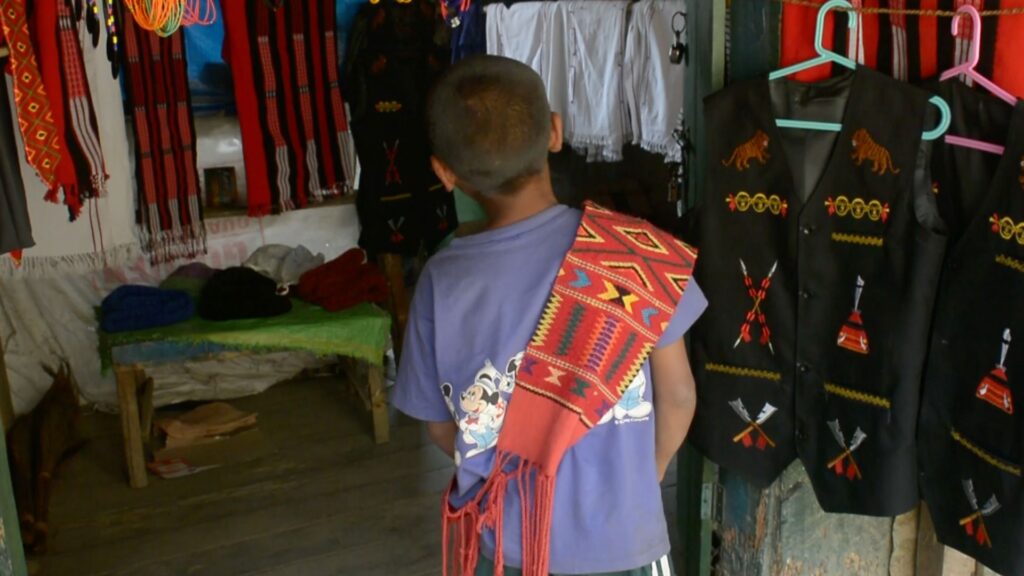
Konyak textiles are portable archives: handwoven panels in deep blacks, reds, and sun-yellow where bands, diamonds, and stepped motifs map clan, rank, and life-cycle rites; the beaded aprons and sashes often echo the same grammar in color and weight. Many pieces once signaled achievement (a warrior’s status, a bride’s lineage), and you’ll still see those motifs reworked today as younger artisans pair back-strap or pit-loom weaves with contemporary silhouettes—cushion covers, stoles, jackets—so the old vocabulary survives in new sentences.
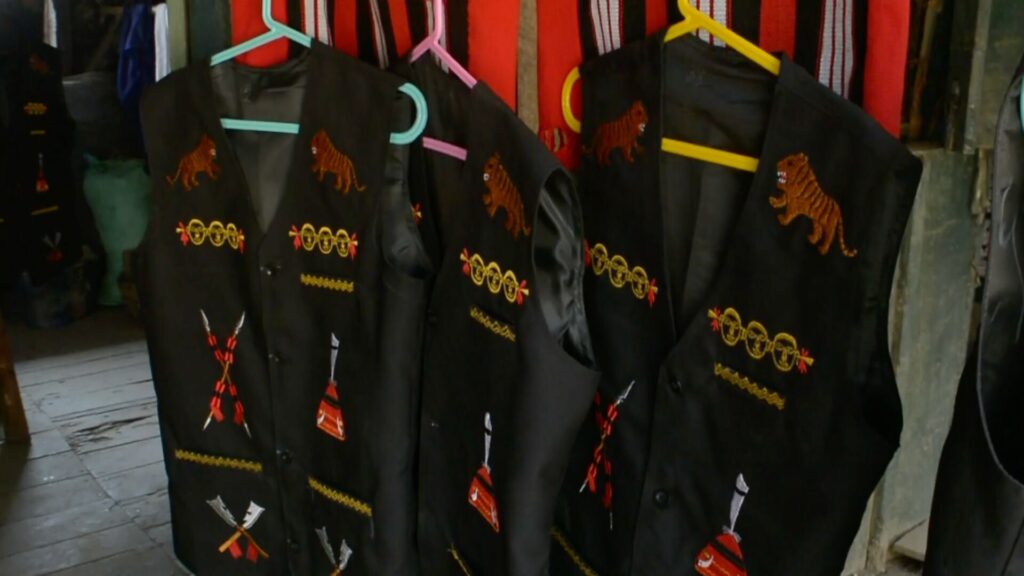
If you’re shopping, buy direct in Mon district (Longwa, Hongphoi) or at festival markets like Aoleang (April) and Hornbill (December), where makers are present; ask who wove it, what the pattern means, fiber content (cotton vs. acrylic), and dye (natural or chemical). Expect handloom irregularities (a good sign), request a receipt with the weaver’s name, and be wary of factory look-alikes or antique wildlife parts (e.g., hornbill)—choose ethical substitutes. Paying fairly, commissioning custom sizes, and photographing the artisan (with consent) helps keep both livelihoods and lineages alive.
Across the hills, Wi-Fi signals now weave where war drums once rolled, and a new generation curates its heritage with the same precision their ancestors carved wood. Through film, photography, and song, young Konyaks are archiving stories once carried only by smoke and voice. The morungs they rebuild host art workshops and oral-history sessions; tattoos once earned in battle now live on in exhibitions and digital galleries. Lucky are the observers.
The Konyaks are a major Naga ethnic group native to Nagaland (India), especially the Mon District, sometimes called The Land of the Anghs (traditional chiefs). They also live in neighbouring areas of Arunachal Pradesh, Assam, and parts of Myanmar.
In the past, Konyak warriors practised headhunting — taking enemy heads as trophies during war. Facial and body tattoos were marks of courage and accomplishment, often earned by warriors after raids.
The Angh is a hereditary village chief/king who held authority within and sometimes over neighbouring settlements. The chief and village elders traditionally managed social, cultural, and community decisions.
No. Headhunting was officially banned in the 1960s and gradually ceased within the community in the decades that followed. Today it survives only in stories, heritage symbols, and some festivals and dancers’ regalia, not as a living practice.
They speak the Konyak language, part of the Northern Naga branch of the Sal subfamily of the Sino-Tibetan language family. Each village may have slight dialectal differences.