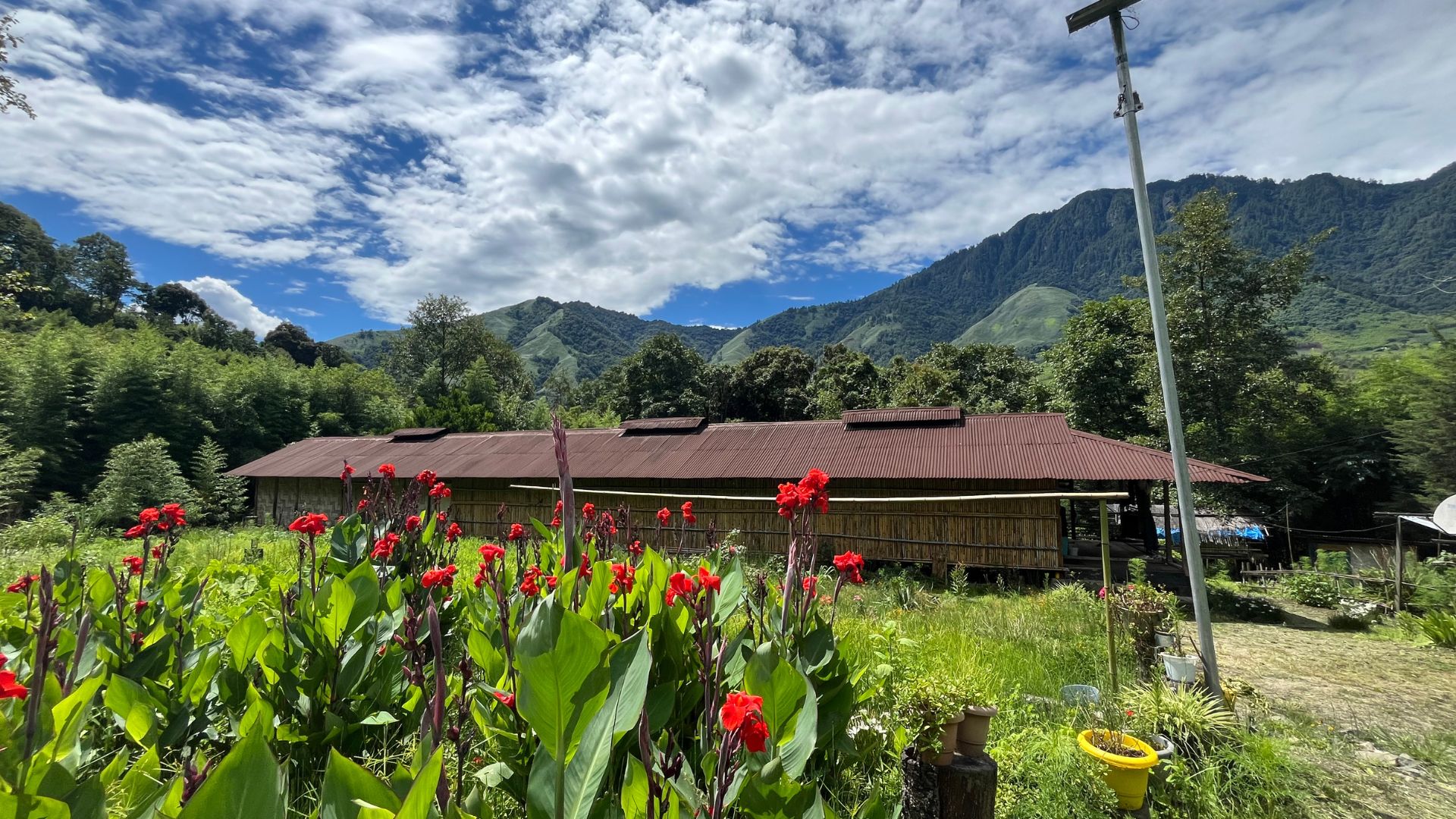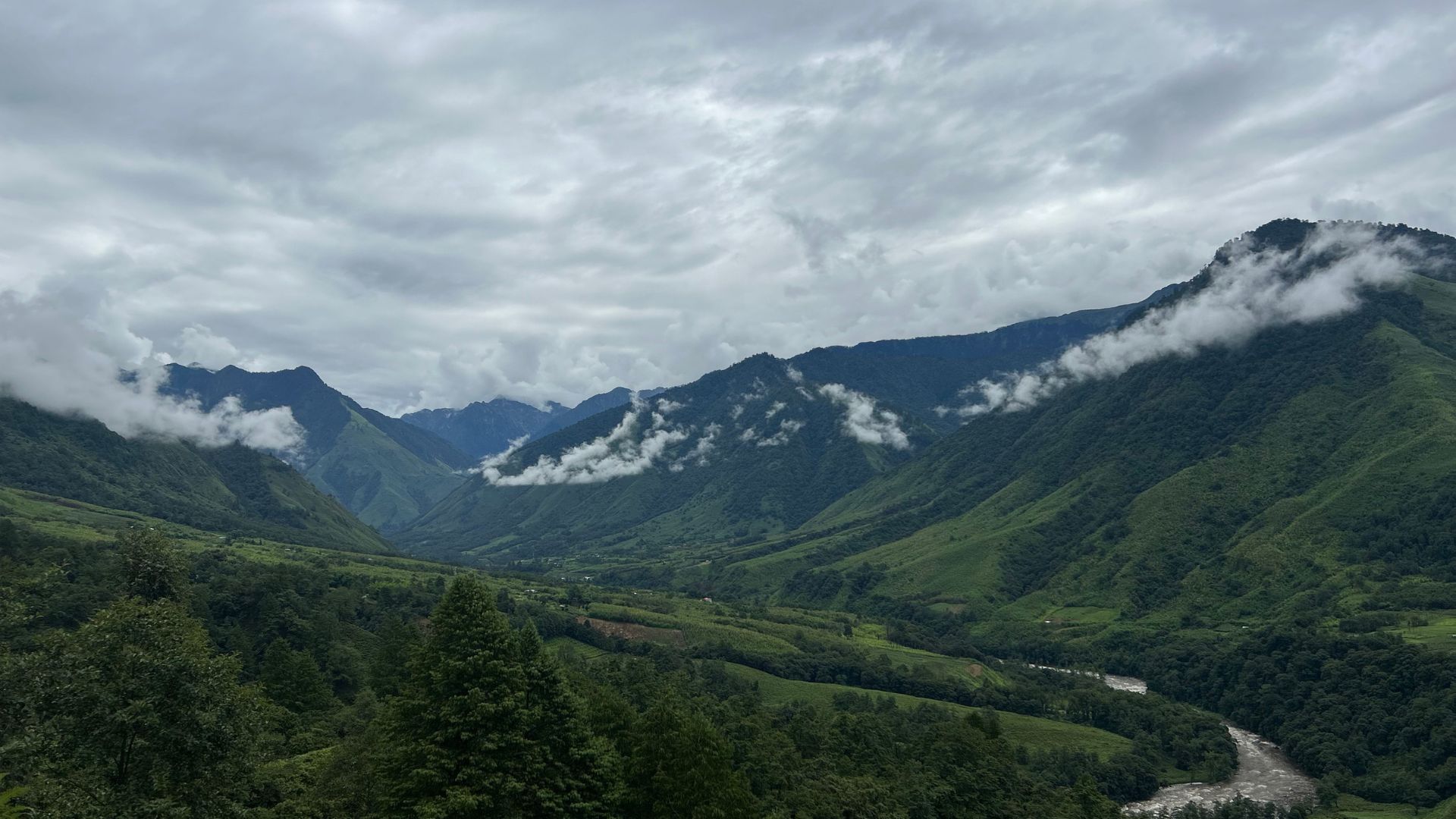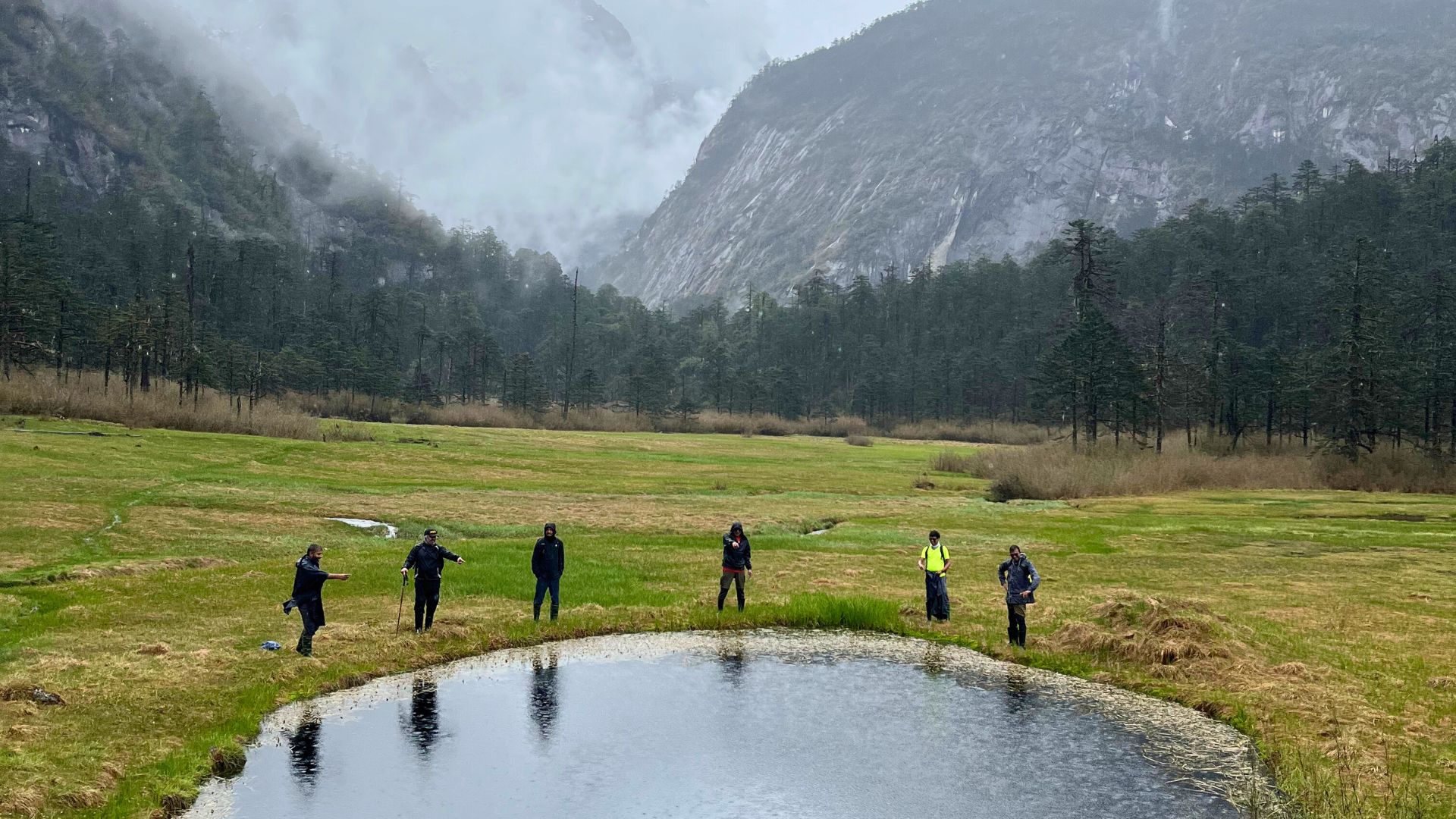
Eastern Arunachal Pradesh is not a place you arrive at quickly. Roads stretch long, valleys deepen gradually, and the landscape reveals itself in layers rather than landmarks. This is one of India’s least inhabited frontiers, shaped as much by distance and terrain as by those who live here.
This chapter journeys into the Dibang region, a remote part of Arunachal where rivers cut deep through forested mountains and movement has always followed the logic of land rather than maps. Set within the Mishmi Hills at the eastern edge of the Himalayas, this is a landscape shaped by isolation, altitude, and time. For generations, communities like the Idu Mishmi have lived with this terrain, carrying knowledge through oral histories, seasonal migration, and an intimate understanding of forests, water, and weather.
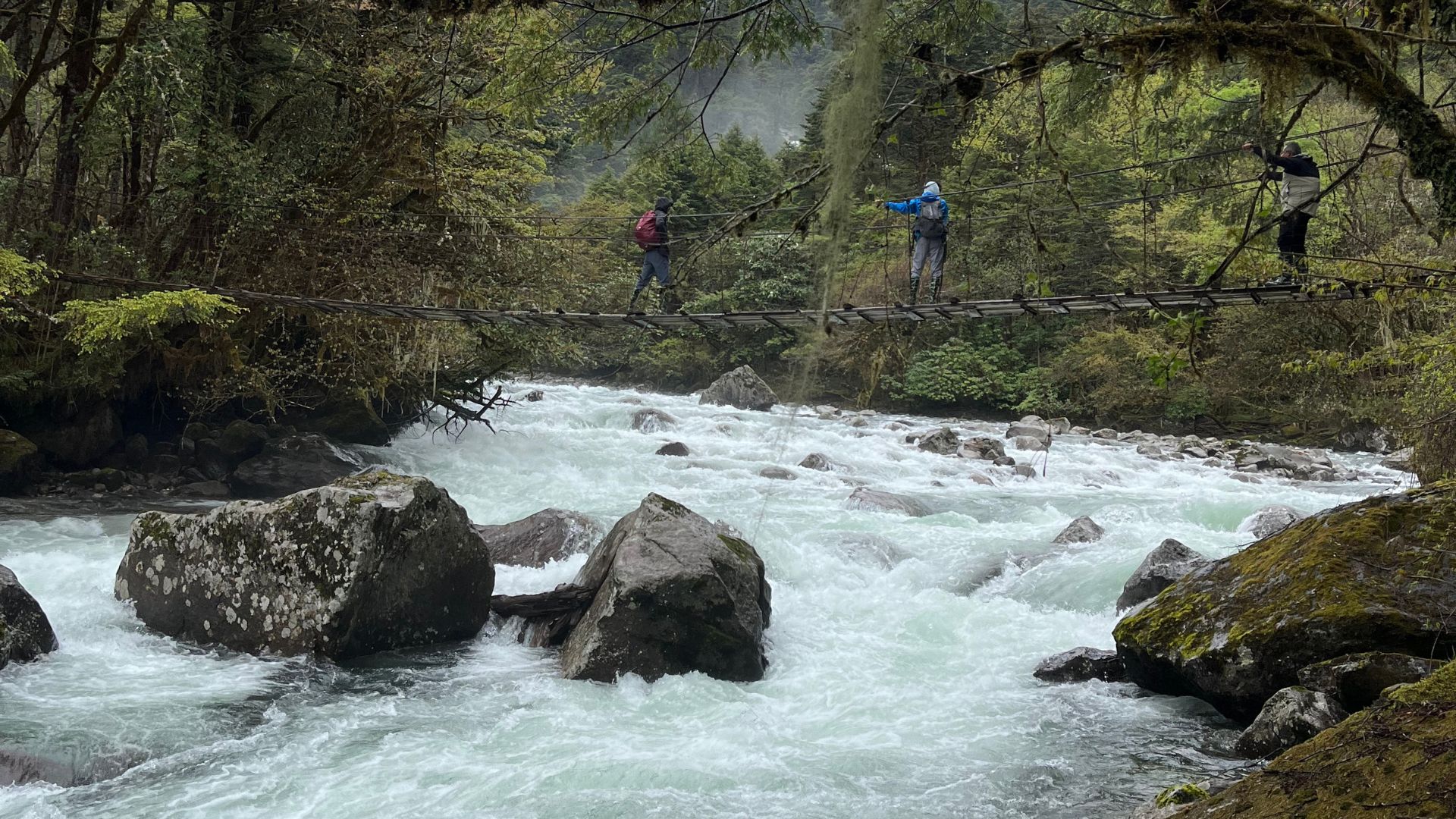
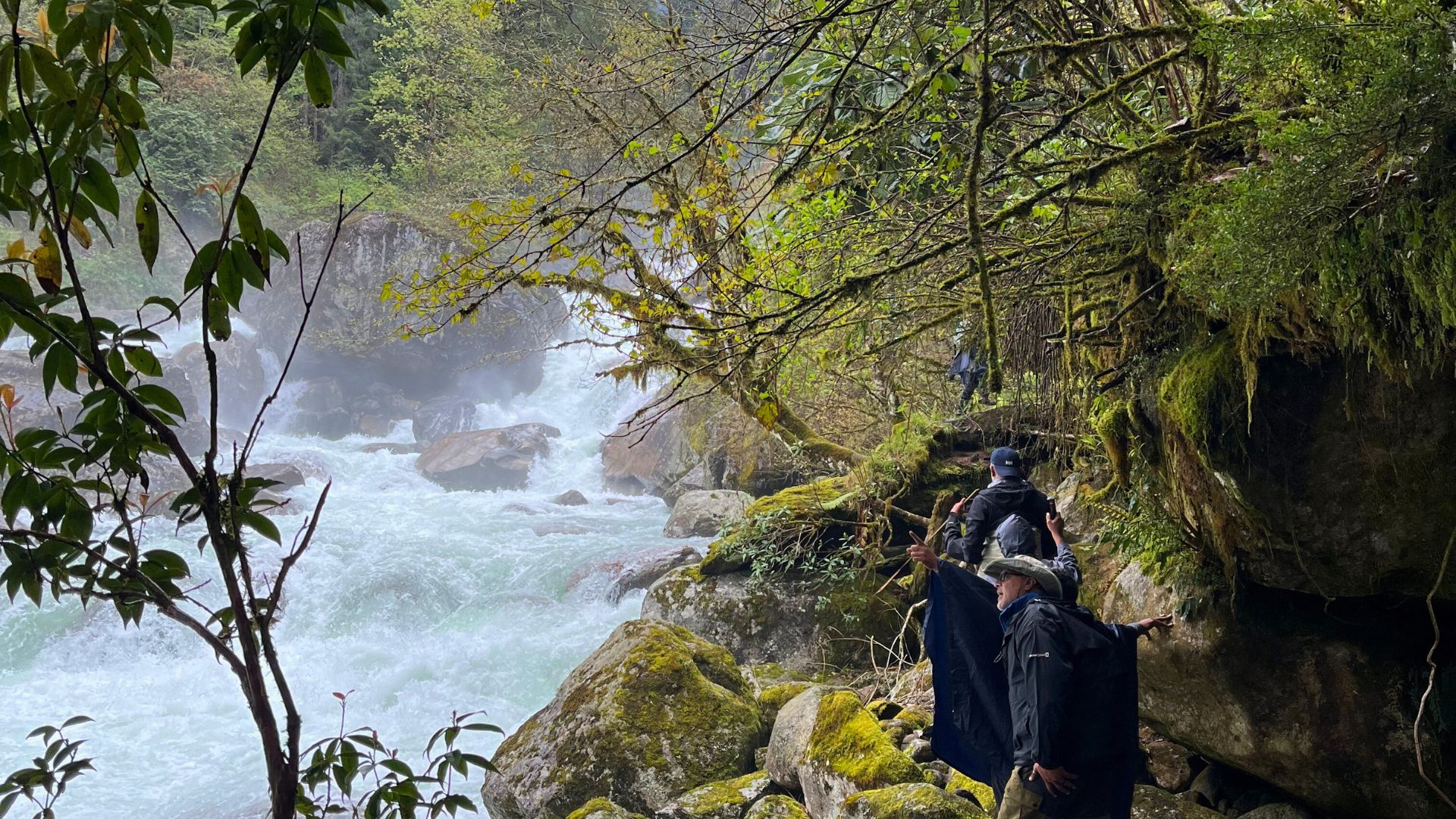
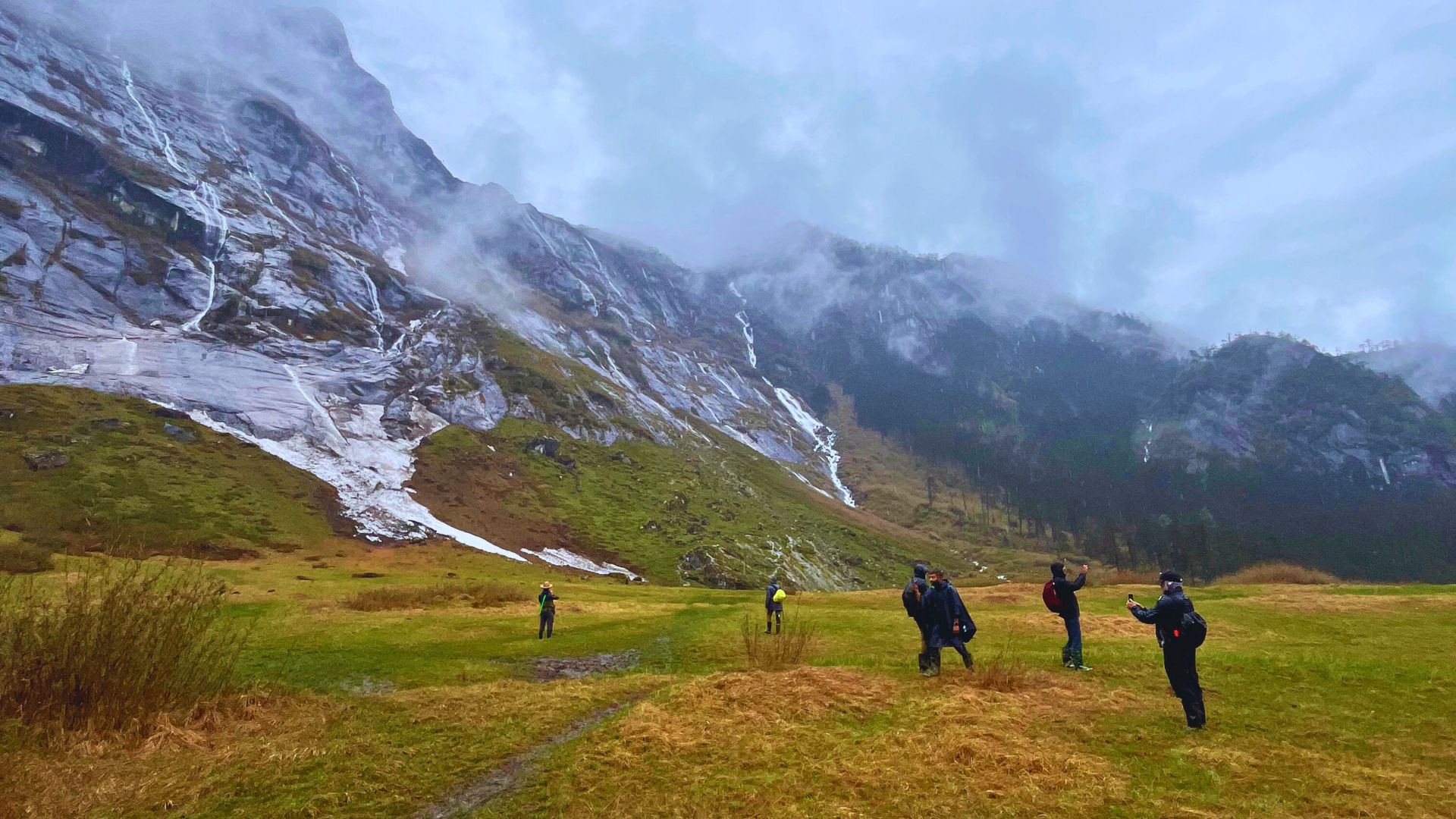
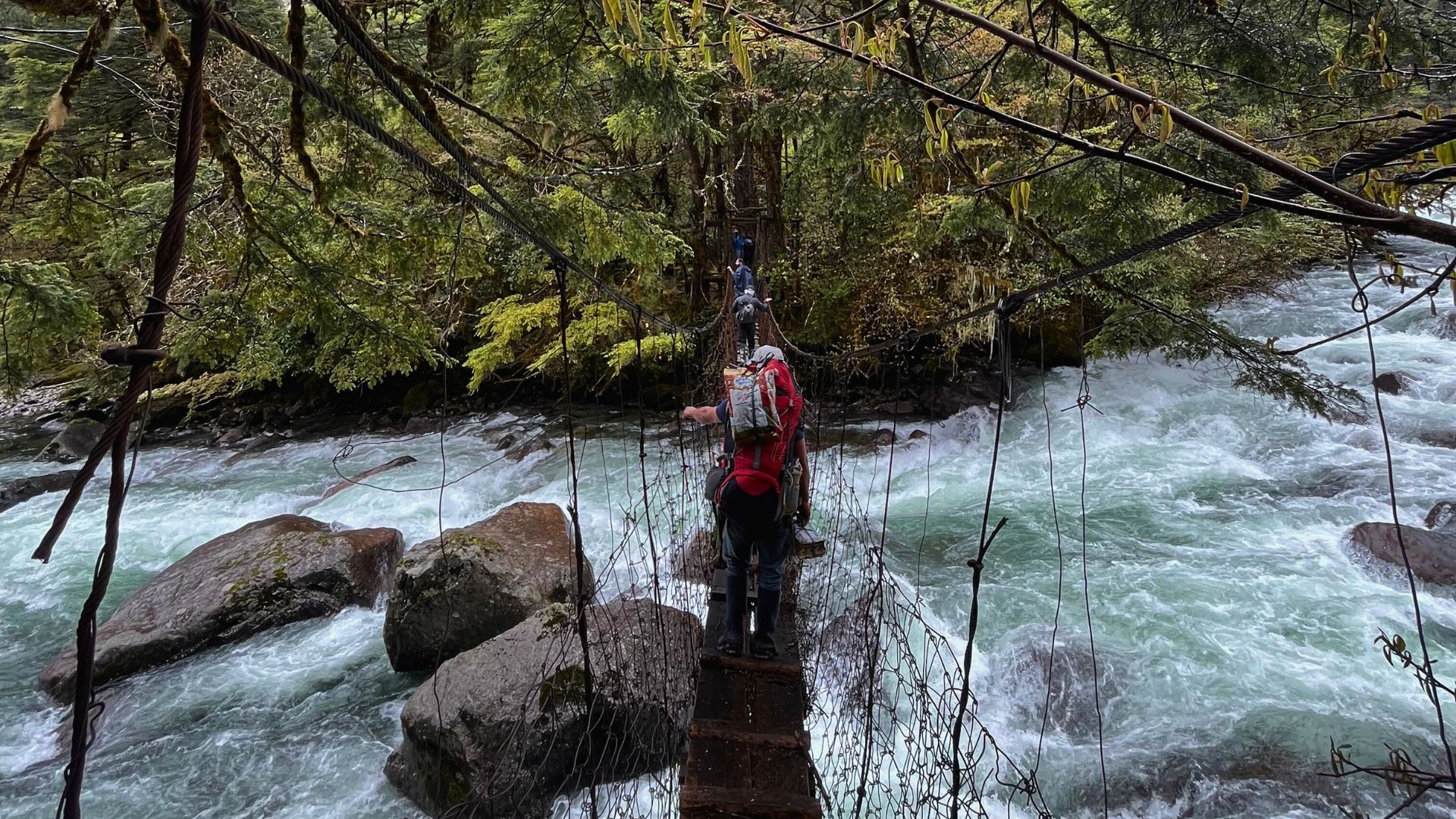
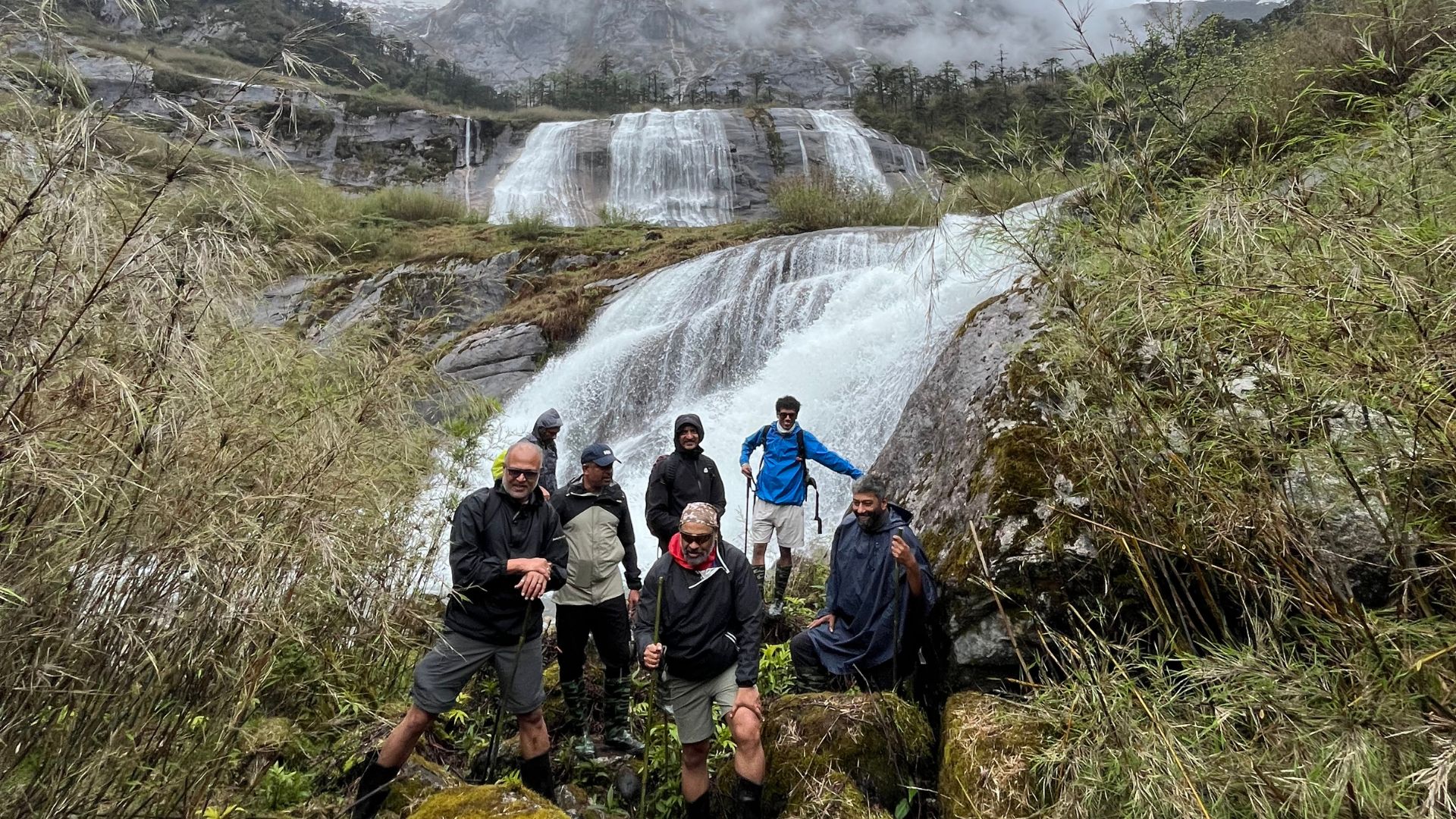
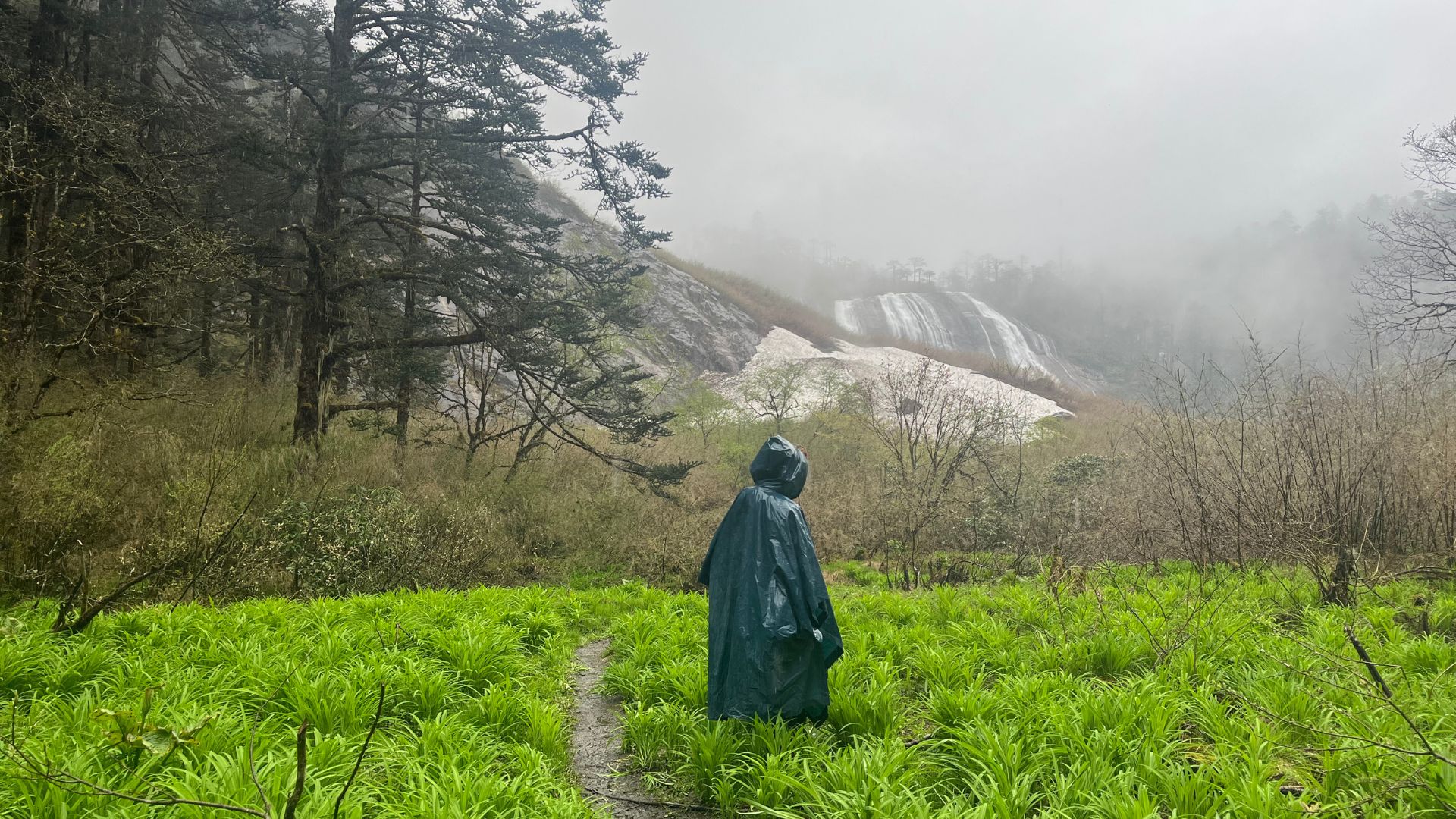
At the heart of this journey lies the Pomo Valley trek. Spread across three days, it is a gentle yet immersive introduction to multi-day trekking. The trail moves through grasslands, maple forests, river crossings, and wide open valleys shaped by waterfalls and weather. The walking is steady, with a few steep sections, but the experience is less about pushing limits and more about learning to move with the land. Campsites are simple, nights are quiet, and each day unfolds at a pace that allows the landscape to be absorbed.
The days before and after the trek are not fillers. They allow you to enter and exit this world gradually. You raft the Dri River, sit down for home-cooked meals in local homes, listen to stories of the valley, and walk through villages where hospitality is offered without performance. By the time you step onto the trail, the place already feels familiar. By the time you leave, it lingers.
This is one of our more demanding set departures, not because the terrain is extreme, but because the journey asks for patience, endurance, and openness. Days are long, comfort is simple, and the experience rewards steadiness more than speed. It is ideal for fit travellers looking to experience a remote multi-day trek, and for those who want to understand the Eastern Himalayas through movement, stillness, and sustained time outdoors.
Over nine days, this chapter reveals the region slowly — through river, forest, camp, and conversation; through walking, waiting, and returning. This is not a journey of constant spectacle. It is one of gradual immersion.
We will be staying at clean, comfortable, and hygienic resorts and campsites at all locations. The room categories at each property may vary and not be the same for all depending on the availability of the rooms.
The stay at Dree-Afra Campsite in Acheso will be divided into Cottages and Tents (A mix of attached and non-attached washroom).
Also, Please note that the campsite during the Pomo trek comes with humble and basic facilities, the best that could be catered in the wild.
The trip begins and ends in Dibrugarh airport. It is ideal to land by 11 am at Dibrugarh airport on Day 1, where you shall greet your Chalohoppo Trip Leader and begin the journey. The trip ends on Day 9 at Dibrugarh airport. You shall be dropped to the airport by 12 pm. We request you to book flights post 1 pm.
This trek is ideally designed for experienced trekkers who have completed multi-day treks or long hikes before. Participants should be comfortable walking 5–7 hours daily over challenging terrain that includes steep ascents and descents, rough trails, and potentially slippery, muddy conditions due to weather.
The trek tests both physical endurance and mental resilience over consecutive days. While a team of guides will be present throughout, this trek is not recommended for absolute beginners. However, if you maintain an active, fit lifestyle and can persist through long hours of trekking across rugged, wild terrain, this trek is achievable with the support of our expert team of guides.
The trail features mixed and demanding terrain, including grasslands, forest flat sections, sustained gradual ascents, steep and rugged climbs, and river crossings. Expect misty passes, lush valleys, steep forest trails, and boulder sections near rivers. During rains, the trail can become muddy and slippery, increasing the overall difficulty.
An age group of 20-50 years old is ideal for the experience. However, depending on your trekking experience and fitness, the limit could be stretched to 60 as well.
You’ll have decent mobile connectivity in Roing, Anini, and Acheso – Airtel and Jio work best. That said, networks can be unreliable and may shut down at times.
There is no mobile connectivity during the trek in Pomo Valley.
Sleeping bags rated for 0°C to sub-zero temperatures are available for rent at ₹1500. Gumboots are available for rent locally at ₹200. However for a comfortable fit, we recommend getting your own. Sleeping bags and gumboots are only available for rent on prior booking. Once you book the trip an extensive and detailed list of items to be carried will be sent to you.
No. A team of porters will carry your main backpack and sleeping bag. Trekkers are only required to carry a small daypack (30 L) with personal essentials needed during the day on the trail.
We’ve kept the Arunachal ILP process separate to give travelers more control and flexibility over their travel documents. The process is simple and can be done online in just a few steps. We’ll guide you through it if needed.
To visit Arunachal Pradesh, Indian citizens need to apply for an Inner Line Permit (ILP), which can be easily obtained online through the official portal https://eilp.arunachal.gov.in. Simply register, fill in your travel details, upload a passport-sized photo and a valid ID (like Aadhaar or Voter ID), select the districts you plan to visit, and pay 500 per district. The e-ILP is usually approved within 24-48 hours. Once approved, download and carry printed copies of the permit, as it will be checked at various entry points and checkpoints within the state.
May marks the transition between summer and the early monsoon in this region. September is the post monsoon transition between monsoon and early autumn period. Expect unpredictable weather, ranging from sunny spells to passing or continuous rain showers within the same day. Trails can become wet and challenging, and nights will be very cold, especially at camps. Weather patterns can change quickly, and exact conditions are difficult to predict even locally.
Local Arunachali cuisine along with simple trek meals like fried rice, eggs, thalis, and millet dishes. There will be enough options for both veg and non veg.
Meal options may be limited on certain days due to remoteness and weather conditions.
Owing to the high terrain, this experience will be challenging for those who encounter motion sickness. The drives on given days will be long through curvy mountain roads.
May and September are usually a month of passing showers but can also see continuous spells of rain. There could be a possibility of delay in reaching destinations owing to weather, road construction or any external factor that is beyond control.
You will find some eateries along the way from Dibrugarh to Roing but as we make our way to Anini, food options become limited, and long drives may occasionally delay meal timings. We recommend carrying snacks or stocking up the previous day for added comfort.
The minimum group size for this trip is 6 participants. We recommend booking flexible flight tickets. In the unlikely event that the trip is cancelled due to insufficient bookings, you will be informed at least 21 days prior to the start date.
The rafting in Dri River is beginner-friendly with Grade 1 rapids. You shall be rafting under the guidance of experienced professionals.
As the trek takes place in the remote wilderness of Eastern Arunachal, campsites will have basic pit toilets. These are eco-friendly, temporary toilet structures commonly used on remote treks. Each toilet is covered on all sides, with a dug pit and a wooden base. All toilets on the trek will be Indian-style.
A basic first-aid kit is available throughout the trek with the team. In case of serious medical emergencies, evacuation will be coordinated with local authorities and porters, depending on weather, terrain, and accessibility. Evacuation costs, if any, will be borne by the participant.
Pomo Valley follows a strict carry-back policy. All non-biodegradable waste, including plastic, must be brought back from the valley. Fines may be imposed by local committees if waste is left behind.
Electricity is available at select towns and stays, but power supply can be erratic. There will be no electricity during the trek in Pomo Valley. We recommend carrying power banks.
Rooms and tents are shared on a double sharing basis. In case you are a solo traveller, you will be paired up with another solo traveller of the same gender. Please note that almost all of the properties will have double bed rooms.