Nagaland is a land where diversity is not an idea but a lived reality. Shaped by steep hills, forested ridgelines, and tightly held village systems, it is home to seventeen major tribes and many more sub-groups, each with its own language, food traditions, architecture, and ways of seeing the world. These differences do not reveal themselves quickly. They unfold slowly, through walking, listening, and spending time in place.
Summer brings a distinct rhythm to these hills. From April to June, clouds move more freely, forests deepen in colour, and village paths open up under long daylight hours. The landscape feels expansive rather than severe, inviting movement through terraced fields, forest trails, and open ridgelines. It is a season when Nagaland is lived outdoors, when walking becomes the most natural way to understand terrain, history, and everyday life.
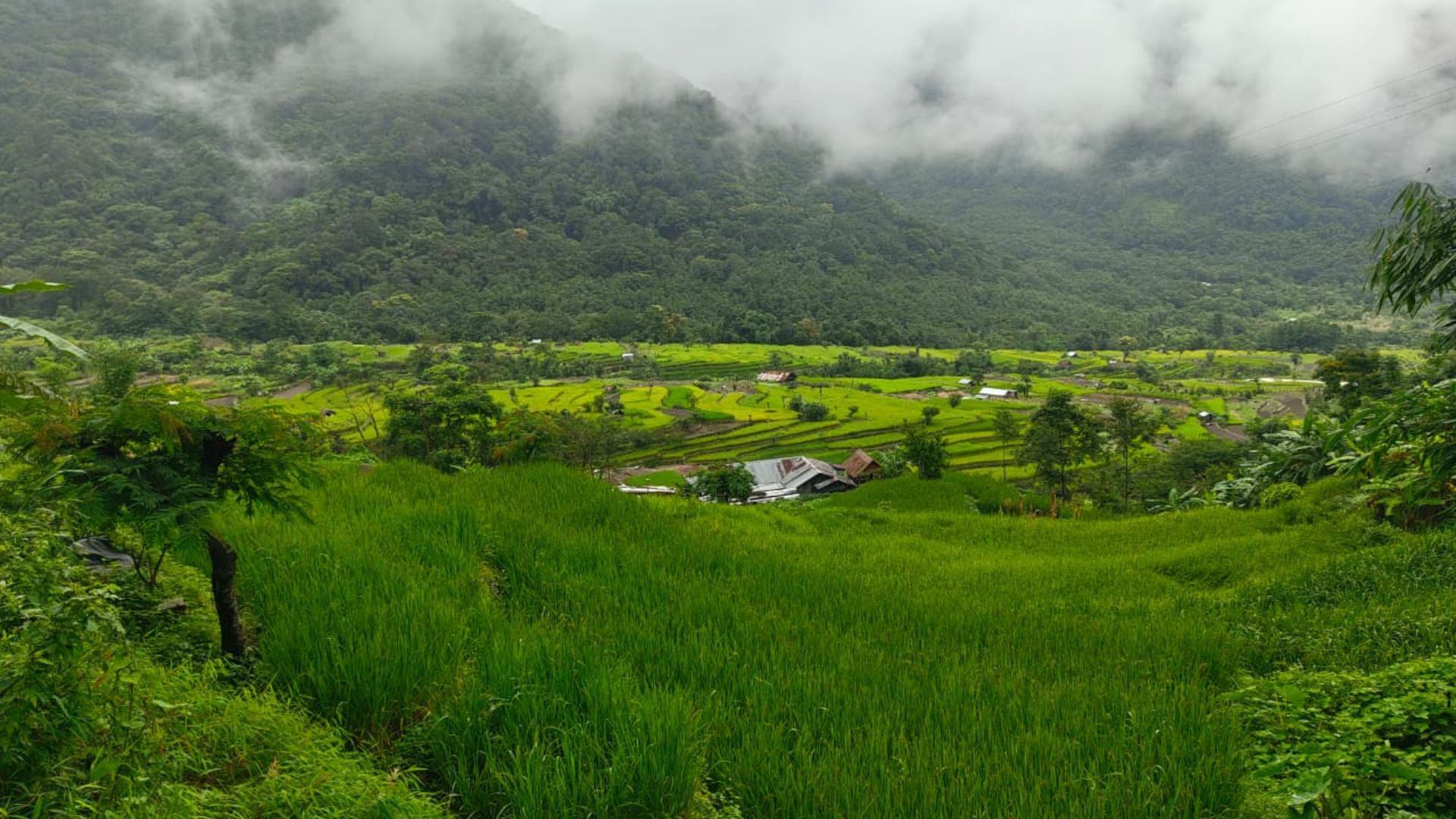
By September, the hills carry the depth of the monsoon, turning trails soft with slush and mud while the landscape settles into a rich, saturated green. Forests feel denser and valleys fuller, making movement slower and more deliberate.
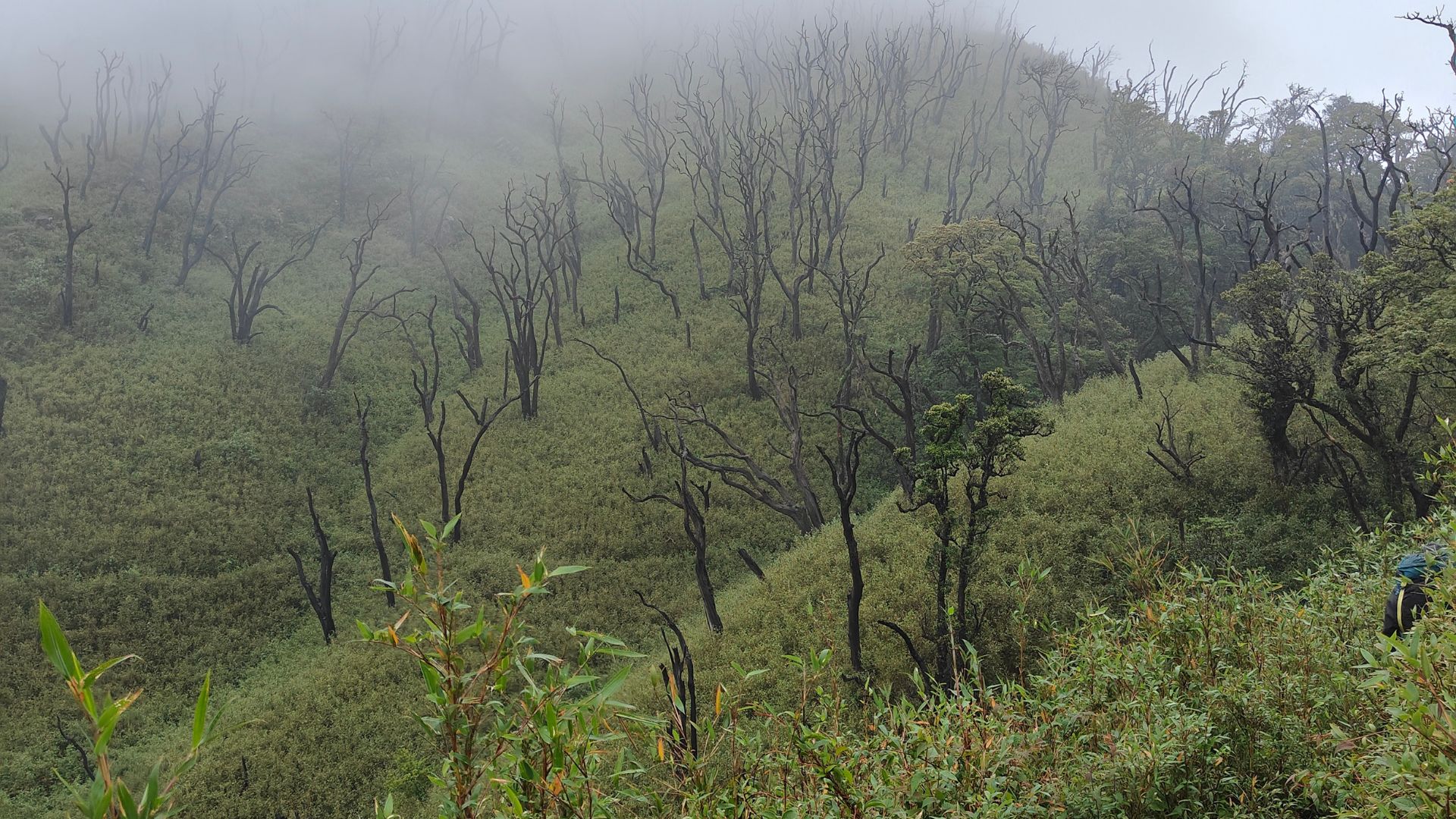
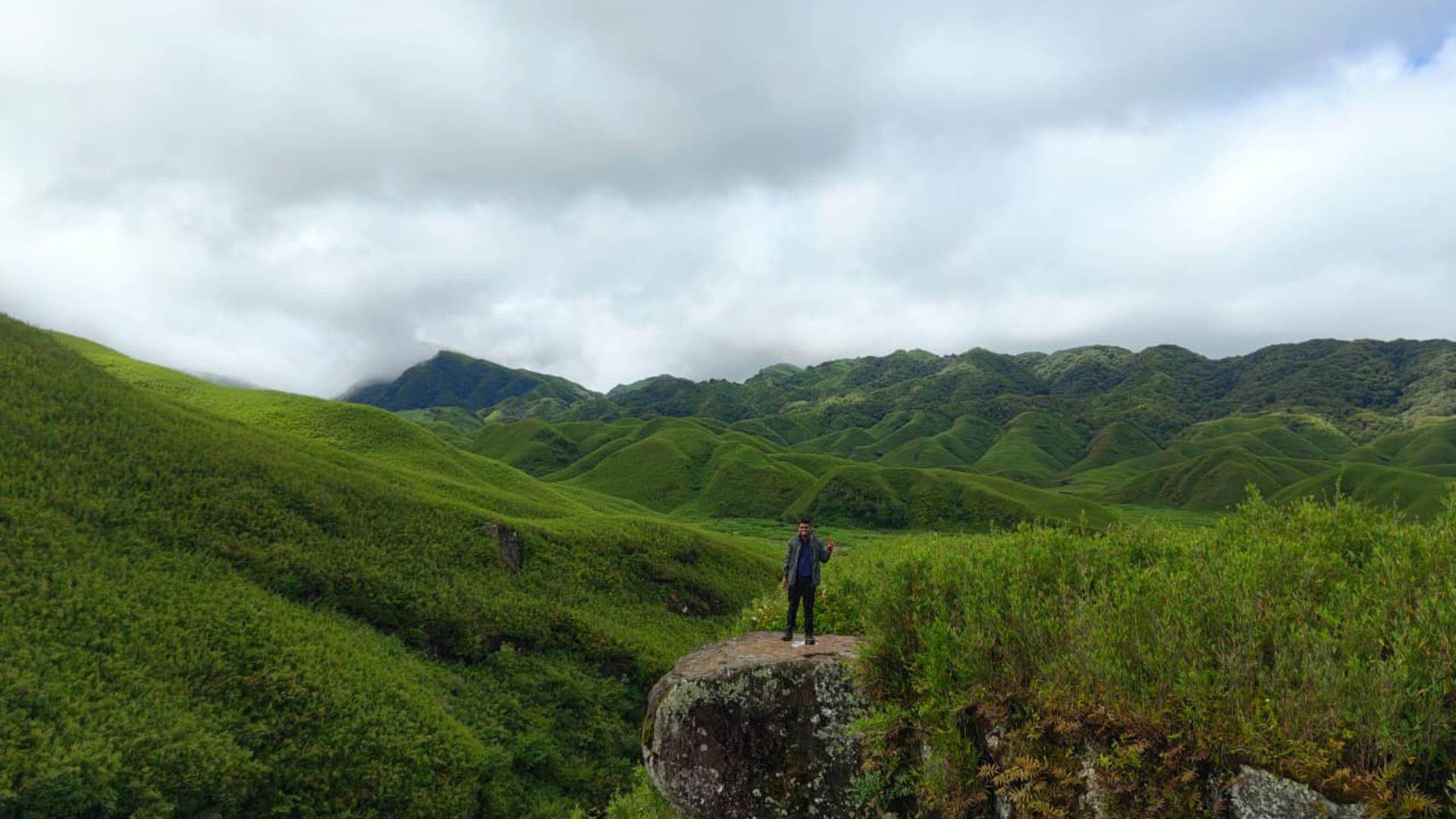
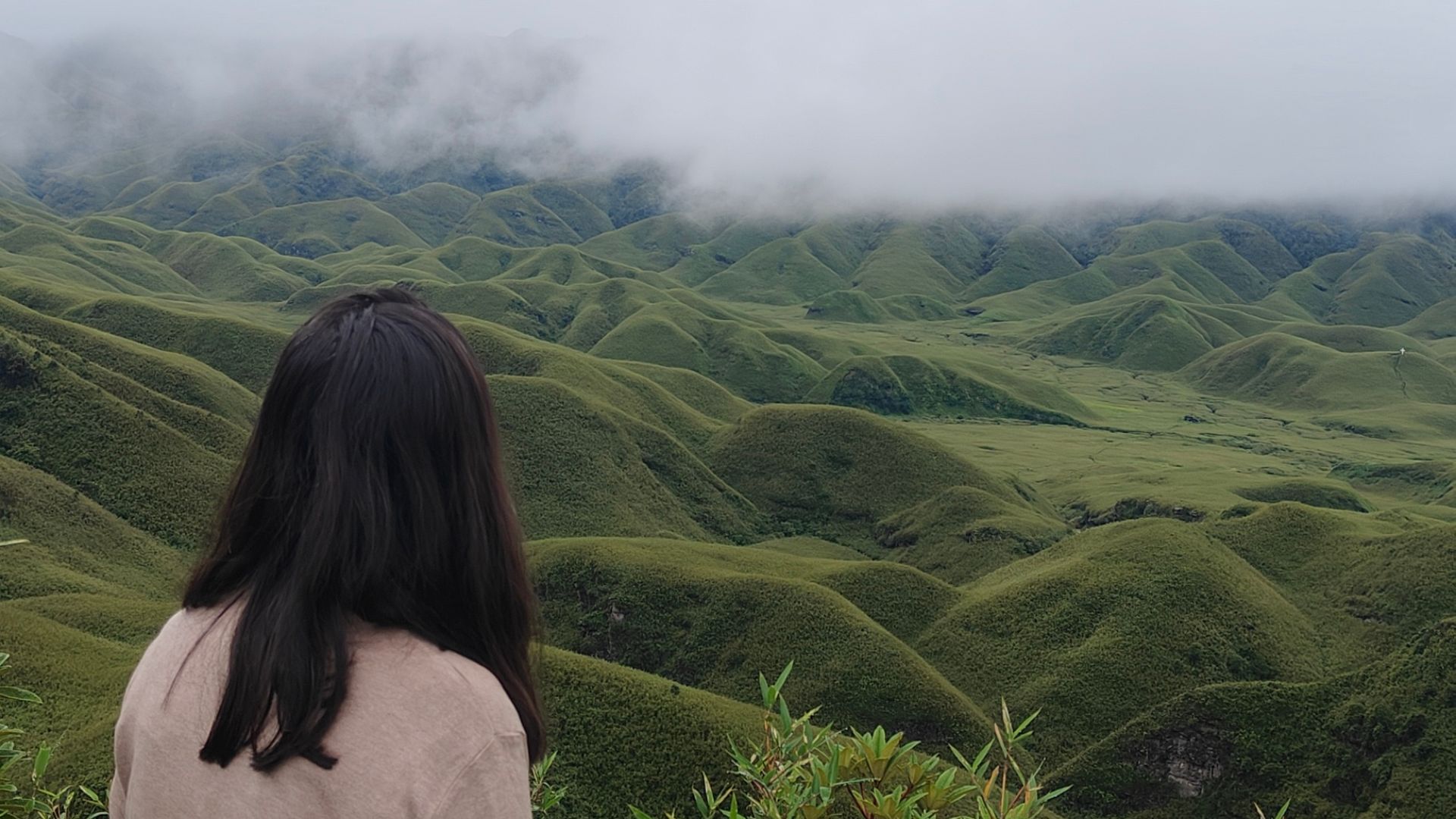
Dzukou becomes a vast rain-fed valley where paths are shaped more by footsteps than clear lines. Clouds drift low through the day, often parting by evening to reveal brief clear skies and quiet sunsets — a season best experienced slowly, embracing the terrain in its most raw and alive form.
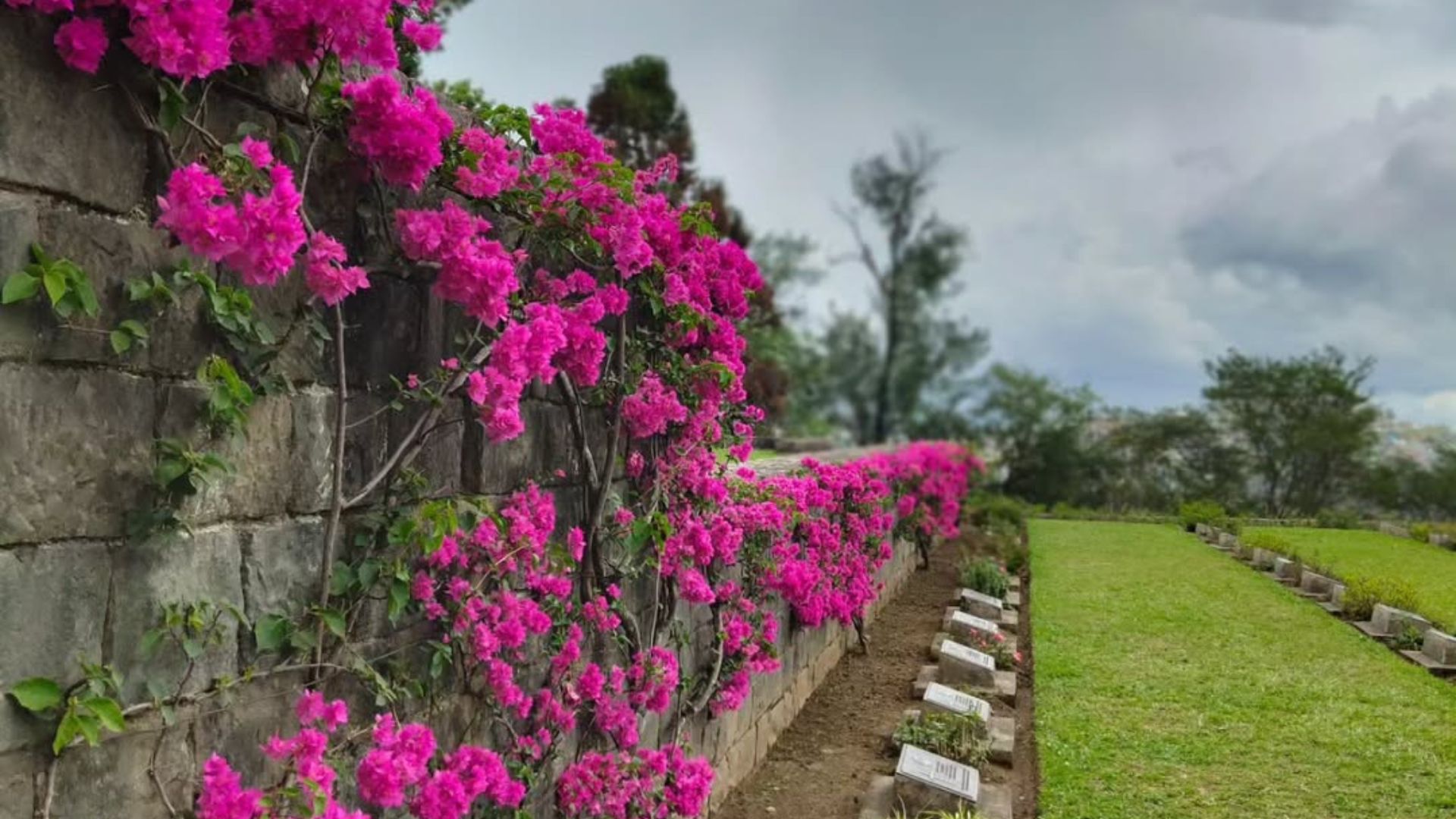
Beneath this cultural and landscape richness lies a layered past. The Angami region has witnessed centuries of movement and resistance. Colonial encounters in the nineteenth century were met with strong opposition, and decades later, the hills around Kohima became the site of one of the fiercest battles of World War II’s eastern front. The years that followed brought further negotiations around identity and self-determination. These histories are not announced loudly, but they remain present, carried quietly in land, memory, and community life.
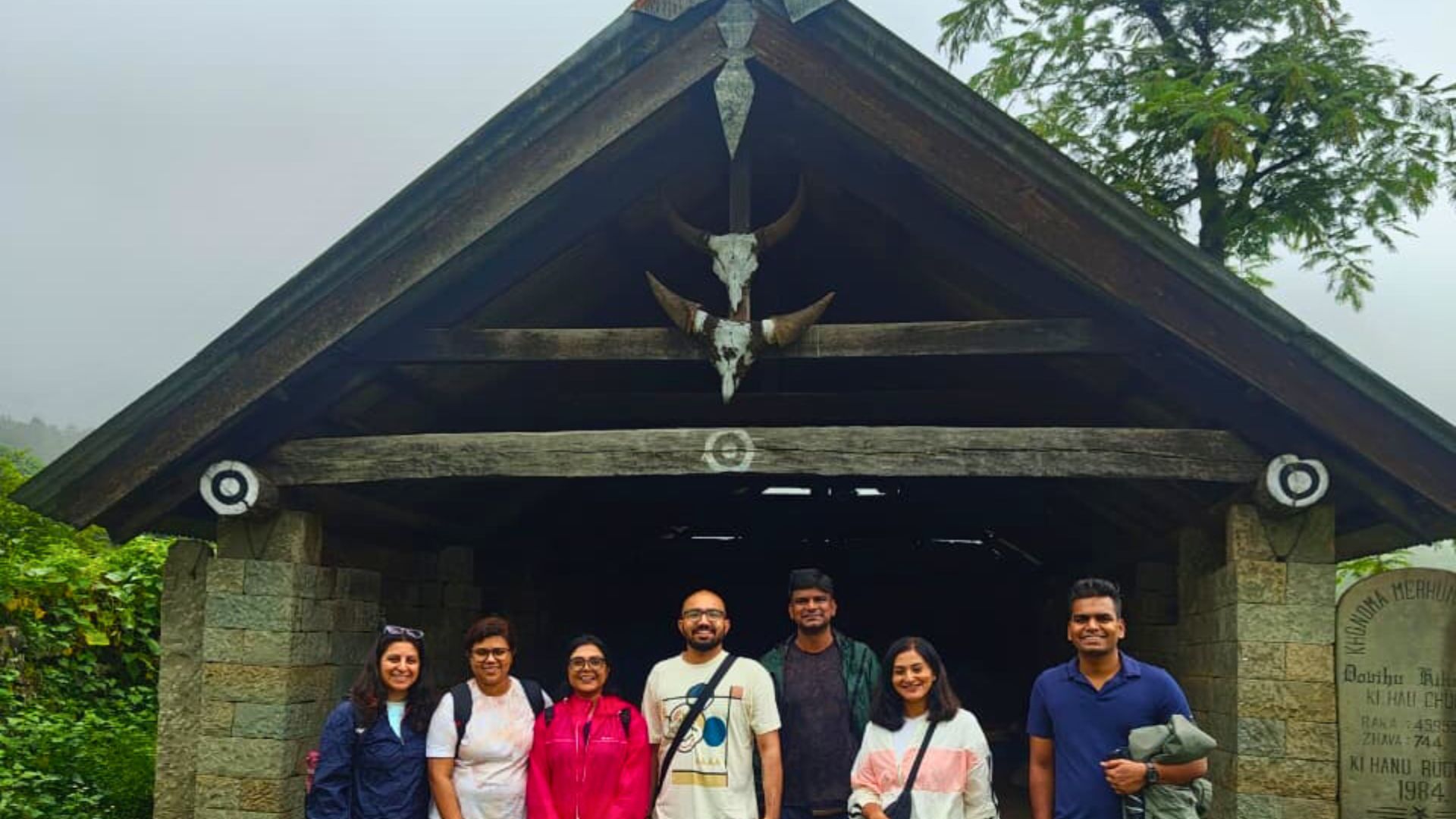
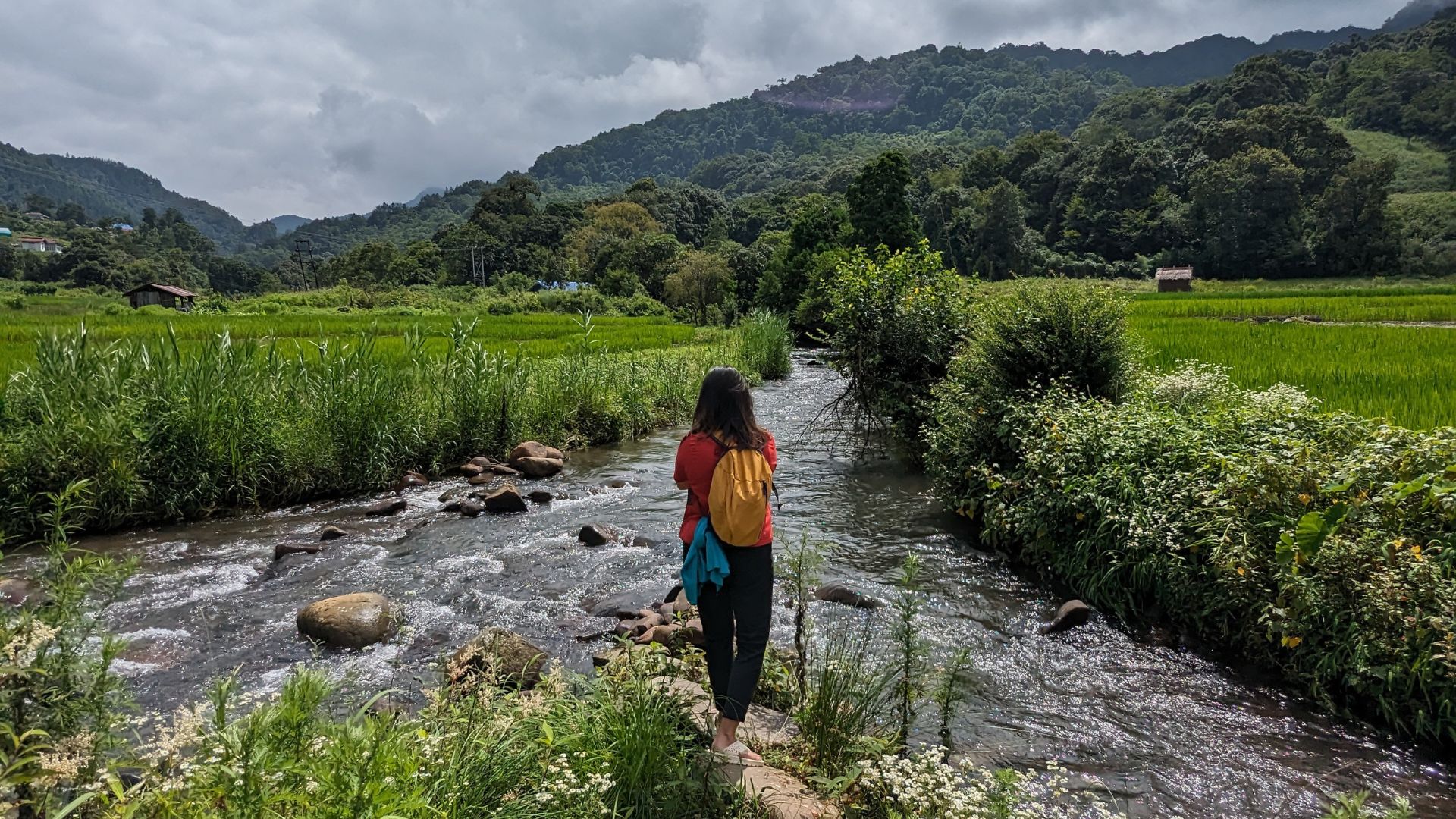
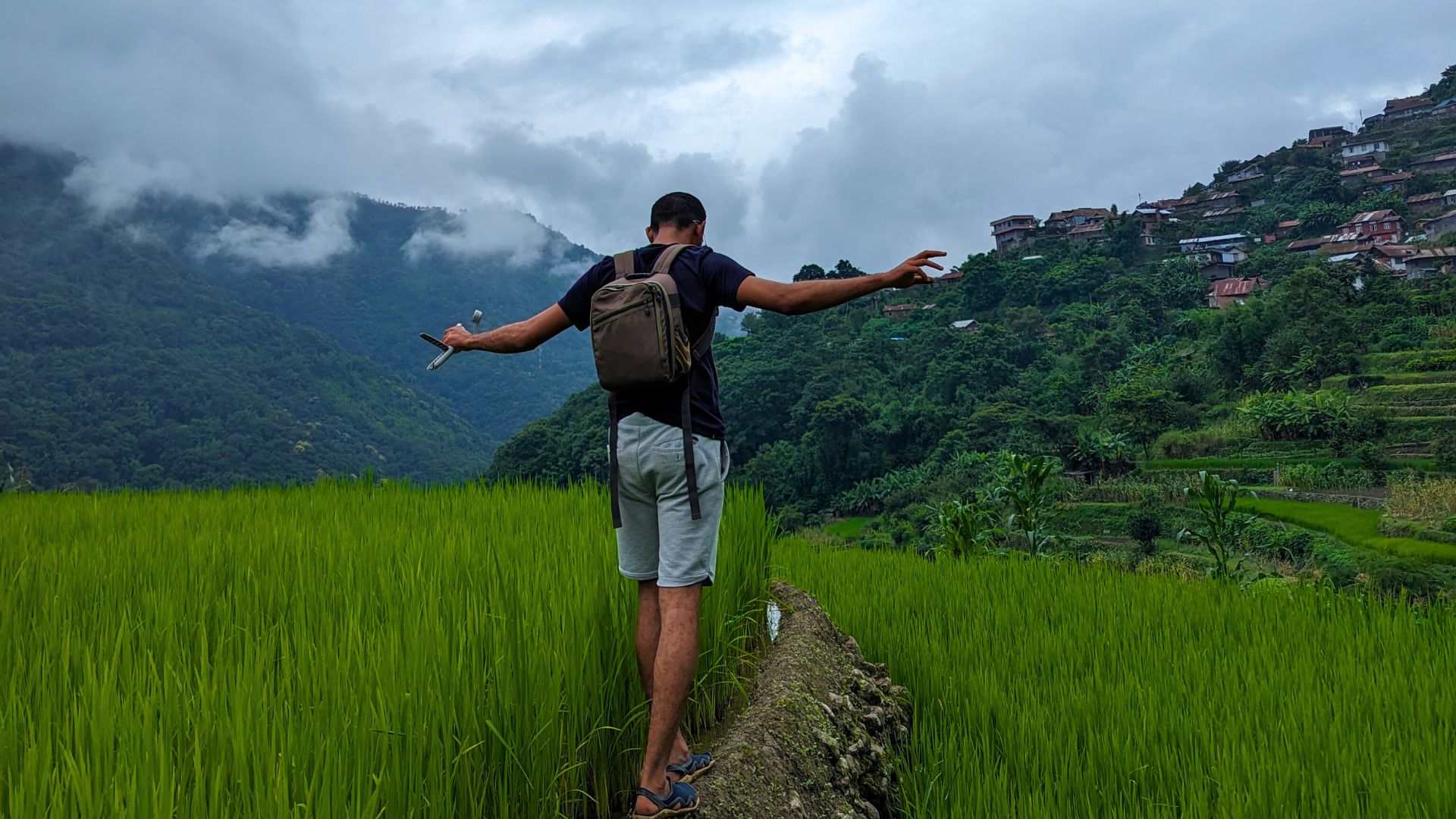
This chapter takes you into the Angami homeland, where village organisation has long been rooted in discipline, cooperation, and land stewardship. Terraced fields reflect generations of agricultural knowledge. Morungs and stone pathways speak of shared responsibility and social order. Forests are not separate from settlement, but integral to how life is sustained. While modern influences are visible, the core relationship between people and land continues to shape daily rhythms.
Over six days, the journey moves through heritage villages, forested hamlets, and highland landscapes that invite both effort and pause. You will walk through Khonoma, Asia’s first green village, wander along gentle trails in Dzuleke, spend time in Kohima’s markets and memorial spaces, and trek into the wide openness of Dzükou Valley, where summer and monsoon bring mist, grasslands, and a sense of scale that resists quick description.
This is not a journey meant to explain Nagaland in full. It is a seasonal chapter, shaped by the fading warmth of summer, the arrival of monsoon clouds, and time spent moving slowly through the land. One that allows the Angami hills to be understood not through instruction, but through presence.
The trip starts at Dimapur Airport on Day 1, where the group assembles for departure, and ends at Dimapur Airport on Day 6. All airport transfers during the scheduled start and end of the trip are planned accordingly. Participants are advised to plan their flights in line with the recommended arrival and departure timings shared for this trip.
On Day 1, participants are required to arrive at Dimapur Airport by 1:30 PM at the latest. The group will depart from the airport by 2:00 PM. Any arrivals after this time – due to flight timings or delays – will need to reach the destination at their own expense.
If your flight timings do not align with this schedule, we highly recommend arriving a day prior.
For departure, return flights can be booked anytime after 11:00 AM on Day 6.
If you arrive a day earlier, the pick-up point for Kohima will be Jotsoma-Khonoma Junction. For Dimapur, pick-ups can be arranged from the airport or the railway station.
We’ll be staying at simple homestays and a very basic dormitory throughout the trip. None of the properties on the trip are boutique/luxurious. They are all clean, comfortable and hygienic and have been vetted by our team!
The dormitory at Dzukou Valley is extremely basic and is the only option, unless you’re looking to carry your own tent to pitch.
Rooms are shared on a double sharing basis. In case you are a solo traveller, you will be paired up with another solo traveller of the same gender. Please note that almost all of the properties will have double bedded rooms.
Dzukou Valley often starts flowering from May onwards, depending on when the consistent monsoon hits the valley. Approximately the wild flowers start blooming somewhere from the month of May and last till July, when the monsoons start retreating.
Dzukou Lilly, an elusive rare lilly that is found in the valley often starts blooming anytime starting mid May and lasts till Mid June. Please note that the exact blooming period is unpredictable and varies depending on the monsoons every year. The volume of travellers visiting to witness the rare lilly is also high around this time.
Although the monsoon recedes in September, taking the vibrant wild flowers with it, the valley remains beautifully lush and green.
While many communities across Northeast India do consume meat, freshly cooked vegetables are an integral part of everyday meals and are almost always prepared alongside meat dishes or served as a side during lunch and dinner. Vegetarian food is neither uncommon nor unfamiliar in the region.
While the food may not resemble restaurant-style meals from larger cities, it is nutritious, well-balanced, and sufficient to keep you comfortable and energised throughout the trip. However, in towns like Kohima, you will also find multiple restaurants and cafés offering a variety of cuisines beyond local fare.
While most of your expenses are covered in the trip cost, carrying up to 1000 per day should be sufficient for personal expenses. Please note that places like Khonoma, Dzuleke, and Dzukou Valley may not accept online payments, which can make transactions slightly inconvenient. Online payment options are easily available in Dimapur and Kohima.
For a clearer understanding of what is covered during the trip, we recommend reviewing the Inclusions and Exclusions section before planning your expenses.
Airtel and Jio work best in this region. However, network connectivity may be limited in areas like Khonoma and Dzuleke, and there is no network coverage in Dzukou Valley. Dimapur and Kohima generally have stable network connectivity.
From April to May, Nagaland transitions through spring into early summer. Days are generally pleasant and sunny, with temperatures ranging between 13°C and 24°C, occasionally interrupted by brief showers or overcast skies. Light, passing rains are common during this period, while nights remain cool, breezy, and comfortable.
As June approaches, the region begins to receive monsoon showers. Rainfall becomes more frequent and, at times, heavier. Dzukou Valley is known for its highly unpredictable weather — it is not unusual to experience steady rain, clear sunshine, and cold, windy conditions all within the same day.
September marks the retreating monsoon in Nagaland, when the hills are at their lushest. Temperatures remain mild (16–26°C), with lingering mist and occasional showers that can last for hours. In Dzükou, the trails often stay damp and muddy, but the valley turns a vivid green, framed by dramatic cloudscapes and clearer sunset windows.
With ongoing climate shifts, weather patterns have become increasingly erratic, making precise predictions difficult, even for locals. Guests are advised to be prepared for changing conditions throughout the journey.
It is important to note that booking flights before reserving a slot with us does not guarantee availability. In the event that we are sold out, we cannot be held responsible for any inconvenience caused.
Single occupancy requires an additional room and impacts overall group capacity. To maintain the experience quality and balance trip logistics, a limited number of single rooms are offered with a single-room supplement.
A 60-litre backpack is ideal for this trip. Suitcases are also acceptable; however, you will need a separate daypack for the Dzükoü Valley trek, as the rest of your luggage will be stored at Jakhama while you explore the valley. Once your booking is confirmed, a detailed Things to Carry list, curated for the season, will be shared with you.
This trip is suitable for travellers with moderate fitness levels, but it does include one physically demanding day during the Dzükou Valley trek. The trek involves walking for about 5–6 hours each way on mountain trails, with long uphill and downhill sections.
While it is not technical and does not require prior trekking experience, you should be comfortable with sustained walking on uneven terrain and carrying a small daypack. However, continuous rains may make the trail muddy and slippery, adding to the overall challenge.
The other days involve village walks, short hikes, and sightseeing at a relaxed pace. If you are reasonably active, enjoy walking, and are open to a challenging but rewarding trekking day, you will be well-suited for this journey.
This trip may not be ideal for travellers with knee issues or those uncomfortable with long walking days.
Yes, each day’s activities will be accompanied by a knowledgeable local guide who will provide insights into the culture, history, and natural wonders of the region. You will also have a ChaloHoppo trip leader throughout the trip.
To comply with the latest guidelines set by the Government of Nagaland, ILP applications must now be completed by the individual traveler through a system that requires a live photo capture. As third parties are no longer permitted to apply on behalf of travelers, the ILP cannot be bundled as part of a travel package.
Applying for the ILP is a simple online process. Travelers can visit the official ILP portal of the Government of Nagaland at https://ilp.nagaland.gov.in and follow these steps:
Once approved, the ILP will be issued digitally and can be downloaded from the Portal.
If you have extra days, here are some great add-ons based on your time:
2–4 days: Kaziranga, Majuli (parts of Assam)
4–5 days: Mon, Longwa, Mokukchung (parts of Nagaland)
5–7 days: Journey through Meghalaya
We’re happy to curate a seamless extension based on your time and interests.