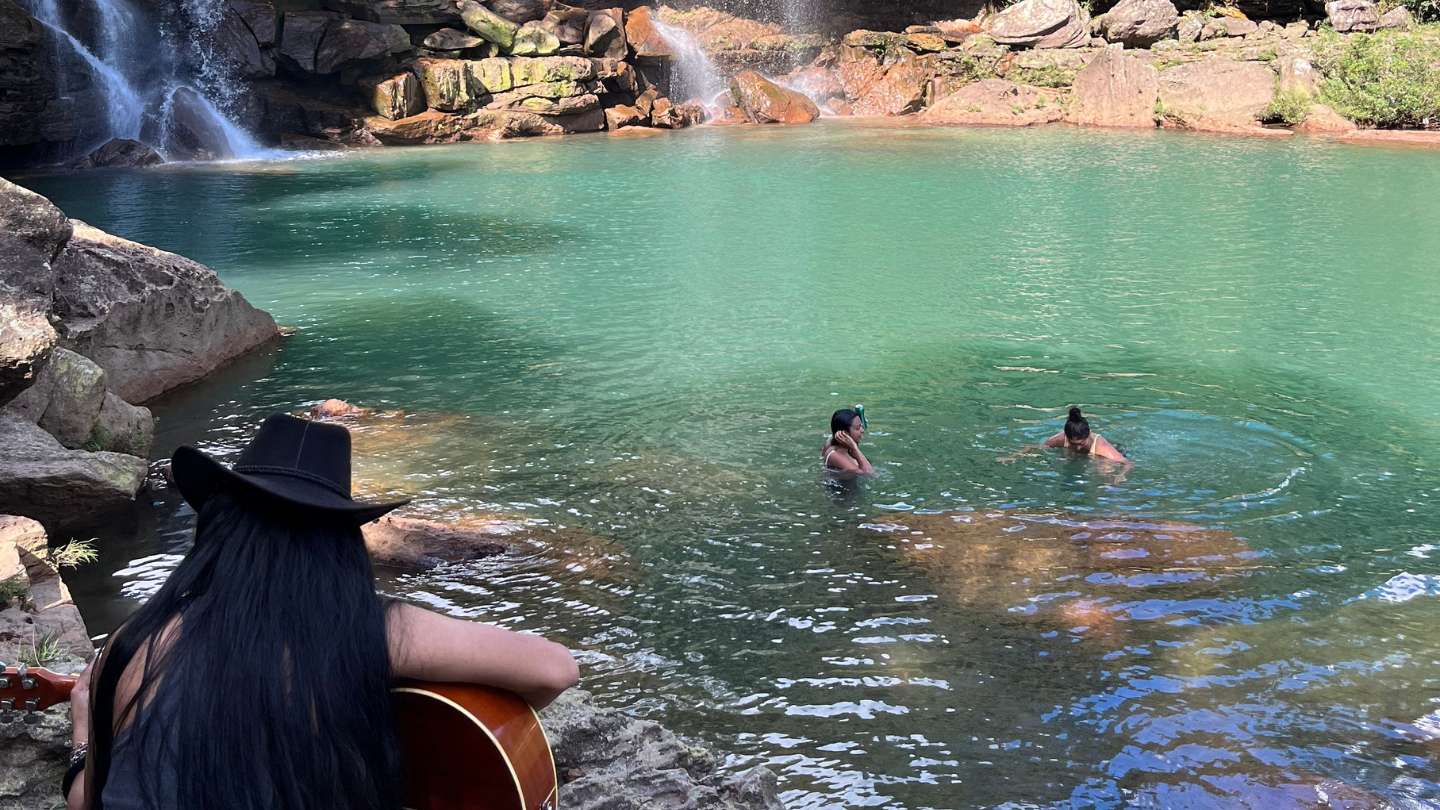
There are places that reveal themselves easily, and then there are places that ask you to arrive with patience. Meghalaya, in the monsoon, belongs firmly to the latter.
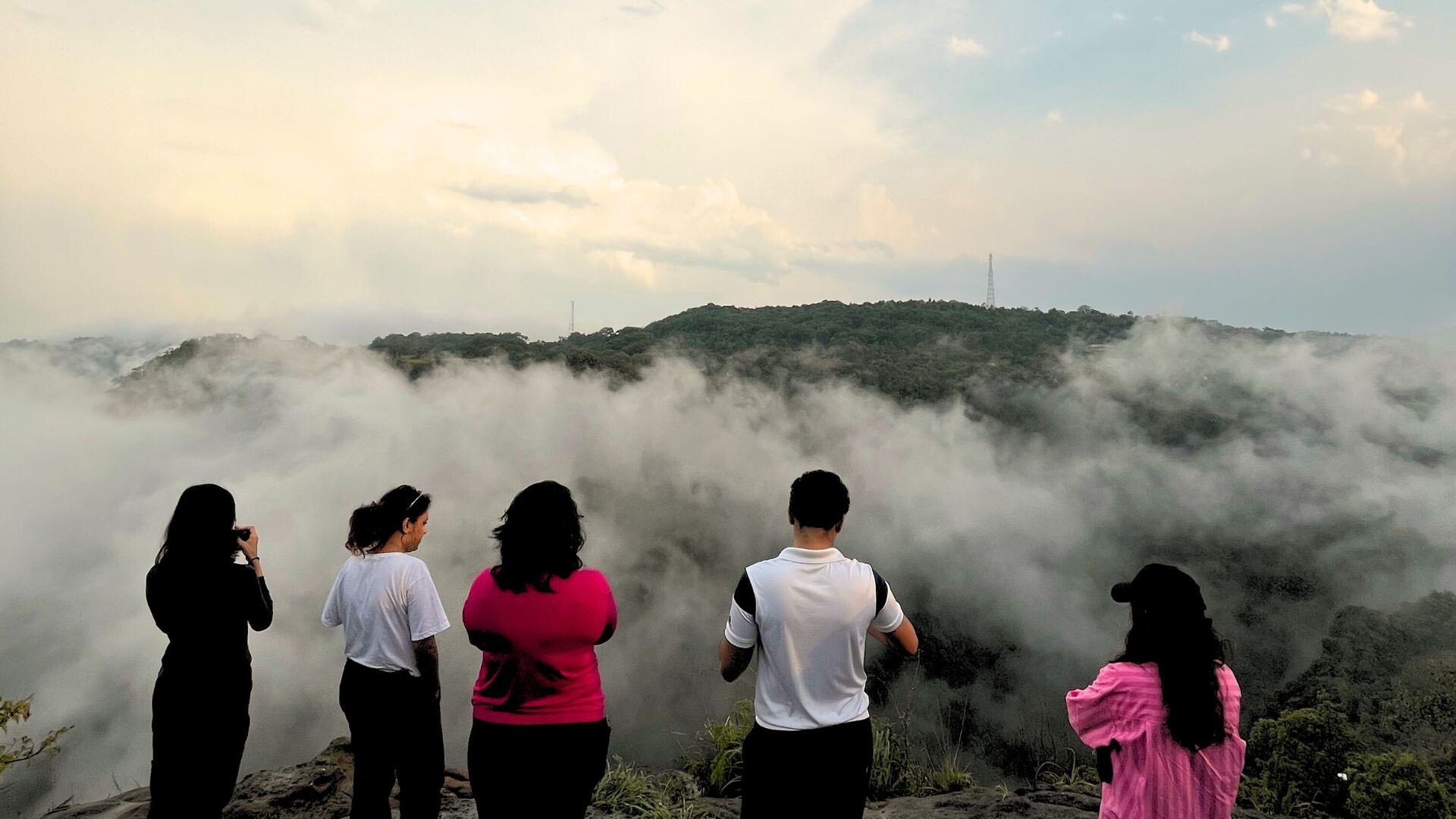
Perched in the eastern Himalayas, the Khasi Hills rise straight into the path of the monsoon winds. Clouds drift low, rain arrives without warning, and the landscape responds in full force. Waterfalls swell, forests deepen in colour, and rivers carve new shapes into stone. This is the season that gives Meghalaya its name, the abode of clouds, and yet it is also the season most travellers choose to avoid.
This chapter is for those who do not.
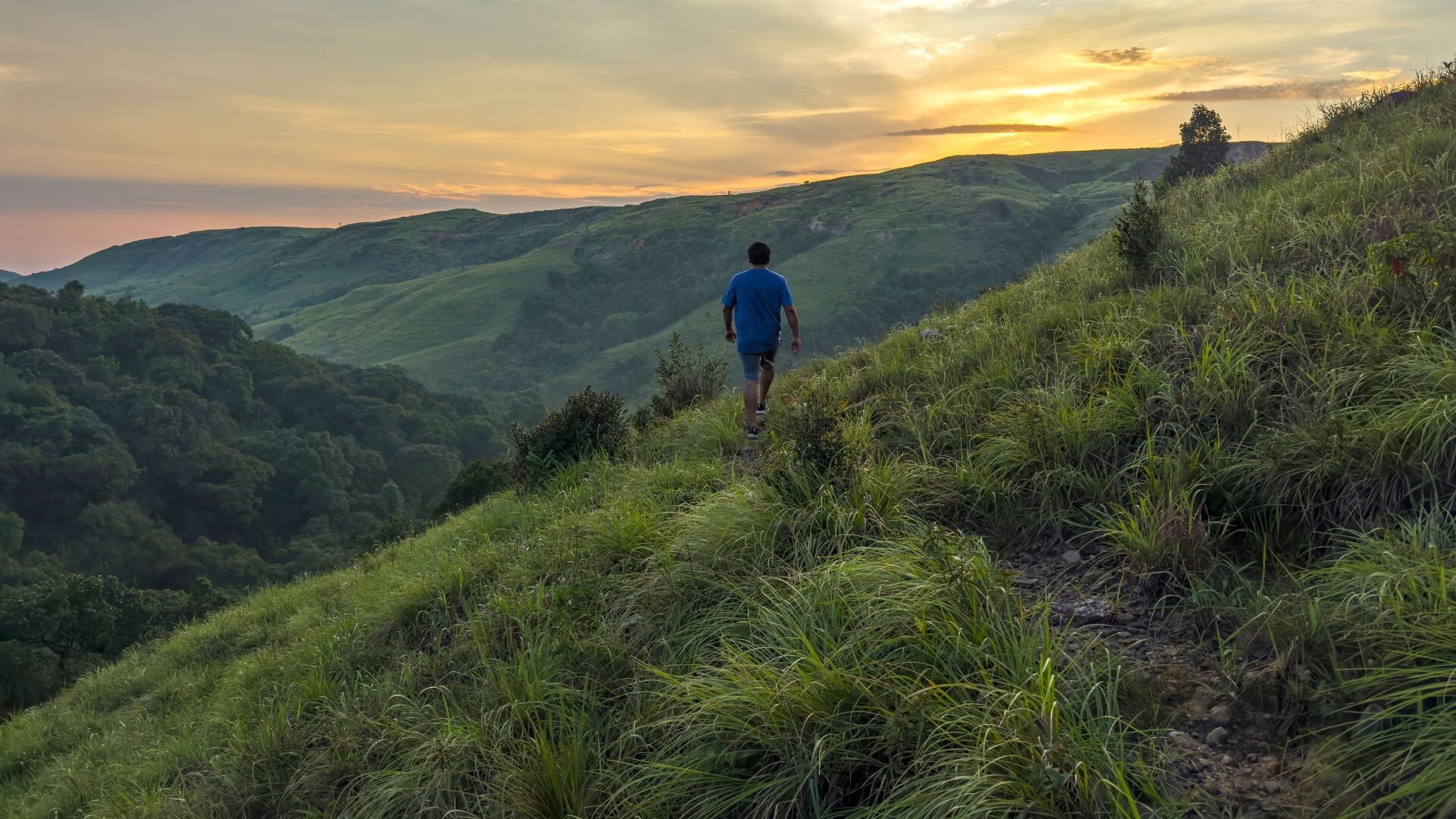
The monsoon in Meghalaya is not about ticking sights off a list. It is about movement and pause, about reading the weather, listening to the land, and allowing plans to flex. Roads disappear briefly into mist, trails soften underfoot, and time itself seems to slow. In return, the land offers something rare: its most alive self.
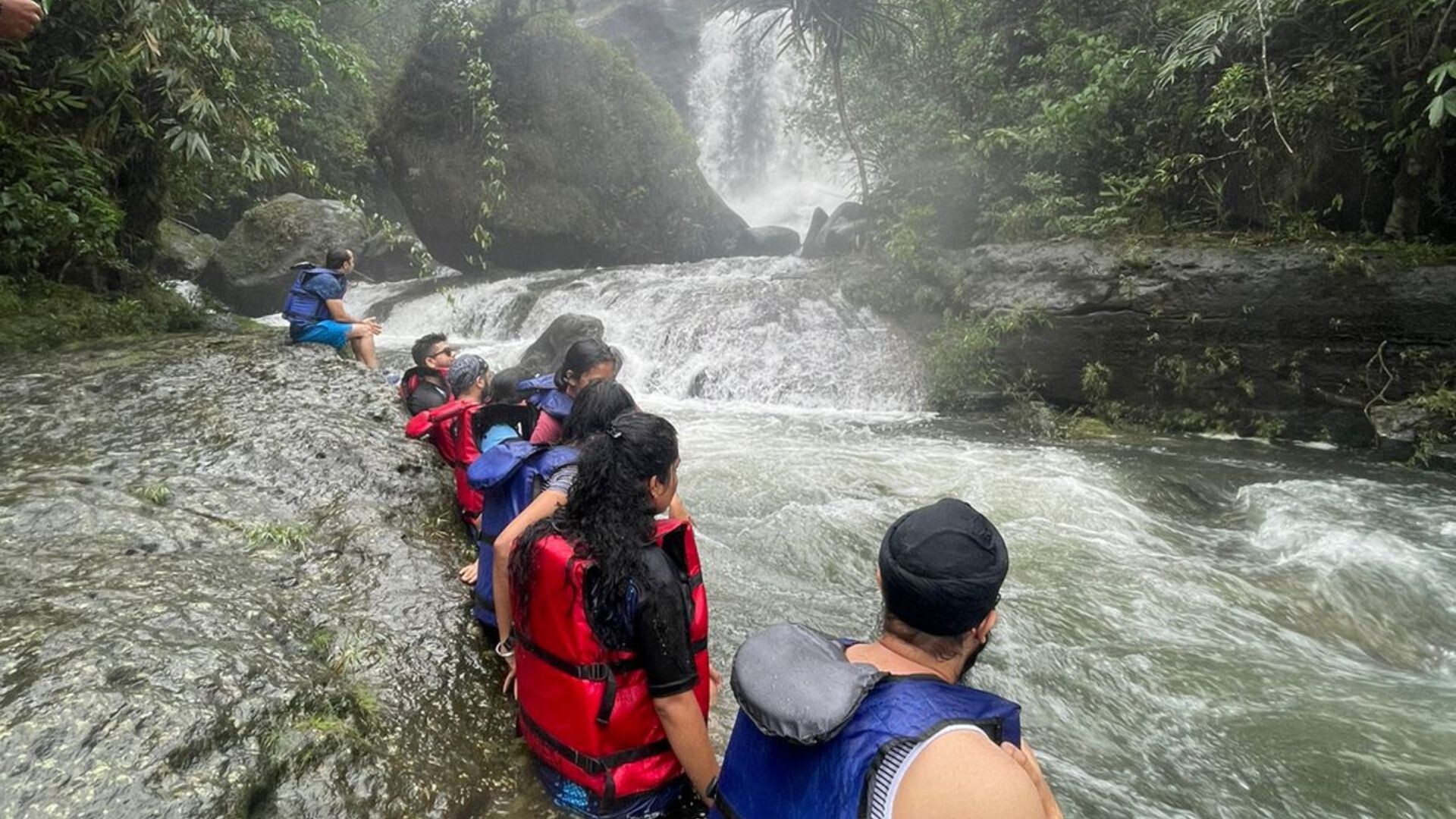
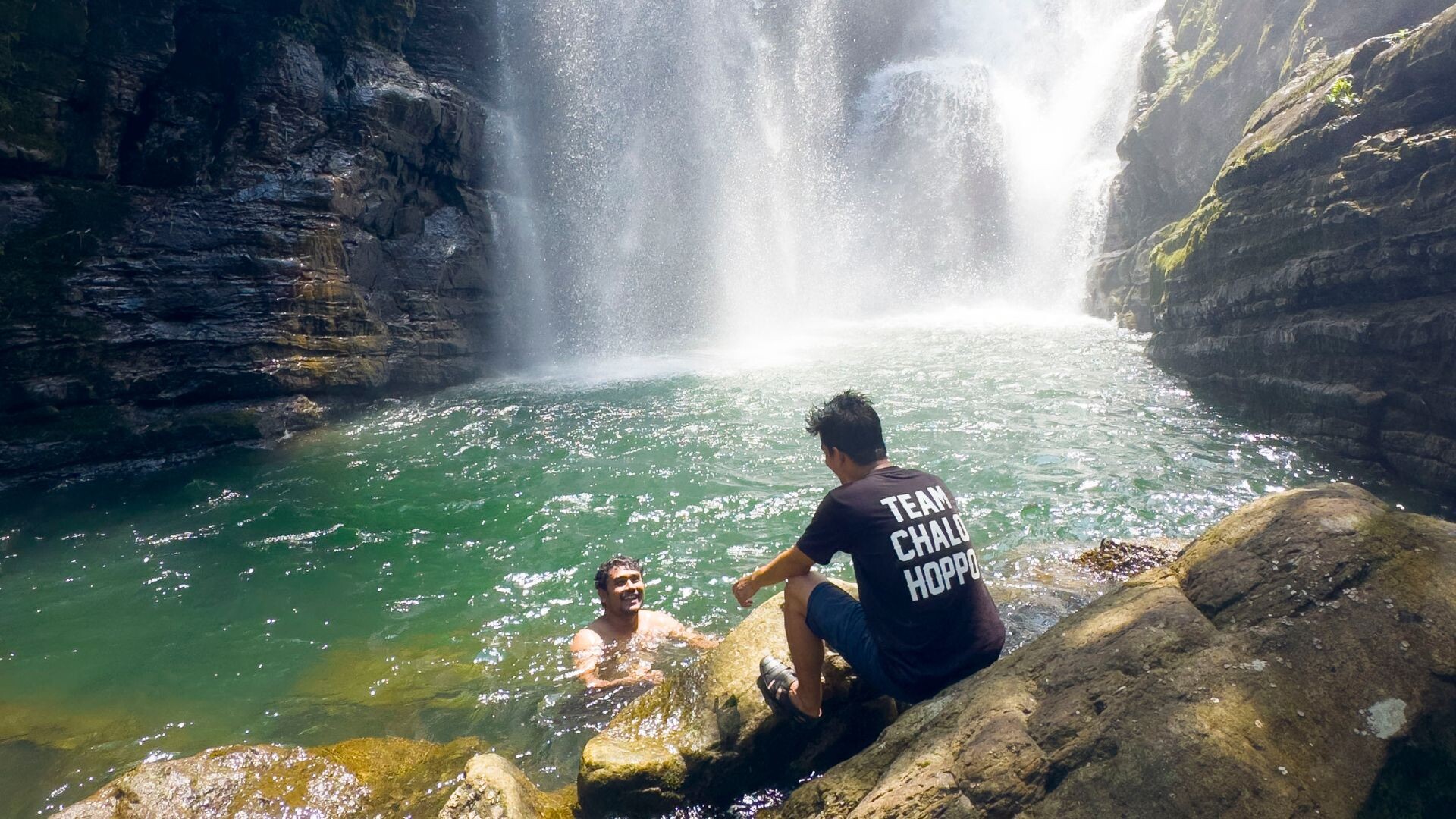
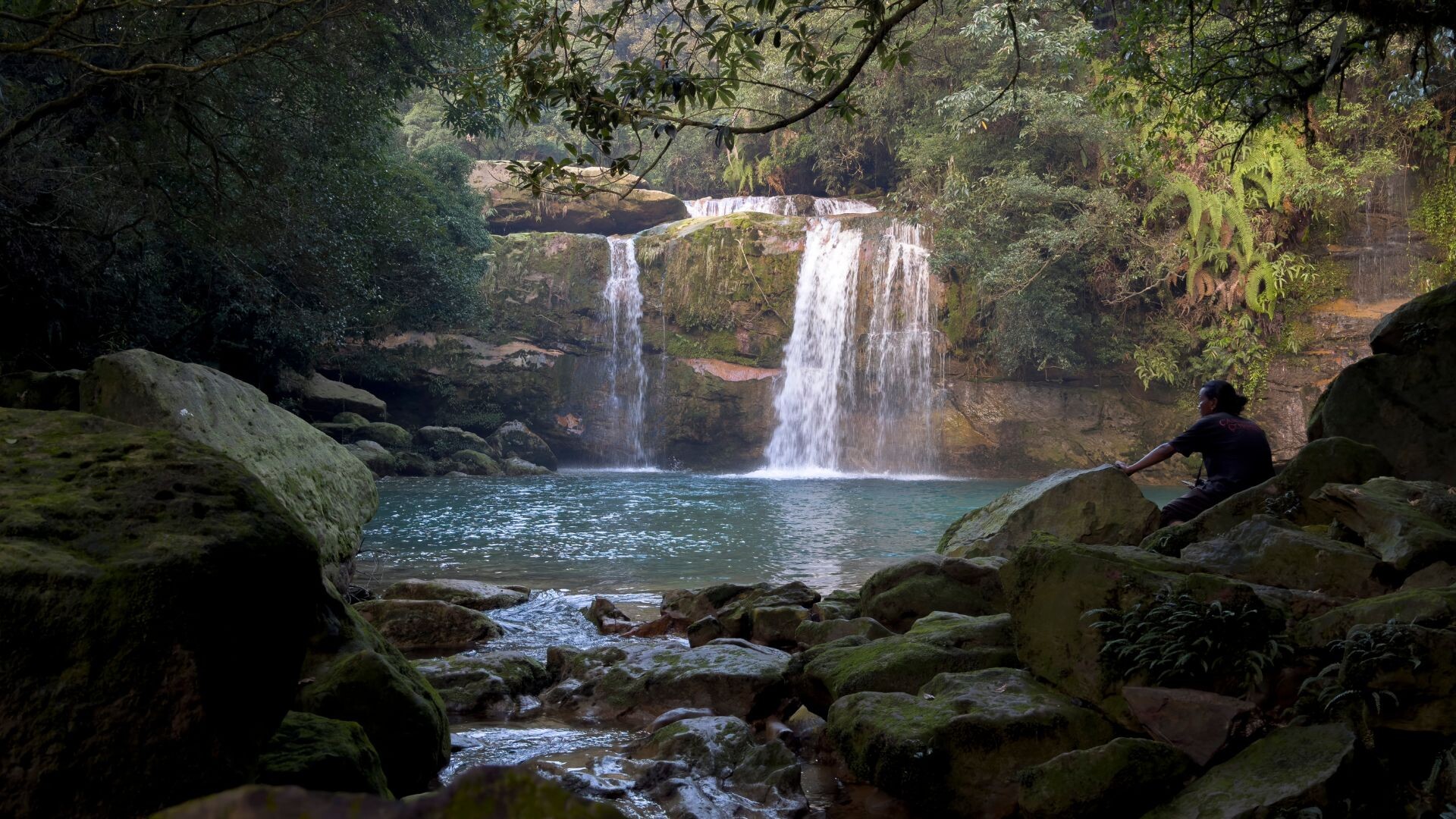
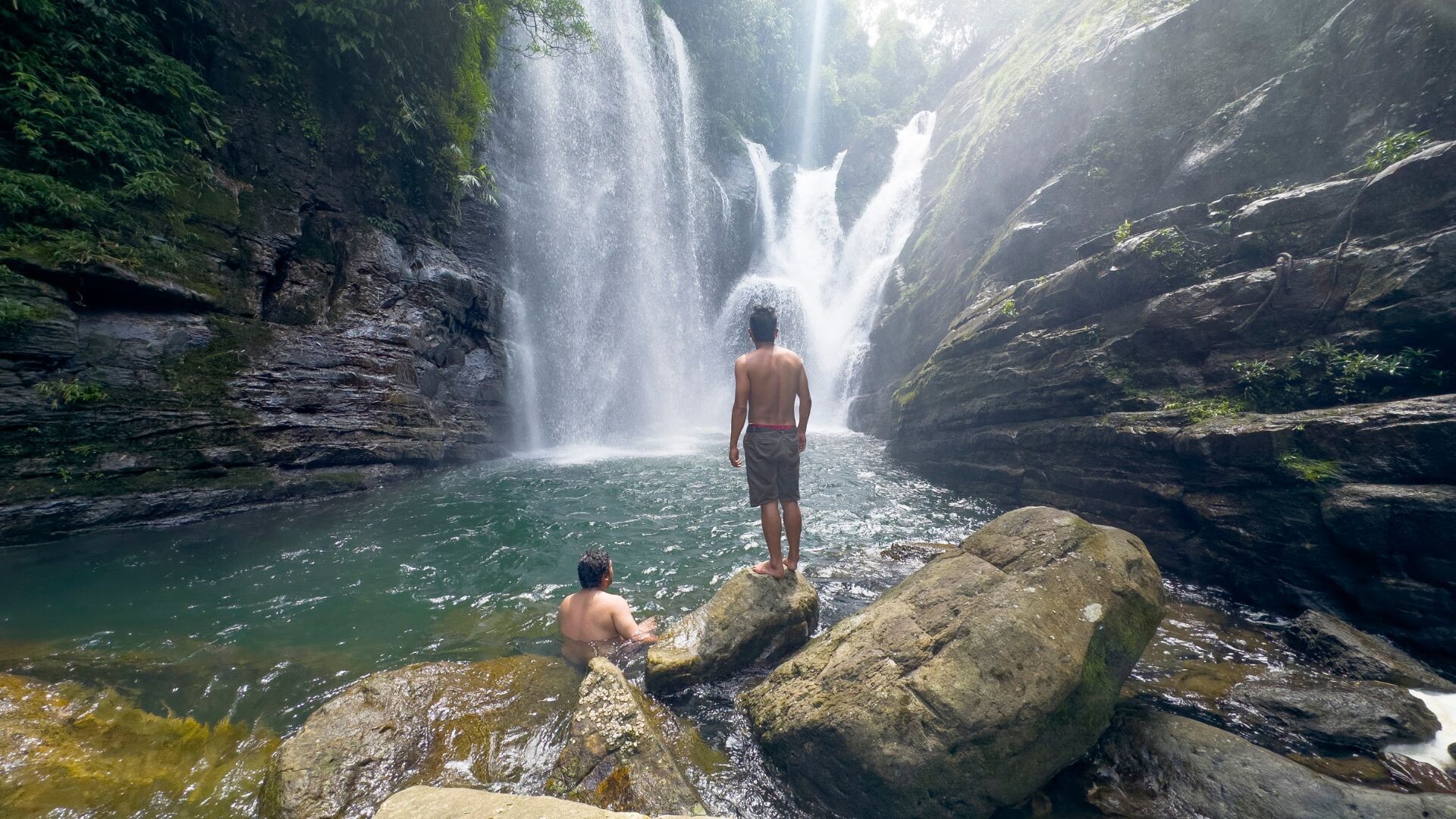
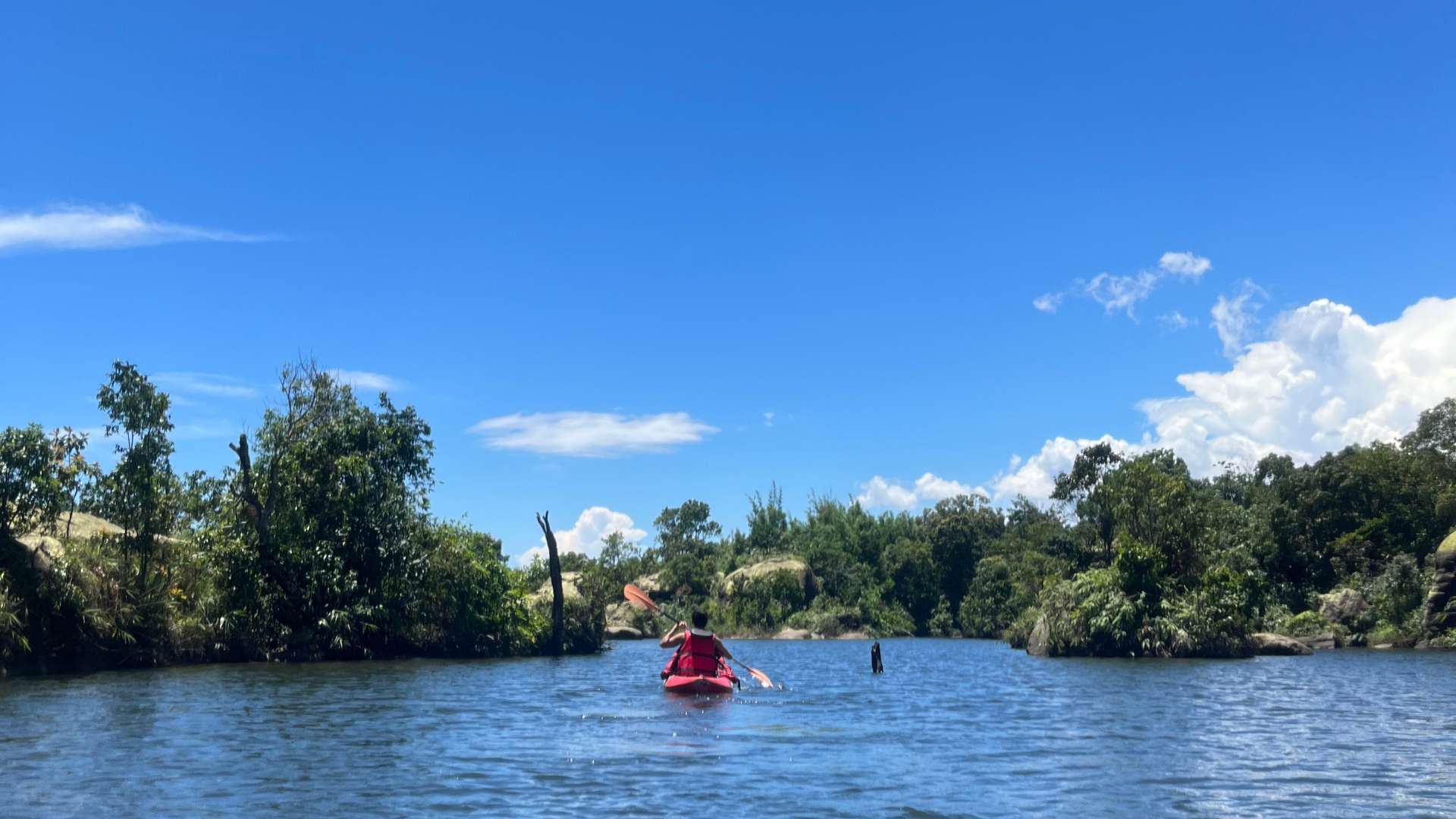
Over six days, this journey moves through the Khasi Hills, from the rain-soaked edges of Sohra to the quieter forests of Mawkyrnot and Pongtung, and onward to the river landscapes of Mawlyngbna. You will walk to lesser-known living root bridges, structures grown patiently over generations to meet the demands of this very climate. You will follow forest trails to waterfalls and natural pools that exist because of the rains, not despite them. You will kayak and canyon through rivers that swell and surge, turning the landscape into a natural playground shaped entirely by water.
But this is not only a journey through terrain.
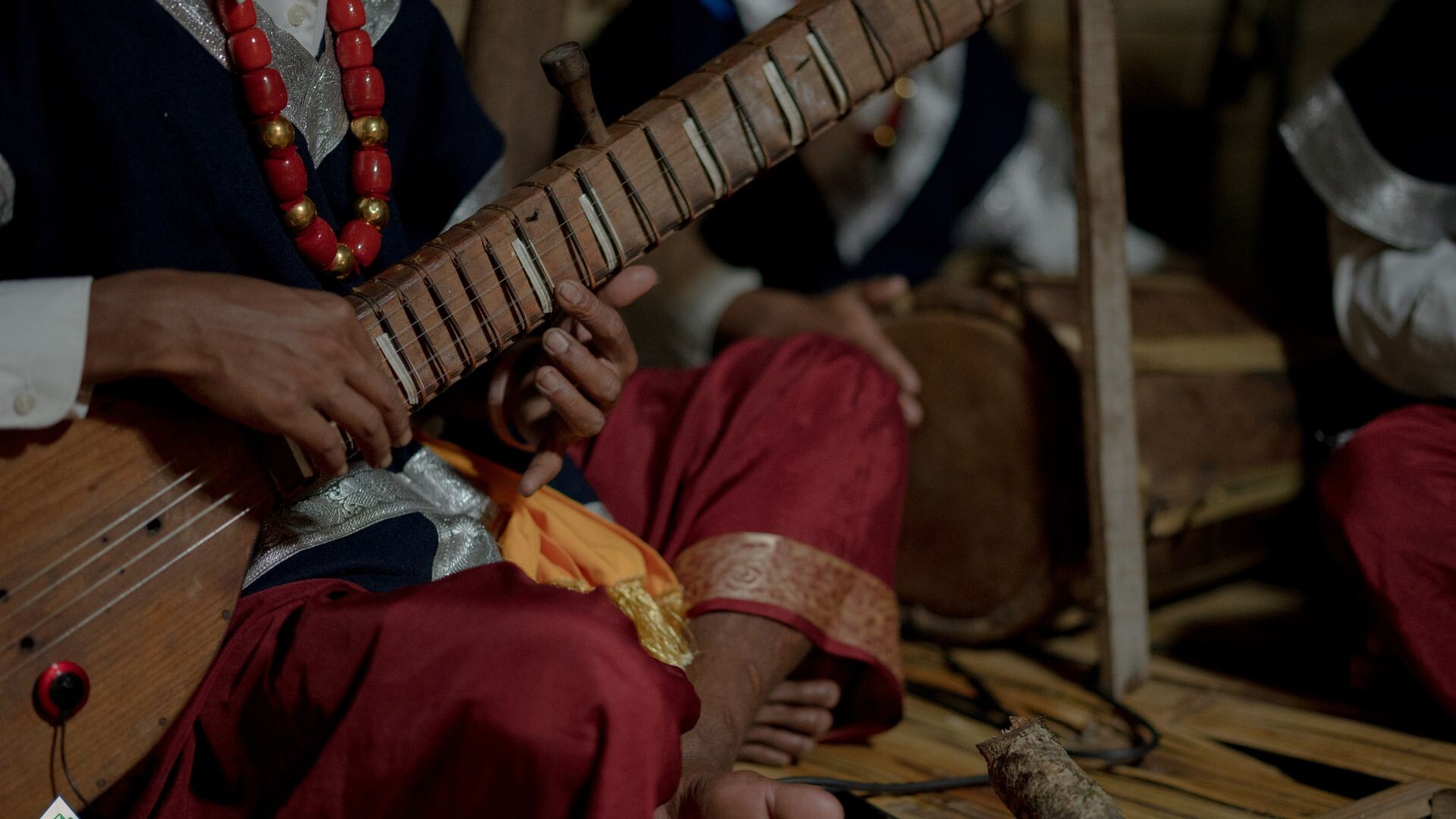
The monsoon has also shaped the lives here. It has influenced how villages are built, how paths are laid, how music is sung, and how communities gather. In the Khasi Hills, rain is not disruption, it is rhythm. You will spend time with local hosts, share meals, and sit in on a traditional music evening where songs carry both memory and everyday life, some old, some newly written, all rooted in place.
This is an outdoors-led journey, but not an adrenaline chase. It is immersive, flexible, and deeply seasonal. Days are planned with intention, but always in conversation with the weather. Some moments are expansive, others quiet. Some walks are misty and slow, others lead to sudden openings where water crashes down rock faces and rivers glow green under grey skies.
This chapter is not designed for everyone. It is for travellers who understand that the rain in Meghalaya does not spoil a journey, it defines it. For those who are willing to get wet, wait things out, and see beauty in unpredictability. For those who want to experience Meghalaya not at its neatest, but at its most honest.
In the monsoon, Meghalaya does not perform.
It simply exists.
And if you let it, it will meet you there.
The trip starts at Guwahati Airport on Day 1, where the group assembles for departure, and ends at Guwahati Airport on Day 6. All airport transfers during the scheduled start and end of the trip are planned accordingly. Participants are advised to plan their flights in line with the recommended arrival and departure timings shared for this trip.
On Day 1, participants are required to arrive at Guwahati Airport by 11 AM at the latest. The group will depart from the airport by 12:00 PM. Any arrivals after this time – due to flight timings or delays – will need to reach the destination at their own expense.
If your flight timings do not align with this schedule, we highly recommend arriving a day prior.
For departure, return flights can be booked anytime after 2 PM on Day 6.
If you arrive a day earlier, the pick-up point will be either at Guwahati Airport, Jalukbari Junction or Khanapara – depending on where you are staying in and around Guwahati. These are the designated pick-up points en route to Sohra, as the vehicle will not stop or enter the city beyond these points.
We’ll be staying at simple homestays and guest houses throughout the trip. None of the properties on the trip are boutique/luxurious. However, they are all clean, comfortable and hygienic, and have been handpicked by our team.
Rooms are shared on a double sharing basis. In case you are a solo traveller, you will be paired up with another solo traveller of the same gender. Please note that almost all of the properties will have double bedded rooms.
Note: The room allocation will be done at Trip Leaders’ discretion.
During the trip, you can expect simple, home-style meals that reflect the local flavours of the Khasi Hills region. Most meals are light, comforting, and well-suited for days filled with hiking and outdoor activities.
In Pongtung, you may order meals either from the guest house or from Ka Bri War Resort’s restaurant. In Shillong and Sohra, there are also cafés and local eateries you can explore on your own.
Most of your major expenses during the trip are already covered. An additional ₹800–₹1,000 per day should generally be sufficient for personal expenses, snacks, café visits, or small purchases.
Most places in the region now accept UPI payments, making transactions easy and convenient. However, we recommend carrying a small amount of cash as well, especially in remote areas where digital payments may not always work reliably.
You can also refer to the Exclusions section for a clearer idea of potential additional expenses.
Mobile connectivity is available in most towns and key areas throughout the trip. Airtel and Jio generally offer the best network coverage in Meghalaya. However, in remote villages, forest stretches, or during treks, the signal may be weak or intermittent.
Wi-Fi is available at some of the selected properties, though the speed may be limited and not always suitable for heavy usage.
We recommend informing family and colleagues in advance that you may be temporarily unreachable while exploring certain remote locations.
This itinerary is designed to be best experienced during the monsoon. Meghalaya comes alive with lush greenery, flowing waterfalls, and misty landscapes. You may even experience different “seasons” in a single day – warm sunshine, sudden showers, cool breezes, fog, and pleasant evenings.
Light to moderate rainfall is part of the experience and generally does not disrupt the itinerary. We operate as planned unless weather conditions pose safety concerns.
Water activities at Mawlyngbna will go ahead unless there is torrential rainfall. In case of heavy rain or safety concerns, an alternate plan such as caving or guided hikes will be arranged. All decisions are taken on-ground with safety as the priority.
All decisions are made on-ground by the trip leader with safety as the top priority, while ensuring you still have a meaningful and immersive experience.
It is important to note that booking flights before reserving a slot with us does not guarantee availability. In the event that we are sold out, we cannot be held responsible for any inconvenience caused.
Single occupancy requires an additional room and impacts overall group capacity. To maintain the experience quality and balance trip logistics, a limited number of single rooms are offered with a single-room supplement.
Yes. From Day 2 onwards, all activities and explorations will be led by knowledgeable local guides. You will also be accompanied by a ChaloHoppo Trip Leader throughout the journey to ensure a smooth and well-coordinated experience.
This trip is best suited for travellers with a moderate level of fitness who are comfortable being active for multiple days in wet, outdoor conditions. The itinerary includes short hikes (up to 45 minutes at a time), walking on uneven forest trails, climbing steps near waterfalls and root bridges, and water-based activities such as river canyoning and kayaking at Mawlyngbna.
The hikes are not technical or extreme, but the terrain can be slippery during the monsoon and involves steady movement throughout the day. You don’t need prior trekking experience, but you should be comfortable walking for a few hours in total, getting wet, and carrying a small daypack.
This trip may not be ideal for travellers with knee issues or those uncomfortable with long walking days. If you enjoy nature, don’t mind the rain, and are reasonably active, you’ll be well-suited for this journey.
For this 6-day monsoon journey, we recommend a medium-sized backpack or duffel (40–60L) that’s easy to carry, along with a small daypack for hikes and daily essentials.
Pack light, quick-dry clothing, comfortable walking shoes with good grip, personal medications, and basic toiletries.
Once you sign up, we’ll share a detailed seasonal “Things to Carry” list to help you prepare – but don’t forget your raincoat.
Meghalaya is known for having some of the better-maintained hill roads in the country, with scenic drives and relatively fewer sharp bends — making motion sickness less common compared to many mountain regions.
Most drives range between 3–4 hours on travel days. However, certain stretches — especially between Sohra and Pongtung — may be slightly bumpy due to ongoing road work.
If you have extra days, here are some great add-ons based on your time:
3–5 days: Majuli or Dzukou Valley
5–7 days: Kohima, Mon, or parts of Western Arunachal Pradesh
8–10 days: A deeper journey into Western, Central, or Eastern Arunachal Pradesh (each region ideally needs 7+ days).
We’re happy to curate a seamless extension based on your time and interests.