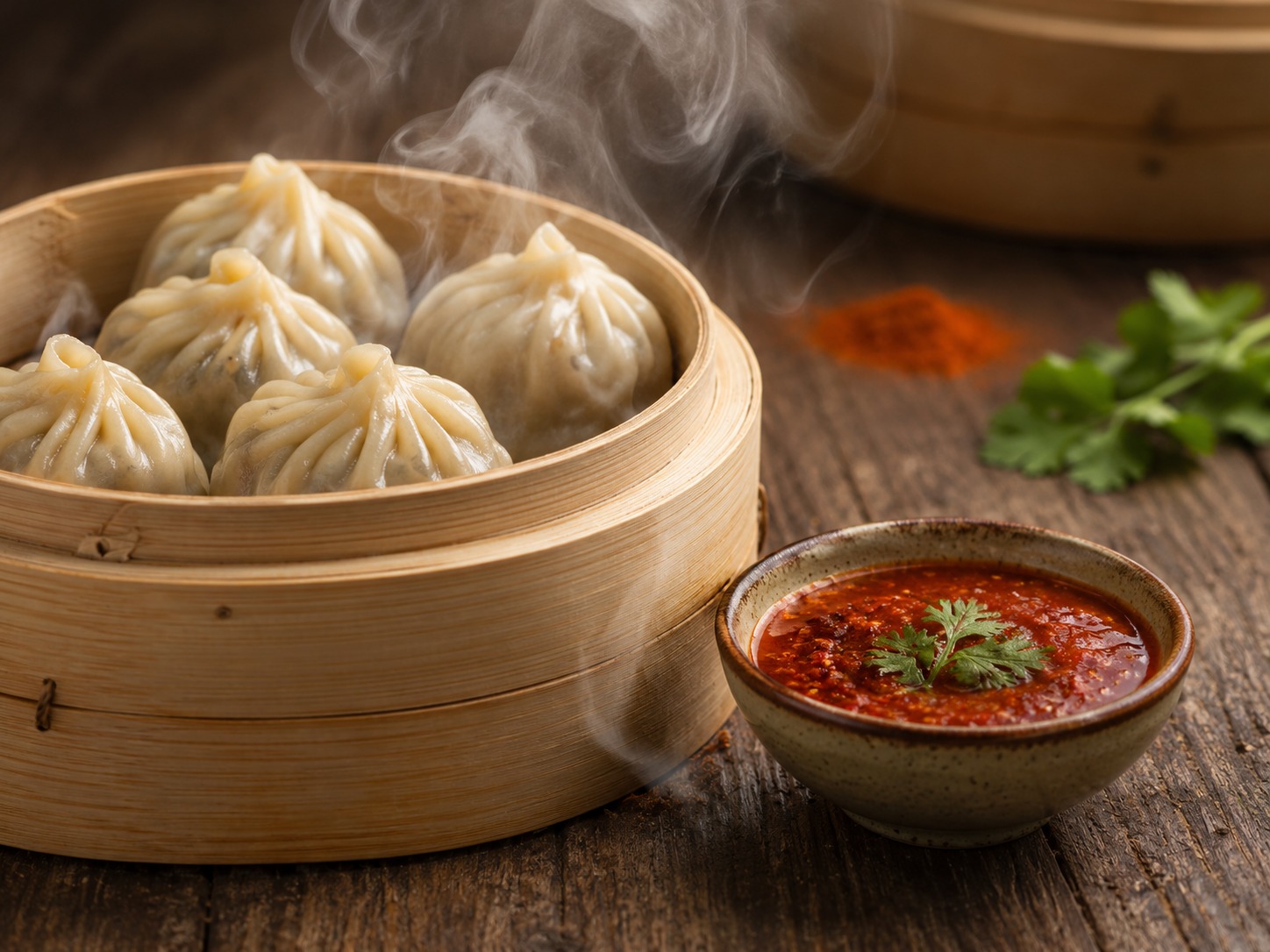
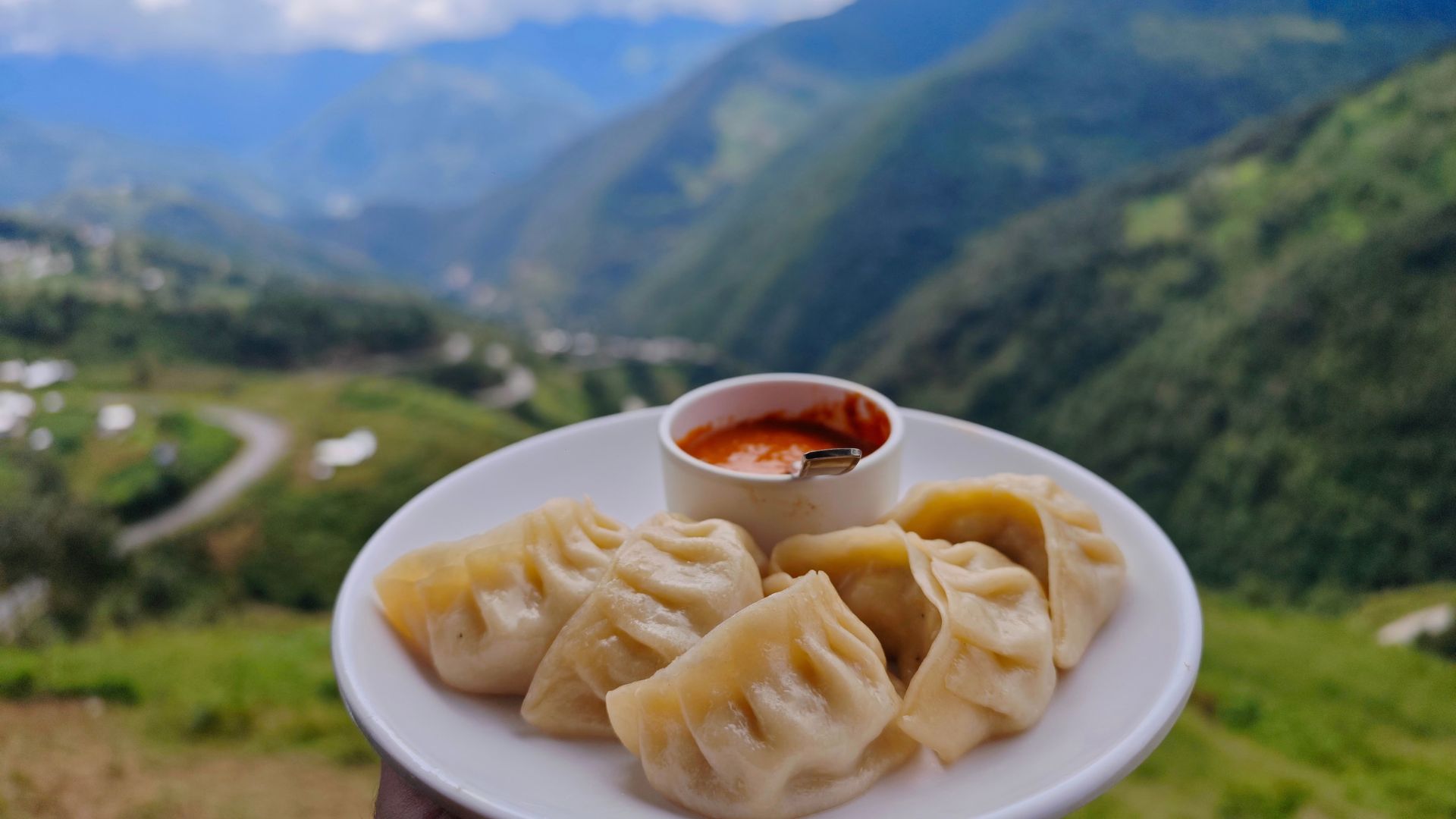
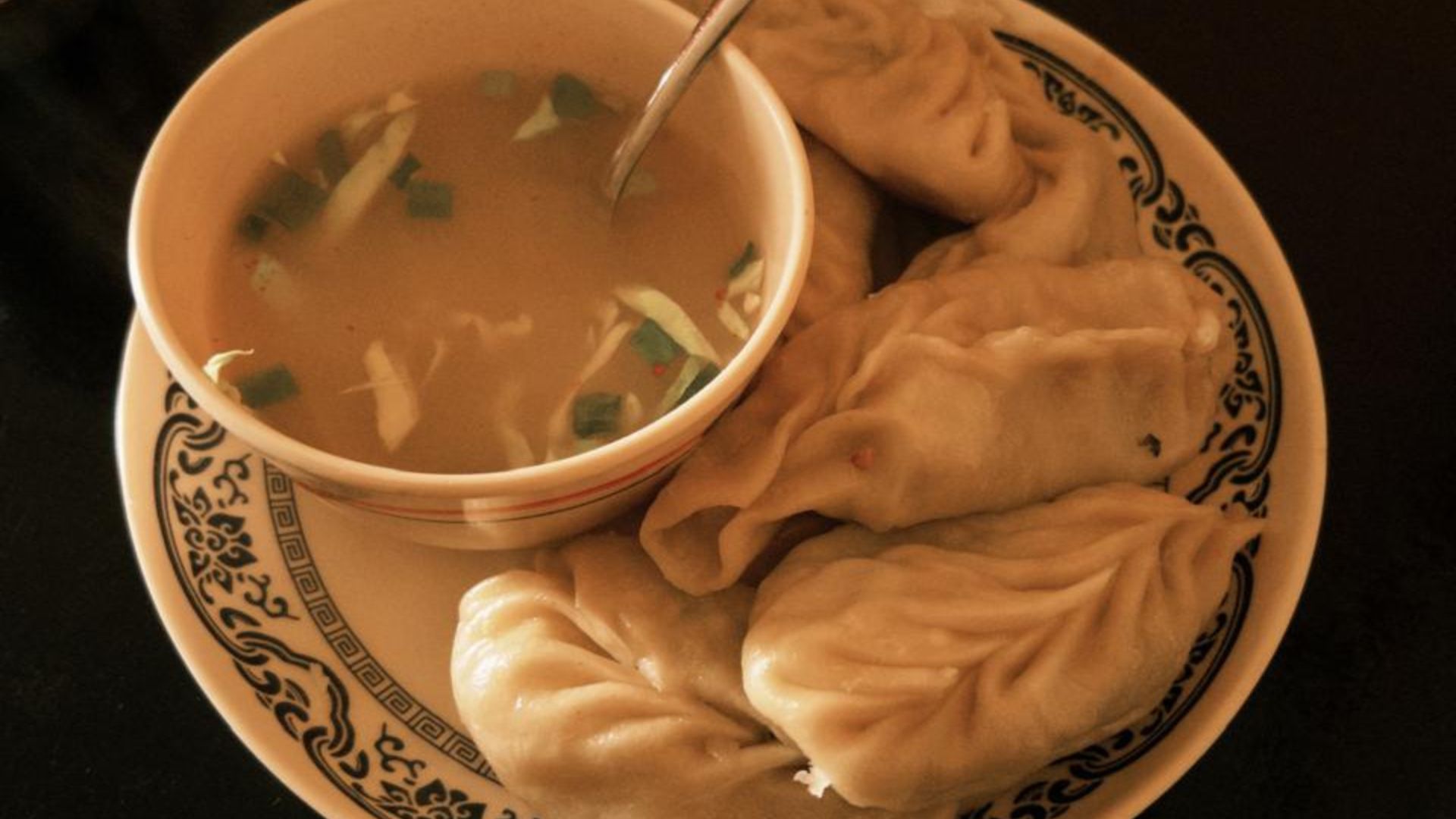
There are few foods in India that inspire the kind of devotion that a plate of momos does. They are eaten standing beside busy roads, over conversations in college canteens, in mountain homestays, at bustling markets and around kitchen tables. They arrive steaming in bamboo baskets, tucked inside paper plates, or swimming in fiery red chutney. They can be filled with pork, beef, chicken, vegetables or even yak cheese. And increasingly, they are being reinvented in ways their earliest makers might never have imagined.
But the momo is more than a dumpling. It is a story of migration, trade, cultural exchange and adaptation. Its journey across the Himalayas and into India's Northeast reveals how food travels with people, how communities make unfamiliar things their own, and how an everyday snack can become an expression of regional identity.
The momo's origins are not as neatly folded as its dough. There is no universally agreed-upon account of where it was first made. Its history is generally traced to the Tibetan Plateau and the wider Himalayan region, where communities developed different forms of stuffed dough, shaped by geography, climate, trade and the availability of ingredients. Some accounts connect its journey to Nepal with Newar merchants who travelled between Kathmandu and Tibet. Others emphasise the movement of Tibetan communities and their food traditions across the mountains. The two histories are not necessarily contradictory; both point towards a culinary world in which borders were crossed long before modern nation-states drew them on maps.
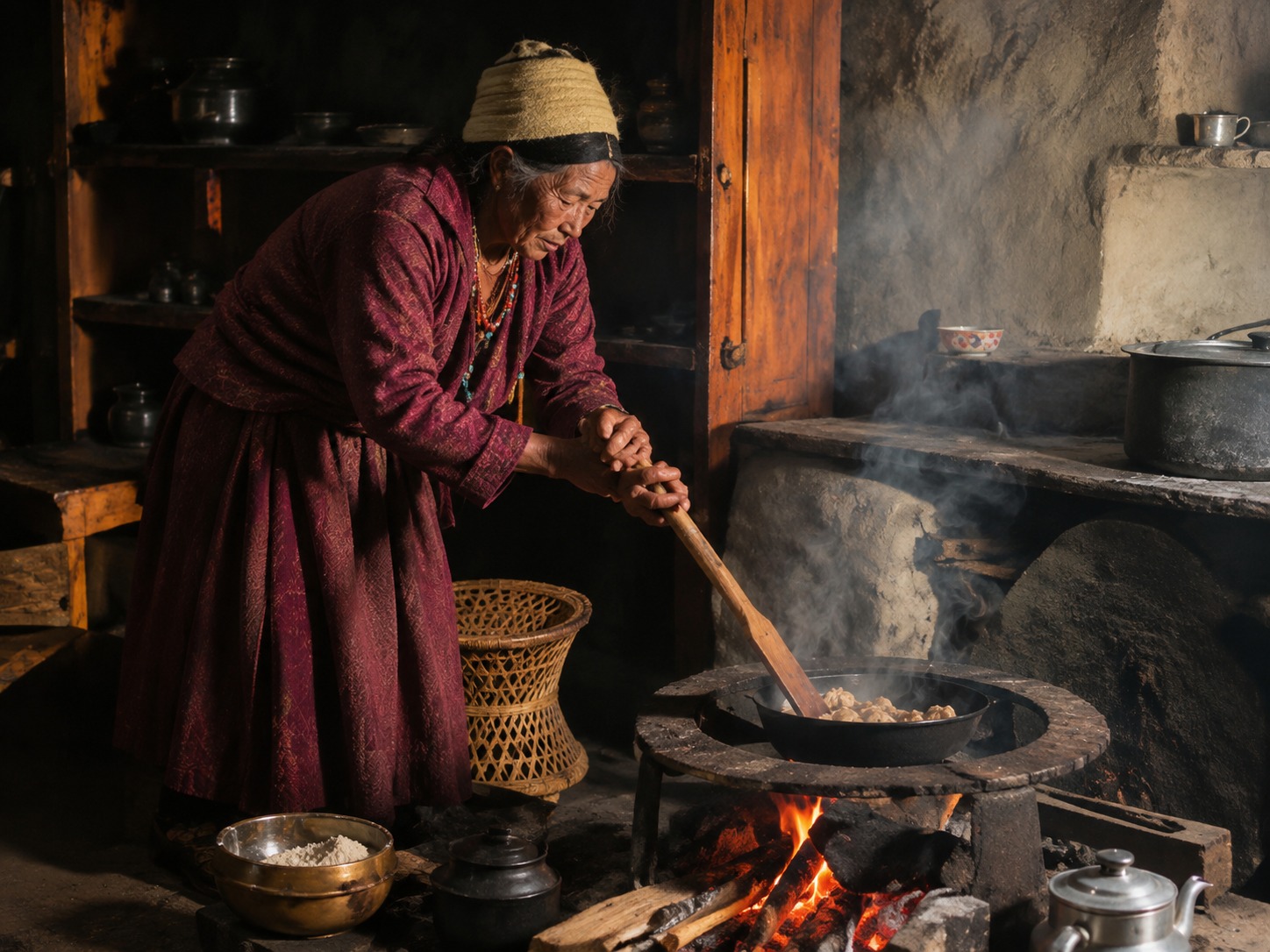
The word momo itself is commonly associated with Tibetan usage. Traditionally, these were relatively simple parcels: a wheat-flour wrapper enclosing minced meat, often yak or other locally available meat, seasoned with ginger, onion and a few aromatics. They were steamed, making them an efficient way to prepare a nourishing meal without requiring elaborate equipment or large quantities of cooking fuel.
There is something wonderfully practical about the design. A little dough, a little filling, a pot of boiling water and a steamer were enough to turn a handful of ingredients into a meal. In cold mountain environments, where food needed to be filling and ingredients depended on local conditions, this was a rather ingenious arrangement.
But the momo's history is not simply a story of culinary invention. It is also a story of movement. For centuries, trade routes connected Tibet with Nepal and the Himalayan foothills. Merchants carried salt, wool, textiles and other commodities, but they also carried recipes, cooking techniques and tastes. When people moved, food moved with them. The momo travelled along these networks, gradually finding its way into kitchens beyond the plateau.
In Kathmandu, the dumpling became closely associated with Newar food culture, although the exact circumstances of its adoption remain debated. Over time, Nepali versions developed their own characteristics, including distinct spice combinations and accompaniments. The momo was no longer simply a food from somewhere else. It was becoming part of the everyday culinary landscape.
This is perhaps the first important lesson of the momo: food rarely travels unchanged. It arrives somewhere, meets a new set of ingredients and habits, and begins another life.
The Himalayas are often imagined as formidable geographical barriers. Historically, however, they have also been corridors of exchange. Communities across present-day Nepal, Bhutan, Tibet and Northeast India have maintained connections through trade, migration, religious networks, kinship and seasonal movement. Food traditions have followed these relationships for generations.
The momo found particularly fertile ground in places such as Sikkim, Arunachal Pradesh and the Darjeeling hills, where Tibetan, Monpa, Nepali and other Himalayan cultural influences intersect.
The arrival of Tibetan refugees in India following the events of 1959 further shaped the momo's spread. Tibetan communities established themselves in different parts of the country, bringing familiar food practices into their new homes. The momo was one of the foods that offered continuity: something recognisable in an unfamiliar landscape, a taste of home that could be recreated with locally available ingredients.
In the Northeast, however, the momo did not remain confined to migrant communities. It entered local food cultures, found new audiences and became an increasingly familiar part of everyday eating. In Sikkim and Darjeeling, it became almost inseparable from the experience of the hills. In Arunachal Pradesh, particularly in Monpa-inhabited areas, it sits comfortably within a food landscape that includes meat, local greens, noodles, soups and other warming preparations. In cities such as Shillong, Itanagar and Guwahati, momo stalls became fixtures of the urban food scene.
There is an interesting distinction worth making here. The momo is widely associated with Northeast Indian food, but it is not an indigenous dish shared by all the region's communities. Northeast India is far too culturally and gastronomically diverse for one dumpling to represent its cuisine. Rather, the momo is an example of how a travelling food became embedded in particular communities and subsequently acquired a much wider regional identity.
And then came the cities.
The momo's journey into mainstream Indian food culture is closely connected to migration.
For much of the twentieth century, it remained relatively unfamiliar outside Himalayan communities and select urban enclaves. Tibetan refugees and Nepali cooks helped introduce it to cities such as Delhi and Kolkata. In the decades that followed, migration from the Northeast and the growing visibility of Himalayan food establishments expanded its reach.
Delhi's Majnu Ka Tila and Lajpat Nagar, for instance, became important spaces in the story of the momo. Kolkata, too, developed its own momo culture through Tibetan eateries and neighbourhood food businesses. By the 1990s, the dumpling was becoming increasingly visible in urban food markets. The opening of Dilli Haat in 1994 also provided a platform for regional food vendors, including those from the Northeast.
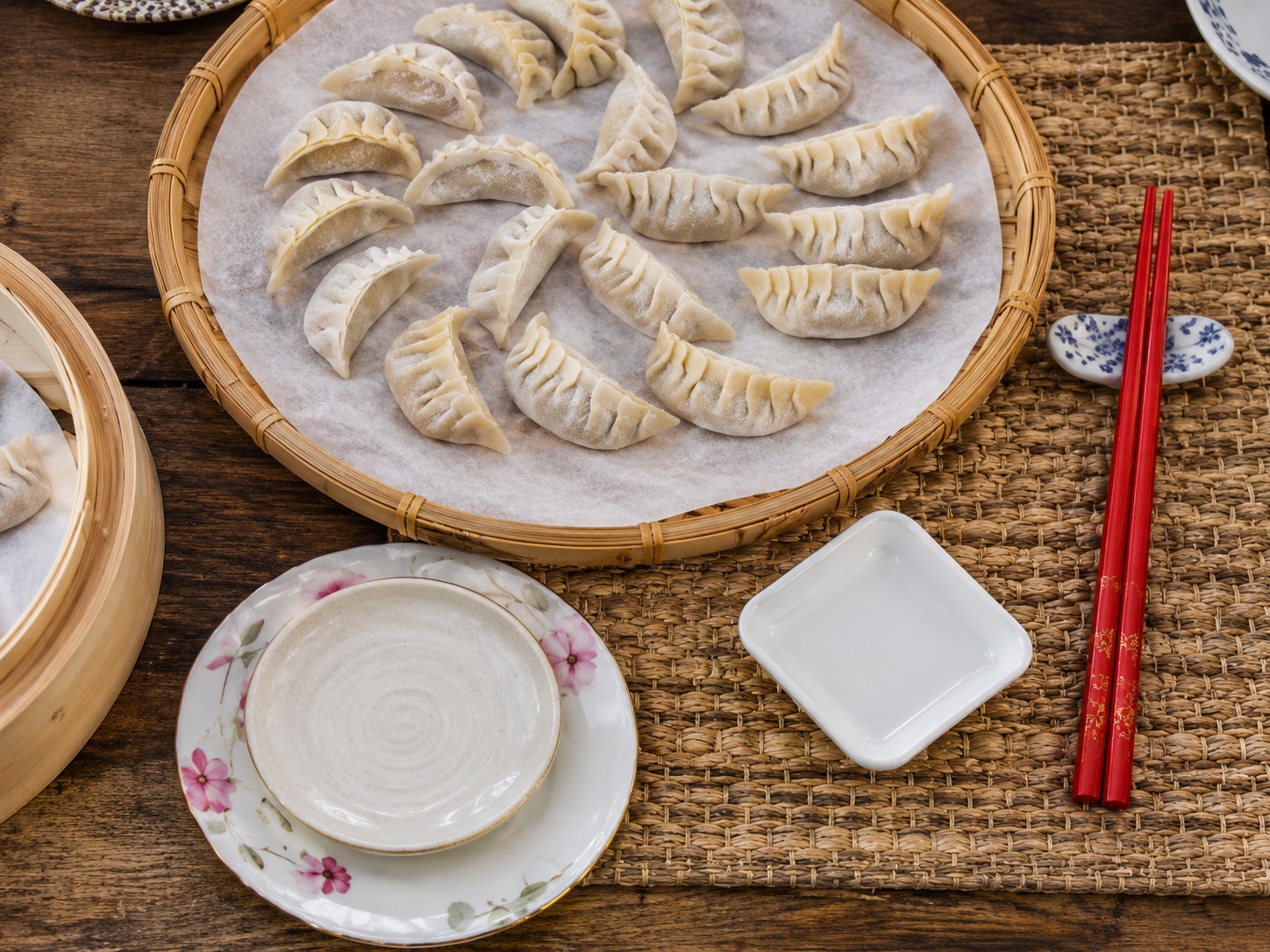
What followed was a remarkable transformation. The momo moved from specialised restaurants and community kitchens to college canteens, street-side stalls, food courts and eventually large restaurant chains. Its affordability, portability and relatively simple preparation made it particularly suited to India's growing street-food economy.
But something else happened along the way. The momo adapted itself to its new consumers. In parts of India, the original, relatively restrained flavour profile met a preference for stronger condiments. Fiery red chilli chutneys became essential companions. Mayonnaise, tandoori marinades, cheese and increasingly elaborate sauces entered the picture. The steamed momo acquired fried, pan-fried, kurkure and gravy-drenched cousins.
A food that had travelled across the mountains was now travelling across class, taste and consumption cultures. Today, one can find momos in neighbourhood stalls, luxury restaurants, frozen-food aisles and delivery applications. It has become one of India's most recognisable street foods, even as its Himalayan histories remain less familiar to many of the people who eat it.
There is a small irony here: the momo became nationally popular partly through the labour and enterprise of the very communities whose food cultures are still frequently misunderstood or stereotyped in mainland India. Its popularity is also a reminder that food can travel further than social acceptance.
One of the most fascinating things about the momo is its ability to accommodate the food habits of the place in which it is made. The dough may look familiar across kitchens, but the filling can tell you quite a bit about local ecology, livestock practices, food preferences and cultural histories.
Pork is an important filling in many Himalayan and Northeast Indian momo traditions. Minced pork, ginger, garlic, onion and spring onions make for a juicy, flavourful filling. In many households, the natural fat in the meat is considered an advantage: it keeps the filling moist as the dumplings steam. In parts of the Northeast, pork momos are especially popular because pork already occupies an important place in local food cultures. The momo is not introducing an unfamiliar ingredient so much as giving a familiar one a new form.
Beef momos are another longstanding Himalayan favourite. They are particularly associated with Tibetan and Nepali culinary traditions, as well as several communities in Northeast India. The filling is often seasoned simply, allowing the meat's flavour to remain prominent. Ginger, garlic and onion do much of the work. A good beef momo is not necessarily about an elaborate recipe. It is about the balance between the meat, the dough and the moisture released during steaming.
Few ingredients are as closely associated with high-altitude Himalayan life as yak meat. Yaks have historically been important to mountain communities, providing milk, meat, fibre and transport. It is hardly surprising that their meat found its way into traditional dumpling fillings. Yak meat momos offer a taste of a food culture shaped by altitude, pastoral livelihoods and the practicalities of mountain living. They are also a reminder that the ingredients of a cuisine are often inseparable from the landscapes that sustain it.
Cabbage, carrot, onion, mushroom and other vegetables have also become popular fillings. Chicken momos, meanwhile, have played a significant role in taking the dish to a wider Indian audience. The variations are practically endless. And that is precisely the point. The momo is not a rigid recipe guarded by a single culinary authority. It is a flexible food tradition, continuously shaped by the people who make it.
For anyone who has travelled through the Northeast, there is a familiar mountain-food hierarchy. There is Maggi, the ever-reliable companion of road trips, treks, rainy afternoons and roadside pit stops. Then there is momo, the steaming plate that tends to turn a quick snack into a full-fledged meal. Both have their place in the mountain imagination. But the momo has a rather different relationship with the landscape. Maggi arrived as a packaged, industrially produced convenience food. Its appeal lies in speed, standardisation and familiarity. Add water, boil, stir and eat. It requires little preparation and can be found in even the most unexpected corners of a mountain journey.
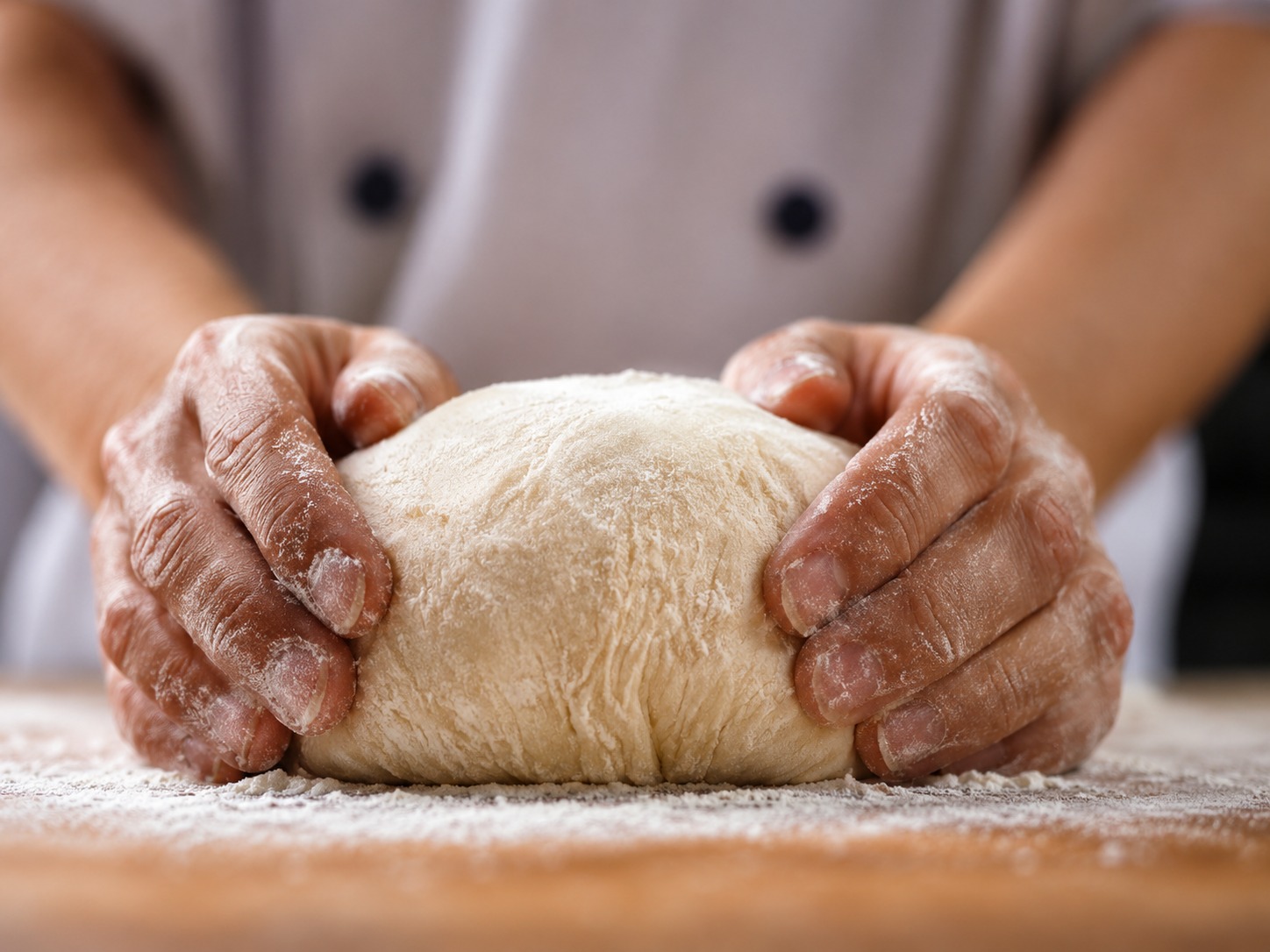
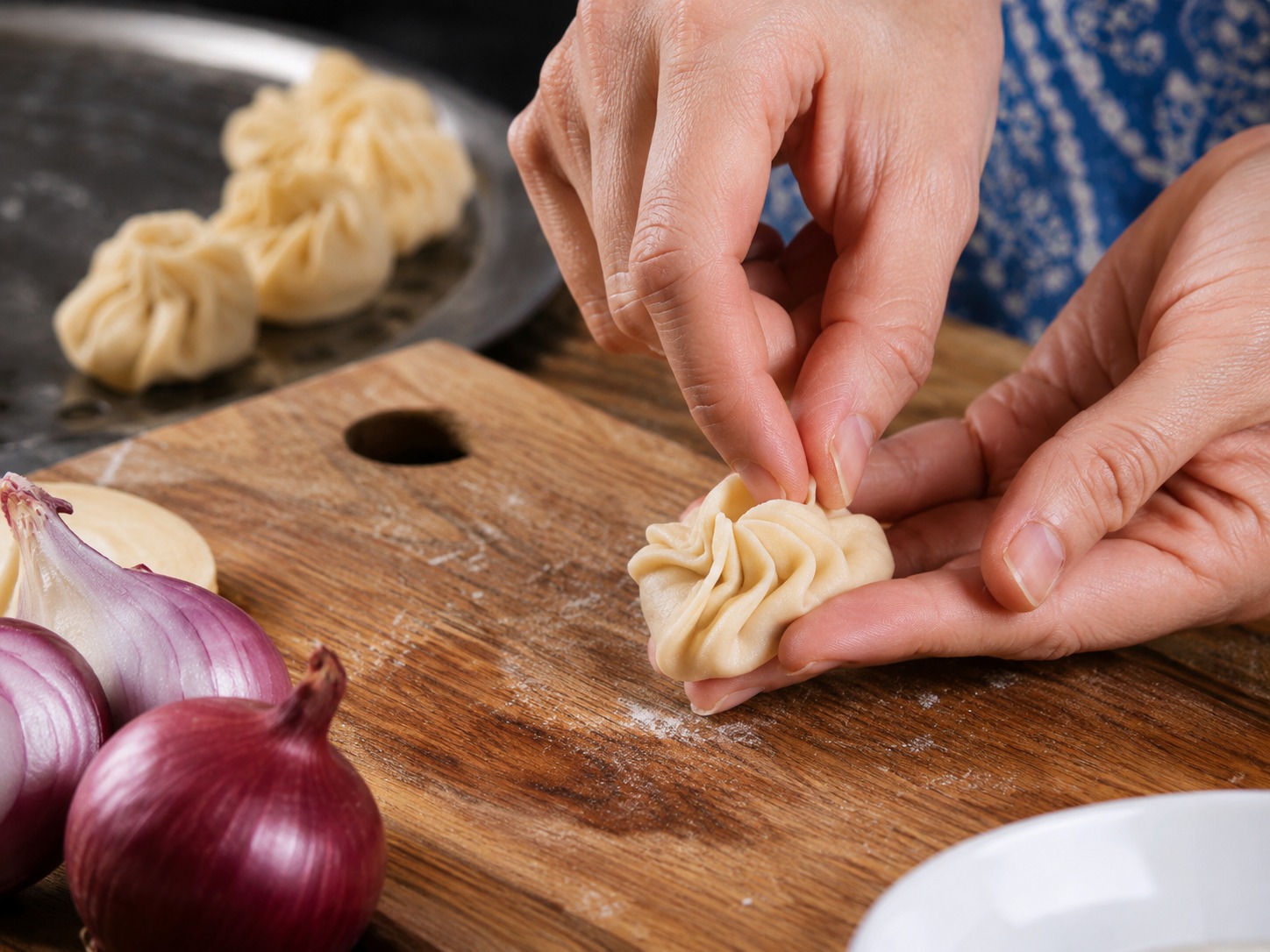
Momo, on the other hand, is a food of preparation and participation. The dough must be kneaded, the filling chopped and seasoned, each wrapper rolled and shaped, and the dumplings steamed. It is a little more demanding, but it also offers something that a packet of instant noodles rarely can: a connection to the kitchen and the people preparing the meal.
This is not to suggest that one must replace the other. In fact, the two have developed a curious relationship in contemporary food culture. The momo has entered the same universe of convenience that Maggi once dominated. Frozen momos, instant preparations and ready-to-steam packets have made the Himalayan dumpling easier to consume far away from its original cultural settings.
Yet when travelling through Arunachal Pradesh, there is something to be said for choosing a freshly made momo over the familiar packet of noodles. Not because Maggi is any less enjoyable, but because the momo offers an opportunity to encounter a place through its food. It allows you to taste local ingredients, observe domestic practices and understand how a community has made a travelling dish its own. And nowhere is this more enjoyable than when you get to make the dumplings yourself.
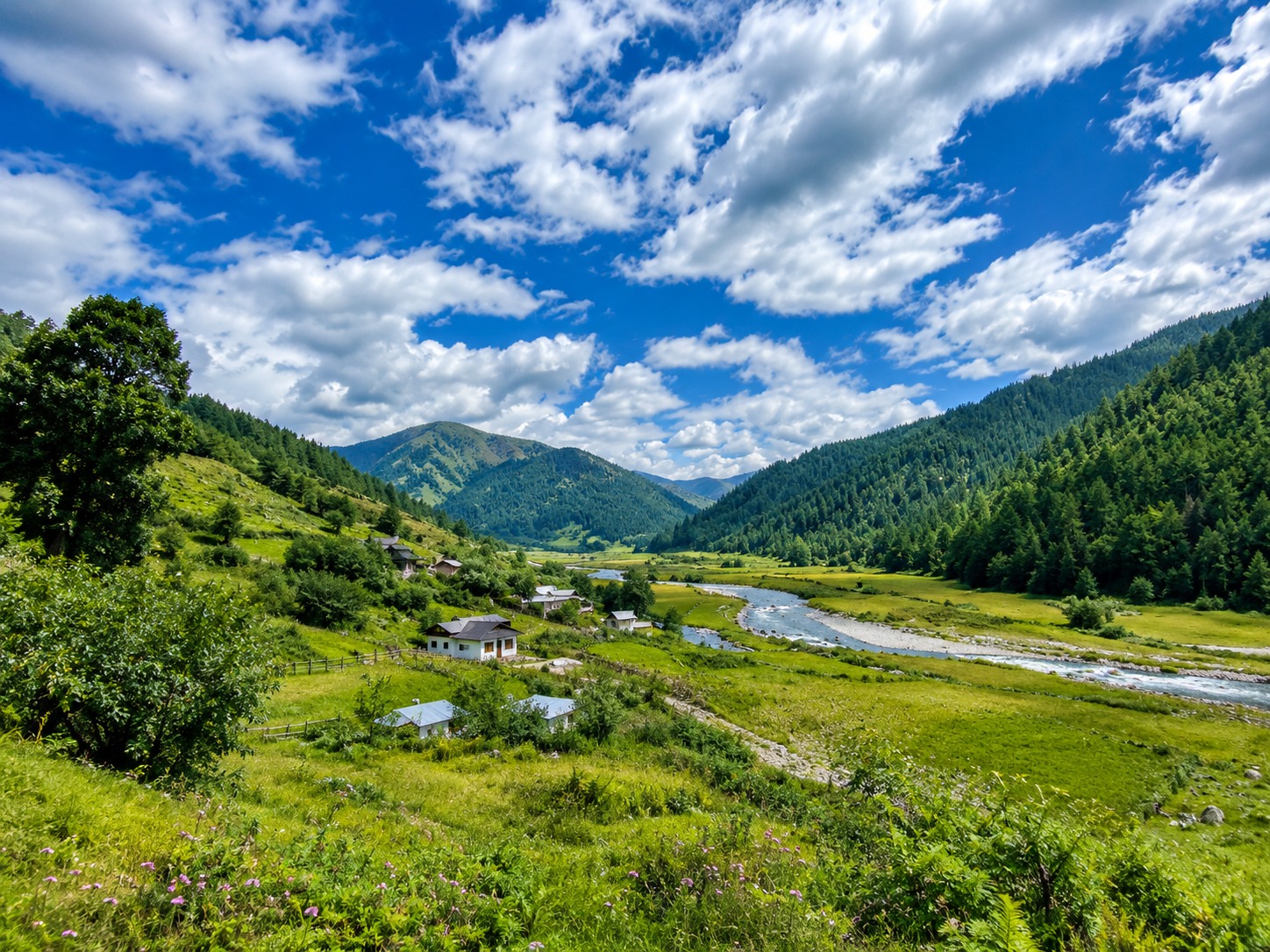
About 14 kilometres from Dirang, Sangti Valley unfolds into a landscape of winding rivers, orchards, agricultural fields and mountains. Known for its apple, kiwi and apricot orchards, the valley also welcomes migratory black-necked cranes during winter, birds of cultural significance to the Monpa community. Amid this beautiful landscape, one of the most rewarding ways to spend an afternoon is in a local kitchen, learning to make momos.
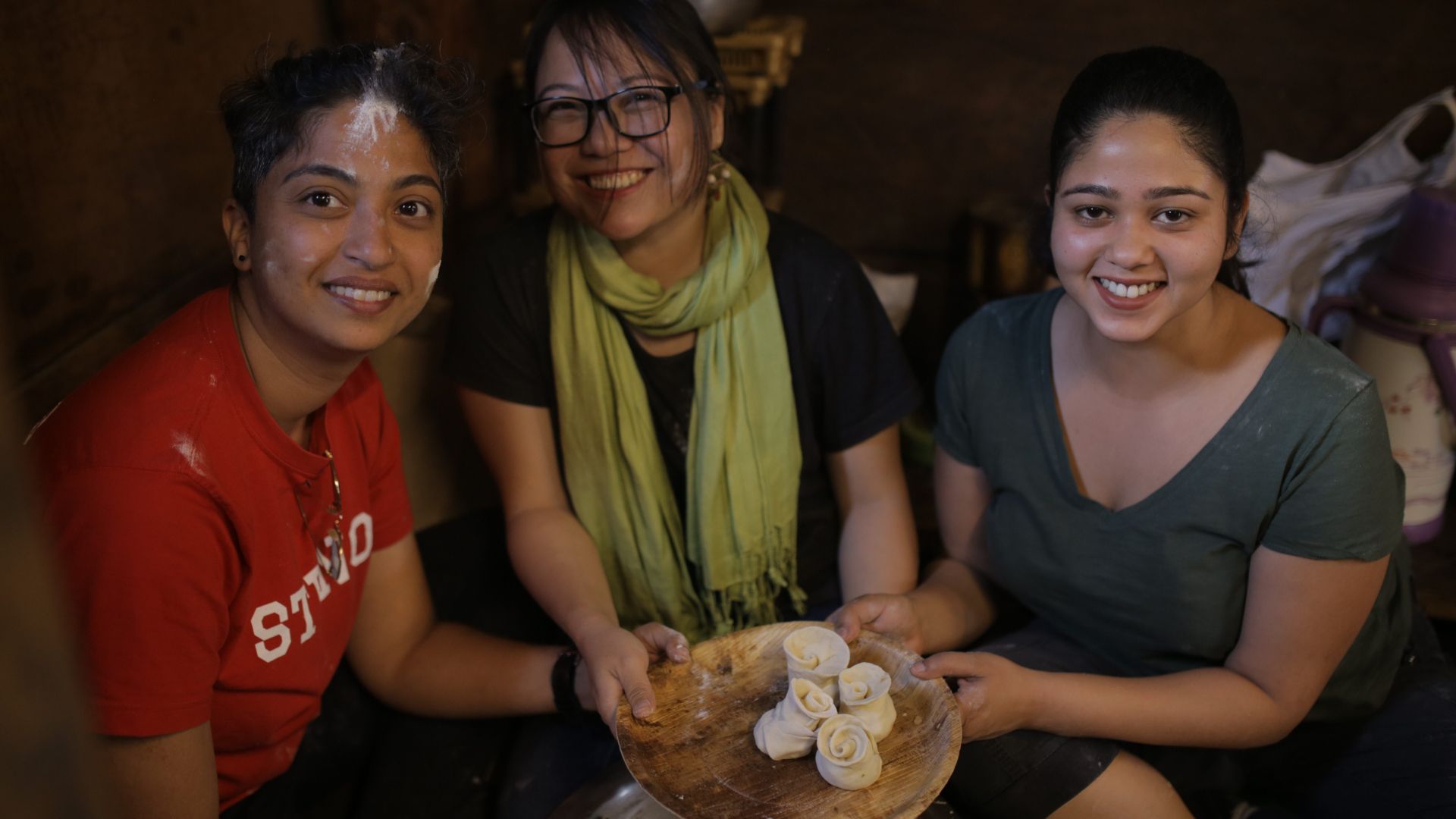
The experience begins with kneading dough, preparing the filling and rolling small portions into thin wrappers. Pork, chicken or vegetables are mixed with ginger, garlic, onion and seasoning before being tucked into each little parcel. Then comes the art of folding. It looks deceptively simple until you try it yourself. The first few momos might be uneven, overfilled or stubbornly unwilling to close, but with a little guidance, the pleats gradually come together.
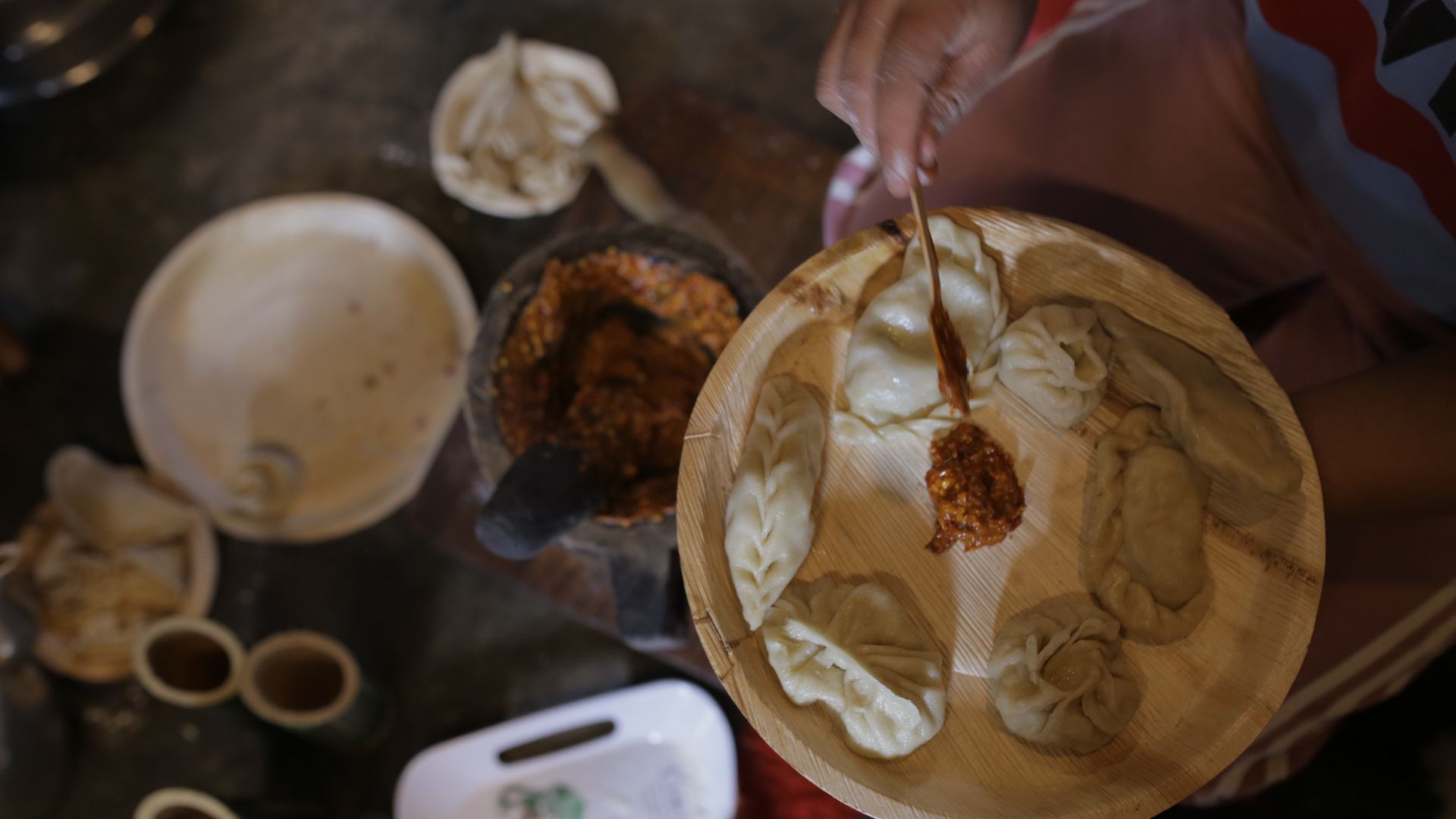
Once ready, the dumplings are placed in a steamer and cooked until soft, while a fiery chilli chutney is prepared alongside. Soon, the kitchen fills with the aroma of freshly steamed momos, followed by the most satisfying part: sitting down to enjoy what everyone has made together.
But the experience is about more than learning a recipe. Food preparation is one of the ways communities pass down knowledge, traditions and everyday practices across generations. Much of this knowledge is learned by watching, helping and doing rather than following written instructions.
A momo-making session offers visitors a glimpse into this everyday cultural life. Conversations unfold around the preparation table, techniques are exchanged, and mistakes become part of the fun. In a destination often experienced through its scenery, it offers another way of discovering Sangti: through its kitchens, its people and the simple pleasure of making something together.
Sometimes, the best way to get to know the mountains is not just to walk through them, but to sit down in a local kitchen, roll up your sleeves and share a meal.
Perhaps the most interesting thing about the momo is that it has never really belonged to just one place. Its history is layered with movement: Tibetan traders, Newar merchants, Himalayan communities, refugees, migrants, street-food entrepreneurs and generations of home cooks. Each has contributed something to the dumpling's evolution. Its journey tells us that culinary traditions are not static inheritances. They are living things, shaped by encounters, exchanges and everyday acts of adaptation.
In the Northeast, the momo has found a particularly comfortable home. It has become part of the region's food landscape without erasing the many other culinary traditions that make the region so distinctive. And perhaps this is why making momos in Sangti Valley feels like such a fitting travel experience. You are participating in a food tradition that has travelled across mountains and generations, but which continues to find meaning in ordinary kitchens.
You may arrive in Sangti for the river, the orchards, the mountains or the black-necked cranes. But between the walks and the landscapes, take an afternoon to sit in a local kitchen, learn a few folds and make a plate of momos. Forget the instant noodles for a little while. Let the dough rest, take your time with the filling and don't worry if your first few dumplings look a little lopsided. After all, the best food experiences are not always about discovering something new to eat. Sometimes, they are about discovering the stories behind something you thought you already knew.
And the momo, as it turns out, has quite a story to tell.
About the Author
Equal parts policy wonk and wanderlust junkie, Kavya is trained in environmental economics and political science. A public health researcher and advocate, she works at the intersection of people, systems, and the planet. Off the clock? She's a storyteller, active rester, and cat mama.