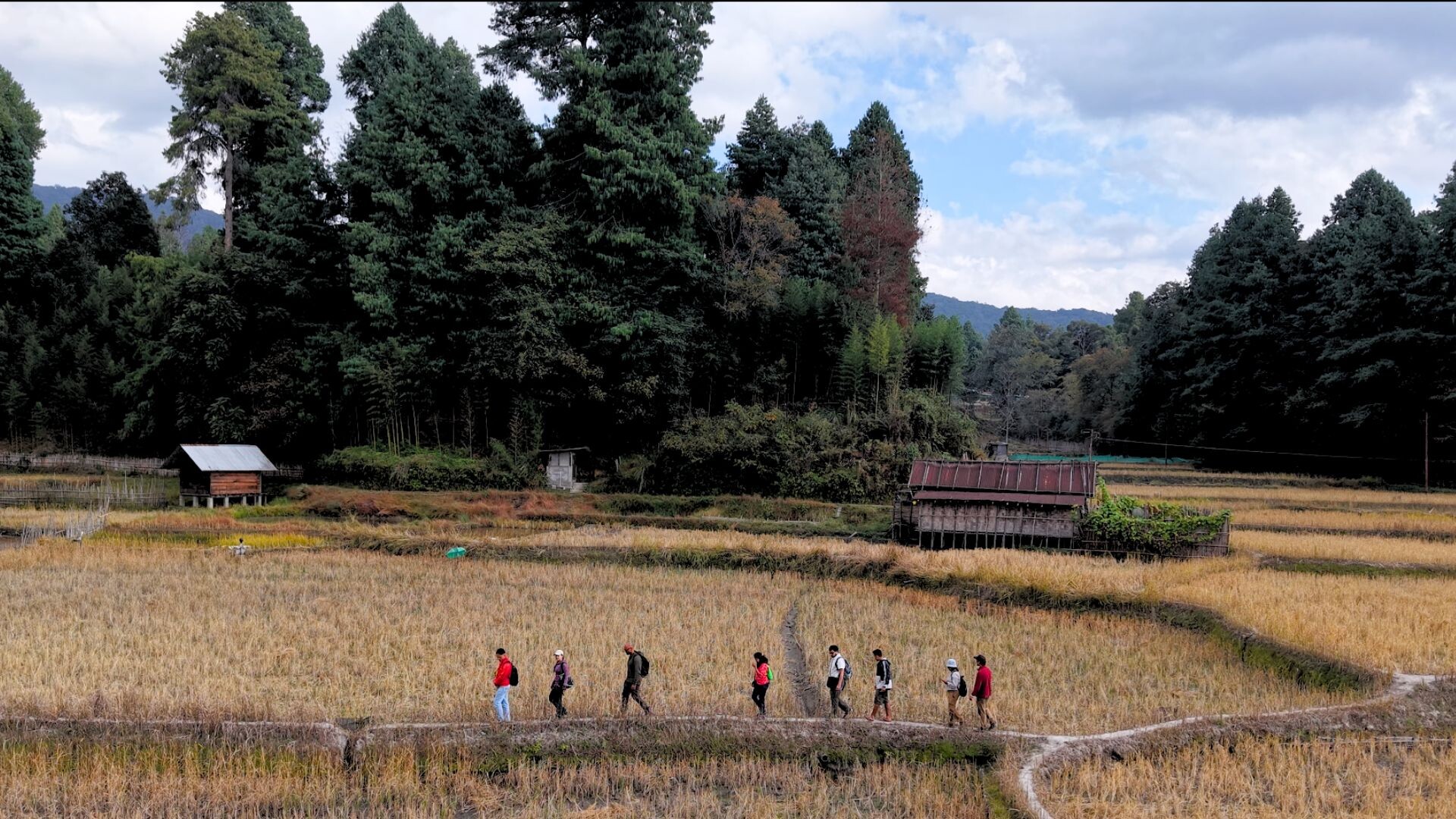
In the far reaches of India’s Northeast, where hills meet rivers and memory lingers in the mist, lies a region shaped by its landscapes as much as by the people who call it home. Here, the mountains of Arunachal give way to the floodplains of Assam before rising again into the Patkai Hills of Nagaland. Every turn reveals a new rhythm of life, bound to land, water, and time.
This journey follows three such worlds — the Apatani of Ziro, the Mising of Majuli, and the Konyak of Mon — each offering a distinct way of seeing and surviving, connected by a shared spirit of resilience.
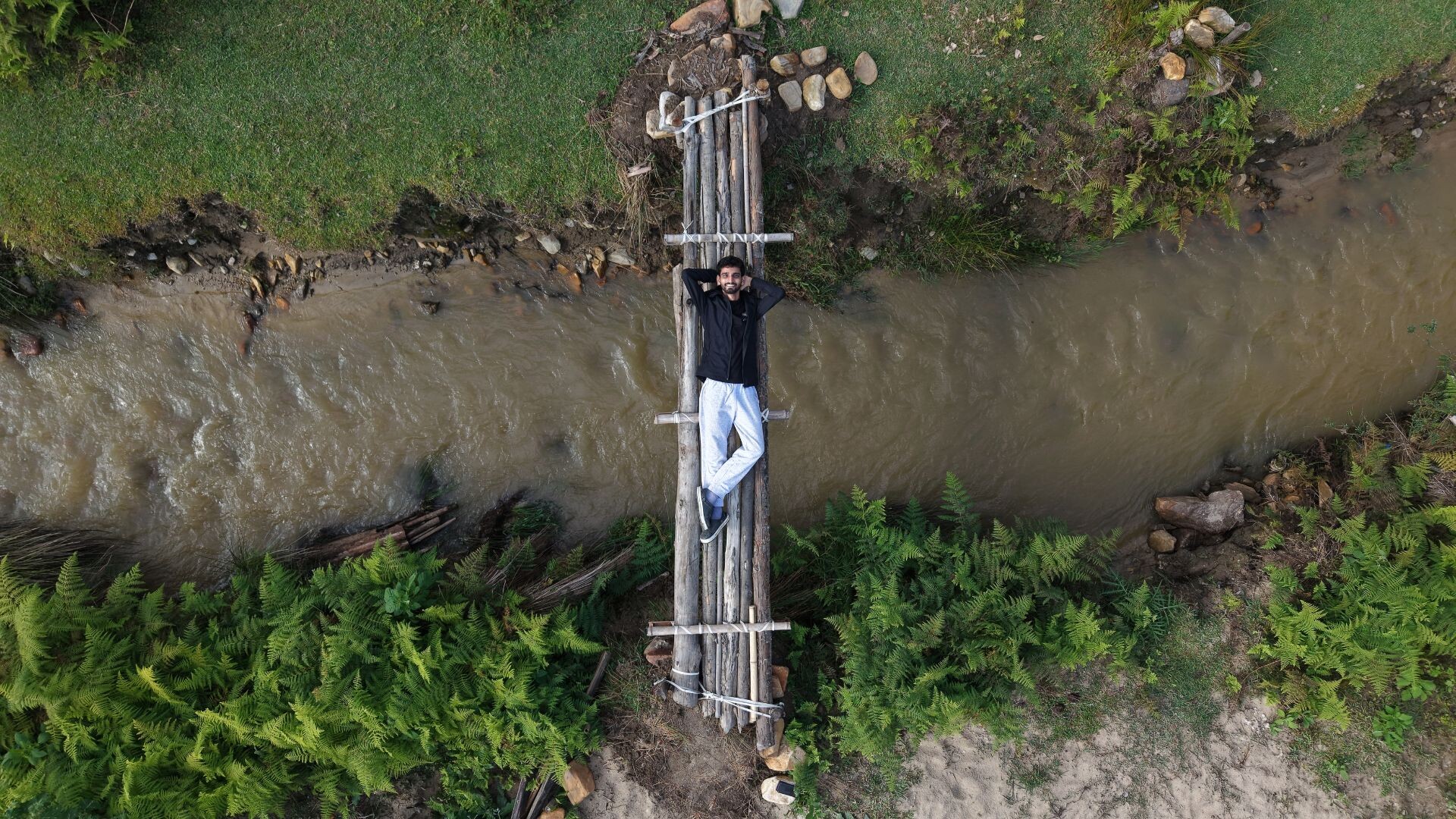
In Ziro, the valley of the Apatani, life has long been rooted in permanence. For centuries, the community has lived here as settlers and cultivators, guided by Donyi-Polo, the ancient Apatani philosophy of balance between sun, moon, and life itself. Their fields are quiet marvels of ingenuity, where rice and fish are grown together without machines or animals. Bamboo houses stand in neat rows, smoke rising softly from their hearths, and every lane carries the calm pulse of a people who live in harmony with their land. By September and November, the rice ripens and the fields turn a deep golden, giving the valley its most postcard-worthy moment.
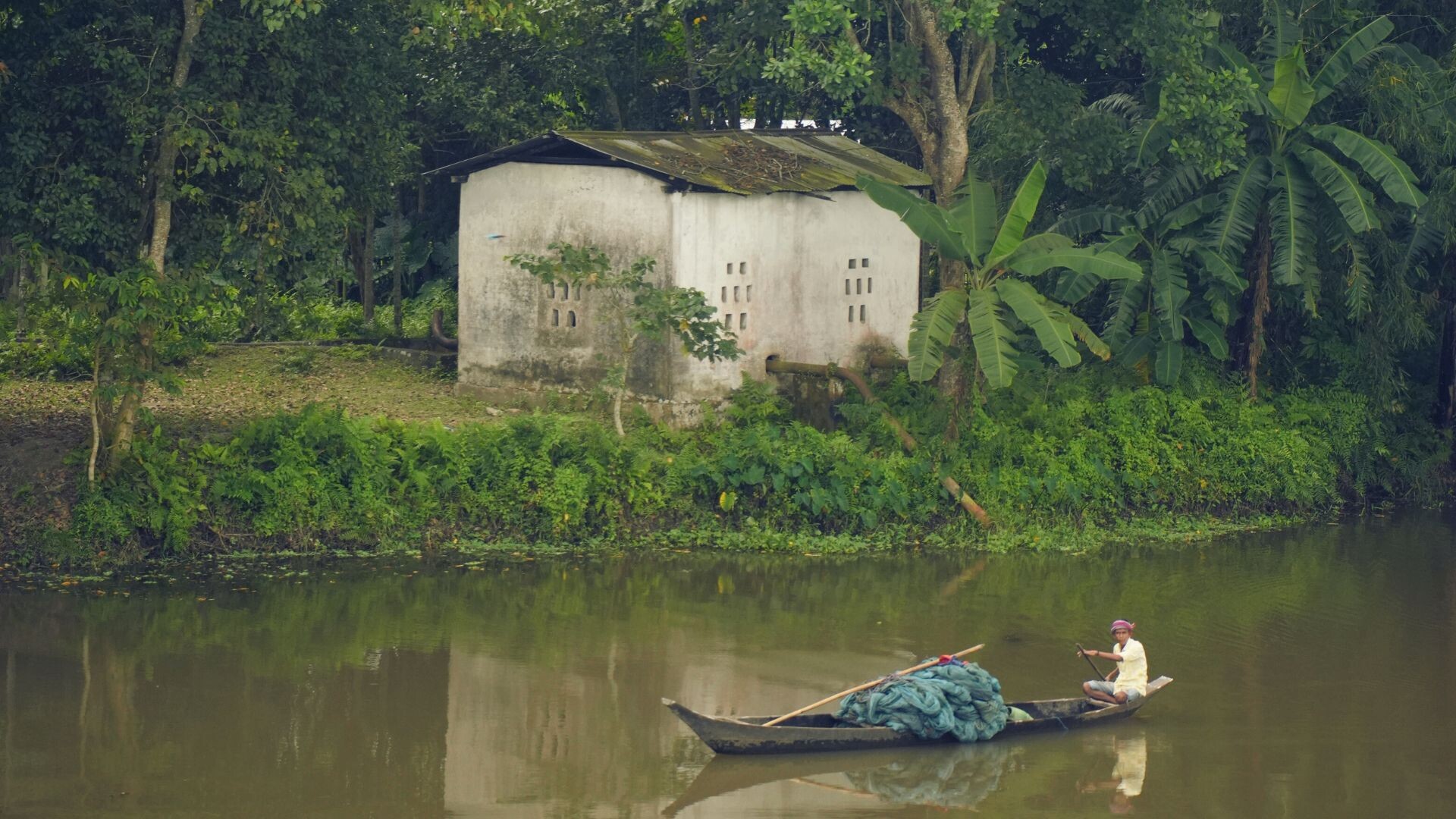
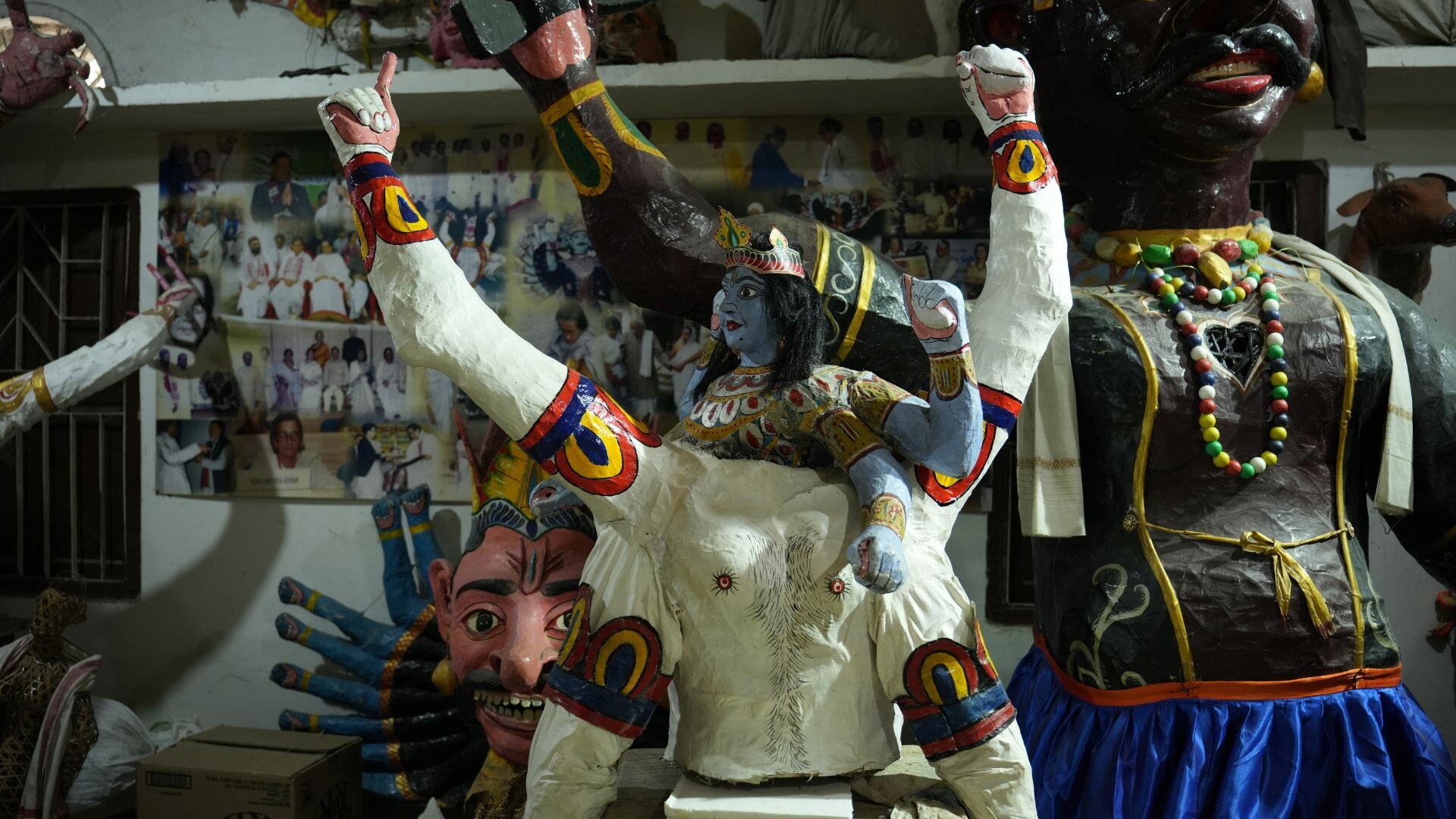
From the stillness of Ziro, the road descends toward Majuli, where land gives way to water and stillness becomes flow. On this great river island, the Mising people have shaped their world around the Brahmaputra’s changing moods. Believed to have migrated from the hills of Arunachal generations ago, they built homes on stilts and lived on trust in the river’s rhythm. Here, permanence yields to adaptation. Each flood reshapes the land, yet life continues — in bamboo crafts, in songs that rise over the fields, and in the Neo-Vaishnavite Satras where monks dance devotion into art and carve gods into masks.
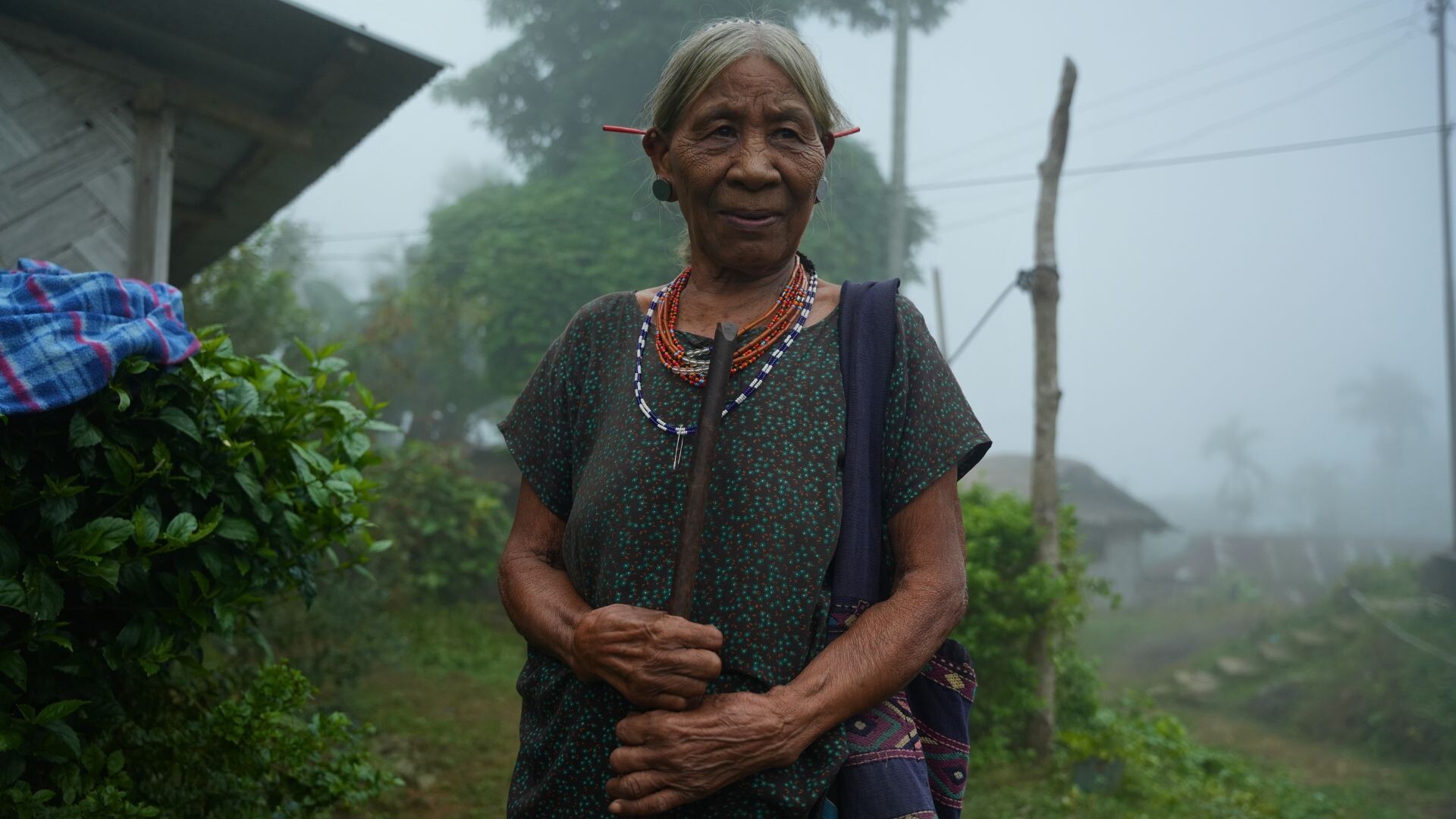
Further east, the Patkai Hills rise in deep green folds, and memory grows older. This is Mon, home to the Konyak Nagas, a people whose history carries both defiance and dignity. Once known as hunters and warriors, the Konyak resisted British rule with fierce independence, relying on their knowledge of terrain and unity of spirit. When conquest proved elusive, the British turned to quieter means, introducing opium to subdue resistance. Yet, even in that, the Konyak endured. Today, their legacy of strength lives on in blacksmiths’ workshops, in intricate beadwork, and in tattooed elders who carry the stories of their ancestors with quiet pride.
Across eight days, this journey moves from valley to river to hill, tracing the arc of permanence, adaptation, and remembrance. Along the way, you’ll share local brews, witness bamboo architecture that breathes with the land, and discover flavours and crafts shaped by centuries of indigenous wisdom.
The landscapes change, but the thread remains — a quiet strength that binds makers, myths, and memories together. Another chapter in the story of the Northeast, waiting for you to walk its path.
NOTE: Apong brewing experience is dependent on weather conditions. However, Apong tasting and the foraging experience will still be possible irrespective of the weather.
Comfortable, clean, and hygienic accommodations on a double-sharing basis.
Transport in an Innova or Tempo Traveller (depending on the group size) for all days from Itanagar Airport on Day 1 and to Dibrugarh Airport on Day 8.
Breakfast from Day 2 to 8 onwards.
Lunch on Days 2, 4, and 6.
Dinner on Days 5, 6, and 7.
All parking, tolls and driver allowances.
All experiences at Ziro Valley – Apatani home and lunch experiences, Community fees, Village Walk, and Winery Visits.
All experiences at Majuli Island – Neo-Vaishnavite and Mising cultural experiences.
All experiences at Mon, Longwa, and Hongphoi – Tributes, Community Fees, Traditional homes, Gunmaker-Blacksmith visit.
Scooter to explore Majuli on Day 4 (Trip leader to take a call).
Local expert guides on Days 2, 4, 6, and 7.
An Experienced ChaloHoppo Trip Leader.
Flight and train tickets.
Meals and beverages not specifically mentioned under Inclusions.
Inner Line Permits for Arunachal and Nagaland (Refer to FAQ).
Camera or photography permit fees, if applicable.
Tips for hotel staff and drivers (at the guest’s discretion).
Entry fees to museums, parks, or attractions not specified.
Personal expenses, including toiletries, medicines, and incidentals.
Any additional costs arising due to weather conditions, roadblocks, health-related issues, or changes to the itinerary beyond our control.
Any medical expenses incurred during the trip due to illness, injury, personal health conditions, or emergencies.
The trip starts at Itanagar Airport on Day 1, where the group assembles for departure, and ends at Dibrugarh Airport on Day 8. Your ChaloHoppo trip leader shall meet you at the airport on Day 1.
On Day 1, participants are required to arrive at Itanagar Airport by 1:00 PM at the latest. The group will depart from the airport by 2:00 PM. Any arrivals after this time, due to flight timing or delays, will need to reach the destination at their own expense.
For departure, return flights can be booked anytime after 2 PM on Day 8. Participants are advised to plan their flights in line with the recommended arrival and departure timings shared for this trip.
Please note that Itanagar Airport is the only designated pick-up point for this trip. The vehicle will not stop at any other location. All participants must ensure they reach the airport before the scheduled departure time, as the trip will commence from there. For the drop-off, Dibrugarh Airport is the only designated point.
The ideal age range for this experience is 25-50 years. The average participant is around 30 years old, and the group atmosphere is generally young, social, and easy-going. Participants often enjoy spending time together beyond the day’s activities, whether over conversations, music, food, or a drink in the evening.
Once you sign up for the trip, we will be sending you a detailed list of Things to Carryfor the season!
While most of your expenses are covered in the trip cost, carrying up to 1000 per day should be sufficient for personal expenses. Please note that places like Majuli, Hongphoi and Longwa may not accept online payments, which can make transactions slightly inconvenient. Online payment options are easily available in Itanagar, Ziro, and Dibrugarh.
For a clearer understanding of what is covered during the trip, we recommend reviewing the Inclusions and Exclusions section before planning your expenses.
We’ll be staying at simple homestays throughout the trip. None of the properties on the trip are boutique/luxurious. They are all clean, comfortable and hygienic and have been vetted by our team!
While many communities across Northeast India do consume meat, freshly cooked vegetables are an integral part of everyday meals and are almost always prepared alongside meat dishes or served as a side during lunch and dinner. Vegetarian food is neither uncommon nor unfamiliar in the region.
While the food may not resemble restaurant-style meals from larger cities, it is nutritious, well-balanced, and sufficient to keep you comfortable and energised throughout the trip. However, in towns like Ziro, you will also find multiple restaurants and cafés offering a variety of cuisines beyond local.
To comply with the latest guidelines set by the Government of Nagaland, the Inner Line Permit (ILP) applications must now be completed by the individual traveler through a system that requires a live photo capture. As third parties are no longer permitted to apply on behalf of travelers, the ILP cannot be bundled as part of a travel package.
For Arunachal Pradesh, the Inner Line Permit (ILP) must be obtained prior to travel through the official government portal or authorised counters. To maintain consistency in the permit process across regions and allow travelers flexibility in applying, the ILP has not been bundled as part of this travel product. Travelers will be required to arrange their ILP independently before the trip.
You’ll get to experience the vibrant cultures of three distinct tribes across the Northeast – each with its own story, rhythm, and way of life:
The elders are generally open to photography, but as a responsible traveler, it’s always best to ask for permission first. During rituals or when photographing elders, it’s advisable to seek your Trip Leader’s assistance or the elder’s consent directly. The Konyak people are warm and welcoming, and showing respect and politeness goes a long way.
This journey is designed to embrace pause over pace — focusing on immersion rather than a checklist of sights. Each day offers suggested experiences, but the final flow is shaped by the trip leader, available time, and the group’s mood. Expect a flexible, organic experience that allows you to slowly absorb the essence of the region, especially in Ziro and Majuli.
Single occupancy requires an additional room and impacts overall group capacity. To maintain the experience quality and balance trip logistics, a limited number of single rooms are offered with a single-room supplement.
There are no hikes or treks in this experience. However you should be able to walk on flat and at times rough uneven trails in the villages. One should consider that all the village walk experiences in the places are all on foot and not challenging at all. One is expected to walk for a couple of hours with breaks on flat surfaces and village lanes.
Rooms are shared on a double-sharing basis. In case you are a solo traveller, you will be paired up with another solo traveller of the same gender. Please note that almost all of the properties will have double-bedded rooms.
Note: Room allocation is managed by the sales and reservations team based on gender and confirmed bookings.
Yes, the day’s activities will be accompanied by a knowledgeable local guide who will provide insights into the culture, history, and natural wonders of the region. You will also have a ChaloHoppo trip leader throughout the trip.
September
September is warm and lush across the region. In Majuli, temperatures usually range between 22°C and 30°C, making it slightly warm during the day but still comfortable. In Ziro, occasional light rain showers are possible as the monsoon gradually recedes, keeping the valleys green and vibrant.
November
November brings clearer skies and cooler weather across the region. Places like Ziro and Mon can feel quite cold in the mornings and evenings, while Majuli remains pleasant and comfortable during the day.
We recommend carrying warm layers and a compact rain jacket, especially for September departures.
Airtel and Jio work best in this region. However, network connectivity may be limited in areas like Hongphoi and Longwa. Itanagar, Ziro, Majuli, and Dibrugarh generally have stable network connectivity.
It is important to note that booking flights before reserving a slot with us does not guarantee availability. In the event that we are sold out, we cannot be held responsible for any inconvenience caused.
Northeast India experiences shorter daylight hours as we move from autumn into winter. From November through February, sunrise can be as early as around 5:30 AM, while sunset can be around 4:30 PM, depending on the state, location and month. This gives us roughly 10 hours of daylight.
Because daylight is limited, we may start early on certain days to make the most of the available time, particularly when longer hikes, outdoor activities or transit are planned.
Morning fog, mist and cloud cover can also reduce visibility, especially around hills, forests and valleys. This may occasionally influence when we begin an activity or start moving for the day.
Winter travel in the Northeast is therefore best approached with some flexibility. Our schedules are planned around daylight, weather and local conditions, rather than following a rigid timetable.
The Arunachal Pradesh Inner Line Permit (ILP) must be applied for individually through the official government portal, as the application requires OTP verification linked to the applicant’s personal mobile number. Due to this verification process, the ILP cannot be processed on behalf of travellers and is therefore not included as part of the travel package. Travellers can apply directly at: https://eilp.arunachal.gov.in/
Please feel free to reach out to us if you need any guidance or assistance with the application process.
Applying for the ILP is a simple online process. Travelers can visit the official ILP portal of the Government of Nagaland at https://ilp.nagaland.gov.in and follow these steps:
Once approved, the ILP will be issued digitally and can be downloaded from the Portal.
If you have extra days, here are some great extensions you can consider:
Before the trip (Pre-ZMM):
• 6–8 days: Western Arunachal Pradesh circuit covering places like Tawang and Dirang.
After the trip (Post-ZMM):
• 6–8 days: Explore the remote regions of Arunachal Pradesh such as Anini or Mechuka.
If you’re planning to extend your journey, we’d be happy to help curate a seamless extension based on your time and interests.