AMONG THE BROKPAS : A PASTORAL WORLD IN THE EASTERN HIMALAYAS
Table of Contents
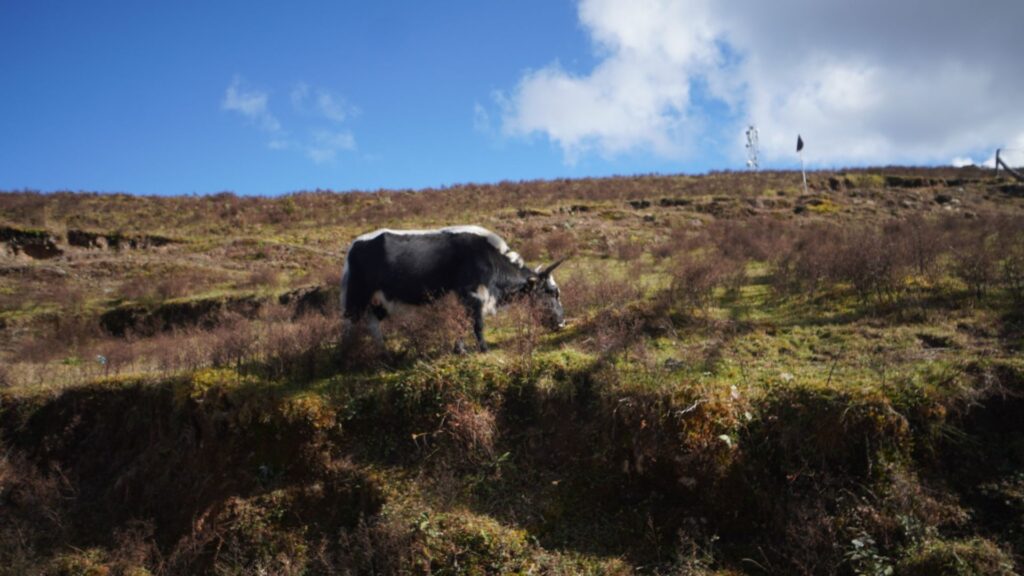
Yak walking along scrub-covered Himalayan slopes
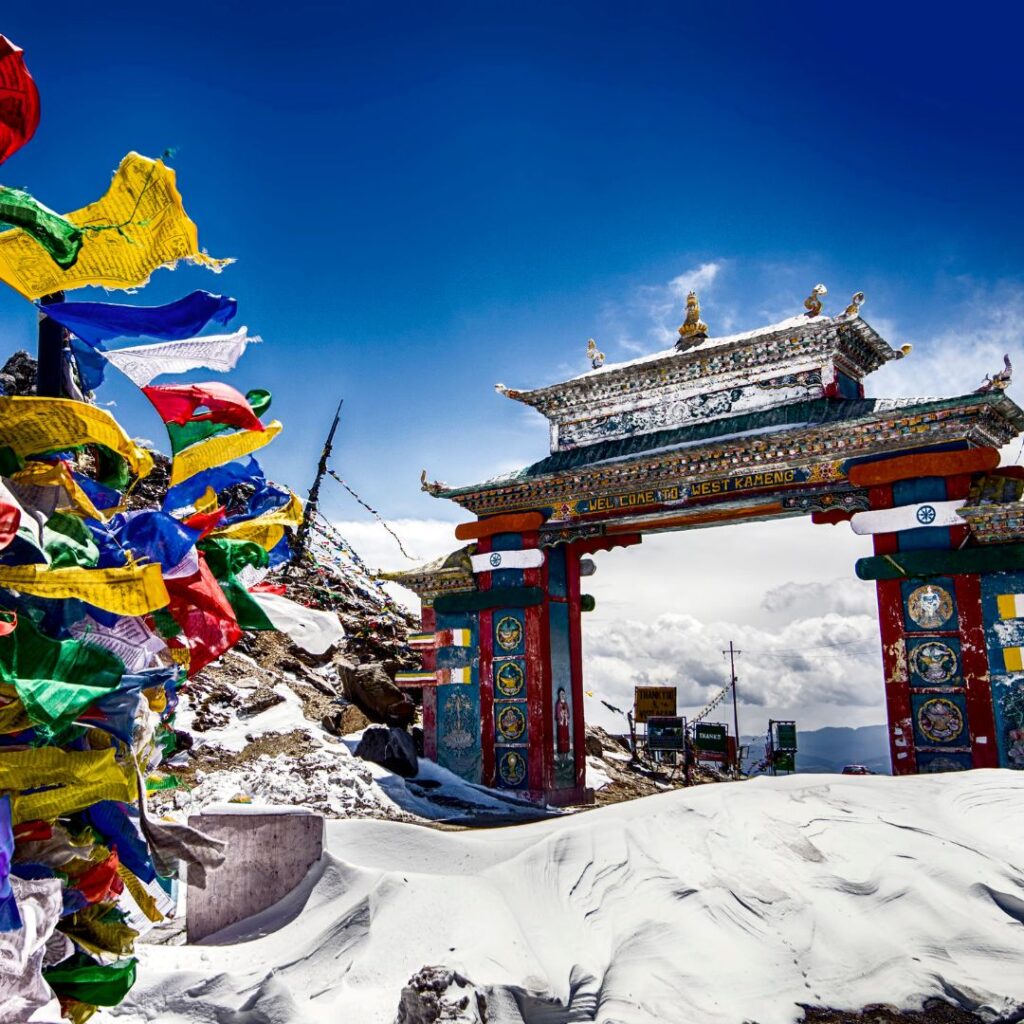
In the farthest folds of the Eastern Himalayas, where mountain passes curl like ancient serpents and clouds drift so low you can almost brush them with your fingertips, lives a community whose world is shaped by altitude, migration, and memory. The Brokpas of Arunachal Pradesh—herders of high pastures, keepers of yak lore, and custodians of centuries-old mountain knowledge—offer a rare glimpse into a pastoral life that continues to pulse quietly across the ridges of Tawang and West Kameng.
A World Above the World
The very word Brokpa comes from the Tibetan ’brog pa, meaning “people of the high pastures,” and the name fits the landscape they inhabit. Here, steep forests melt into rolling meadows, and the horizon is a sweep of jagged peaks softened by grazing yaks. Villages like Lubrang, Brogteng, Sangti, and scattered hamlets across the valley slopes are not just settlements—they are footholds in an environment where people, animals, seasons, and spirits coexist in delicate balance.
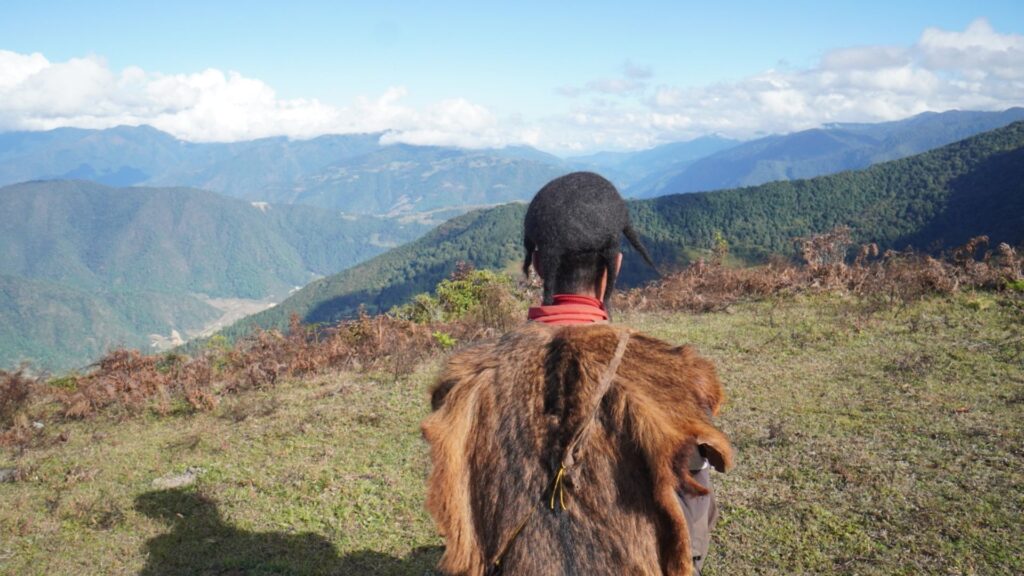
Brokpa herder in yak-hair cloak standing on a high-altitude ridge
A traveller arriving in these villages may first notice the scent of pine-smoke curling from rooftops, the low calls of yak-calf herders drifting across fields, or the flutter of prayer flags marking household shrines. But look closer, and you begin to witness something deeper: a pastoral system that has evolved through migration, myth, and a relationship with the mountains so enduring it feels almost ancestral.
Origins Written in Stories, Not Stone
The Brokpa story is not bound to books or archives; it survives in legends told beside hearths or sung during long treks. Many of these narratives trace their origins to Tibet and Bhutan, where their ancestors are said to have been nomadic herders crossing snowy passes in search of better pastures. Over centuries, they followed trade routes that once pulsed with caravans carrying wool, salt, butter, and grains—routes far older than the borders drawn on modern maps.
These stories preserve histories of movement and exchange, of marriages forged across valleys, and of a time when herders traversed landscapes without passports but with a shared understanding of survival in extreme terrain. When you walk with a Brokpa elder along a pasture trail, you walk not just beside a person, but beside a living archive of Himalayan migration.
Pastoral Life & Community Structure
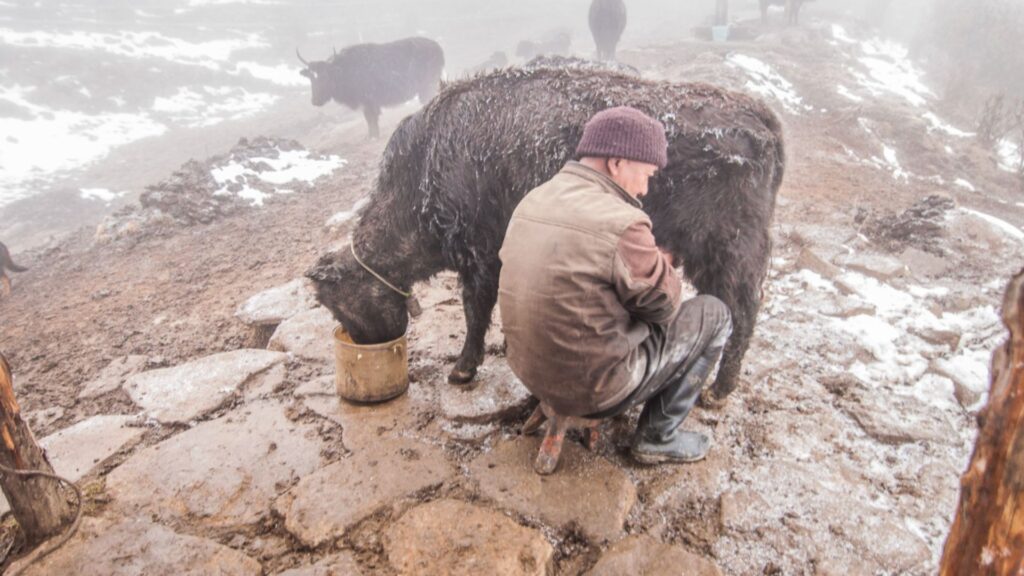
The heart of Brokpa culture is pastoralism, especially yak herding. Yaks provide milk, butter, wool, meat, and fuel, anchoring both livelihood and identity. Seasonal migration, or dronglen, remains a shared effort: families move together, manage herds collectively, and rely on cooperation networks that have long ensured survival in these remote terrains.
Brokpa herder milking a yak in cold, misty mountain terrain
Family life mirrors this interdependence. Multi-generational households are common, with men often accompanying herds to distant pastures while women manage homes, process dairy, weave garments, and maintain social ties. Kinship binds labour, ritual, and responsibility into a tightly woven social fabric essential to mountain life.
Homes, Food & Daily Rhythms
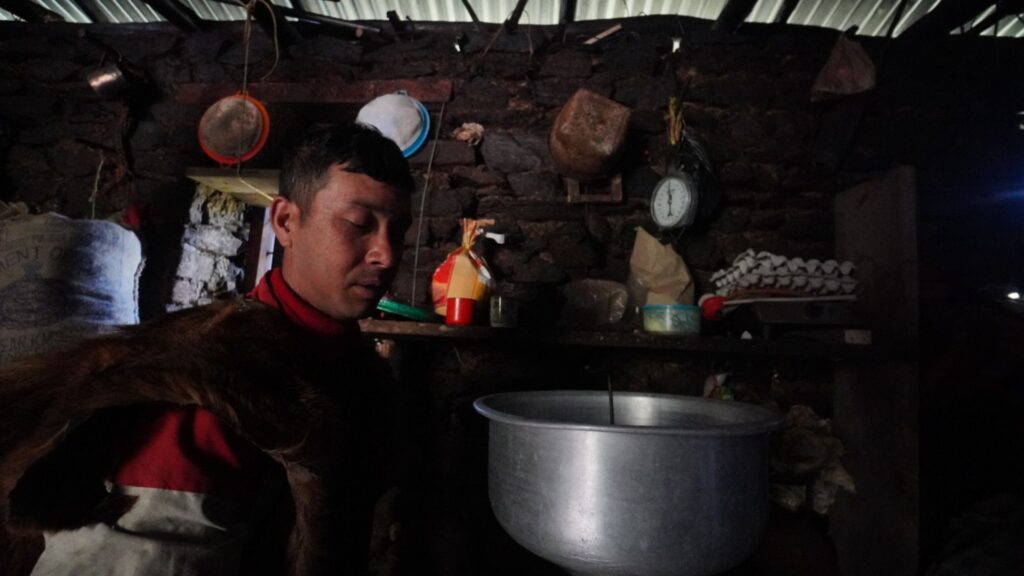
Brokpa man cooking inside a stone house
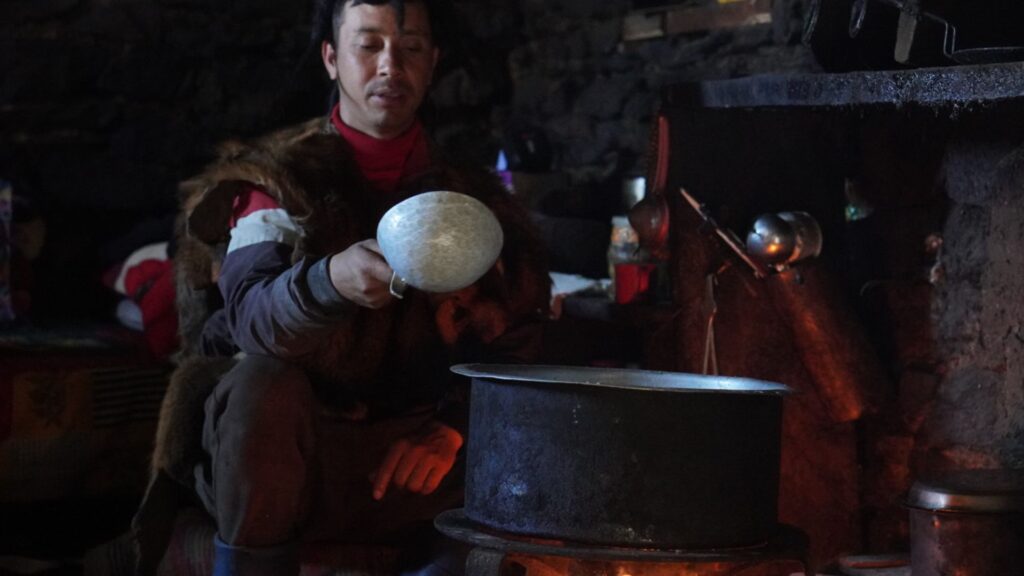
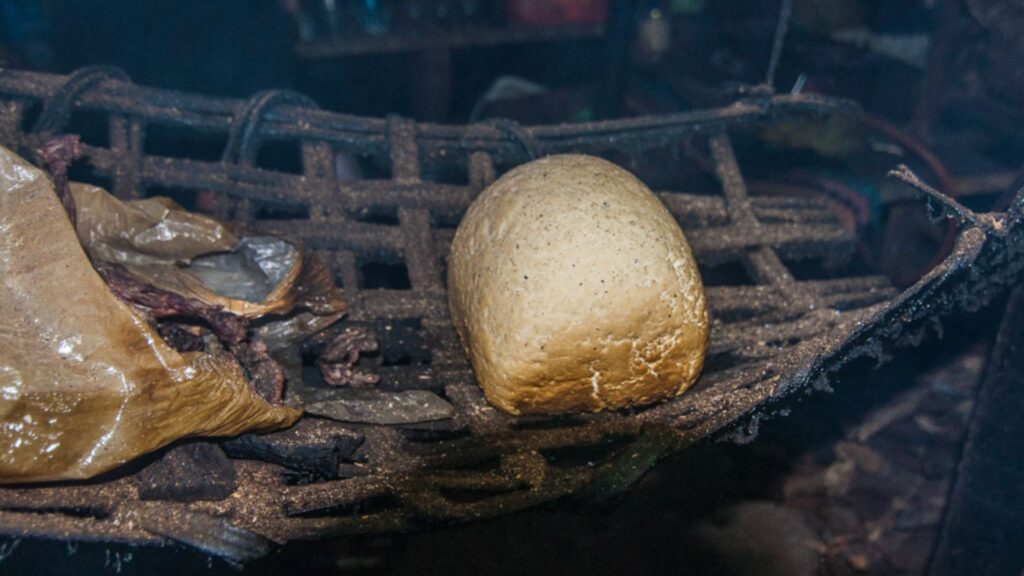
Brokpa architecture reflects their altitude-bound existence. Winter houses built of stone and timber guard against icy winds, while summer shelters are temporary structures of bamboo, pine, or tarpaulin, easily moved as the herds roam. Daily sustenance comes from the mountains themselves: butter tea warming cold mornings; chhurpi cheese drying on racks; yak meat simmered with barley; and foraged herbs enriching soups and stews. Their cuisine blends Tibetan and Monpa influences into a practical yet comforting high-altitude fare, shaped more by climate and migration than by recipes.
Chhurpi cheese and wrapped food drying on a grill above a hearth
Beliefs, Rituals & Cultural Expressions
Faith here is layered. Mahayana Buddhism—centred on Tawang Monastery—guides most rituals, yet older beliefs in mountain spirits and protective deities still shape daily decisions. Before herds depart for summer pastures, monks bless animals; when storms threaten, families offer prayers to local spirits. Spirituality is inseparable from ecology.
Festivals and oral traditions keep culture alive: villagers circle fields during Choe-kor, welcome the New Year with Losar and Torgya dances, and sing ballads that recount migrations or mountain legends. Their language, a Tibeto-Burman tongue distinct from Monpa, survives mostly through speech—stories, songs, and everyday conversations acting as its living script.
Clothing, Weaving & Material Culture
Brokpa garments are crafted for the mountains: thick yak-wool cloaks, felt caps, and woven layers that shield against wind and snow. Jewellery of silver, coral, and turquoise is often inherited, carrying histories across generations. Weaving is both an art and a necessity, with motifs echoing mountains, rivers, and protective symbols.
In the last few years (2023–2025), artisan cooperatives in Arunachal, including groups from Brokpa villages, have begun receiving support from state handicraft boards to market yak-wool shawls, hand-spun blankets, and traditional cloaks beyond the region.
These textiles are prized for being naturally water-repellent, incredibly warm, and eco-friendly, making them attractive in sustainable fashion circles.
Change, Challenges & Conservation
In recent years, even as the snow-clad ridges remain, Brokpa life has begun to shift under the weight of rising skies and shifting seasons. Pastures once carpeted with grasses are thinning; snowfall has become erratic; and yaks — cold-adapted creatures that are the backbone of Brokpa livelihood — suffer under warming summers. In response, many families now raise more resilient yak-cattle hybrids, adjust migration calendars by a few months, and rework pasture-use to protect fragile grasslands. At the same time, younger generations draw on ancestral knowledge to produce yak-milk butter, cheese and woollen crafts for sale — a blend of tradition and market economy. Institutional support is emerging too: a recently announced Himalayan-wide yak herder collective promises improved livelihood coordination and cultural protection, offering new hope for this high-altitude pastoral world.
Brokpa man ladling food from a pot over a wood-fired stove
Travelling Responsibly in Brokpa Country
Visitors can support this fragile pastoral world by travelling with care: asking permission before photographing people or rituals, staying in community-run homestays, observing daily herding rhythms without disruption, and purchasing local woven goods or dairy products fairly.
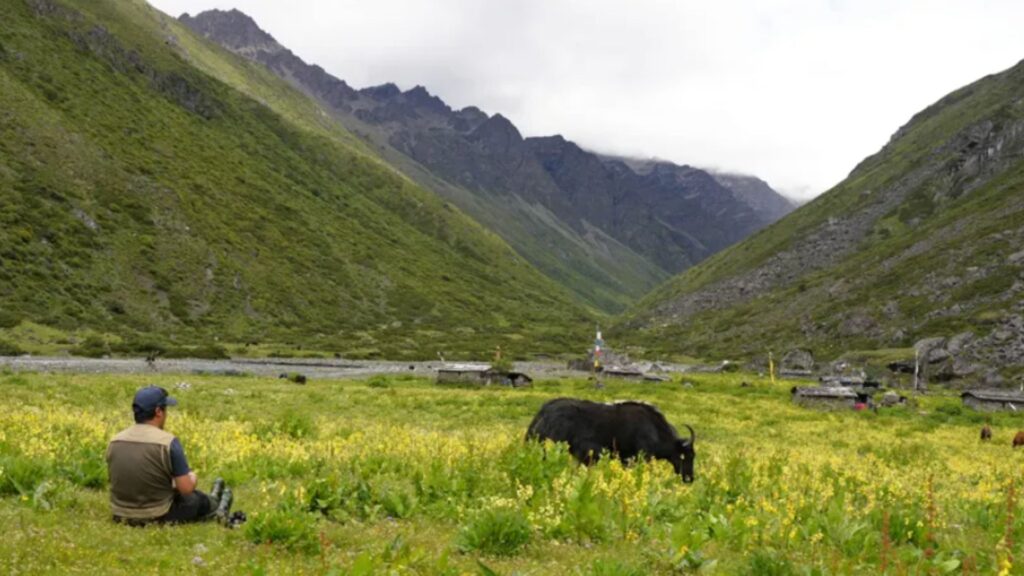
Yak grazing in a green alpine meadow surrounded by steep Himalayan slopes
Ask before photographing people, especially elders, children, and anyone engaged in rituals or herding work.
Choose community-run homestays where your stay directly supports Brokpa families and keeps tourism benefits local.
Respect daily rhythms by avoiding interruptions during milking, migration preparations, or household rituals.
Tread lightly on the land, sticking to established trails and avoiding sensitive pastures or sacred sites.
Buy local products responsibly, paying fair prices for woven textiles, yak products, and handmade crafts.
Be mindful of cultural spaces, removing shoes where required, keeping voices low in monasteries, and dressing modestly.
Limit waste by carrying reusable bottles, refusing single-use plastics, and packing out what you bring in.
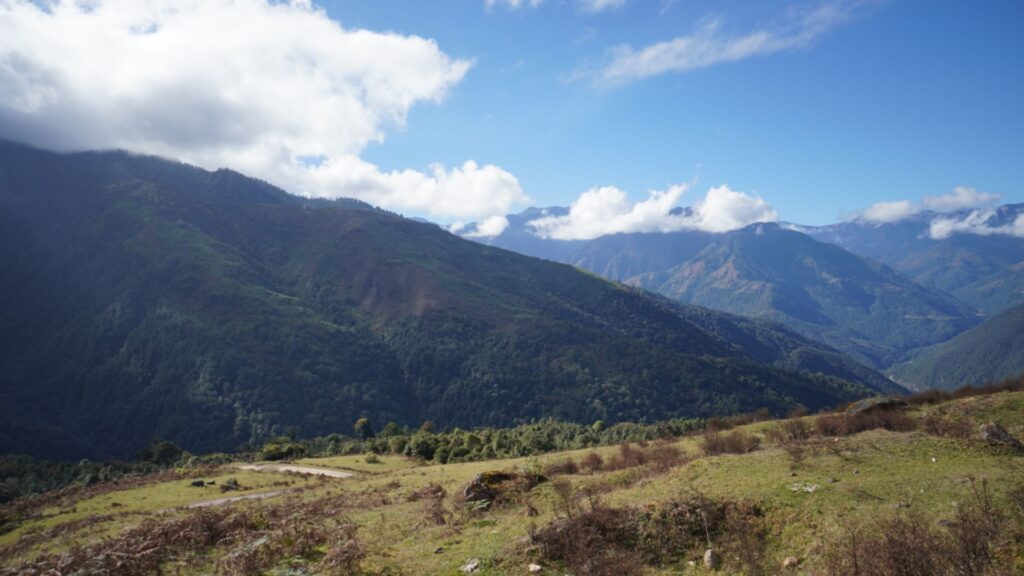
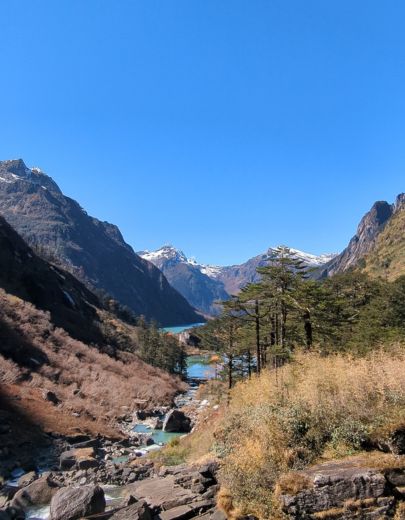
Panoramic view of forested mountains and valleys in the Eastern Himalayas
Sources
Béteille, A. (1986) The Tribes of Arunachal Pradesh. Delhi: Oxford University Press. Available at:https://global.oup.com/academic/ (Accessed: 1 December 2025). A foundational anthropological text covering Arunachal’s tribal groups.
Chaudhuri, S. (2020) ‘Pastoral mobility and landscape knowledge among yak herders of Arunachal Pradesh’, Himalaya, the Journal of the Association for Nepal and Himalayan Studies, 39(2), pp. 45–60. Available at:https://digitalcommons.macalester.edu/himalaya/vol39/iss2/6/ Peer-reviewed article on Brokpa/Monpa herding systems and adaptation.
Government of India, Ministry of Tribal Affairs (2021) Tribal Profiles of Arunachal Pradesh. New Delhi: Ministry of Tribal Affairs. Available at: https://tribal.nic.in/research/ (Accessed: 1 December 2025). Authoritative government source on Arunachal’s tribal communities.
Miteva, A. et al. (2023) ‘Climate variability, pastoral adaptation, and yak herd vulnerability in the Eastern Himalayas’, Environmental Research Letters, 18(4), 045009. Available at: https://iopscience.iop.org/article/10.1088/1748-9326/acc9a7 Scientific study on climate impacts affecting yak pastoralism.
Nautiyal, A. and Rawat, P. (2019) ‘Traditional ecological knowledge and sustainable grazing in high-altitude Arunachal’, Journal of Mountain Science, 16(11), pp. 2539–2554. Available at: https://link.springer.com/article/10.1007/s11629-019-5551-9 Research on rotational grazing, meadow ecology, and indigenous stewardship.
Sarmah, D. (2014) Yak Husbandry in Arunachal Pradesh: A Socio-Economic Study. Guwahati: ICAR–National Research Centre on Yak. Available at: https://nrconyak.icar.gov.in/ Key reference on yak culture, husbandry practices, and Brokpa livelihoods.
Singh, R. (2022) ‘Weaving traditions of Tawang and West Kameng: Material culture in transition’, Indian Journal of Traditional Knowledge, 21(3), pp. 587–595. Available at: http://nopr.niscpr.res.in/handle/123456789/60325 Research on yak-wool textiles, motifs, natural dyes, and weaving transitions.
United Nations Development Programme (UNDP) India (2023) High Mountain Livelihoods Under Change: Yak Pastoralists of the Eastern Himalayas. New Delhi: UNDP. Available at:https://www.undp.org/india/publications Report on climate challenges, livelihood diversification, and conservation.