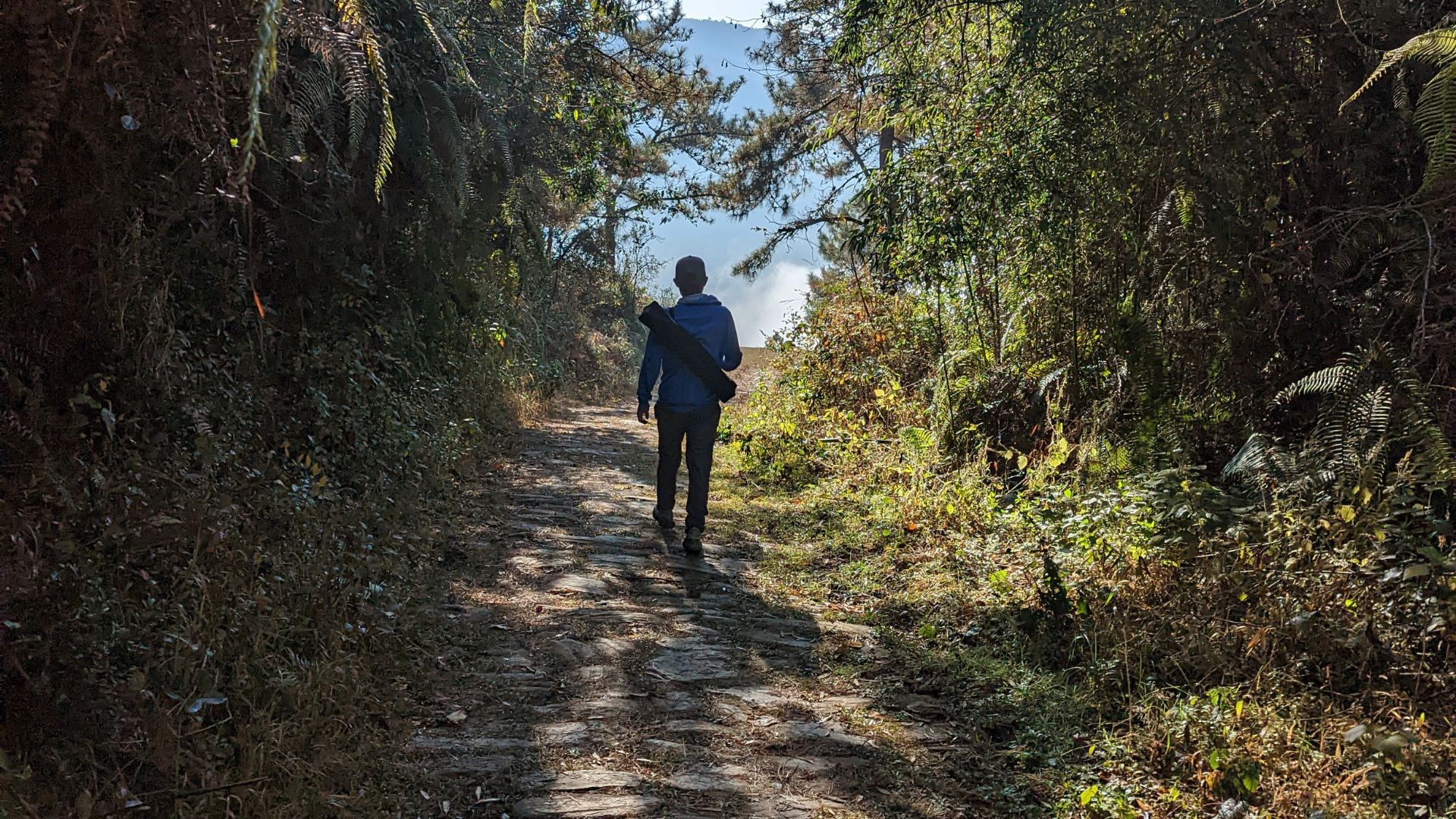
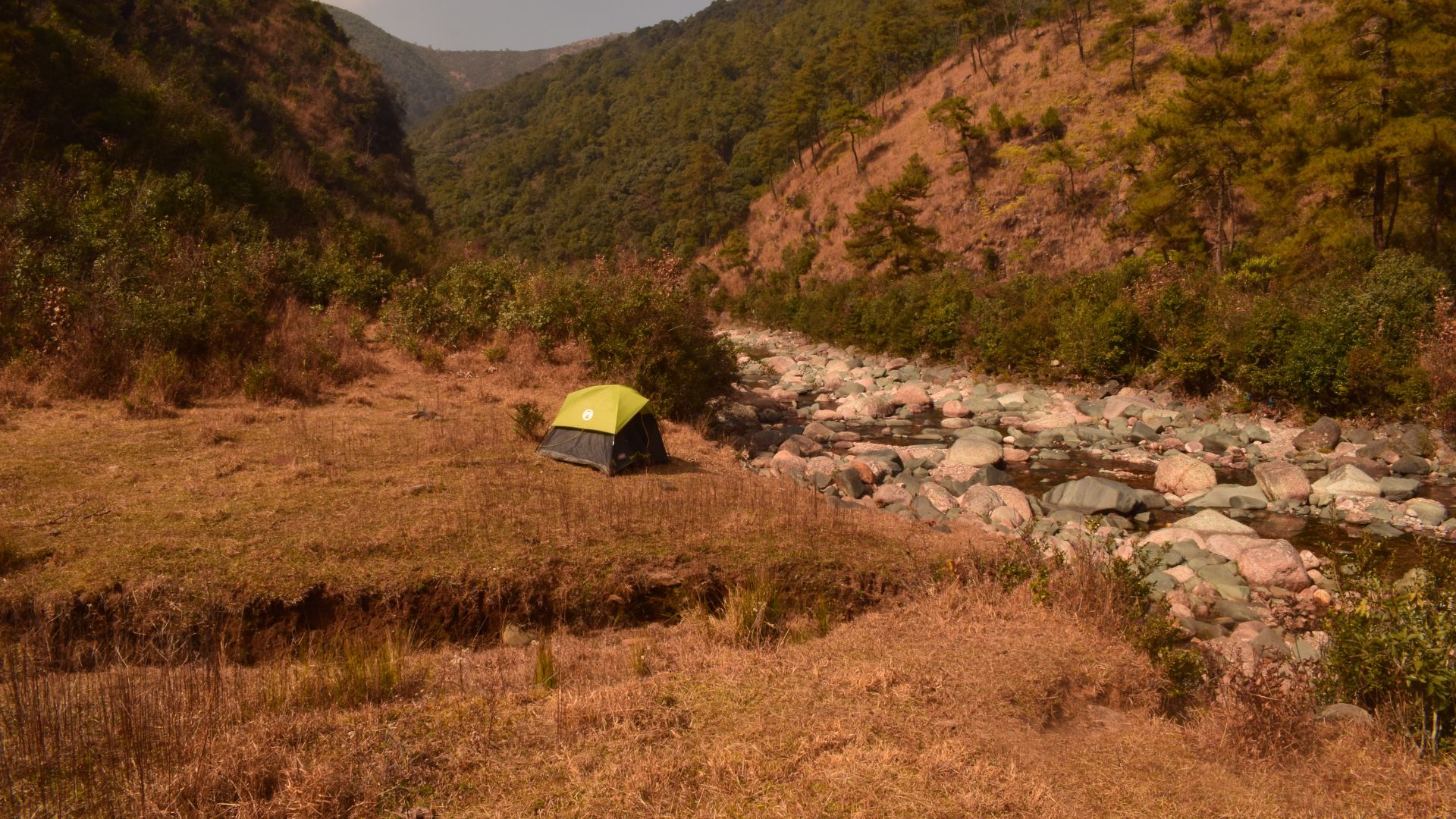
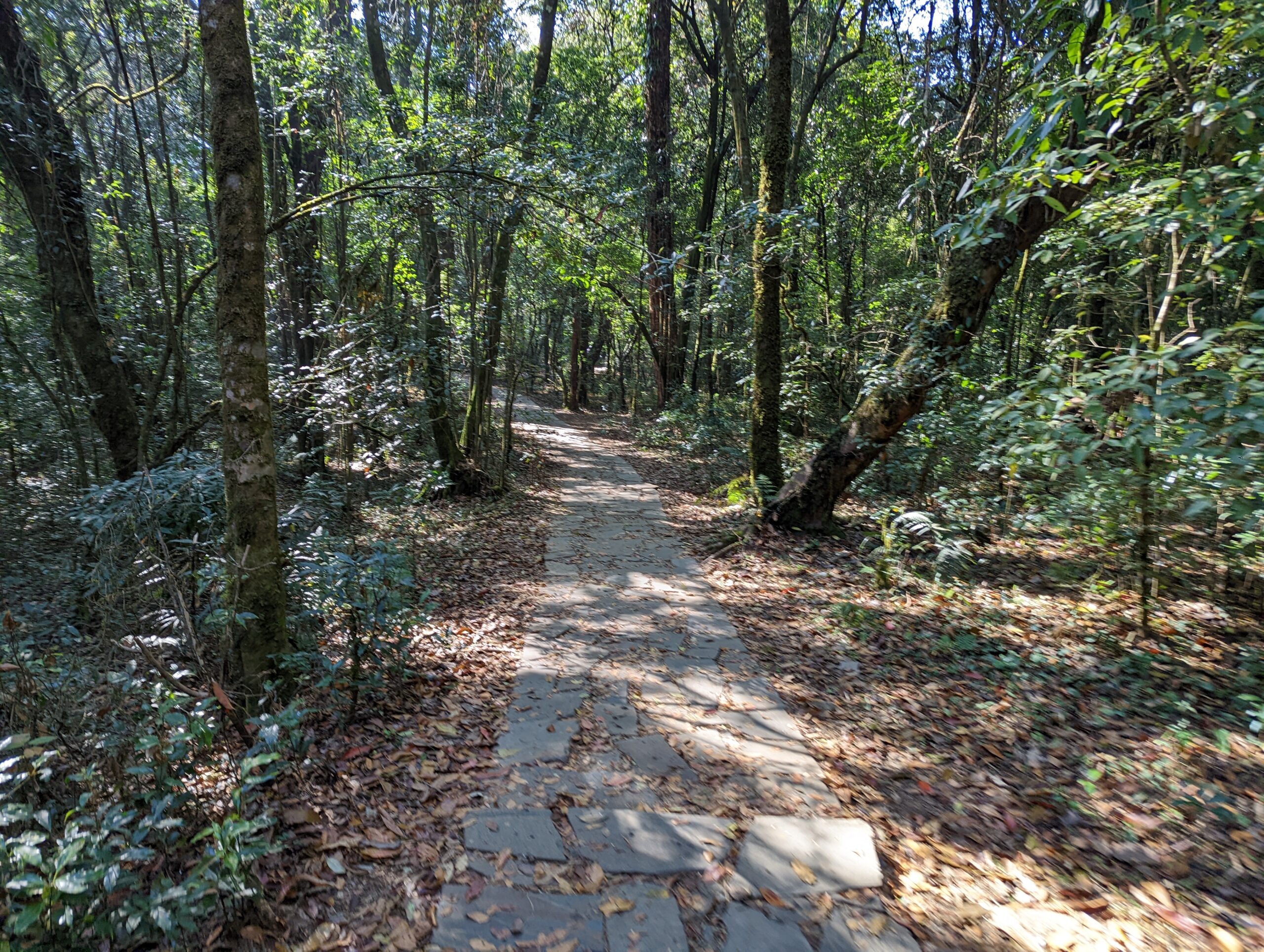
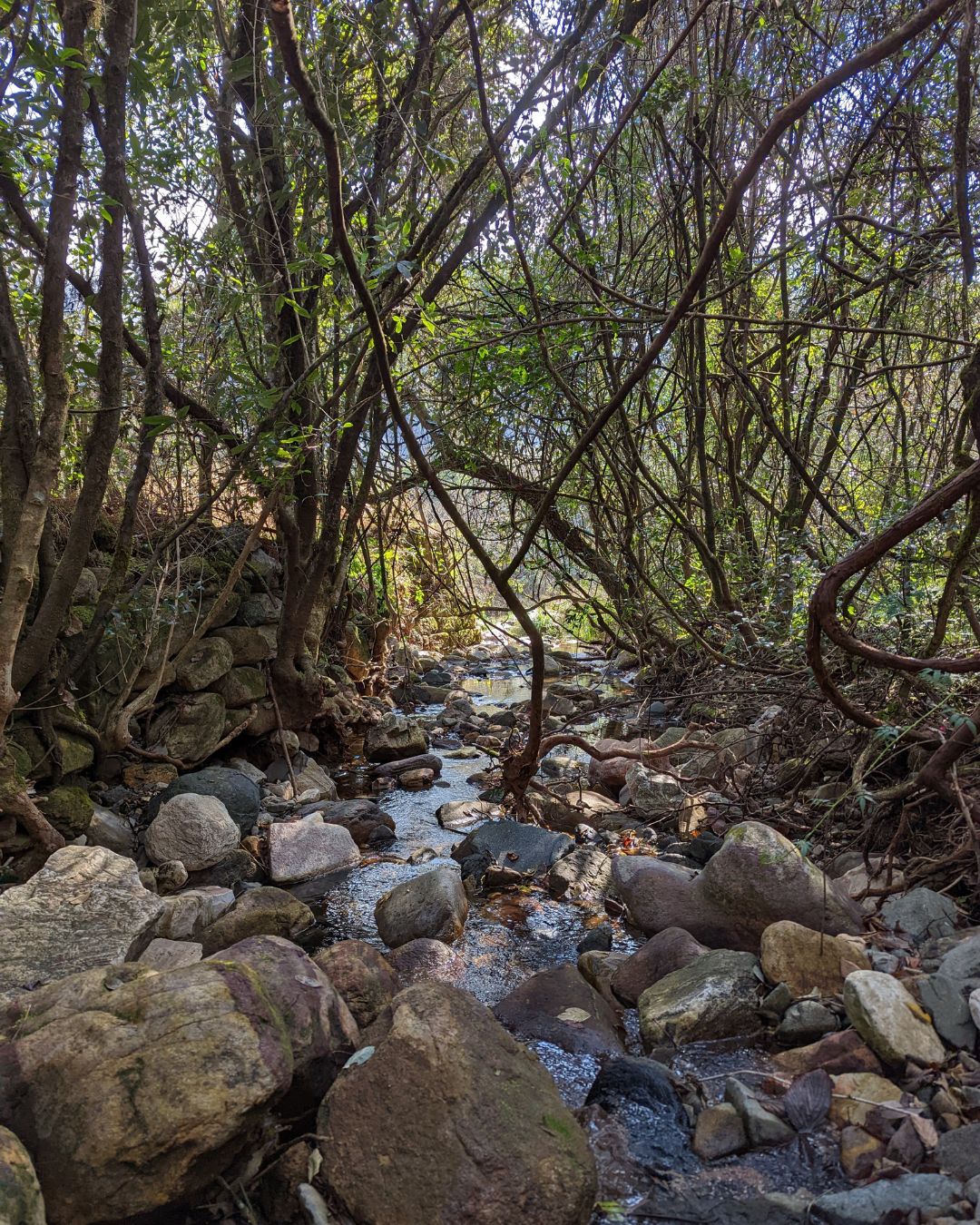
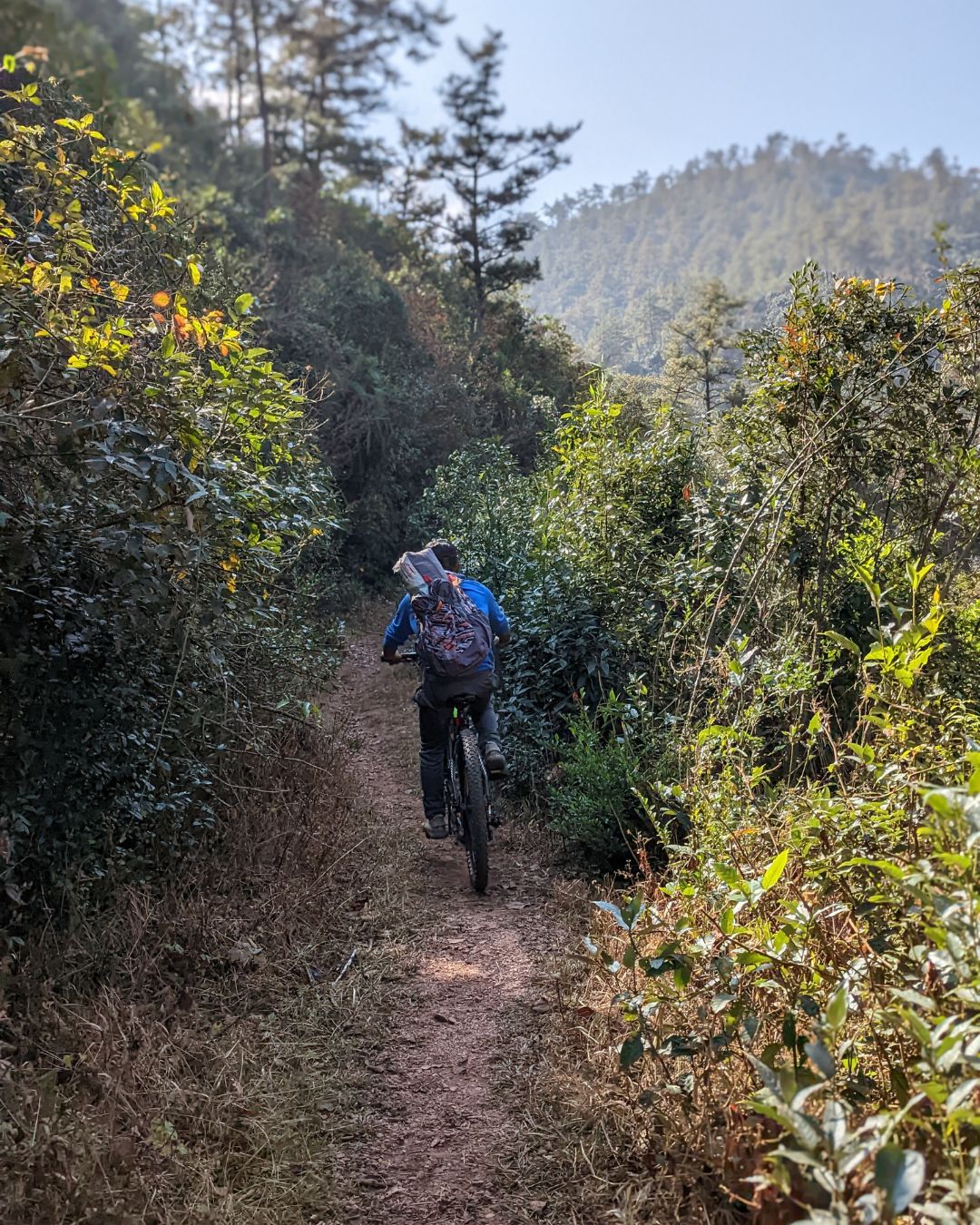
Winding through the mist-laden hills of Meghalaya, the David Scott Trail is a journey through time, nature, and legend. This historic trail, named after British officer David Scott, takes you through an enchanting landscape of rolling meadows, ancient stone pathways, whispering pine forests, and picturesque villages nestled in the heart of the Khasi Hills.
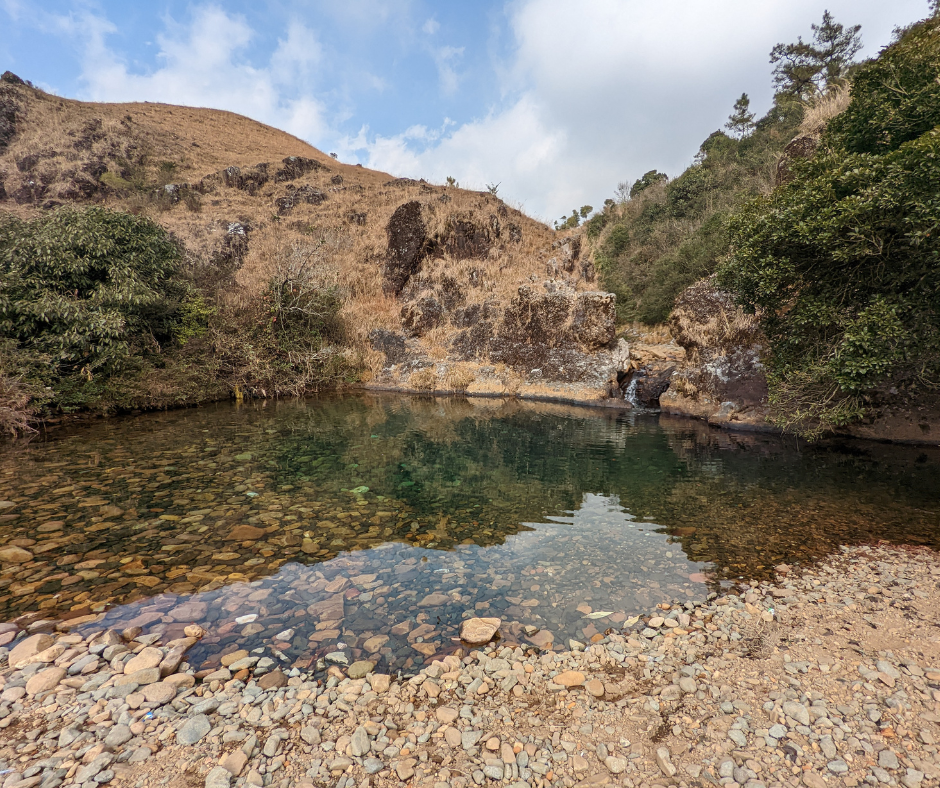
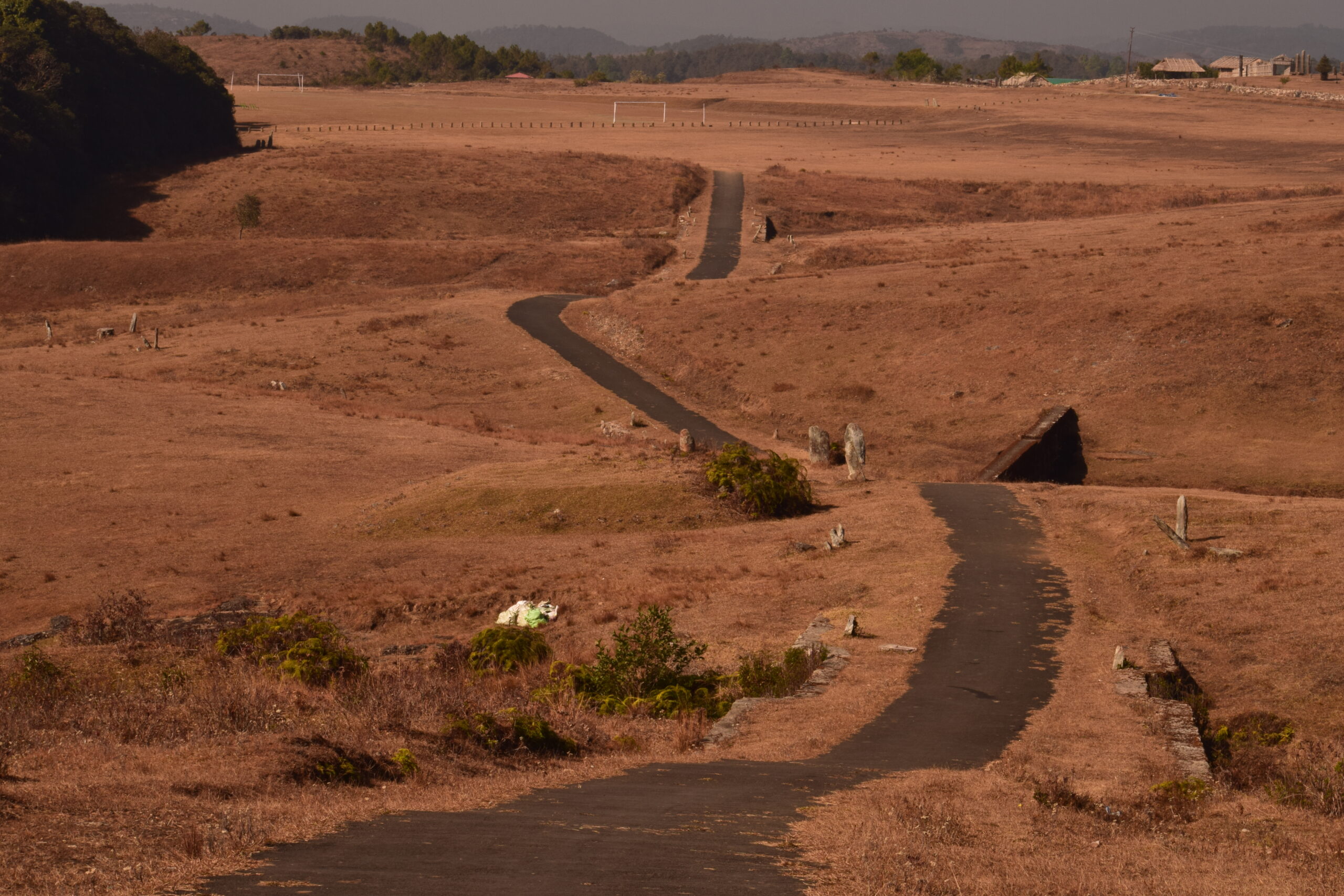
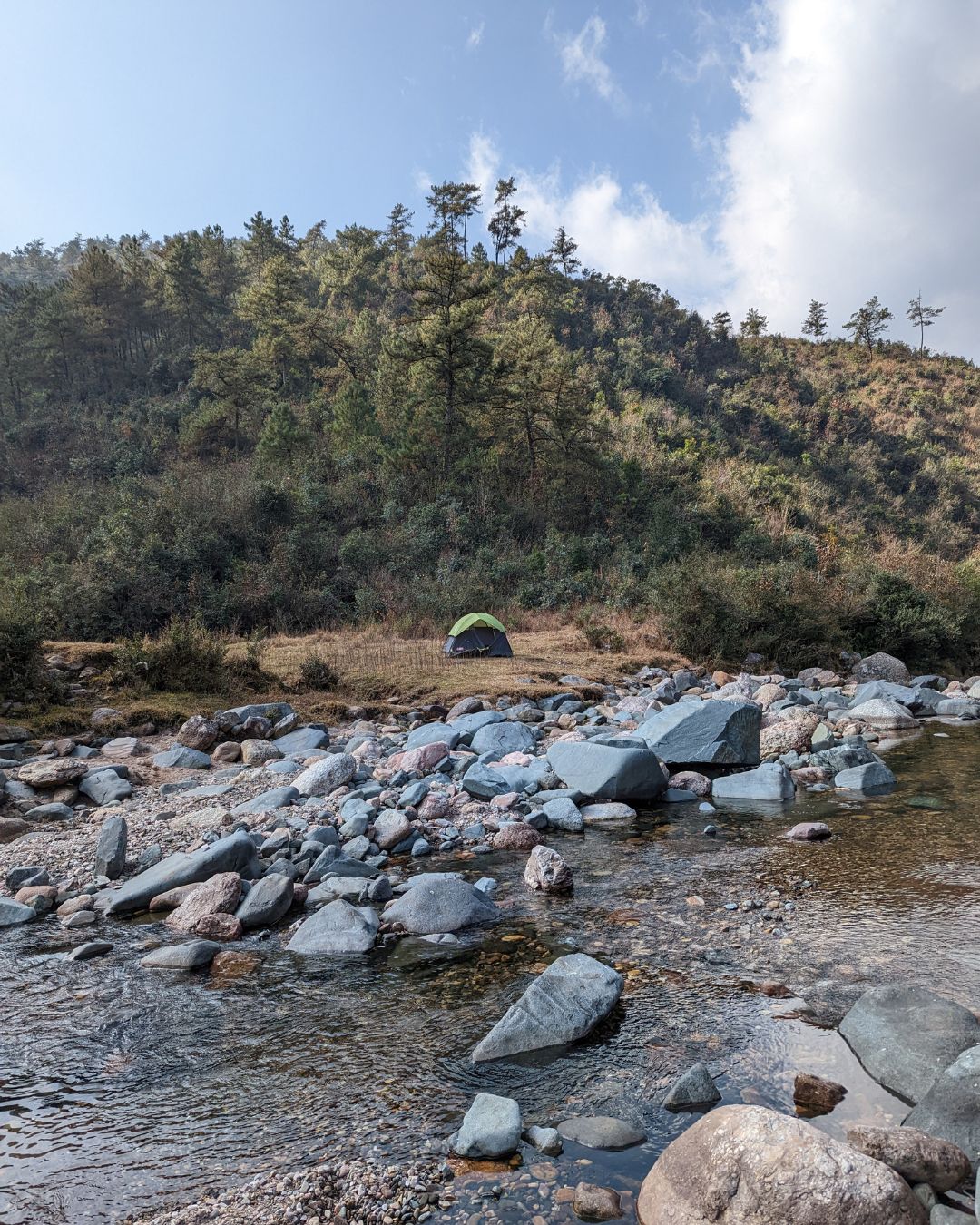
As you tread along this scenic route, the gurgling Wahrew River keeps you company, its crystal-clear waters weaving through lush valleys and rocky gorges. Towering monoliths, remnants of age-old traditions, stand as silent sentinels along the path, telling tales of Meghalaya’s rich past. The air is crisp, filled with the scent of wildflowers and the distant call of birds hidden among the foliage.
One of the highlights of the trail is the crossing of the historic stone bridge built in the early 19th century, a relic of colonial-era engineering, arching gracefully over the river below. Further along, the verdant landscape unfolds into expansive meadows where you can pause to soak in the panoramic views of the surrounding hills, a breathtaking testament to the region’s untouched beauty.
Whether you are a nature lover, history enthusiast, or an adventure seeker, the David Scott Trail promises an unforgettable experience. It is a trek that immerses you in the tranquility of Meghalaya’s landscapes while offering glimpses into its storied past—an experience that lingers long after you have left its winding paths behind.
Itinerary
8:00 AM – 8:30 AM: Arrival at the starting point of the David Scott Trail in Mawphlang. Meet your guide for a briefing on the trek and its historical significance.
8:30 AM – 10:30 AM: Begin the trek through scenic pine forests and undulating meadows. Pass by ancient monoliths and hear fascinating stories about the Khasi heritage.
10:30 AM – 11:00 AM: Stop by the historic stone bridge built during British rule. Take in the breathtaking views of the Wahrew River and the surrounding valley.
11:00 AM – 12:30 PM: Continue the trek through picturesque landscapes, crossing streams and walking along old horse-cart trails used in the 19th century.
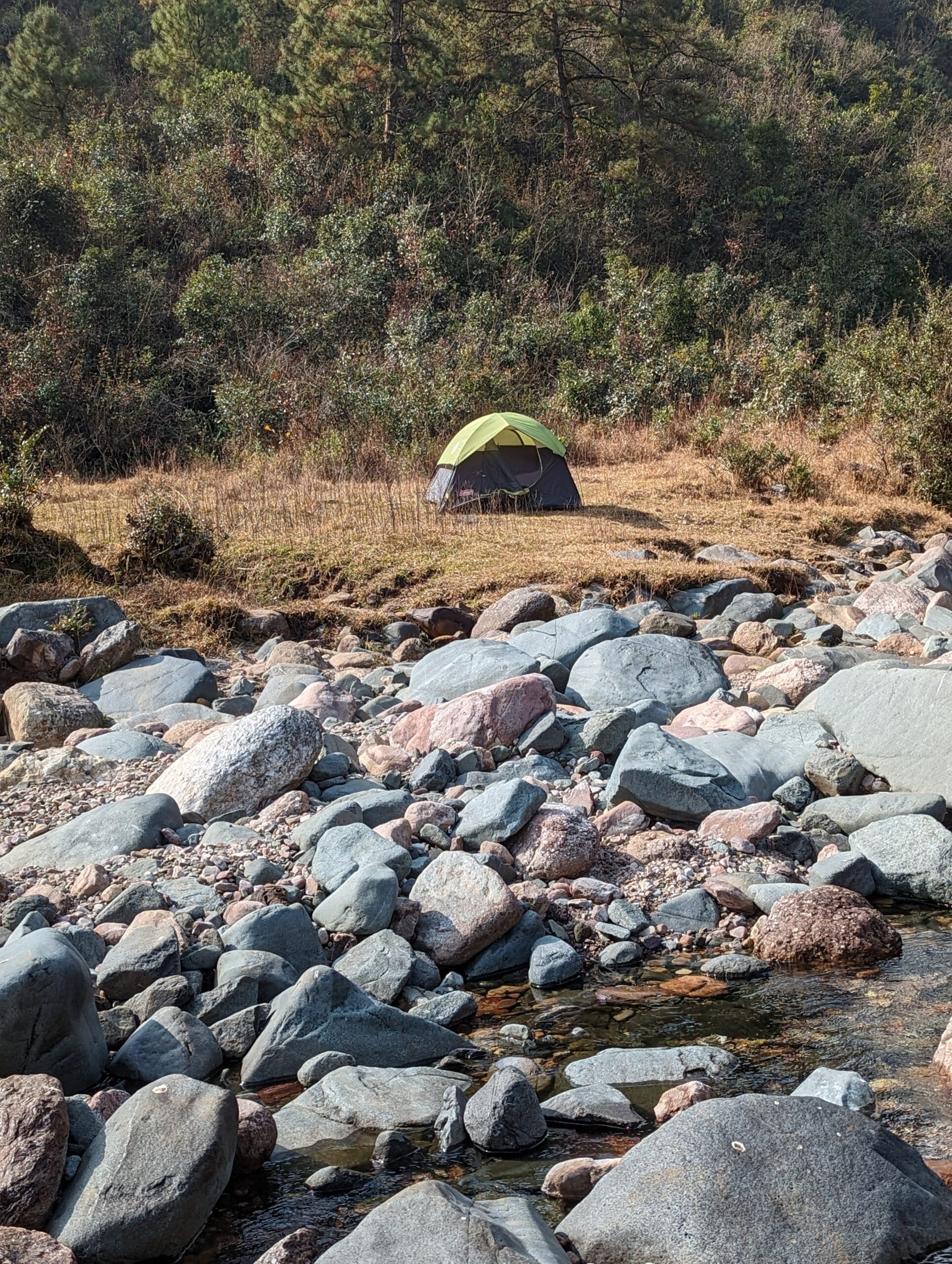
12:30 PM – 1:30 PM: Enjoy a packed lunch in a serene riverside meadow, surrounded by nature’s beauty.
1:30 PM – 3:00 PM: Resume the trek towards Lad Mawphlang, taking in the last leg of the scenic trail. The journey concludes with panoramic views of the East Khasi Hills.
3:00 PM: Reach the endpoint at Lad Mawphlang. Relax and reflect on the trek before heading back to Shillong or your next destination.
Why You Will Love It?
Scenic Landscapes: Walk through Meghalaya’s breathtaking meadows, forests, and riversides, soaking in nature’s pristine beauty.
Historic Significance: Follow the footsteps of British explorers and discover the colonial history of this ancient trade route.
Cultural Immersion: Pass through Khasi villages and witness the traditional way of life in Meghalaya.
Adventure & Exploration: Experience the thrill of trekking through diverse terrains, from pine forests to rocky gorges.
Photography Haven: Capture the misty hills, historic monoliths, and vibrant landscapes along the way.
Who Is This Experience For?
Trekking Enthusiasts: Perfect for those who enjoy moderate hikes through stunning landscapes.
History Buffs: Ideal for those fascinated by the colonial past and indigenous heritage of Meghalaya.
Nature Lovers: Great for those seeking an escape into the tranquility of Meghalaya’s natural beauty.
Adventure Seekers: A must for anyone who enjoys exploring offbeat trails and discovering hidden gems.
Gallery
Guided trek along the David Scott Trail.
Historical and cultural insights from an experienced local guide.
Packed lunch and refreshments.
Transportation to and from the trail (if part of the package).
All necessary permits and entry fees.
Comfortable trekking shoes with good grip.
Weather-appropriate clothing (light jacket, rain protection if needed).
Sun protection: hat, sunglasses, and sunscreen.
A reusable water bottle to stay hydrated.
A camera or phone to capture stunning landscapes.
A light backpack to carry essentials and snacks.
FAQs
What is the David Scott Trail and why is it special?
The David Scott Trail is one of Meghalaya’s oldest trekking routes — originally established in the early 1800s by David Scott (a British administrator) as a mule/horse-cart trade path connecting hills and plains.
Today it blends history, culture and nature — passing through sacred groves, ancient monoliths, streams, meadows, forest and Khasi villages.
How difficult is the hike — who can do it?
The hike is rated easy-to-moderate. Terrain includes forest paths, occasional slopes, stream/river crossings, and some uneven sections.
It’s suitable for beginners and families comfortable with moderate walking, though a basic level of fitness and steady footwear are advisable.
What kind of landscape and sights will we see?
Expect a rich mix — sacred groves with ancient trees, open meadows, pine and forest patches, streams and natural pools, small rivers / springs, old colonial-era stone or suspension bridges, Khasi village settlements and traditional houses, and panoramic hill/valley views.
Is the trail well-marked? Can I do it without a guide?
While the basic route is known, the trail lacks consistent signboards and becomes confusing in villages or forest-dense patches. Many trekkers strongly suggest a guide — especially if you are unfamiliar with Khasi region trails. Guides also help with local stories, flora/fauna spotting, and logistic help (vehicle transfer from endpoint).